Quick Answer
If your stomach hangs over pants or trousers, the usual causes are fat stored on the lower belly, loose skin after weight loss or pregnancy, weakened tummy muscles and hormonal changes with age. A waistband that sits too low or too tight pushes the belly over the top and makes it worse. Better fitting trousers help straight away, while gradual weight loss and strength work reduce the overhang over time.
- Fat, loose skin and weak tummy muscles all play a part
- A wide, soft waistband that does not cut into the fold helps most
- Keep your waist to less than half your height for health
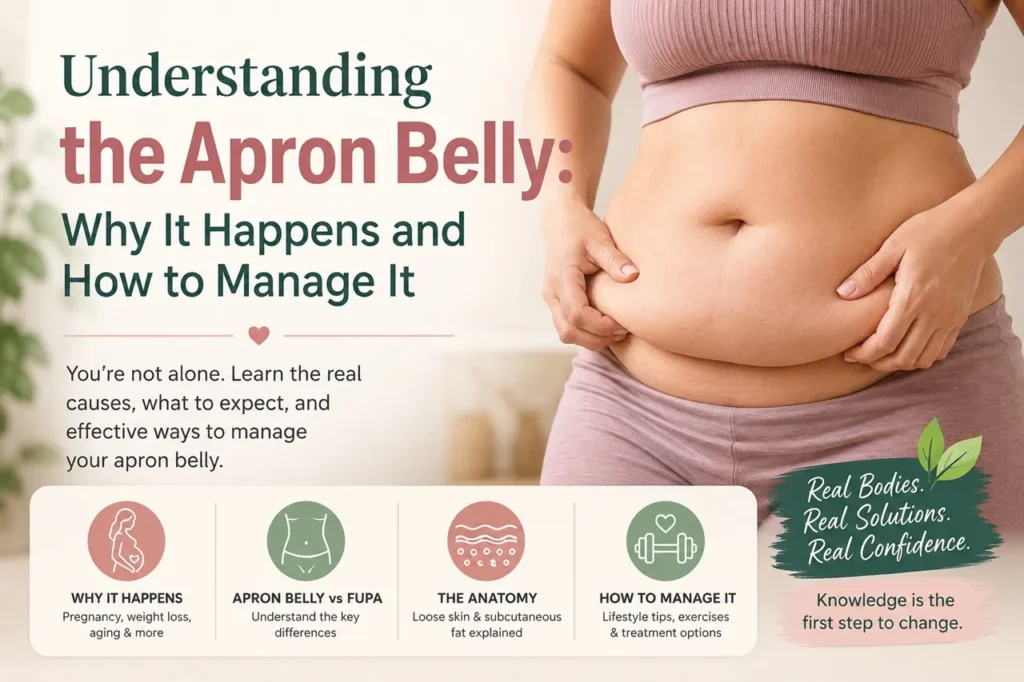
If your stomach hangs over pants or trousers, you are far from alone. In American English the phrase stomach hangs over pants means trousers, and it describes the same thing many people in the UK call a belly hanging over trousers or an apron belly. The overhang can feel uncomfortable, make clothes hard to fit and knock your confidence. This guide explains why it happens, when it matters for your health and the practical fixes, from the right waistband to longer term changes.
This article is part of our belly guide hub. For the bigger picture on overhangs, read our guide to the hanging belly, and our article on the Dunlap belly explains the slang terms people use.
Why Your Stomach Hangs Over Pants and Trousers
A stomach hanging over pants is usually caused by a mix of lower belly fat, loose skin and weaker tummy muscles, made more visible by a waistband that sits in the wrong place.
Fat stored on the lower belly
Many people store fat low on the abdomen, just under the skin. As this layer grows, the soft tissue above the pubic area starts to fold forward and rest on whatever sits beneath it, often the waistband. Genes, overall weight and hormones all affect where your body puts fat.
Loose skin after weight loss or pregnancy
Skin that has been stretched for a long time may not shrink back fully after big weight loss or pregnancy. The extra skin forms a flap that hangs over the front of your trousers even when there is little fat left. Our guide on apron belly fat vs loose skin explains how to tell the difference.
Weak or separated tummy muscles
Pregnancy can stretch the two long tummy muscles apart, a condition called diastasis recti. With less support from the muscle wall, the belly pushes further forward, which can make an overhang look bigger, even in people who are not overweight.
Hormonal changes with age
Around menopause, falling oestrogen tends to shift fat towards the tummy. Skin also loses collagen and elasticity with age, so the belly sags more easily. Men also tend to store more fat around the middle as they get older.
A waistband in the wrong place
Low rise trousers that sit just under the belly act like a shelf, pushing soft tissue up and over the top. Trousers that are a size too small dig into the crease and squeeze the belly forward. Bloating after meals can make the problem feel worse by the end of the day.

Overhang, Muffin Top or Apron Belly?
People use several names for a belly that spills over trousers. Knowing which one you have helps you pick the right fix.
| What you see | Likely name | What usually helps |
|---|---|---|
| Soft roll above the waistband that disappears when trousers come off | Muffin top | A bigger size or a wider, softer waistband |
| Fold that hangs over the waistband even with trousers off | Apron belly or pannus | Support, skin care, weight loss, sometimes surgery |
| Loose skin flap after big weight loss | Belly flap | Support garments, skin care, surgery if it causes problems |
| Firm, round belly that pushes trousers down | Visceral fat or bloating | Weight loss, activity and a GP check if new |
Check with trousers off
Stand in front of a mirror without clothing on your lower half. If the fold still hangs down over the pubic area, you have an apron belly rather than a simple muffin top caused by clothing. Our guide to measuring your apron belly grade walks you through this check.
Does a Belly Hanging Over Trousers Affect Your Health?
The overhang itself is not an illness, but it can point to other things worth checking and can cause skin problems.
What your waist size tells you
NICE advises keeping your waist measurement to less than half your height, as a larger waist is linked with a higher risk of type 2 diabetes, high blood pressure and heart disease. You can check your waist to height ratio with the NHS BMI and waist calculator. Measure around your middle halfway between your lowest rib and the top of your hip bone, not across the fold.
Skin irritation under the fold
Where the belly rests on the waistband, sweat and friction can cause red, sore or itchy skin. Wash and dry the crease every day and change damp clothing. Our guide to the apron belly rash covers this in more detail.
Pressure from tight clothing
Tight belts and waistbands are one recognised cause of meralgia paraesthetica, a trapped nerve that causes burning, tingling or numbness on the outer thigh. Looser clothing often eases it. See your GP if symptoms last, or if you notice a new lump or bulge in your tummy or groin.
How to Stop Your Belly Hanging Over Pants: Clothing Fixes
The quickest improvement comes from changing what you wear. These fixes reduce rubbing and make the overhang less obvious from day one.
Choose the right rise
High waisted trousers that sit at or above the fold usually give the smoothest line and stop the waistband cutting into the crease. Some people prefer a mid rise that sits fully below the fold without pressing on it. Avoid low rise styles that sit just under the belly and push it forward. Our guide to the best trousers for apron belly compares the options.
Look for a wide, soft waistband
- a flat, wide waistband spreads pressure instead of creating one tight line
- side elastic or a pull on waist adjusts as your body changes through the day
- a little stretch in the fabric, such as a few per cent elastane, moves with you
- braces can replace a tight belt if you need extra hold
Get the size right, then tailor
Buy trousers that fit the widest part of your body comfortably, then have the legs or hips taken in if needed. A pair that fits your belly but is loose elsewhere is easier to alter than a pair that is too tight at the waist. Sizes vary between shops, so ignore the number on the label and go by fit.
Add support underneath
A support belt or a high waisted support garment lifts the fold so the waistband sits more comfortably. Our guides to the apron belly support belt and the best shapewear for apron belly explain what to look for. Remove support garments at night and check the skin.
Balance the top half
Longer tops that finish below the hip, wrap styles and open jackets draw the eye away from the waistband. Our best jeans for apron belly guide has more styling ideas.

Long Term Ways to Reduce the Overhang
Clothing helps you feel comfortable now. These steps make the overhang smaller over months.
Gradual weight loss
If your overhang is mainly fat, losing weight steadily is the most effective long term change. Our guide to the calorie deficit for apron belly shows how big a deficit to aim for. Even modest weight loss can make trousers fit better.
Strength and core work
You cannot burn fat from the belly alone, but strengthening your tummy, back and hips improves posture and support. If you think you have diastasis recti, ask your GP or a physiotherapist about safe exercises.
Medical options for a large fold
If the fold hangs well below your waistband, causes repeated rashes or infections, or remains after you have reached a stable weight, talk to your GP. A panniculectomy to remove the fold may be possible on the NHS when local criteria are met, or privately as a tummy tuck.
A worked example
A 55 year old woman has a grade 2 apron belly that hangs over her low rise work trousers, leaving a red, sore line by the evening. She switches to high waisted trousers with a wide, soft waistband a size up and has the legs shortened. She starts wearing a light support garment underneath and washes and dries the crease every evening. Within a week the soreness settles and her trousers stay in place. She then measures her waist, finds it is above half her height and books a GP appointment to talk about weight support.
Frequently Asked Questions
Why does my stomach hang over my pants?
A stomach usually hangs over pants or trousers because of fat stored on the lower belly, loose skin after weight loss or pregnancy, weakened tummy muscles, or hormonal changes with age. A waistband that sits too low or is too tight makes the overhang look and feel worse.
Is a belly hanging over trousers a health risk?
The overhang itself is not a disease, but a large waist can be a sign of extra fat around the organs, which raises the risk of type 2 diabetes and heart disease. NICE advises keeping your waist to less than half your height. The skin fold can also become sore if sweat and friction build up.
Should I wear high waisted or low rise trousers with an apron belly?
Most people with an overhang find high waisted trousers with a wide, soft waistband more comfortable, because they sit above or over the fold instead of cutting under it. Some prefer a mid rise that sits fully below the fold. Avoid any waistband that digs into the crease.
Will losing weight stop my stomach hanging over my trousers?
Losing weight usually makes the overhang smaller, especially if it is mainly fat. If the fold is mainly loose skin, some overhang may remain after weight loss, and support garments, well fitted clothing or, in some cases, surgery may help.
Can tight trousers cause health problems?
Very tight waistbands and belts can rub and irritate the skin fold, and they are one recognised cause of meralgia paraesthetica, a trapped nerve that causes burning or numbness on the outer thigh. If you notice this, loosen your clothing and speak to your GP if it does not settle.
The Bottom Line
A stomach that hangs over pants or trousers is usually down to lower belly fat, loose skin, weak tummy muscles and hormonal changes, made worse by a waistband in the wrong place. A high waist, a wide soft waistband and the right size give quick relief. Gradual weight loss, strength work and a GP check on your waist size tackle the overhang in the long term.
Your next step
Try on the trousers you wear most and note where the waistband sits and whether it digs into the fold. If it does, look for one high waisted pair with a wide, soft waistband this week, and measure your waist against half your height.
Featured image: tape measure and sewing kit by Myriams-Fotos, Wikimedia Commons, CC0, cropped.