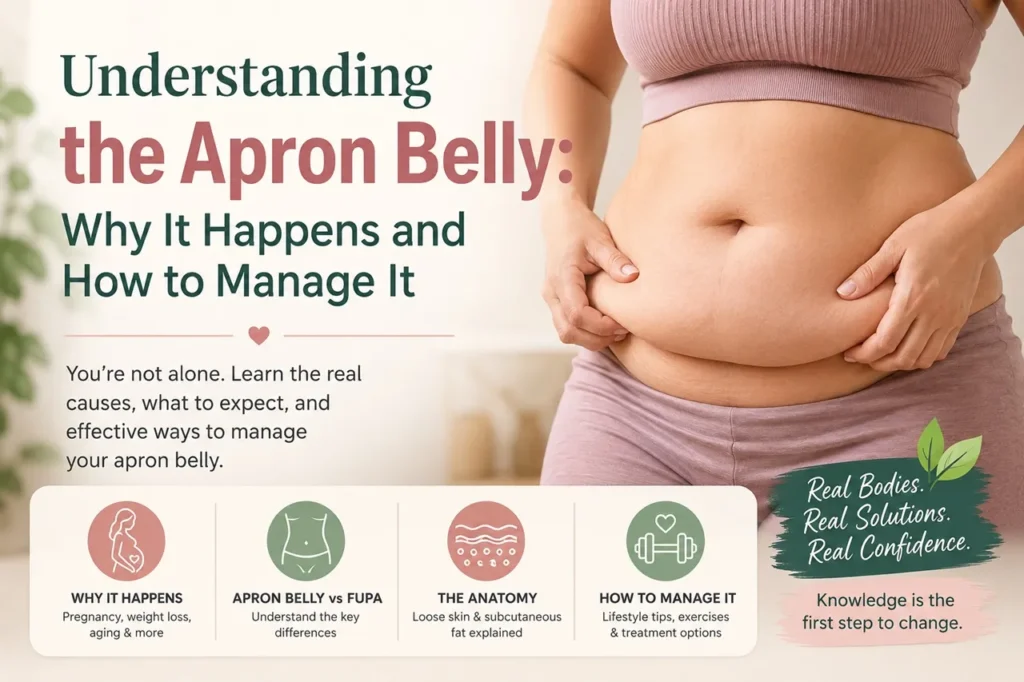
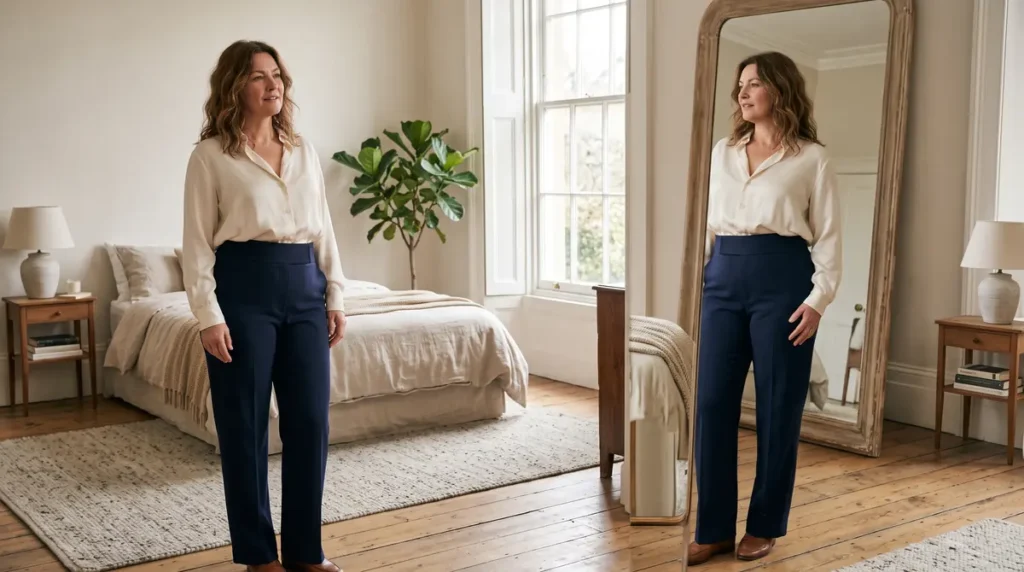
The best trousers for an apron belly have a high rise, a wide flat waistband and a fabric with enough weight to hang past the lower tummy. Get those three details right and trousers stop digging into the fold, rolling down or showing a ridge through your top.
This guide explains how rise, waistband and fabric each change the way trousers sit on a hanging lower tummy. It also covers the best leg shapes, how to measure for the right size, what to wear underneath and a quick checklist for the changing room.
If you are new to the term, our guide to what an apron belly is explains the causes and grades. For denim in particular, see our separate guide to the best jeans for an apron belly.
Why Trousers Are Harder Than Dresses
An apron belly, also called a pannus or panniculus, is a fold of skin and fat that hangs over the lower abdomen. Trousers have to fasten around the body at some point, and that fastening often lands right on the crease.
When the waistband sits across the fold, it presses inwards and pushes the overhang outwards. The result is a visible shelf, a waistband that rolls over and red marks at the end of the day. Many people also feel the pressure more after meals.
Dresses can simply release fabric above the tummy. Trousers cannot, so the fix is to control exactly where the waistband sits and how it holds you. That comes down to three choices: rise, waistband and fabric. Our guide to the best dresses for an apron belly covers the alternative.
Rise: Where the Waistband Sits
The rise is the distance from the crotch seam to the top of the waistband. It decides where trousers sit on your body. For an apron belly, rise matters more than any other single detail.
Low Rise
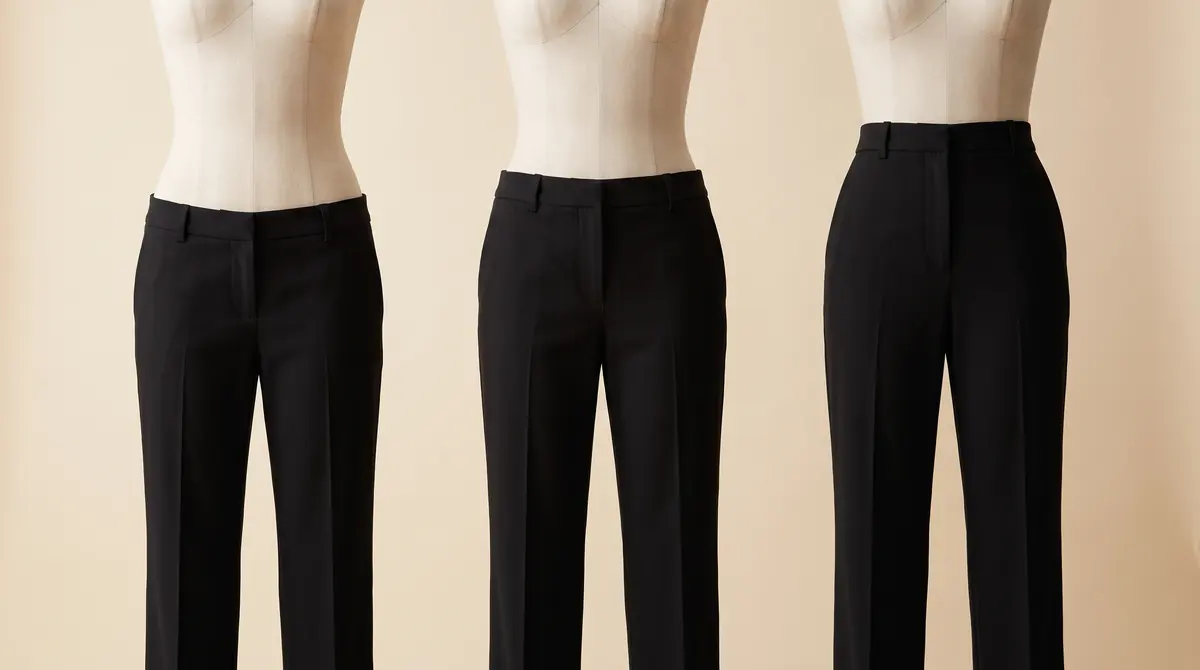
Low-rise trousers sit on the hips, usually 7 to 9 cm below the navel. On an apron belly, this is almost always under the fold. The waistband tucks beneath the overhang, which lifts it forward and makes it look larger.
Low rises also slip down when you sit or bend, so you spend the day pulling them up. For most people with a lower tummy fold, low-rise styles are the ones to skip.
Mid Rise
Mid-rise trousers sit around the navel or a little below it. They can work for a small Grade 1 apron, where the fold is shallow. For larger aprons, the waistband often lands right on the crease and creates a hard line.
High Rise
High-rise trousers sit at or just above the navel, close to your natural waist. The natural waist is the narrowest part of the torso, usually between the bottom of the ribs and the top of the hip bones.
A high rise lets the waistband hold the tummy from above rather than cut into it. The fabric then runs smoothly over the fold instead of pinching it. Rise lengths of about 28 to 32 cm suit most women, depending on height.
Very tall waistbands, sometimes sold as super high rise, can also work well if you have a short torso. Try sitting down in them before you buy. If the top edge digs under the ribs, the rise is too long for you.
Waistband: Width, Shape and Closure
Once the rise is right, the waistband decides how comfortable trousers feel all day. A narrow, stiff band concentrates pressure into a thin line. A wide, soft band spreads it over a larger area of skin.
Wide Flat Waistbands
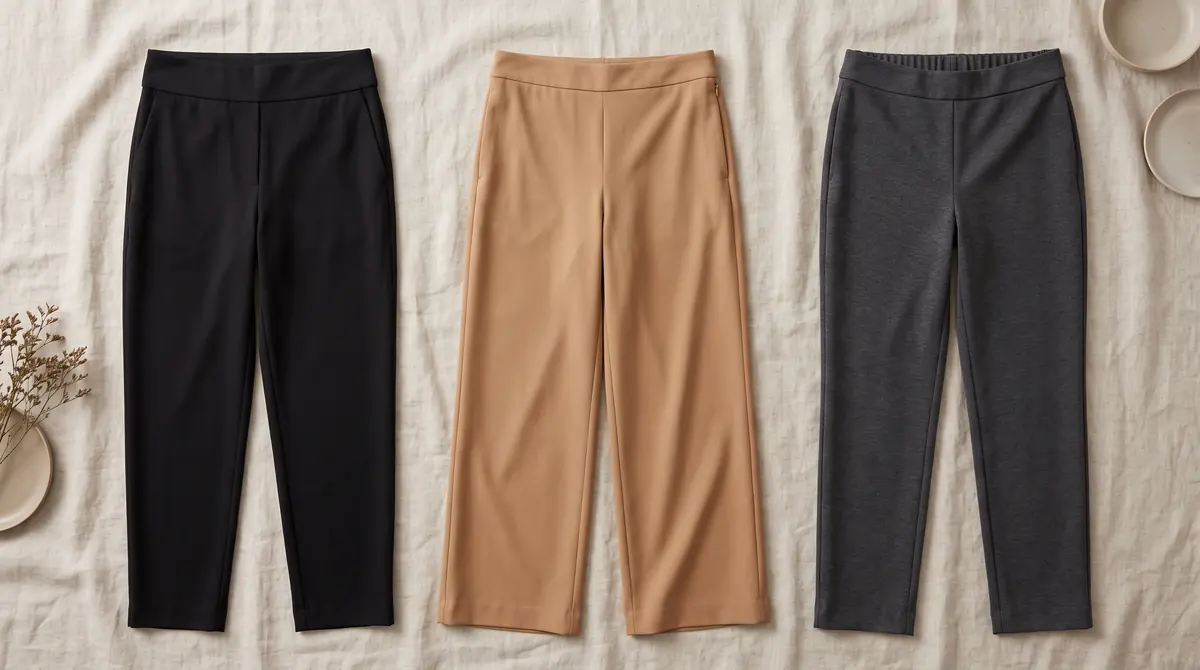
A wide flat waistband, about 6 to 10 cm deep, is the easiest to wear over an apron belly. It acts like a gentle panel and smooths the top of the fold. Yoga-style and pull-on trousers often use this design.
Look for a band that lies flat when you sit. If it folds over on itself, the fabric is too thin or the band is too tall for your torso. A band with a hidden inner grip strip stays in place better.
Elasticated and Part-Elastic Waistbands
Fully elasticated waistbands stretch with you, which helps if your tummy changes through the day. However, thin, tight elastic can roll and leave marks. Covered elastic, where the elastic sits inside a fabric casing, is softer on the skin.
Part-elastic waistbands are flat at the front and stretchy at the back. They look tailored from the front but still give at the back when you sit. This style is a good middle ground for work trousers.
Front, Side and No Fastening
A front zip with a metal button puts a hard point right over the centre of the tummy. Some people find this pinches, especially when seated. Side-zip and back-zip trousers remove that pressure point and give a cleaner front.
Pull-on trousers have no fastening at all. They are the most comfortable choice for many people with an apron belly, as long as the fabric has enough body to look smart.
Fabric: Weight, Stretch and Drape
Fabric weight decides whether trousers skim over the fold or sink into it. Heavier fabrics hold their own shape. Thin, very stretchy fabrics cling to every curve, including the crease beneath the apron.
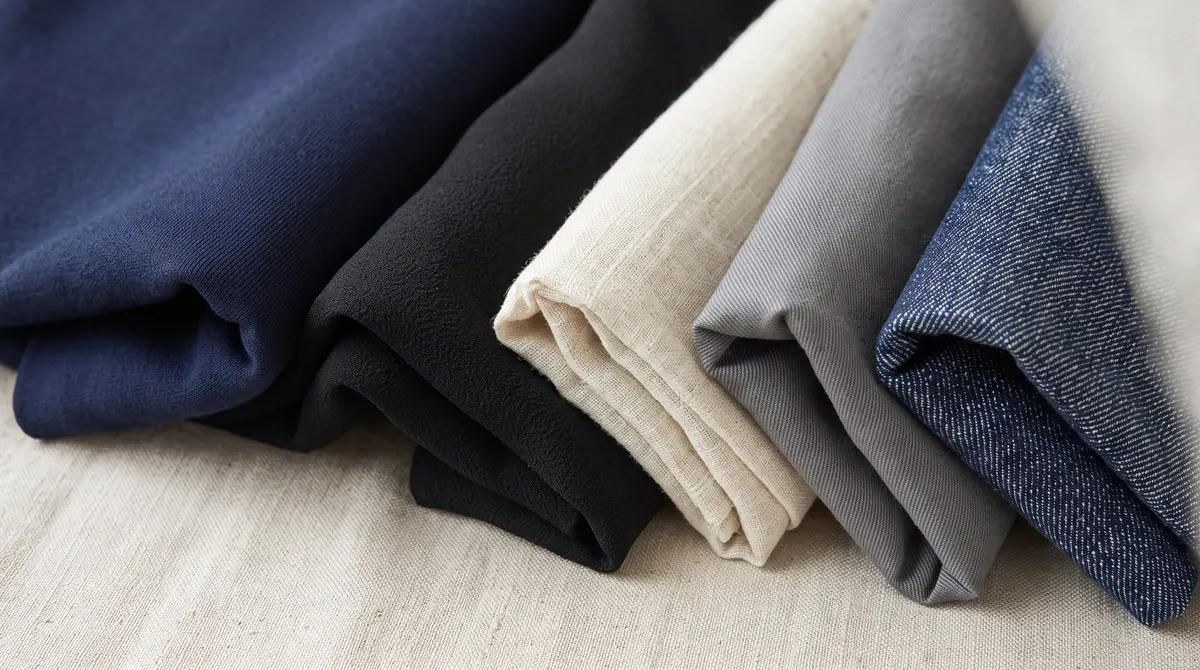
Ponte and Heavy Jersey
Ponte is a thick, double-knit jersey. It stretches but keeps a smooth, firm surface, so it hides lines and ridges well. Ponte trousers feel as comfortable as leggings but look closer to tailored trousers.
Crepe and Suiting Fabrics
Crepe has a slightly grainy surface and a soft drape. It falls in a clean line from the hip and does not cling. Wool blends and polyester suiting do the same and suit office wear.
Stretch Cotton, Linen and Denim
Stretch cotton twill and chinos with about 2 to 3% elastane give structure with a little give. Linen blends are cool in summer, though pure linen creases easily across the lap. For denim, choose a mid-weight fabric with some stretch rather than rigid denim.
Fabrics to Treat With Care
Thin leggings fabric, lightweight jersey and shiny satin show every contour. Very high stretch, above about 5% elastane, often grows during the day and starts to sag at the seat and knees. A lining or a darker colour helps lighter fabrics look smoother.
Best Leg Shapes for an Apron Belly
The leg shape balances the whole outline. A leg that falls straight or widens towards the hem draws the eye downwards and evens out a fuller middle.
Wide-leg trousers are the easiest choice for most people. The fabric falls straight from the hip, so the tummy, hips and legs read as one long line. Choose a high rise and a fabric with good drape.
Straight-leg trousers look neat for work and suit most heights. They work best in ponte, crepe or stretch twill. Bootcut and flared trousers add a little width at the hem, which balances the hips and tummy.
Palazzo trousers are very wide and fluid, which makes them cool and comfortable in summer. Slim, tapered and cigarette styles can still work if the rise is high and the fabric is thick, though they show the shape of the hips more clearly.
Details That Help and Details to Skip
Small details can make trousers flatter or fight you. Front pleats or darts that start at the waistband give room over the tummy without adding bulk. Slanted side pockets sit flat, while deep front patch pockets can gape.
Pressed front creases create a sharp vertical line from waist to hem, which lengthens the legs. A slightly longer hem that touches the top of the shoe does the same, especially with a small heel.
Skip heavy belt loops and wide statement belts worn on the fold. Avoid bulky cargo pockets on the front thighs and horizontal yokes across the lower tummy. Contrast stitching across the front also draws attention to that area.
How to Measure for the Right Fit
Sizing on the label only tells part of the story. Taking three simple measurements makes online shopping far easier.
- Natural waist: measure around the narrowest point of your torso, usually just above the navel.
- Widest point of the tummy: measure around the fullest part of the apron while standing relaxed.
- Hips: measure around the widest part of the bottom.
Choose your size from the largest of these numbers, then check the rise length in the product details. It is easier to have the waist taken in by a tailor than to make tight trousers comfortable.
Always sit, bend and walk in new trousers before you cut the tags. If the waistband rolls when you sit, try a size up or a wider band. If there is a gap at the back of the waist, look for a curved or contoured waistband.
Styling Trousers With an Apron Belly
Tops change how trousers look as much as the trousers themselves. A loose half tuck, where only the front of the top is tucked in, shows the waistband while letting fabric fall softly over the tummy.
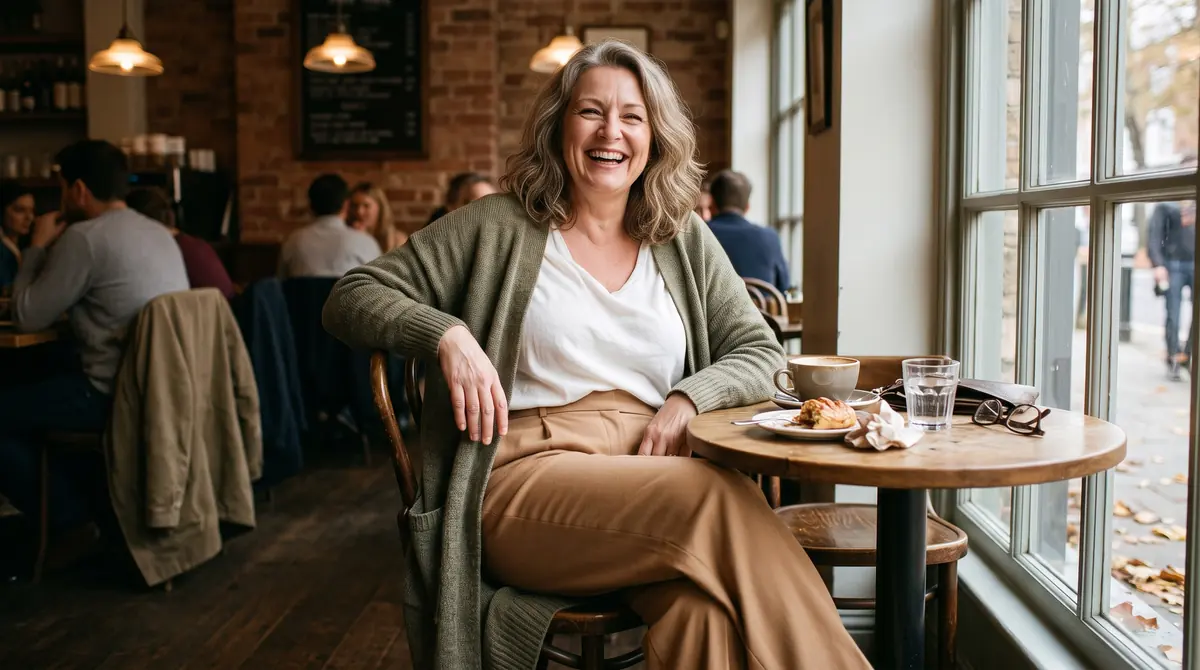
Longline cardigans, blazers and open shirts create two vertical lines down the front of the body. Tunics that end at the upper thigh cover the waistband completely and pair well with straight or slim trousers.
Matching the colour of your top and trousers, or choosing tones that are close, creates one long column of colour. Darker shades on the bottom half and detail near the face keep the eye moving upwards. For more outfit ideas, see our guide on how to hide an apron belly.
What to Wear Under Your Trousers
The layer underneath shapes the final look. Low-cut knickers often sit under the apron and leave a dent that shows through trouser fabric. High-waisted knickers that finish above the fold give a smoother line.
For fitted or special-occasion trousers, light shapewear shorts that start above the navel can hold the fold and stop it pressing on the waistband. Our guide to the best shapewear for an apron belly compares compression levels.
A soft cotton liner placed in the fold keeps the skin dry under trousers on warm days. It also stops the waistband rubbing the crease. Our best underwear for an apron belly guide covers styles that stay put.
Quick-Reference Trouser Table
Use this table as a shortcut when you shop or try trousers on.
| Feature | Best choice | Avoid |
|---|---|---|
| Rise | High rise at or above the navel | Low rise that sits under the fold |
| Waistband | Wide, flat band about 6 to 10 cm deep | Narrow, stiff bands and thin rolled elastic |
| Fastening | Pull-on, side zip or back zip | Large metal front buttons that pinch |
| Fabric | Ponte, crepe, stretch twill, mid-weight denim | Thin jersey, shiny satin, very high stretch |
| Leg shape | Wide-leg, straight, bootcut, flared | Skin-tight styles in thin fabric |
| Details | Front pleats, slanted pockets, pressed creases | Front patch or cargo pockets, horizontal yokes |
Comfort and Skin Care
Trousers trap more heat around the fold than dresses or skirts. Warmth and moisture under the apron can cause chafing and a rash called intertrigo. If a waistband leaves deep red marks or hurts by the evening, it is too tight, whatever the label says.
Choose breathable fabrics where you can, change out of tight trousers at home and wash and dry the fold well each day. Pat the skin dry rather than rubbing it.
See a pharmacist or GP if a rash in the fold spreads, cracks, weeps, smells or lasts more than a few days. Our apron belly rash treatment guide explains the common causes and remedies.
Frequently Asked Questions
What rise is best for an apron belly?
A high rise that sits at or just above the navel suits most people. It holds the tummy from above and lets fabric run smoothly over the fold. Low rises tend to sit under the apron and push it forward.
Are elasticated trousers good for an apron belly?
Yes, if the elastic is wide and covered in fabric. Wide covered elastic spreads pressure and stretches with you through the day. Thin, tight elastic can roll over and dig into the crease.
Which trouser fabric hides an apron belly best?
Ponte and crepe give the smoothest finish. Both have enough weight to skim over the fold without clinging. Mid-weight stretch twill and denim with about 2 to 3% elastane also work well.
Should I size up in trousers if I have an apron belly?
Choose your size from the widest point of your tummy, not your waist. You can have the waist taken in by a tailor. Trousers that are too tight will roll down and leave marks however good the cut is.
Are wide-leg trousers flattering with a tummy?
Yes. Wide-leg trousers fall straight from the hip, so the tummy, hips and legs read as one long line. Pair them with a high rise and a fabric that drapes well for the best result.
Why do my trousers roll down at the front?
Rolling usually means the rise is too low, the waistband is too narrow or the fabric is too thin. The fold pushes against the band when you sit. A higher rise and a wider, firmer waistband usually solve the problem.
Final Thoughts
The best trousers for an apron belly combine a high rise, a wide flat waistband and a fabric with some weight. Wide-leg, straight and bootcut shapes then balance the whole outline. Small details such as side zips, front pleats and pressed creases add polish.
Measure the widest point of your tummy, sit down in every pair before you buy and choose comfort first. Trousers that let you move freely all day will always look better than a pair that pinches.