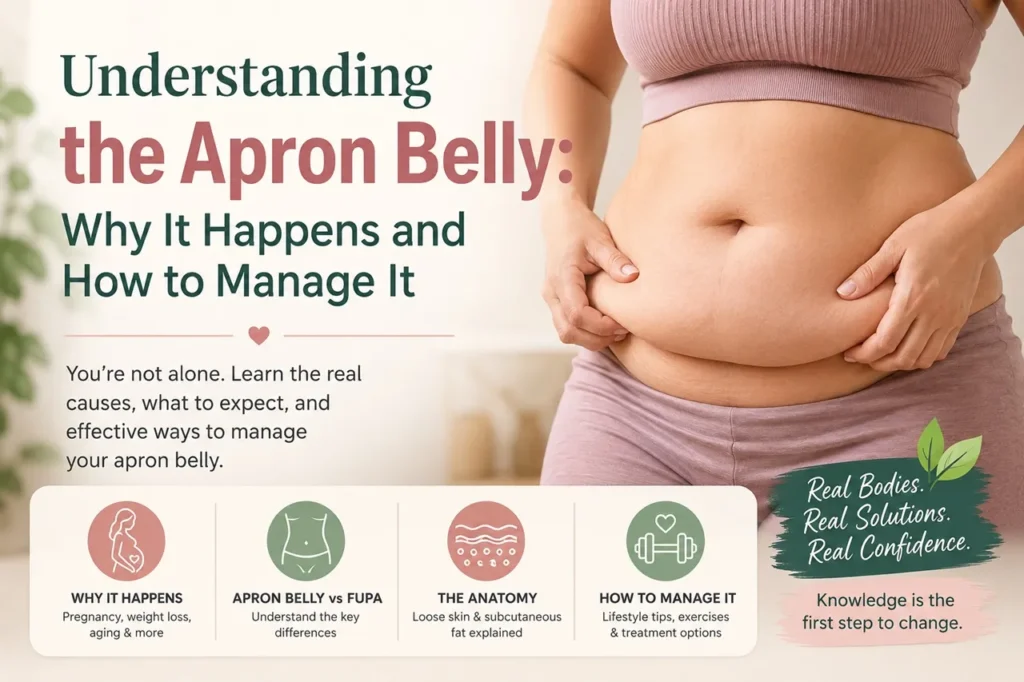

An apron belly and a FUPA are not the same thing. An apron belly is a fold of stretched skin and fat that starts on the lower abdomen and hangs down over the pubic area. A FUPA is a mound of fat on the pubic area (the mons pubis) that sits forward but does not hang. Because one is mostly loose skin and the other is mostly fat, they respond to different treatments.
Both shapes are common after pregnancy, weight changes and the hormonal shifts of midlife. They can also appear together, which makes the lower tummy harder to read in the mirror. That confusion often leads people towards the wrong plan.
For example, someone with an apron belly may diet for months and feel let down when the loose skin remains. Meanwhile, someone with a FUPA may consider surgery when steady fat loss could have helped. Getting the label right saves time, money and frustration.
This guide explains how to tell the two apart, why they behave differently, and which options can help each one, so you can set realistic goals for the results you want.
What is an Apron Belly? (Understanding the Overhang)
An apron belly is a colloquial term that describes a sagging lower belly that, as the name suggests, resembles an apron. An apron belly is known as a pannus or panniculus in the medical field. If someone has a more pronounced apron belly, the stomach overhang can extend down to their hips, thighs, or pubic area.
Doctors sometimes describe it as abdominal ptosis, which means the tissue has dropped. When the skin and the connective tissue beneath it lose support, gravity pulls the fold downwards. Surgeons often grade a pannus by how far it hangs, and our guide to apron belly grades explains each level.
Primary Causes of a Pannus Stomach
- Pregnancy and Caesarean Section: Pregnancy stretches the abdominal skin more than almost any other life event. After a C-section, the scar can tether the skin across the lower abdomen. Looser tissue above it may then spill over the scar line and form a shelf. Our guide to an apron belly hanging over a C-section scar covers this in detail.
- Major Weight Loss: Losing a large amount of weight, through lifestyle change, weight-loss medication or bariatric surgery, shrinks fat faster than skin can adapt. Skin that stretched for years may not fully retract, which leaves a soft, empty fold. Our article on loose skin after weight-loss medication explains why.
- Genetics, Ageing and Hormones: Collagen and elastin keep skin firm and springy. Levels of both fall with age, and some people inherit skin that stretches more easily. The drop in oestrogen around menopause can also reduce skin elasticity.
What is a FUPA? (Fat Upper Pubic Area Explained)
FUPA stands for fat upper pubic area. It describes fat that collects over the pubic bone, in the rounded area called the mons pubis. Unlike general abdominal fat, this localised fat creates a bulge that projects forward but does not hang. Our guide to what a FUPA is covers the term in more depth.
A FUPA and an apron belly also behave differently. An apron belly is a loose, hanging drape of skin and fat, whereas a FUPA is a firmer mound that projects forward over the pubic bone without hanging. Because it sits right where waistbands and front seams rest, a FUPA can push out fitted trousers, leggings and swimwear even when the garment fits well elsewhere.
Primary Causes of a Pubic Bulge
- Subcutaneous Fat Storage: The fat that forms a FUPA is subcutaneous fat, which sits just beneath the skin. Visceral fat, by contrast, lies deep inside the abdomen around the organs. A pubic bulge is a local store of subcutaneous fat that can be slow to shrink.
- Weight Gain: Gaining weight, quickly or gradually, adds fat to the pubic area along with the rest of the body. Many people notice that this area is among the last places to slim down.
- Postpartum and Hormonal Changes: Pregnancy stretches the lower abdominal wall and changes how the body stores fat. Later in life, falling oestrogen around menopause tends to shift fat storage towards the abdomen, which can add fullness above the pubic bone.
Key Differences: Apron Belly vs FUPA
The two shapes differ in what they are made of, where they sit and how they respond to change. Because they are structurally different, they will not feel or behave the same. The table below sets out the main contrasts side by side.
| Feature | Apron Belly (Panniculus) | FUPA (Fat Upper Pubic Area) |
| Primary Composition | Excess skin with reduced elasticity, mixed with hanging fat. | Dense, stubborn subcutaneous fat. |
| Exact Location | Starts on the lower abdomen and hangs down over the pubic area. | Sits directly over the mons pubis. |
| Main Trigger | Pregnancy, Caesarean section or major weight loss, including after bariatric surgery. | Overall weight gain, genetics and age-related hormonal changes. |
| Physical Sensation | A loose, heavy fold that can rub and trap moisture. | A firm or soft forward-projecting pubic bulge that does not hang. |
| Does It Hang? | Yes, it drapes forward and down. | No. |
| Responds to Fat Loss Alone? | Partly. The fat inside the fold shrinks, but loose skin usually stays. | Usually, yes, with steady overall fat loss. |
| Main Surgical Option | Panniculectomy or tummy tuck (abdominoplasty). | Liposuction or monsplasty (pubic lift). |
Why the Difference Matters: Fat vs Loose Skin
What the tissue is made of decides what you can change without surgery. Fat shrinks with a steady calorie deficit. Loose skin does not shrink in the same way. This is about structure, not effort. Skin that has stretched a lot, through pregnancy or major weight loss, may not spring back fully.
Getting the label right protects you from two common mistakes. If you treat an apron belly as a pure fat problem, you may expect it to vanish with weight loss and feel let down when the fold remains. If you treat a FUPA as something that needs surgery, you may consider a procedure that diet and exercise could have made unnecessary. So check your tissue type first, then match your plan to what you actually have.
How to Tell Which One You Have: 4 Quick Checks
You do not need a clinic to get a good first answer. These four checks take a few minutes in front of a mirror.
- Look at where the fullness sits. Stand side-on to a mirror and relax your stomach. A fold that starts on the lower abdomen and hangs down over the pubic area points to an apron belly. Rounded fullness sitting on the pubic mound itself, without hanging, points to a FUPA.
- Lift the tissue gently. If you can lift a fold away from your body and it rests on your palm, you are dealing with a pannus. If it feels soft and floppy with little resistance, loose skin plays a big role. If it feels firm and evenly padded, it is mostly fat.
- Think about your history. Major weight loss, several pregnancies or a C-section make a skin-dominant apron belly more likely. Without that history, the fullness is more often fat-based and more likely to respond to lifestyle changes.
- Decide what bothers you most. If chafing, rashes or hygiene are the main problem, your plan will look different from one built around appearance. Any pain, rapid change or lump is a reason to see a GP first.
If neither description fits and the fullness is mild, does not hang and is not focused on the pubic area, you are more likely looking at a lower-belly pooch. Our guide to FUPA vs pooch explains that distinction in more detail. A firm, rounded belly that pushes outward rather than hanging may be a beer belly, covered in our apron belly and beer belly comparison.
Can You Have Both at the Same Time?
Yes. The two shapes often appear together, particularly after pregnancy or major weight loss. A fatty mound can sit on the pubic area while a fold of loose abdominal skin hangs over it from above.
This overlap makes each one harder to judge. The overhang can hide the mound beneath it, so a FUPA may only become obvious when you lift the fold or wear tight leggings. Equally, pubic fat can make an apron look heavier than it is.
Weight loss can also change the balance. As the pubic fat shrinks, the loose skin above may look more obvious, not less. Knowing you have both helps you set realistic expectations for lifestyle changes and for any surgical consultation.
How to Get Rid of an Apron Belly (Targeted Solutions)
Non-surgical options cannot fully correct skin that has stretched a long way. Once collagen and elastin fibres overstretch, they rarely return to their previous state. Even so, several practical steps can improve comfort and appearance, and our guide to tightening apron belly skin without surgery covers them in depth.
Non-Surgical Management and Hygiene
- Caring for the Skin Fold: The fold traps sweat and heat, which can lead to intertrigo, a sore rash in the skin crease. Wash the area daily with a gentle, fragrance-free cleanser and pat it completely dry. Breathable cotton between the skin surfaces reduces friction, and dermatology guidance advises against talc and cornflour. See a pharmacist or GP if a rash spreads, cracks, weeps or smells. Our apron belly rash treatment guide explains the options.
- Structural Support: Firming creams cannot repair overstretched skin fibres, although moisturiser keeps the surface comfortable. High-waisted, supportive garments hold the tissue in place and can ease the pull on your back and hips. Choose knickers and trousers with a waistband that sits above the fold rather than under it.
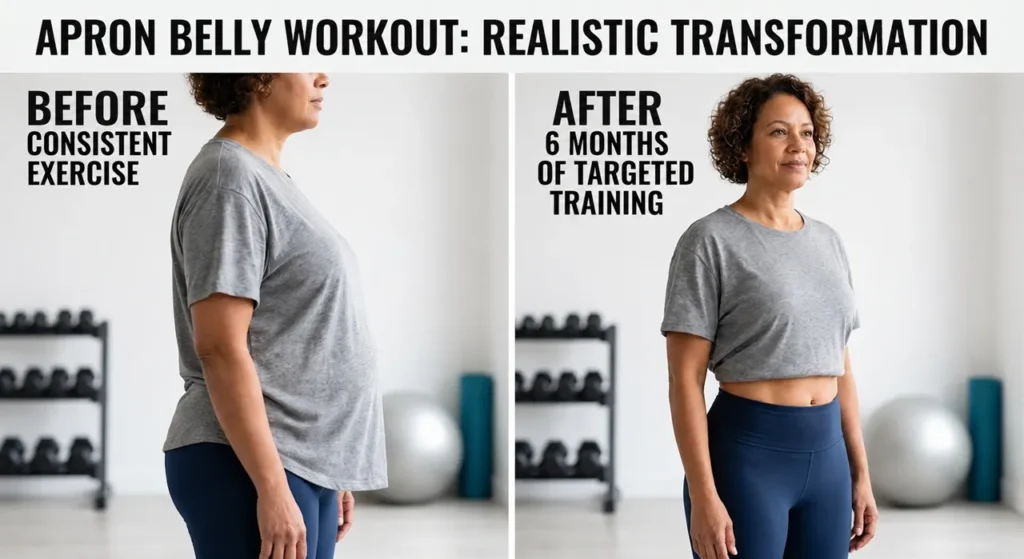
- Fat Loss and Core Strength: Reducing excess body fat shrinks the fat inside the fold, so the overhang can become smaller and lighter. Core exercise does not remove skin, but it supports posture and makes everyday movement easier.

Surgical Options for Removal
Surgery is the only way to remove a large amount of loose skin. Two operations are the most common choices for an apron belly.
- Panniculectomy: This operation removes the overhanging apron of skin and fat. It does not reposition the belly button or tighten the abdominal muscles. Its main aim is functional, such as reducing recurrent rashes, hygiene problems and discomfort. In the UK it is not routinely funded on the NHS, and local integrated care boards set strict criteria. Our guide to apron belly surgery on the NHS explains them.
- Tummy Tuck (Abdominoplasty): This is a larger, usually cosmetic operation. It removes excess skin and fat, tightens the abdominal wall and usually repositions the belly button. If you have diastasis recti (a separation of the two long abdominal muscles down the centre), the surgeon can repair it at the same time. Our panniculectomy vs tummy tuck guide compares the two.

How to Lose FUPA Fat (Targeted Solutions)
A FUPA is mostly subcutaneous fat, so it responds to the same changes as fat elsewhere on the body. You cannot burn fat from one chosen spot. Instead, lowering your overall body fat gradually reduces the pubic mound along with other areas.
Diet and Lifestyle Tweaks
Fat loss depends on a moderate calorie deficit that you can keep up for months. Build meals around vegetables, protein, whole grains and fibre, and cut back on sugary drinks and highly processed snacks. Good sleep and regular movement also help appetite control. Our UK diet and nutrition guide sets out a realistic plan.
Core and Postural Exercises
Strong deep core muscles will not burn the fat pad away, but they improve posture and pelvic support. Try these moves alongside the full routine in our FUPA exercises guide.
- Pelvic Tilt: Bend your knees while lying flat and tighten your core. Tilt your pelvis up slightly while pressing your lower back into the floor, and hold for 5 seconds.
- Reverse Crunch: While lying on your back, lift your legs and bend your knees at a right angle. Tighten your lower abs to lift your hips off the floor. Pull your knees to your chest.
- Plank: Strengthen and stabilise your core and body while holding a straight line in a forearm plank position. Pull your belly button towards your spine.
Non-Invasive and Surgical Procedures
When fat remains after lifestyle changes, some people consider cosmetic procedures. For surgery in England, check that the clinic is registered with the Care Quality Commission (CQC) and that the surgeon is on the GMC specialist register.
- Liposuction: Liposuction removes fat cells through small incisions. Some clinics market a wider version, often called Lipo 360, that treats the abdomen, flanks and back together. Liposuction does not tighten loose skin, so it suits a FUPA better than an apron belly.
- Monsplasty (Pubic Lift): A monsplasty lifts and tightens a sagging mons pubis and removes excess fat. Surgeons sometimes combine it with a tummy tuck when both areas are affected. Our guide to FUPA surgery explains recovery.
- Cryolipolysis (Fat Freezing): Cryolipolysis, sold under brand names such as CoolSculpting, cools fat cells under the skin until they break down. The body clears them gradually over several months, so results are modest and slow. A rare side effect called paradoxical adipose hyperplasia makes the treated fat grow instead.

Dressing for an Apron Belly or a FUPA
Clothes fit each shape differently. An apron belly hangs over the waistband, so the rise of trousers and knickers matters most. A FUPA sits directly behind the front seam, so it shows most in leggings, swimwear and fitted trousers.
For an apron belly, choose waistbands that sit above the fold and fabrics that skim rather than cling. Our guide on how to hide an apron belly sets out 15 styling rules. For a FUPA, look for a smooth, flat front panel and avoid seams that cut across the mound.
Our guide to how leggings, jeans and knickers fit each shape covers this in detail. For smoothing layers, our FUPA shapewear guide and our apron belly shapewear guide compare the options.
Frequently Asked Questions (FAQs)
An apron belly is a fold of stretched skin and fat that starts on the lower abdomen and hangs down over the pubic area. A FUPA is a mound of fat on the pubic area (the mons pubis) that does not hang. An apron belly often needs surgery to remove the loose skin, while a FUPA usually shrinks with overall fat loss.
Exercise helps a FUPA more than an apron belly. A FUPA is mainly subcutaneous fat, so it shrinks as overall body fat falls through activity and diet. An apron belly is largely loose skin. Core work strengthens the muscles underneath and improves posture, but it cannot remove excess skin.
Usually, yes. A FUPA shrinks as your overall body fat falls through a steady calorie deficit and regular activity. You cannot target the pubic area alone, so progress there may be slower than elsewhere. Consistency matters more than speed.
An apron belly can develop without pregnancy. Common causes include weight gain, large weight fluctuations, major weight loss, ageing skin with less collagen and elastin, and genetics. Men can develop one too.
A panniculectomy removes the hanging apron of skin and fat to relieve rashes, rubbing and discomfort. It does not tighten the muscles or move the belly button. A tummy tuck (abdominoplasty) removes excess skin and fat, tightens the abdominal wall and usually repositions the belly button.
The rash that forms in skin folds is called intertrigo. Wash the fold daily with a gentle, fragrance-free cleanser, pat it completely dry and keep the skin apart with breathable cotton. Avoid talc. See a pharmacist or GP if the rash spreads, cracks, weeps or smells.
Prescribed weight-loss medication can reduce the fat inside an apron belly, so the overhang may get smaller. It cannot tighten or remove loose skin, so the fold is unlikely to disappear if skin looseness is the main factor. Speak to your GP or specialist about whether any medication is suitable for you.
Fat under the skin of the lower belly and pubic area tends to be stubborn and is often among the last to shrink. Visceral fat, which sits around the organs, carries more health risk but often responds well to regular aerobic exercise and a steady calorie deficit.
Summary and Key Takeaways
An apron belly is a fold of stretched skin and fat that starts on the lower abdomen and hangs over the pubic area. A FUPA is a stubborn mound of fat on the pubic area that does not hang. Many people have elements of both.
Fat responds to steady lifestyle changes, while loose skin usually needs support garments or surgery to change. Bodies change over time, and neither shape is a failure. If the fold causes pain, rashes or problems with daily life, speak to your GP. For cosmetic surgery, choose a surgeon on the GMC specialist register.