Quick Answer
For apron belly weight loss, the NHS suggests eating and drinking around 600 calories a day less than you do now. For many people that means a steady loss of 0.5kg to 1kg a week. The fat inside the fold shrinks as your overall body fat comes down, but you cannot target the belly first, and a calorie deficit will not tighten loose skin.
- Average needs are about 2,000 calories a day for women and 2,500 for men
- A 600 calorie daily cut gives roughly 1,400 or 1,900 calories as a starting point
- Fat shrinks first, while stretched skin changes slowly or not at all
If you want to shrink an apron belly, sooner or later you will hear the phrase calorie deficit. It is the basis of all apron belly weight loss, but it can be hard to know how big a deficit you need, how quickly the fold will change and whether the effort will make a visible difference to the overhang itself.
This guide explains how a calorie deficit works for an apron belly, using NHS figures, with worked examples and a clear look at what shrinks first. For our full plan, read the best way to get rid of apron belly, and for everything on fat loss, visit our belly fat hub.
How Apron Belly Weight Loss Works
Apron belly weight loss happens when you take in fewer calories than your body uses, so it draws on stored fat, including the fat inside the fold.
What a calorie deficit is
Calories measure the energy in food and drink. If you regularly take in more than your body needs, the extra is stored as fat. If you take in less, your body makes up the gap from its fat stores. That gap is the calorie deficit.
Why the fold is made of more than fat
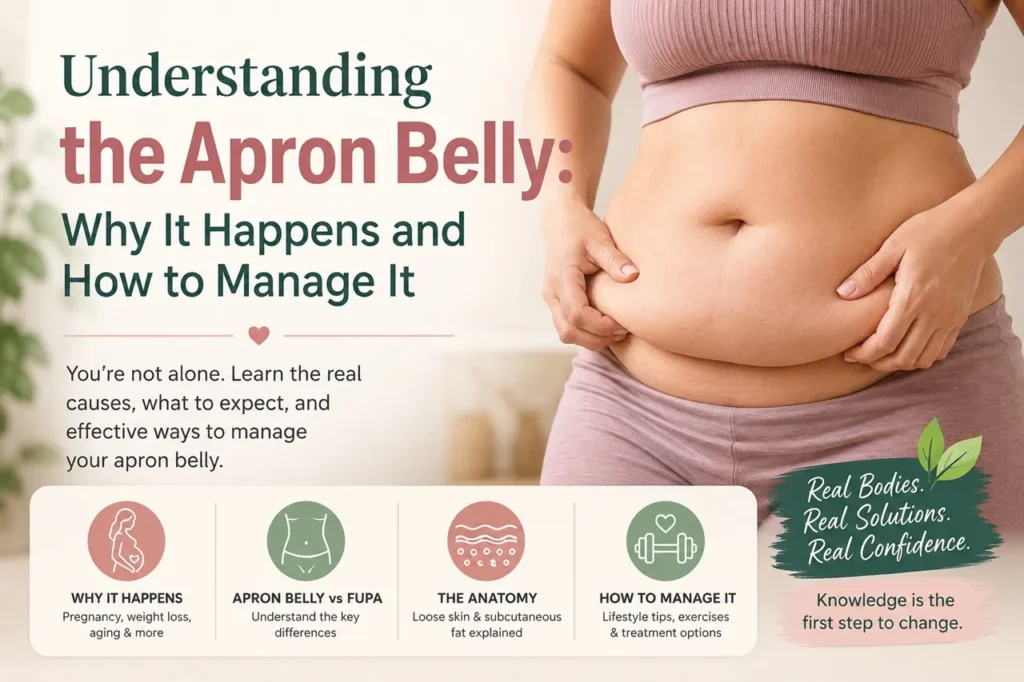
An apron belly is usually a mix of fat under the skin and skin that has been stretched. A calorie deficit acts on the fat. It does not shrink skin, which is why the results depend on what your fold is mostly made of. Our guide to apron belly fat vs loose skin shows how to check.
How Big a Calorie Deficit Do You Need?
You do not need an extreme diet. The NHS approach is a moderate, steady deficit that you can keep up for months.
The NHS 600 calorie guide
The NHS advises that, on average, women need around 2,000 calories a day and men around 2,500 to stay at the same weight. To lose weight, it suggests you reduce your intake by around 600 calories a day, describing this as a safe and sustainable approach.
| Average daily need | With a 600 calorie cut | |
|---|---|---|
| Women | About 2,000 calories | About 1,400 calories |
| Men | About 2,500 calories | About 1,900 calories |

Why your own number may differ
These are averages. Taller, heavier or very active people usually need more, and shorter, older or less active people usually need less. That is why the NHS frames the deficit as a cut from what you eat now, rather than a fixed target. If your weight does not change after a few weeks, you may need a slightly larger cut or more activity.
What not to do
Very low calorie diets can cause tiredness, muscle loss and gallstones, and they are hard to keep up. Do not drop to very low intakes without medical advice, especially if you have diabetes, take medicines or have a history of difficult eating.
How Much Weight Loss Makes a Difference to the Fold?
There is no single number that suddenly makes an apron belly disappear. Instead, the fold usually changes in stages as body fat comes down.
A worked example
A commonly used estimate is that 1kg of body fat holds roughly 7,700 calories. On that basis, a deficit of 600 calories a day adds up to 4,200 calories a week, which is a little over 0.5kg of fat. Real results vary from week to week because of water, hormones and how active you are, so treat this as a rough guide.
| Daily deficit | Weekly deficit | Rough fat loss a week | Rough fat loss in 12 weeks |
|---|---|---|---|
| 300 calories | 2,100 calories | About 0.3kg | About 3kg |
| 600 calories | 4,200 calories | About 0.5kg | About 6.5kg |
| 900 calories | 6,300 calories | About 0.8kg | About 10kg |
What you might notice
Many people find the lower belly is one of the last places to change. In the early weeks the scales may move while the fold looks the same. Over the following months the fold often becomes softer, lighter and less deep. Our guide to how long it takes to lose an apron belly sets out realistic timelines by situation.
Small folds versus large folds
A small, mostly fat fold can flatten a great deal with moderate weight loss. A larger fold, especially after pregnancy or big weight loss, may reduce in size but leave a flap of skin behind. In both cases losing fat makes the fold lighter, which can mean less rubbing, sweating and rashes.
What Shrinks First: Fat or Skin?

Fat goes first
Fat responds directly to a calorie deficit, so it is always the first part of the fold to change. As it goes, the fold empties out and may hang a little less.
Skin changes slowly
Skin can firm up a little over many months, especially in younger skin after modest weight loss. After large weight loss, or in older skin, loose skin often remains. If it still causes problems once your weight has been stable for around a year, it is reasonable to talk to your GP about the options.
How to Keep a Calorie Deficit Without Feeling Hungry
The best deficit is one you can live with. Our diet and nutrition guide for apron belly covers food choices in more depth, but these habits help most people.
Build meals that fill you up
- fill half your plate with vegetables or salad
- include a portion of protein, such as fish, chicken, eggs, beans, lentils or tofu, at each meal
- choose wholegrain bread, pasta and rice, and potatoes with skins
- swap sugary drinks for water, tea or coffee without sugar
- keep alcohol low, as drinks carry calories with little to fill you up
Track without obsessing
Reading food labels, using a food diary or the free NHS Weight Loss Plan app, and weighing yourself once a week at the same time of day can show you whether your deficit is working. You do not need to count every calorie forever.
Try a structure that suits you
Some people find it easier to eat within a set window. Our guide to intermittent fasting for apron belly explains whether 16:8 helps. It works only if it leads to fewer calories overall.
Pair the Deficit With Activity
Why exercise matters
Activity adds to your deficit, and strength training two days a week helps you keep muscle while you lose fat. That makes your body look and feel firmer as the fold shrinks. Brisk walking for apron belly is an easy way to start. Eating enough protein helps protect muscle too, and our guide to a high protein diet for apron belly sets out daily targets and simple UK meals.
When you need more help
If a deficit is not working, your GP can check your health, discuss NHS weight management services and, depending on your BMI and health, talk about weight loss medicines. Faster weight loss can leave more loose skin, so read our guide to Mounjaro and apron belly if you are considering one.
Frequently Asked Questions
How much of a calorie deficit do I need to lose an apron belly?
The NHS suggests cutting around 600 calories a day from what you currently eat and drink. For many people this leads to a steady loss of about 0.5kg to 1kg a week, which is the rate the NHS recommends as safe and sustainable.
Does a calorie deficit get rid of belly fat?
A calorie deficit makes your body use stored fat for energy, and that includes the fat in an apron belly. You cannot choose where the fat comes from first, so the lower belly may shrink later than other areas, but it does usually reduce as overall body fat comes down.
How much weight do I need to lose to see a difference in my apron belly?
There is no fixed number, because it depends on your size and how much of the fold is fat. Many people notice the fold getting softer and lighter within a few months of steady weight loss. A small fold that is mostly fat tends to change sooner than a large fold with a lot of loose skin.
Will a calorie deficit tighten loose skin?
No. A calorie deficit reduces fat, not skin. Once the fat inside the fold has gone, some skin may firm up over time, but a fold that is mostly loose skin often remains and may need surgery if it causes problems.
Is it safe to eat 1,200 calories a day?
Very low calorie diets are not right for everyone and should not be started without medical advice. For most adults, the NHS approach of cutting around 600 calories a day from current intake is a safer starting point. Speak to your GP before making big changes, especially if you have a health condition or take medicines.
The Bottom Line
Apron belly weight loss comes down to a steady calorie deficit. The NHS suggests cutting around 600 calories a day, which for many people means losing 0.5kg to 1kg a week. The fat inside the fold shrinks as overall body fat comes down, while loose skin changes slowly and may remain.
Your next step
Write down what you eat for three typical days, find two or three easy swaps that cut around 600 calories, and weigh yourself once a week. If your weight does not move after a month, or you have a health condition, speak to your GP.
Featured image: vegetables by Daniel Rueda, Wikimedia Commons, CC0, cropped.