Quick Answer
A high protein diet for apron belly helps you lose fat while keeping muscle, because protein keeps you fuller and protects lean tissue when you eat fewer calories. Aim for at least 0.75g of protein per kg of body weight a day, spread across three meals, inside a modest calorie deficit. Protein will not tighten stretched skin or burn fat from the belly alone.
- UK reference intake: 0.75g of protein per kg of body weight a day
- Include a palm sized portion of protein at every meal
- Check with your GP first if you have kidney disease
A high protein diet for apron belly is one of the simplest changes you can make when you are trying to lose weight. Protein helps you feel full on fewer calories and helps your body hold on to muscle while the fat comes off. That matters, because an apron belly only gets smaller when you lose body fat overall, and keeping muscle makes that loss easier to sustain. This guide covers how much protein you need, the best UK supermarket sources, a sample day of meals and what protein can and cannot do for loose skin.
This article is part of our belly fat hub. If you are just starting out, our guide on how to get rid of apron belly explains the full plan, and our article on the best way to get rid of apron belly matches the approach to your grade.
Why a High Protein Diet for Apron Belly Helps
Protein supports fat loss in three ways: it keeps you full, it protects muscle while you eat less, and it costs your body a little more energy to digest than fat or carbohydrate.
It keeps you fuller for longer
Meals built around protein tend to be more filling than meals built mainly around refined carbohydrate. Feeling full makes it easier to stick to a calorie deficit without constant snacking, which is the part most people find hardest. Our guide to diet habits that keep you full has more ideas on this.
It helps you keep muscle
When you lose weight, some of the loss can come from muscle rather than fat. Eating enough protein and doing regular strength exercise helps your body keep more of its muscle. Muscle supports your posture and back, which helps carry the weight of an apron belly more comfortably, and it keeps you strong as you get older.
It slightly raises the energy you use
Your body uses some energy to digest and process food. Protein takes more energy to process than fat or carbohydrate. The effect is modest and will not replace a calorie deficit, but it is one more small advantage of building meals around protein.
How Much Protein Do You Need?
In the UK, the reference amount for adults is 0.75g of protein for every kilogram of body weight each day. The British Heart Foundation gives examples of about 45g a day for a 60kg woman and 55g a day for a 75kg man. This is a minimum to cover the needs of most healthy adults.
Aiming a little higher while losing weight
Many people who are cutting calories, and many older adults, aim a little above the minimum, often around 1.0 to 1.2g per kg. This gives some extra protection for muscle when you are eating less. If you are living with obesity, a dietitian may base your target on a lower, adjusted weight, so the higher figures in the table below can overstate what you need.
| Body weight | UK minimum (0.75g/kg) | Higher range (1.0 to 1.2g/kg) |
|---|---|---|
| 60kg | 45g | 60g to 72g |
| 70kg | 53g | 70g to 84g |
| 80kg | 60g | 80g to 96g |
| 90kg | 68g | 90g to 108g |
| 100kg | 75g | 100g to 120g |
| 110kg | 83g | 110g to 132g |
Who should check before eating more protein
If you have chronic kidney disease, your kidney team may ask you to limit protein, so speak to your GP before raising your intake. The same applies if you have liver disease, are pregnant or have been given a special diet for any reason. A registered dietitian can set a target that fits your health.

Best High Protein Foods From UK Supermarkets
You do not need shakes or special products. Everyday foods from any UK supermarket can meet your needs. The figures below are approximate and vary by brand, so check the nutrition label on the pack.
| Food and portion | Approximate protein | Notes |
|---|---|---|
| 2 medium eggs | 13g | Cheap and quick, boil a batch for the week |
| 100g cooked chicken breast | 30g | Frozen packs keep costs down |
| 1 small tin tuna in spring water, drained | 20g to 25g | Choose spring water to cut calories |
| 125g salmon fillet | 25g | Counts towards your oily fish |
| 150g pot of skyr or fat free Greek style yoghurt | 15g | Brands vary a lot, check the label |
| 100g cottage cheese | 10g to 12g | Good on jacket potatoes or toast |
| Half a 400g tin of baked beans | 10g | Also counts towards fibre |
| 100g cooked lentils or chickpeas | 8g to 9g | Bulk out stews, soups and curries |
| 100g firm tofu | 12g to 15g | Absorbs marinades well |
| 200ml semi skimmed milk | 7g | Use in porridge or tea through the day |
Animal sources
Lean meat, poultry, fish, eggs and dairy all provide complete protein. The NHS advises eating at least two portions of fish a week, one of them oily, such as salmon, sardines or mackerel. If you eat more than 90g of red or processed meat a day, the NHS advice on meat is to cut down to 70g. Choose lower fat cuts and grill, bake or poach rather than fry.
Plant sources
Beans, lentils, chickpeas, tofu, soya mince, nuts and seeds all provide protein, and pulses add fibre too, which also helps you feel full. Eating a variety of plant proteins across the day gives you all the building blocks your body needs, so a vegetarian or vegan diet can work well for an apron belly.
Where protein shakes fit in
Protein powders are convenient but not necessary. If you use one, treat it as a snack or part of a meal, count its calories and check the label for added sugar. Food gives you fibre, vitamins and minerals that most shakes lack.
How to Build High Protein Meals
The easiest method is to start each meal with a protein, then fill half the plate with vegetables or salad and add a smaller portion of wholegrain starch. This follows the NHS Eatwell Guide while putting protein first.
Spread protein across the day
Rather than eating most of your protein at dinner, include some at breakfast, lunch and dinner. A palm sized portion of meat, fish, tofu or pulses at each meal is a simple visual guide that works for most adults.
A sample high protein day
| Meal | Example | Approximate protein |
|---|---|---|
| Breakfast | Porridge made with semi skimmed milk, topped with a pot of skyr and berries | 20g |
| Lunch | Jacket potato with a small tin of tuna, sweetcorn and a large salad | 25g |
| Snack | 2 boiled eggs or 100g cottage cheese with cucumber | 12g |
| Dinner | Chicken and vegetable stir fry with a small portion of brown rice | 35g |
| Total | About 92g |
A vegetarian high protein day
- Breakfast: 2 scrambled eggs on wholemeal toast with tomatoes
- Lunch: lentil and vegetable soup with a wholemeal roll and a small pot of yoghurt
- Snack: a small handful of unsalted peanuts
- Dinner: tofu and chickpea curry with vegetables and a small portion of rice
Keep the calories in check
Adding protein without adjusting the rest of your plate can push calories up. Our guide to the calorie deficit for apron belly explains how big a deficit to aim for. Swap some of the bread, pasta or snacks for protein rather than simply adding more food.

Protein, Muscle and Loose Skin
Many people with an apron belly hope that protein or collagen will tighten the skin. It is worth being clear about what is realistic.
What protein can do for your skin
Your skin needs protein, vitamin C and other nutrients to repair itself. Eating a balanced diet with enough protein supports this normal process. Losing weight slowly, rather than very fast, may also give the skin more time to adapt.
What protein cannot do
No food, protein powder or collagen supplement has been shown to tighten a fold of skin that has been stretched for years. If your overhang is mostly loose skin rather than fat, our guide on apron belly fat vs loose skin explains how to tell, and what helps each one.
Pair protein with strength training
Protein works best for muscle when your muscles have a reason to grow. Strength exercises on at least two days a week, as the UK physical activity guidelines recommend, help you keep and build muscle while you lose fat. Our strength training guide and 4 week workout plan are good places to start.
A Worked Example
Putting the numbers together
A 48 year old woman weighs 80kg and has a grade 2 apron belly. Her UK minimum protein is 60g a day, and she decides to aim for about 85g while she loses weight. Her usual breakfast of toast with jam gives only around 6g of protein, so she switches to porridge with milk and skyr, which gives about 20g. She adds tuna or eggs at lunch and makes chicken, fish or lentils the centre of dinner. She cuts back on biscuits and bread to keep her calories in line, and does two short strength sessions a week. Over the following months she finds she is less hungry between meals and her weight comes down steadily.
What she tracks
- her weight once a week at the same time of day
- her waist measurement once a month
- how hungry she feels between meals
- whether she can lift slightly more in her strength sessions
Frequently Asked Questions
Does a high protein diet get rid of an apron belly?
Not on its own. Protein helps you feel full and keep muscle while you eat fewer calories, which makes fat loss easier to sustain. The apron belly shrinks only when you lose body fat overall, and stretched skin may remain even after weight loss.
How much protein do I need to lose belly fat?
The UK reference amount for adults is 0.75g of protein per kg of body weight a day, about 60g for an 80kg adult. Many people losing weight aim a little higher, around 1.0 to 1.2g per kg, but check with your GP or a dietitian first if you have kidney disease or another long term condition.
Can protein tighten loose skin on my stomach?
No food or supplement has been shown to tighten an overhanging fold of stretched skin. Eating enough protein supports normal skin repair and helps you keep muscle, but loose skin after big weight loss usually needs support garments or surgery if it causes problems.
What are cheap high protein foods in UK supermarkets?
Eggs, tinned tuna and sardines, baked beans, lentils, chickpeas, frozen chicken, cottage cheese, plain yoghurt, milk and supermarket own brand tofu all give good amounts of protein for the price. Check the label, as the grams of protein per 100g are printed on most packs.
Is a high protein diet safe?
For most healthy adults, eating a bit more protein from a mix of foods is safe. People with chronic kidney disease may need to limit protein, so speak to your GP or kidney team first. Keep red and processed meat to no more than 70g a day, as the NHS advises.
The Bottom Line
A high protein diet for apron belly helps you lose fat without losing muscle, mainly by keeping you full on fewer calories. Aim for at least 0.75g of protein per kg of body weight, spread across your meals, and build each plate around protein and vegetables. Pair it with a modest calorie deficit and strength exercise, and check with your GP first if you have kidney disease or another long term condition.
Your next step
Look at what you ate yesterday and add up the protein using the labels and the table above. If you are below your target, change one meal this week, starting with breakfast, and build from there.
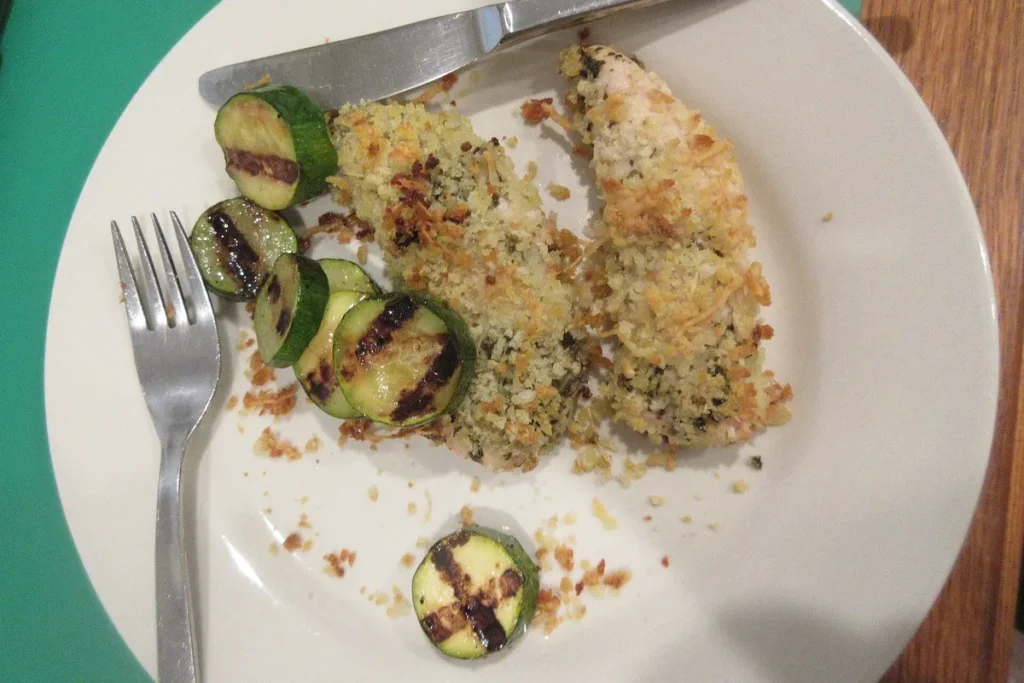
Featured image: chicken and courgette dinner by Infrogmation of New Orleans, Wikimedia Commons, CC BY-SA 4.0, cropped.