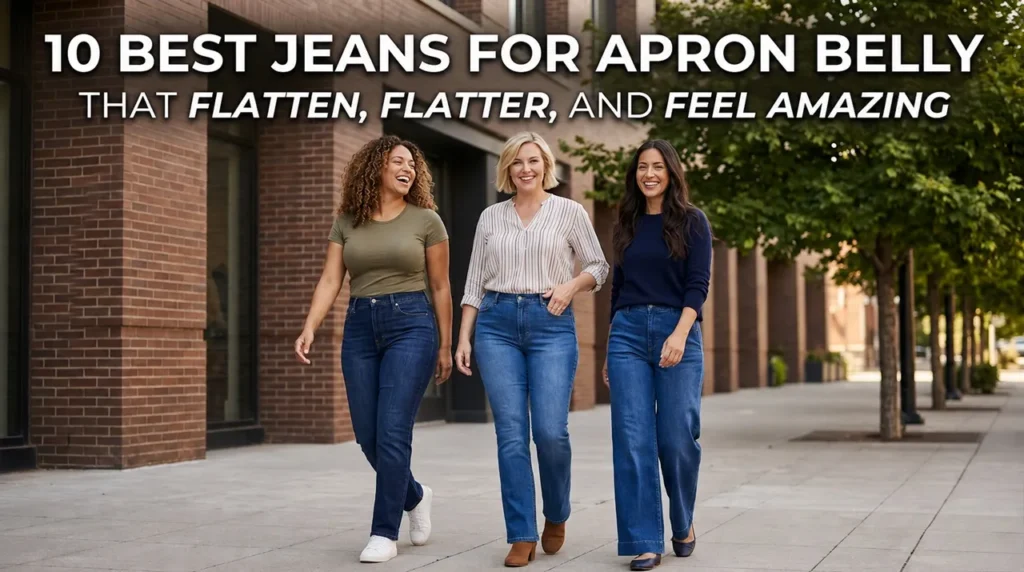
If you’ve ever stood in a fitting room fighting back tears because yet another pair of jeans dug into your stomach, gaped at the back, or slid down the second you sat in your car, you are not alone, and there is nothing wrong with your body. An apron belly (sometimes called a panniculus) is an incredibly common shape, and the truth is simple: most jeans just aren’t built for it. They’re cut for a body that tapers evenly from waist to hip, and when your midsection doesn’t follow that pattern, standard denim fights you every step of the day.
The good news? Denim technology has come a long way. Brands now design specifically for curves that hang, fold, and shift, with smarter waistbands, better stretch ratios, and internal support panels unheard of a decade ago. This guide breaks down exactly what makes jeans work (or fail) for an apron belly, and reviews the 10 best options on the market right now, from budget-friendly staples to premium shaping powerhouses.
Let’s find you a pair that actually stays put.
Here’s what makes this guide different from a typical “best jeans” roundup: every recommendation on this list was chosen specifically for how it interacts with a fuller, hanging lower belly, not just general “tummy control” marketing language. We looked at rise height, waistband construction, fabric composition, and where the brand places its support panels, because those details are what actually determine whether a pair of jeans will feel comfortable at 9am and still feel comfortable at 9pm. Comfort shouldn’t be a luxury; it should be the baseline, and increasingly, denim brands are catching up to that idea.
Quick Summary: Top Picks at a Glance
| Best Overall | Levi’s 311 Shaping Skinny | Skinny, mid-rise | Tummy-slimming inner panel |
| Best for Maximum Hold | NYDJ Marilyn Straight | Straight, high-rise | Lift Tuck Technology® |
| Best Budget Pick | Lee Secretly Shapes | Regular straight leg | Dual-core tummy panel |
| Best Plus-Size Option | Torrid Sky High Skinny | Skinny, ultra high-rise | 5-button sky-high front |
| Most Comfortable Pull-On | Signature by Levi Strauss Gold Label | Pull-on skinny | No zipper or button front |
| Best Size Range | Universal Standard Seine | High-rise skinny | Sizes 00 to 40 |
| Best for Shifting Weight | Good American Always Fits | Skinny, high-rise | Stretches up to 4 sizes |
(Scroll down for the full breakdown of all 10 picks, including bootcut, wide-leg, and classic tapered options.)
What Is an Apron Belly (Panniculus), and Why Is Finding the Right Jeans So Hard?
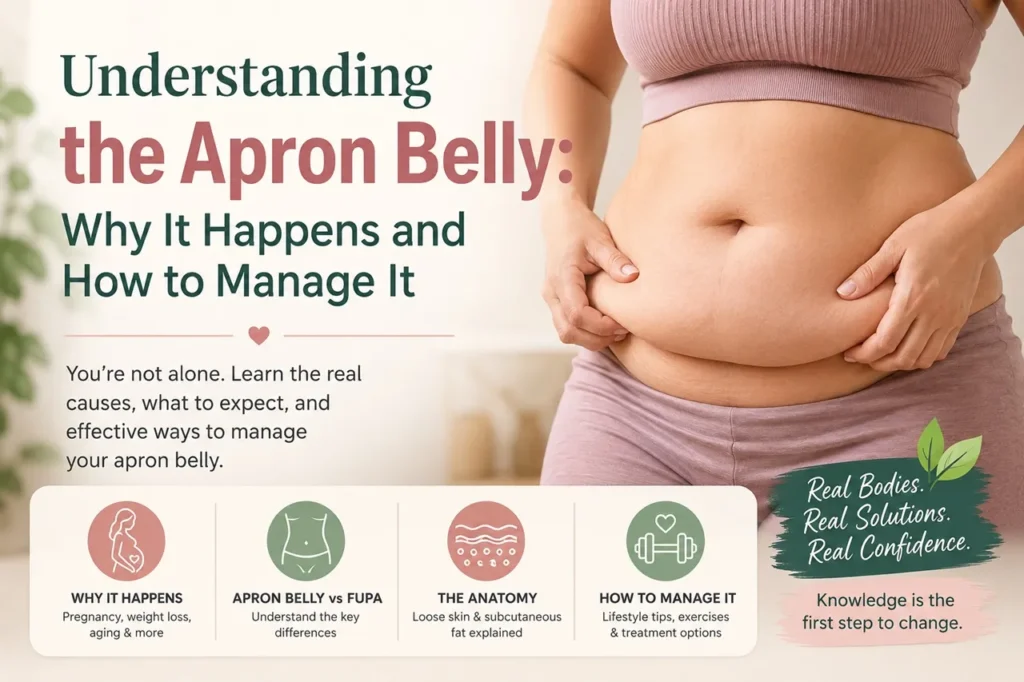
An apron belly, medically referred to as a panniculus, is excess lower-abdominal skin and tissue that hangs down over the pubic area, sometimes extending past the hips. It’s an entirely normal variation of the human body, and it’s far more common than fashion brands seem to acknowledge. Despite how frequently it occurs, denim design has historically ignored it, which is exactly why so many people struggle to find jeans that fit comfortably.
The Anatomy of a Flattering Fit
Traditional low-to-mid-rise jeans are engineered assuming your torso narrows smoothly at the waistline. When there’s additional weight or tissue hanging below the natural waist, that design logic breaks down fast. Low-rise waistbands sit directly under the apron, meaning the belly folds over the denim rather than being supported by it. The result: constant readjusting, visible bulges, and that frustrating “muffin top” effect. None of this happens because anything is wrong with you. It happens because the garment’s structure was never built to accommodate this shape. If you are unsure which shape you have, compare apron belly vs FUPA fit in leggings and knickers.
Postpartum vs. Weight-Loss Apron Belly
An apron belly commonly develops after childbirth, when abdominal skin and connective tissue stretch and don’t fully retract. It can also result from large weight fluctuations, including after major weight loss, where skin elasticity hasn’t caught up with the body’s new shape. In both cases, the underlying issue is the same: the skin and soft tissue in the lower abdomen have expanded beyond what they naturally retract to, and no amount of diet or exercise will necessarily change that; it’s a matter of skin elasticity and connective tissue, not fitness level.
It’s also worth noting that an apron belly can become more pronounced due to genetics, age-related changes in skin elasticity, certain medical conditions, or simply the natural ageing process. There is no single “cause,” and there doesn’t need to be one. The goal here isn’t to explain away or minimise the body you have; it’s to help you dress it well. Whatever the cause, the styling solution is largely the same: strategic rise, targeted stretch, and structural support in the waistband.
Anatomy of the Perfect Denim: What to Look for in Jeans for Apron Belly
Before diving into specific product picks, it helps to understand why certain features matter. Once you know what to look for, you’ll be able to spot the right jeans even outside this list.
The Rise Strategy: High-Rise vs. Mid-Rise
High-rise and ultra high-waisted jeans are non-negotiable for most apron belly shapes. A rise of roughly 10 to 12 inches allows the waistband to sit above the belly’s widest point, anchoring the jeans securely rather than letting them slide beneath the overhang. Low-rise jeans, on the other hand, almost always end up positioned at the worst possible point: right where the apron folds, leading to digging, pinching, and constant slipping.
💡 Style Tip: If a jean’s rise measurement isn’t listed, check for the phrase “sits at natural waist” or “ultra high-rise” in the product description; these are reliable indicators.
It’s also worth considering how rise interacts with torso length. Petite frames may find that even a “high-rise” label runs shorter in practice, while tall frames sometimes need to size up specifically to get enough rise coverage. When possible, check a brand’s actual rise measurement in inches rather than relying on the label alone, since “high-rise” isn’t standardised across brands; one label’s high-rise might be another’s mid-rise.
Fabric Matters: The Magic Spandex Percentage
Rigid, 100% cotton denim has almost zero give, which means it either gaps uncomfortably or cuts in sharply; there’s no in-between. Stretch denim with 2 to 4% elastane or spandex contours to your shape throughout the day, moving with you rather than against you. Look for four-way stretch denim specifically, as it stretches both horizontally and vertically for superior shape retention and all-day comfort.
Waistband Architecture: Wide & Contoured Waistbands
A wide, contoured waistband distributes pressure across a larger surface area instead of digging in at one point, which is a major factor in muffin top prevention. Contoured waistbands are also cut to follow the natural curve of your torso, helping eliminate the awkward back-to-waist gapping that plagues so many straight-cut jeans.
Tummy Control Panels & Built-In Slimming Technology
Many of today’s best jeans for an apron belly include an internal mesh panel or tummy-slimming technology sewn directly into the front of the garment. These panels gently compress and smooth the lower abdomen, offering support similar to shapewear for an apron belly without the need for a separate garment underneath.
The placement and depth of this panel matter more than most shoppers realise. A panel that only covers the very top of the waistband does little for someone whose apron extends several inches below the natural waist. Look for descriptions that mention an extended front panel or full-coverage panel, which typically indicate that the support extends further down the abdomen rather than stopping at the waistband edge.
Denim Weight and Breathability
One detail that’s easy to overlook is the actual weight of the denim fabric, measured in ounces per square yard. Heavier denim (12oz and up) tends to hold its structure better and resists clinging, but can feel warm for all-day or warm-weather wear.
Lighter stretch denim (under 10oz) breathes better and feels softer against the skin, though it may show more visible texture change throughout the day as it warms to body temperature. Neither is objectively better; it depends on your climate and how much structure versus softness you personally prefer.
Front Seam Shape and Seated Comfort
If you sit for most of the day at a desk, in the car or in meetings, the shape of the front seam matters more than almost any other detail. A curved front seam follows the body when your hips are bent, so the fabric does not bunch and dig into the lower abdomen. Straight seams are cut for a standing figure and tend to press a hard ridge against the fold when you sit.
Check the back rise as well. It should be long enough that the waistband stays level at the back when you sit down, rather than dipping and pulling the front lower.
Pull-On and Side-Zip Styles
A standard zip fly puts the zip, button and reinforced placket right at the lower abdomen, which is exactly where an apron belly carries the most volume. Pull-on and side-zip jeans remove that hardware and give you a smooth, flat front panel instead.
The trade-off is structure. Light pull-on denim can look soft and the waistband may roll. Choose a heavier fabric of around 11oz or more with a wide, non-roll waistband, and you keep the clean front without losing shape.
Waistband Grip During Movement
A waistband can feel secure when you stand still and still slide down when you walk, bend or climb stairs. The features that stop this are internal boning or a silicone grip strip along the inner edge of the waistband. Few product listings mention them, so fold the waistband over when you try a pair on. If it feels completely floppy, it will slowly migrate downward under the weight of the fold.
Rise, Inseam and Your Seated Measurement
Most shoppers check waist and hip sizes but ignore how the rise relates to the inseam. A very high rise on a short inseam compresses the thigh, while a long inseam with a modest rise can leave the waistband sitting lower than intended.
For a more personal benchmark, measure your seated rise from the waist to the seat and compare it with the front rise listed for each pair. A front rise of roughly 28 to 30cm is a sensible starting point for many apron belly shapes, but your own measurement is more reliable than a size chart.
Pocket Placement
High, shallow front pockets push fabric outward across the lower abdomen and add bulk where most people want less. Pockets angled towards the side seam lie flatter. Stand naturally in the fitting room and look at the pocket openings. If they gape open, they are too shallow for your hip width and will create a flap of fabric across the front.
Flat Seams and Soft Interior Finishes
Rough internal stitching can irritate the skin along and beneath the fold, especially in warm weather. Flat-lock seams, a covered inner waistband and soft lining reduce friction and help prevent pressure marks and chafing over a long day.
Leg Shape and Overall Proportion
The leg cut changes how balanced the whole outfit looks. Straight, bootcut and relaxed wide-leg cuts draw the eye downward and balance the midsection. If you want options beyond denim, our guide to the best trousers for an apron belly explains rise, waistband and fabric for ponte, crepe and tailored styles. Very tight tapered cuts can make the lower belly look fuller by contrast, while rigid straight-leg denim with under 1% elastane usually gaps at the back or cuts in at the front, whatever size you choose.
Detailed Reviews: The 10 Best Jeans for Apron Belly
1. Levi’s Women’s 311 Shaping Skinny Jeans

The Breakdown: A modern skinny-fit jean built on a stretch-cotton-elastane blend, sitting at a flattering mid-to-high rise depending on the wash. The leg is slim through the thigh and calf without being restrictive.
Why It Works for an Apron Belly: The signature feature here is Levi’s built-in tummy-slimming panel, sewn into the interior of the front to smooth and hold the lower belly. Combined with genuinely reliable shape retention, these resist the bagging-out effect that plagues cheaper stretch denim by midday.
Pros:
- Widely available in petite, tall, and plus sizes
- Reliable shape retention wash after wash
- Recognisable, versatile skinny silhouette
Cons:
- Rise may run lower than ideal for a more pronounced apron belly.
- Skinny legs aren’t for everyone stylistically.
Best For: Someone who wants a recognisable, everyday skinny jean with just enough built-in support to get through a full workday comfortably, without needing a dramatically high rise.
2. Democracy Women’s “Ab”solution Straight Leg Jeans

The Breakdown: A straight-leg silhouette built around an internal elastic waistband system, paired with a slightly structured stretch-denim body.
Why It Works for an Apron Belly: The internal elastic waistband is designed to mould to your midsection rather than resist it, while integrated mesh panels work to smooth and hold the belly in place throughout the day, a genuinely thoughtful bit of tummy-slimming technology for a mainstream denim brand.
Pros:
- Internal waistband flexes with movement (sitting, bending, walking)
- Straight leg balances a fuller midsection nicely
- Frequently praised for reducing waistband gapping
Cons:
- Limited size range compared to plus-size specialists
- Some washes run narrower through the hip
Best For: Anyone who has struggled specifically with back-waist gapping in other “high-rise” jeans and needs a waistband that actively adjusts to torso movement rather than staying rigid.
3. NYDJ (Not Your Daughter’s Jeans) Marilyn Straight Denim

The Breakdown: A straight-leg, high-rise jean built on NYDJ’s proprietary stretch-denim blend, cut generously through the hip and thigh with a classic straight drop through the leg.
Why It Works for an Apron Belly: NYDJ’s patented Lift Tuck Technology® uses a criss-cross internal panel at the front to compress and lift, offering some of the most noticeable tummy control of any jean on this list. It’s specifically engineered to smooth without the bulk of external shapewear.
Pros:
- Strong, structured tummy support
- High-rise waistband stays put during movement
- Available across a broad size range, including petite
Cons:
- Higher price point than mainstream competitors
- Fabric is firmer, so it’s less “loungewear soft”
Best For: Anyone prioritising maximum structural support above all else. This is often considered the gold standard for shaping technology in mainstream denim, and it’s a favourite for occasions where you want your jeans to do the most work possible.
4. Lee Women’s Secretly Shapes Regular Fit Straight Leg Jeans

The Breakdown: A budget-friendly regular-fit straight leg constructed from a comfortable stretch-cotton blend, designed with everyday wear and easy care in mind.
Why It Works for an Apron Belly: The hidden dual-core tummy panel sits just behind the waistband, offering gentle compression without a premium price tag. It’s proof that all-day comfort and effective panniculus support don’t have to come at a luxury cost.
Pros:
- Very affordable relative to shaping-jean competitors
- Machine washable with easy care instructions
- Comfortable stretch for all-day wear
Cons:
- Shaping effect is more subtle than premium options
- Fewer wash/colour options than bigger brands
Best For: Anyone building a denim wardrobe on a budget who still wants genuine, functional support rather than a jean labelled “shaping” that lacks real structural backup.
5. Torrid Sky High Skinny Jeans (Plus Size)

The Breakdown: A plus-size-specific skinny jean built on a stretch-denim base with a dramatic 5-button ultra high-rise front closure.
Why It Works for an Apron Belly: This is one of the few jeans engineered from the ground up for plus-size denim bodies rather than adapted from straight-size patterns. The extended 5-button front provides serious front-panel support and coverage, directly addressing the digging or pinching common with a lower-rise, plus-size cut.
Pros:
- Purpose-built for fuller figures, not just graded up
- Sky-high rise offers exceptional front coverage
- Wide range of inseam lengths available
Cons:
- Multiple buttons can feel bulky under fitted tops
- Sizing is Torrid-specific and may require size conversion
Best For: Plus-size shoppers who have found that straight-size brands’ plus lines feel like an afterthought. This is denim designed from the pattern up for a fuller figure.
6. Signature by Levi Strauss & Co. Gold Label Totally Shaping Pull-On Skinny Jeans

The Breakdown: A pull-on skinny jean with a jeggings-style stretch-denim body, no traditional zipper or button closure at all.
Why It Works for an Apron Belly: By eliminating the front closure entirely, this style removes the single biggest source of digging or pinching: hardware sitting right against the belly. The wide waistband stretches to fit and holds its shape, giving a genuinely smoothing effect across the whole midsection.
Pros:
- Extremely comfortable, no hardware discomfort
- Budget-friendly price point
- Easy on-and-off, great for everyday wear
Cons:
- Less structured “denim” look; leans jegging
- Style may read too casual for dressier occasions
Best For: Anyone who has ruled out jeans entirely because of front-closure discomfort, this style proves you don’t have to give up denim to avoid a digging zipper or button.
7. Universal Standard Seine High Rise Skinny Jeans

The Breakdown: A high-rise skinny jean built with a premium four-way stretch fabric, offered across one of the widest size ranges in the industry.
Why It Works for an Apron Belly: The four-way stretch denim here is a standout: it moves with your body in every direction, providing genuine shape retention rather than stretching out and sagging by evening. The extensive size range (00 to 40) also means the fit is proportioned correctly rather than simply scaled up.
Pros:
- Exceptional four-way stretch and recovery
- Size-inclusive across an unusually wide range
- Free exchanges if your size changes (per brand policy)
Cons:
- Higher price point
- Skinny legs may not suit everybody’s preference.
Best For: Anyone who has struggled to find a consistent, well-proportioned fit across different sizes. The brand’s inclusive grading means the fit philosophy remains consistent across the smallest to the largest sizes offered, rather than the cut changing dramatically at certain size breaks.
8. Wit & Wisdom Ab-Solution High Waist Bootcut Jeans

The Breakdown: A high-waist bootcut jean with a slight flare from the knee down, built on a stretch-denim base.
Why It Works for an Apron Belly: The bootcut silhouette helps balance overall proportions when there’s more volume up top, while the brand’s signature “no-gap” elastic waistband and slimming mesh inserts work together to prevent both waistband gapping and belly overhang.
Pros:
- Bootcut balances a fuller midsection with the lower body
- “No-gap” waistband technology reduces back gapping
- Versatile for both casual and dressier styling
Cons:
- Bootcut requires specific footwear to look proportional
- Runs slightly long; may need hemming for petite frames
Best For: Anyone who feels that skinny and straight-leg jeans emphasise their midsection more than they’d like, the slight flare draws the eye downward and creates a more balanced overall silhouette.
9. Good American Always Fits Good Legs Jeans

The Breakdown: A skinny, high-rise jean built from a hyper-stretch denim blend specifically engineered to accommodate large size fluctuation.
Why It Works for an Apron Belly: This is the go-to option for anyone whose weight shifts throughout the month, postpartum, or through ongoing weight loss. The fabric stretches up to four sizes while maintaining tension and recovery, meaning it continues to offer panniculus support even as your body changes, a genuinely rare feature in denim.
Pros:
- Accommodates size fluctuation better than almost any competitor
- A strong recovery doesn’t fade throughout the day.
- Inclusive sizing philosophy across the whole brand
Cons:
- Premium price point
- “Stretches to fit” design means it can feel snug on first wear.
Best For: Anyone currently in postpartum recovery, actively losing weight, or dealing with cyclical bloating. These jeans are built specifically for a body that isn’t the same size every single day.
10. Gloria Vanderbilt Women’s Amanda Classic High Rise Tapered Jeans

The Breakdown: A classic, high-volume tapered jean that sits squarely at the natural waistline, built on a traditional stretch-denim blend.
Why It Works for an Apron Belly: As one of the most affordable high-rise jeans on the market, the Amanda fit proves that a proper high-waisted cut, even without elaborate internal panelling, makes a big difference for muffin top prevention and all-day comfort.
Pros:
- Extremely budget-friendly
- Classic high-rise fit sits at true natural waist
- Tapered leg is versatile and easy to style
Cons:
- No dedicated tummy panel or mesh support
- Fabric has less stretch than premium competitors
Best For: Shoppers who want to test whether a proper high-rise fit alone solves most of their discomfort, before investing in a pricier option with additional shaping technology.
Denim Styles to Avoid If You Have an Apron Belly
Just as important as knowing what to buy is knowing what to skip. Steer clear of:
- Low-rise cuts: These sit directly beneath the apron, causing constant slipping and discomfort.
- 100% rigid, heavy cotton denim: With no stretch, rigid denim either gaps at the waist or digs in sharply; there’s rarely a comfortable middle ground.
- Bulky front details: Thick pleats, oversized zippers, and heavy front pocket bags add unnecessary volume exactly where you don’t need it.
- Narrow, unstructured waistbands: These fail to distribute pressure and tend to roll or fold rather than hold their shape.
How to Style Your Jeans: Complete Outfitting Tips
Best Tops to Pair with Your Denim
The right top can enhance everything your jeans are already doing for you. Peplum tops create movement and structure at the hip, drawing the eye outward and away from the midsection. Empire-waist tops and dresses skim the belly entirely, fitting closely at the bust and flowing loose below. And don’t underestimate the French tuck, tucking in just the front few inches of a looser top creates definition at the waist without the commitment of a full tuck. (Looking for more? Check out our upcoming guide on the best tops for an apron belly.)
Layering for Added Confidence
Layering pieces is one of the most versatile tools in your wardrobe. A long cardigan creates a clean vertical line, elongating the silhouette. A structured blazer adds shoulder definition, balancing midsection volume. And a shacket (shirt-jacket) offers a relaxed, of-the-moment layer that skims rather than clings.
Do You Need Shapewear Under Your Jeans?
Not all of the jeans above include built-in tummy-slimming technology. That said, if you want a little extra smoothing for a special occasion, lightweight, breathable shapewear or smoothing underwear can be worn comfortably underneath most high-rise styles without adding bulk. This is purely a matter of personal preference, not a requirement.
If you do choose to layer shapewear underneath, opt for a high-waisted style that ends above where your jeans’ waistband sits, rather than one that ends mid-belly. A shapewear edge that stops partway down the apron can actually create an additional line or bulge, working against the smooth silhouette you’re going for.
Accessorising to Draw the Eye
Statement earrings, a bold necklace, or a printed scarf worn near the face naturally draws attention upward, making it a simple and effective styling trick on days when you want the focus elsewhere. Similarly, a structured tote or crossbody bag worn slightly higher on the body, rather than one that sits directly at hip or belly level, keeps the overall silhouette clean.
Choosing the Right Wash and Colour
Darker denim washes (indigo, black, deep rinse) have a naturally slimming visual effect compared to lighter washes, simply because darker tones absorb light rather than reflect it. If you’re new to high-rise, shaping denim, starting with a dark wash is a low-risk way to build confidence in the fit before branching out into lighter washes or more distressed styles.
How to Wash and Care for Stretch Denim to Maintain Its Shape
Stretch denim owes its comfort to elastane (spandex) fibres, which break down faster under heat. To protect your investment:
- Wash in cold water to preserve elastane fibres and prevent shrinkage.
- Turn jeans inside out before washing to protect the colour and any interior panels.
- Avoid the hot-dryer setting. Air-dry, or use a low-heat tumble setting instead.
- Wash less frequently than you might think; spot-cleaning between wears helps the denim hold its shape and retain it longer.
- Skip the fabric softener. Fabric softener coats fibres and can, over time, reduce elastane’s ability to snap back into shape.
- Fasten buttons and zippers before washing to help the garment hold its intended shape and prevent the hardware from snagging other items in the wash.
- Store jeans folded, not hung, whenever possible. Hanging by the waistband over time can gradually stretch out a fitted waist, undoing some of the shape retention you paid for.
Following these steps can meaningfully extend the life of a shaping jean’s structural support, which matters given that many of the styles above sit at a higher price point specifically because of that built-in technology.
How to Stop Jeans Rolling Down Under an Apron Belly
If your current jeans keep slipping under the fold, a few changes usually solve the problem without buying a whole new wardrobe:
- Go up in rise, not just size. A larger size in the same low rise still sits under the belly. A higher rise sits above it and stays put.
- Look for a wide, contoured waistband. A broader band spreads pressure and grips the torso rather than rolling over.
- Add a smoothing layer. High-waisted support knickers or a light shapewear short give the waistband something stable to sit against.
- Choose tops that skim, not cling. Tunics, wrap tops and longer relaxed shirts sit over the waistband and hide any small shifts during the day.
- Check the seated fit before you buy. Sit down in the fitting room. If the waistband digs in or the back dips, the pair will not stay comfortable for a full day.
If you shop online in the UK, check the retailer’s returns window before ordering and try several rises at once. Fit varies widely between brands, so your seated rise measurement is the most useful number to compare.
Frequently Asked Questions (FAQs)
High-rise or ultra-high-waisted jeans (with a 10 to 12-inch rise) are the best. They sit securely above the natural waistline, offering complete coverage and preventing the denim from slipping down.
Choose jeans with a contoured waistband and high stretch-retention fabric (2 to 3% spandex). A wider waistband grips the torso better, preventing the jeans from sliding under the panniculus.
Yes, you can wear boyfriend jeans. Just ensure they are high-waisted, so they support the midsection comfortably while offering a relaxed, stylish fit through the hips and thighs.
Stretch denim is highly recommended. Fabrics with a blend of elastane or spandex provide a comfortable, contouring fit that eliminates the painful digging and pinching caused by 100% rigid denim.
Yes. Built-in tummy control panels or inner mesh pockets offer a gentle, smoothing effect. They structurally support the lower belly and create a streamlined silhouette without the restriction of heavy shapewear.
Look for premium denim blends with four-way stretch and high-quality elastane (such as Lycra). These fabrics offer superior shape retention, preventing the jeans from sagging or stretching out after a few hours of wear.
Conclusion
An apron belly is not a flaw to hide; it’s simply a body shape that deserves denim built for it. Whether you gravitate toward the structured lift of NYDJ’s Marilyn Straight, the size-inclusive stretch of Universal Standard’s Seine, or the budget-friendly comfort of Lee’s Secretly Shapes, the right pair of jeans is out there, and it should feel like it was made for you, because increasingly, it is.
The next time you shop for denim, look past the marketing and check for the fundamentals: a genuinely high rise, a real stretch percentage, a wide, contoured waistband, and, if you want it, a built-in tummy panel. Get those right, and you’ll spend a lot less time tugging at your waistband and a lot more time simply living your life.
We’d love to hear from you: Which of these styles are you most excited to try? Drop a comment below and let us know your own tips for finding jeans that actually fit an apron belly comfortably.