Quick Answer
A hanging belly is a lower tummy that droops forward and down over the waistband, pubic area or thighs. It is usually a mix of stretched skin, fat under the skin and weakened tummy muscles. Weight loss reduces the fat part, core and posture work help support it, daily skin care prevents soreness, and surgery is the only way to remove loose skin.
- Most hanging bellies are caused by weight gain, pregnancy, large weight loss or ageing skin
- Find out whether yours is mostly fat, loose skin or muscle separation, because each needs a different fix
- See a GP if the skin under the fold gets sore, broken, hot or swollen, or if you notice a new lump
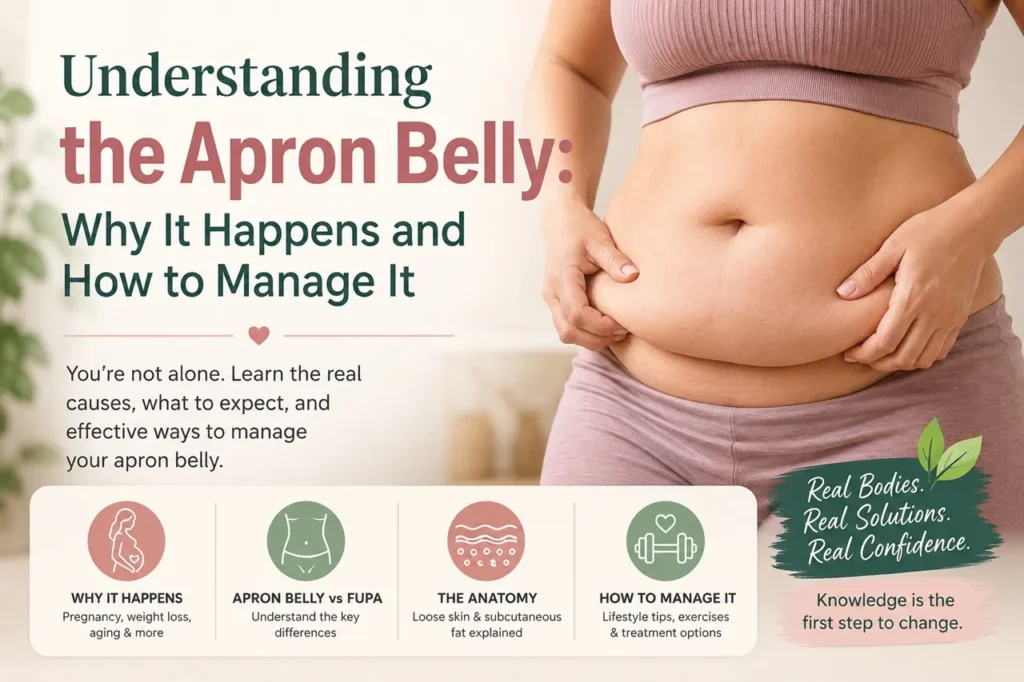
A hanging belly is one of the most common body changes people search for help with, and one of the least talked about. You might call it a belly overhang, a hanging tummy or an overhanging stomach. Doctors may call it an abdominal apron or a pannus. Whatever the name, it means the lower part of your stomach hangs down rather than sitting flat or simply rounding forward.
This guide explains why your stomach overhangs, how to work out what your overhang is made of, and which treatments actually help. It is written for UK readers and points you to NHS support where it applies. For a wider overview of every belly topic we cover, visit our belly guide hub.
What Is a Hanging Belly?
A hanging belly is a fold of lower abdominal tissue that droops over the waistband, the pubic area or, in larger cases, the upper thighs. It forms when the skin and fat of the lower tummy have been stretched and gravity pulls them downward.
Hanging belly, apron belly and pannus: the same thing?
Mostly, yes. Apron belly is the everyday name, pannus is the clinical one, and hanging belly or belly overhang is how most people describe what they see in the mirror. Our guide to the pannus belly covers the medical terms in more detail. You may also hear slang such as a dunlap belly or curtain belly for the same overhang.
How it differs from general belly fat
A round, firm stomach that pushes forward is usually fat stored deeper inside the abdomen. A hanging belly is different: the tissue is softer, it folds over, and there is often a crease underneath where skin rests on skin. Many people have a bit of both. Fat that bulges on the sides of the waist is different again, and our guide to apron belly vs love handles explains how to tell the two apart.
Why Your Stomach Overhangs
There is rarely one single cause. Most belly overhangs build up from several of the factors below over months or years. Our full article on what causes apron belly goes into each one in depth.
Weight gain
When you gain weight, fat collects under the skin of the lower abdomen and the skin stretches to hold it. The NHS lists eating and drinking more calories than the body uses, and not being active enough, as the most common reasons for weight gain.
Pregnancy
Pregnancy stretches the skin and tummy muscles a great deal in a short time. After birth, the skin may not fully shrink back, especially after several pregnancies, twins or a caesarean, where the scar can create a shelf that the tissue above hangs over.
Large weight loss
Losing a lot of weight, whether through diet, weight loss medicines or bariatric surgery, removes fat but leaves the stretched skin behind. This is one of the most common reasons for a loose, empty fold of skin, often called a belly flap.
Age and hormones
Skin makes less collagen and elastin as we get older, so it becomes thinner and less springy. Around the menopause, many women also notice that fat starts to settle more around the middle. The NHS notes that being over 55 and being menopausal or perimenopausal can make it harder to stay a healthy weight.
Weak or separated tummy muscles
If the two long muscles down the front of the tummy have separated, a condition called diastasis recti, the abdomen has less support and the lower belly can push forward and sag. Our guide to apron belly and diastasis recti explains how to check for it.
Genetics and posture
Your genes affect where your body stores fat and how elastic your skin is. Posture also plays a part: slouching or tilting the pelvis forward can make the lower tummy hang more noticeably.
Is Your Hanging Belly Fat, Skin or Muscle?
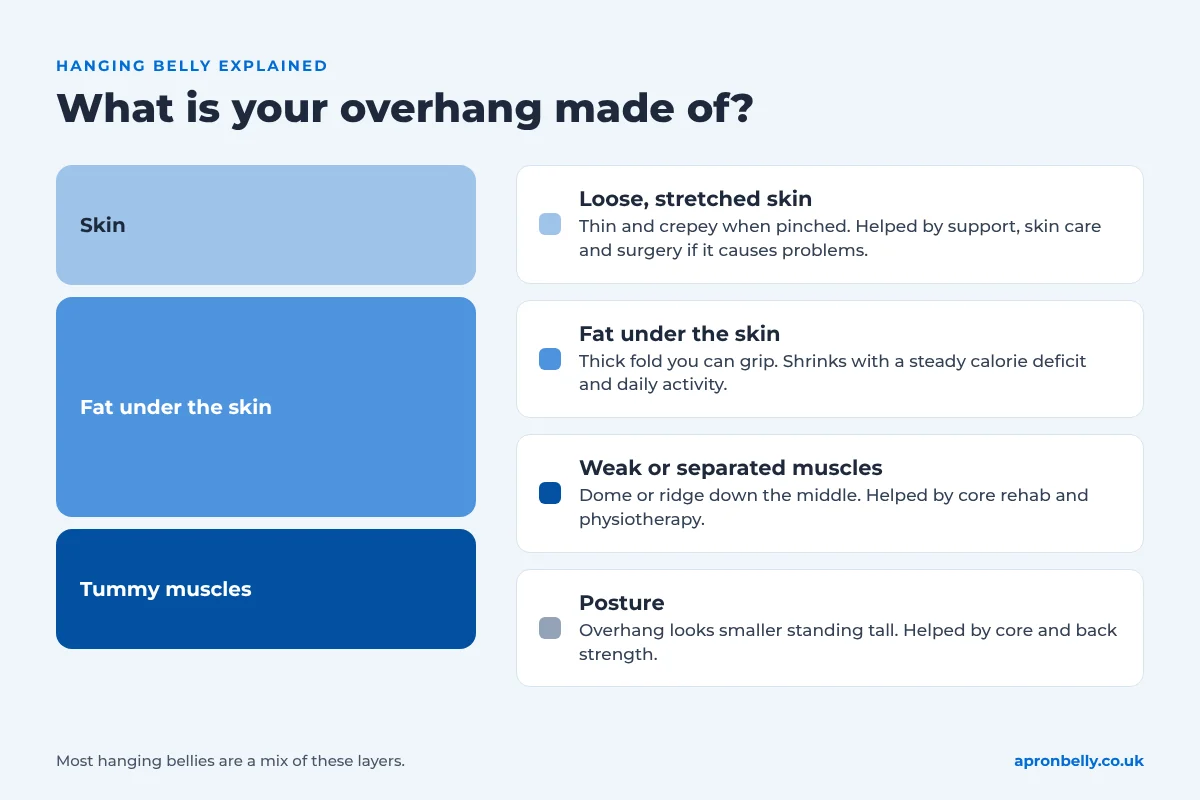
This is the most useful question to answer, because it decides which treatment will help. Our comparison of apron belly fat vs loose skin covers the signs in more depth, but the table below gives a quick guide.
| What you notice | Likely main cause | What helps most |
|---|---|---|
| Thick, firm fold you can grip in a full handful | Fat under the skin | Steady weight loss and activity |
| Thin, crepey skin that feels empty when lifted | Loose, stretched skin | Support, skin care, surgery if it causes problems |
| A soft bulge or dome along the middle when you sit up | Separated tummy muscles | Physiotherapy and core rehabilitation |
| Overhang that looks smaller when you stand tall | Posture | Core and back strengthening, posture habits |
Three simple self-checks
- The pinch test: gently pinch the fold between finger and thumb. A thick pinch suggests fat, a thin pinch suggests mostly skin.
- The lying-down test: lie on your back. If the overhang flattens out a lot, there is more fat and loose tissue than muscle weakness.
- The midline check: lying on your back with knees bent, lift your head slightly and feel along the centre of your tummy above and below the belly button for a gap or ridge. A physiotherapist or GP can confirm what you find.
Checking how far it hangs
Clinicians often describe an overhanging stomach on a scale from grade 1, covering the pubic hairline, to grade 5, reaching the knees. Our guide to apron belly grades shows how to work out yours.
Health Problems a Belly Overhang Can Cause
A small overhang is usually just a cosmetic concern. A larger one can cause practical and medical problems, and these are worth taking seriously.
Skin fold rashes and infection
The crease under the fold traps warmth and sweat. This can lead to intertrigo, a red, sore rash, and sometimes yeast or bacterial infection. Our guide to an apron belly rash covers prevention and treatment.
Back pain, chafing and movement
A heavy hanging tummy pulls the body forward and can strain the lower back. It may rub against the thighs when walking and make bending, exercise and getting dressed harder.
What the fat around it means for health
If your overhang comes with a large waist, it is worth knowing the wider picture. The NHS advises keeping your waist measurement to less than half your height, and explains that overweight and obesity raise the risk of type 2 diabetes, heart disease, high blood pressure and some cancers.
What Helps a Hanging Belly
The right plan depends on what your overhang is made of. Most people do best with a combination of the steps below. Our guide to the best way to get rid of apron belly matches each option to your grade.
Lose fat steadily
If the fold contains a lot of fat, losing weight will make it smaller and lighter. The NHS recommends eating fewer calories than your body uses, aiming to lose 0.5kg to 1kg a week, and getting active for 45 to 60 minutes a day, which can be split into shorter sessions. It also notes that losing just 5 to 10% of your body weight can improve your health.
Strengthen your core and posture
Exercise cannot burn fat from one spot, but a stronger core helps hold the abdomen in and improves how the belly sits. Gentle core work, walking and strength training two or more days a week all help. Our belly exercises hub has beginner routines that do not need floor crunches.
Support and protect the skin
Wash and dry under the fold every day, keep skin apart with a cotton liner, and wear breathable fabrics. A well fitted apron belly support belt lifts the overhang, reduces rubbing and can ease back strain.
Get medical help with weight
If you are finding it hard to lose weight on your own, a GP can refer you to weight management programmes and, depending on your BMI and health, discuss weight loss medicines or surgery. In some areas you can self-refer to local weight management services.
Consider surgery for loose skin
Loose skin does not shrink away with diet or exercise. Surgery is the only way to remove it. A panniculectomy removes the hanging fold and may be funded on the NHS in some cases, depending on local criteria. A tummy tuck also tightens the muscles, but the NHS explains that a tummy tuck is regarded as cosmetic, so it is not usually available on the NHS. Our tummy tuck hub and guide to apron belly surgery on the NHS explain both routes.

What Does Not Work
Plenty of products promise to shrink a hanging belly fast. Most do not work, and some waste money you could spend on things that help.
Spot reduction
Hundreds of sit-ups will strengthen muscles but will not burn fat from the belly itself. Fat is lost from the whole body as you create a calorie deficit.
Creams, wraps and waist trainers
Firming creams may make skin feel smoother but cannot lift a fold of stretched skin. Wraps and waist trainers only squeeze tissue for as long as you wear them. Shapewear is fine for comfort and confidence, but it is not a treatment.
When to See a GP
Book a routine appointment if
- the skin under the fold keeps getting sore or rashy
- the overhang causes back pain, rubbing or problems moving
- you want help with weight loss or want to discuss surgery
- your belly has changed shape quickly without an obvious reason, or you notice a new lump or bulge
Get help the same day from your GP or NHS 111 if
- the skin under the fold is hot, swollen and increasingly painful
- redness is spreading or the skin has broken open
- you have a high temperature or feel shivery and unwell
Frequently Asked Questions
Why does my stomach hang down?
A stomach usually hangs down because the skin and fat of the lower abdomen have been stretched by weight gain, pregnancy or large weight loss, and gravity pulls the tissue down. Ageing skin, weak or separated tummy muscles, genetics and posture can all make the overhang more noticeable.
Can a hanging belly go away without surgery?
A hanging belly that is mostly fat can shrink a great deal with steady weight loss, activity and core strengthening. Loose, stretched skin does not shrink away on its own, so if most of the overhang is skin, surgery is the only way to remove it.
Is a belly overhang the same as an apron belly?
Yes. Belly overhang, hanging belly, hanging tummy, apron belly, abdominal apron and pannus all describe the same thing: a fold of lower tummy tissue that hangs over the waistband, pubic area or thighs.
Do exercises get rid of a hanging tummy?
Exercise cannot burn fat from the belly alone, but it helps you lose fat overall when combined with eating fewer calories. Core and posture exercises also strengthen the muscles that hold the abdomen in, which can make an overhanging stomach look and feel smaller.
Can I get a hanging belly removed on the NHS?
Sometimes. A panniculectomy to remove the hanging fold may be funded on the NHS if you meet local criteria, which usually look at your BMI, how long your weight has been stable and the health problems the fold causes. A cosmetic tummy tuck is not usually available on the NHS.
The Bottom Line
A hanging belly is a fold of stretched skin, fat and sometimes weakened muscle that hangs over the lower tummy. Working out which of these makes up most of your overhang is the first step, because fat responds to weight loss, muscle weakness responds to core work, and loose skin responds only to support, good skin care or surgery.
Your next step
Try the three self-checks above, note how far your overhang hangs, and start with one small change, such as a daily walk or a skin care routine. If the fold causes soreness, pain or problems moving, book a GP appointment and take your notes with you.
Featured image: measuring tape by Evan-Amos, Wikimedia Commons, public domain, cropped.