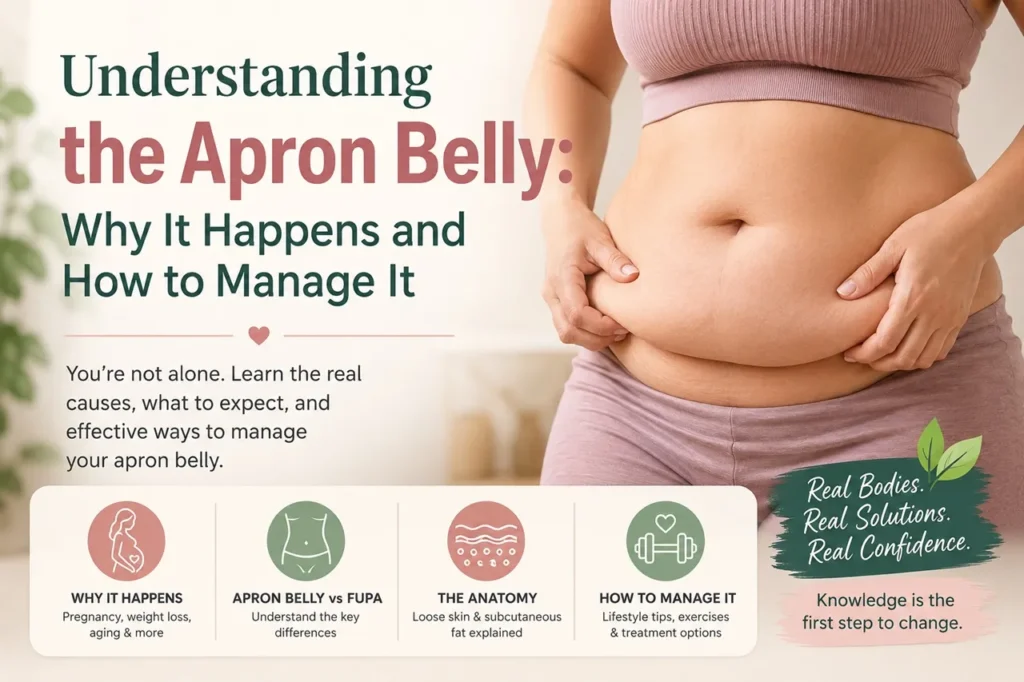

When you look in the mirror, there’s still a fold of skin hanging over your waistband. No amount of dieting seems to touch it. This is one of the most common and most discouraging experiences on a weight-loss journey. It has a medical name: the panniculus, or “apron belly.”
If you’ve been wondering whether this is something you’ll simply have to live with forever, you’re not alone. You deserve an honest answer rather than a marketing promise. The truth is nuanced. An apron belly is not always permanent, but how much it improves and how quickly depend on a mix of biological factors.
Many of these are largely out of your direct control. This guide breaks down what’s really happening beneath the surface, what you can realistically do about it, and when it’s worth talking to a professional.
What Exactly is an Apron Belly (Panniculus)?
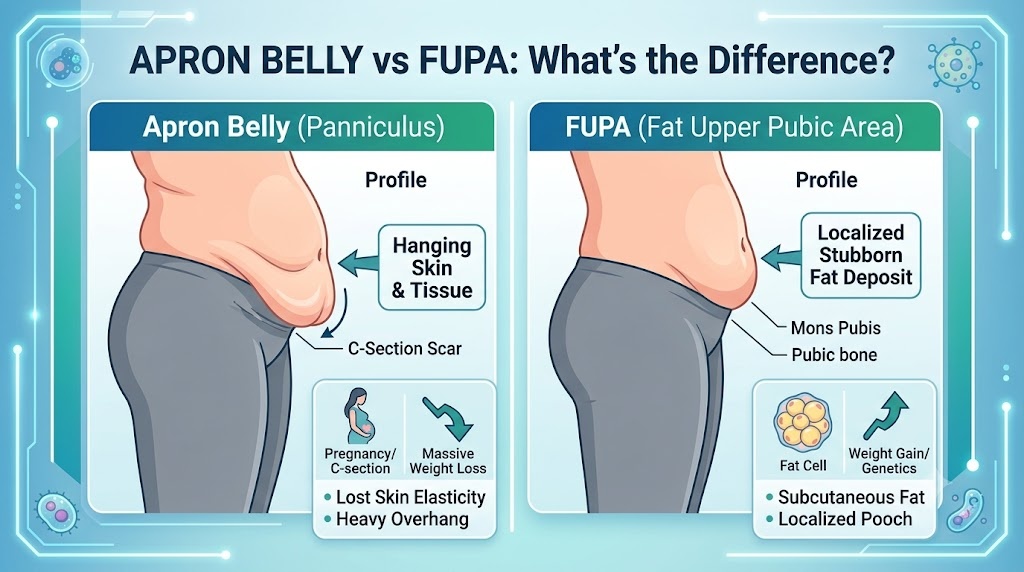
Some people ask, “What exactly is an Apron Belly?” The answer is so simple: an apron belly refers to excess skin and fatty tissue that hangs down over the lower abdomen. Sometimes it extends as far as the pubic area or upper thighs. In medical terms, this overhang is called a panniculus.
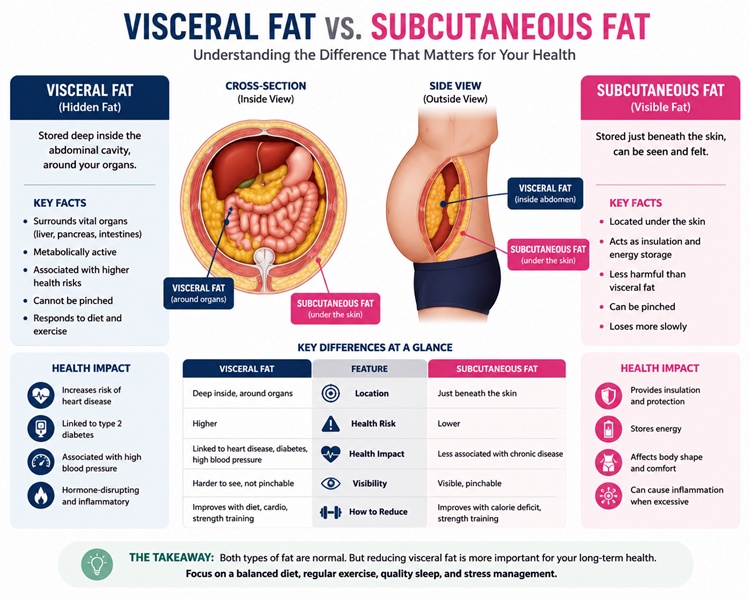
It’s important to understand that not all abdominal fat behaves the same way. Visceral fat sits deep inside the abdominal cavity, surrounding your organs. It’s the fat most closely tied to metabolic health risks. Subcutaneous fat, on the other hand, sits just beneath the skin. It’s this layer, combined with stretched connective tissue and reduced skin laxity, that typically forms the apron.
PCOS Apron Belly usually develops for one of a few reasons:
- Pregnancy, particularly multiple pregnancies, which stretches the abdominal wall and skin over many months.
- Significant or rapid weight loss, where the skin hasn’t had time to shrink back down at the same pace as the fat loss underneath it.
- Genetics, which plays a major role in how much collagen and elastin your skin naturally produces, and how well it “bounces back” after being stretched.
Understanding which of these factors applies to you is the first step in setting realistic expectations.
Is an Apron Belly Permanent? The Hard Truth
Here’s the biological reality: skin is elastic, but that elasticity isn’t infinite. When skin is stretched significantly, whether from pregnancy, weight gain, or rapid weight loss, the collagen and elastin fibers in the dermis can become damaged. The dermis is the skin’s deeper structural layer. Once this happens, skin doesn’t always retract fully, even after the underlying fat is gone.
That doesn’t mean improvement is impossible. It means the outcome depends on several interacting factors.
Genetics. Some people’s skin is simply more elastic than others. This is largely due to inherited collagen quality and density. Two people who lose the exact same amount of weight can have very different results.
Age. Collagen production naturally declines as we get older. This is why skin laxity tends to be more noticeable and to improve more slowly in people over 35 or 40. Someone in their early twenties going through the same weight change often sees faster results.
Degree and speed of weight loss. Gradual, sustained weight loss generally gives skin more time to adapt and retract. Very rapid weight loss, through extreme dieting, illness, or some medical interventions, often outpaces the skin’s ability to keep up. This makes an apron more likely to develop and persist.
In short, for some people, the apron will shrink substantially over time with consistent healthy habits. For others, some degree of loose skin may remain regardless of effort. This is especially true for those with significant skin stretching, older skin, or a strong genetic predisposition to lower elasticity. This isn’t a reflection of failure. It’s physiology.
Natural Ways to Manage and Improve Appearance
You can’t force skin to behave differently than its biology allows. Still, there’s a lot you can do to improve both the area’s appearance and your overall comfort and confidence.
Targeted Exercises for the Core
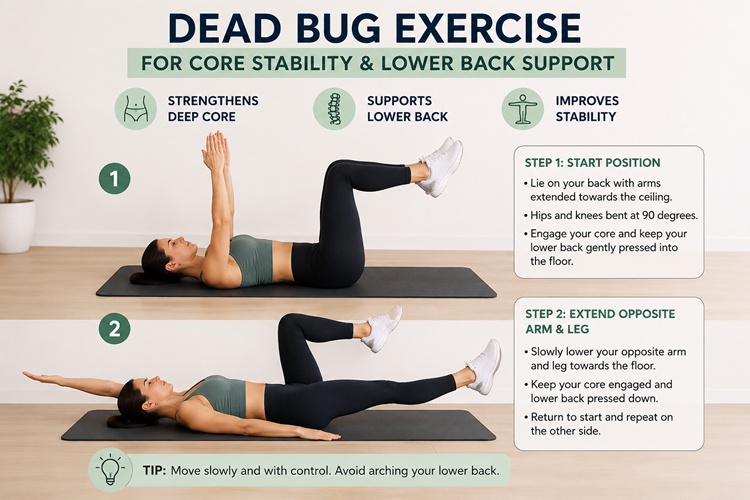
A common misconception is that endless crunches will “burn off” the Small Apron Belly. They won’t. Spot fat reduction isn’t how the body works, and crunches alone don’t address loose skin. What helps is building strength in the underlying muscles. This is particularly true of the transverse abdominis, the deep core muscle that acts like a natural corset around your midsection.
Strengthening this muscle layer through planks, dead bugs, bird dogs, and functional core work won’t eliminate excess skin. But it can improve posture, tighten the underlying support structure, and make the area appear firmer. Combining core-focused training with general strength training and cardiovascular fitness supports both muscle tone and healthy circulation. This, in turn, plays a supporting role in skin health.
Nutrition for Skin Health
Collagen production relies on specific nutritional building blocks. A protein-rich diet gives your body the amino acids it needs to repair and maintain skin structure. Foods rich in Vitamin C, such as citrus fruits, bell peppers, and leafy greens, directly support collagen synthesis. Zinc and omega-3 fatty acids are also frequently cited for their roles in skin repair and elasticity.
Hydration and Lifestyle
Well-hydrated skin tends to look and function better. Adequate water intake supports the skin’s elasticity over time. Sleep is equally important, since it’s during rest that much of the body’s tissue repair takes place. This includes collagen remodelling. Avoiding smoking and excessive sun exposure also protects existing collagen from further breakdown.
When to Consider Medical Intervention
For some people, lifestyle changes alone won’t fully resolve a persistent apron belly. That’s a completely valid outcome. This section is meant to inform, not to pressure. The decision to pursue medical treatment is personal and should always involve a qualified professional.
Non-invasive options, such as radiofrequency skin-tightening treatments, are sometimes used for mild to moderate skin laxity. Results vary and are generally more modest than those of surgical approaches.
For more significant cases, a surgical option called a panniculectomy may be considered. This applies particularly where the skin overhang causes chronic issues like skin irritation, rashes, infections, or difficulty with hygiene and mobility. This is distinct from a cosmetic “tummy tuck,” or abdominoplasty. A panniculectomy specifically removes the excess overhanging tissue. It’s sometimes considered medically necessary rather than purely cosmetic.
If you’re considering any of these options, talk to a dermatologist or board-certified plastic surgeon first. They can assess your specific anatomy, skin quality, and health history. This helps them advise on realistic outcomes and any associated health risks. For general guidance on post-weight-loss body contouring and eligibility, resources like the NHS offer useful, non-commercial overviews.
Managing Expectations: A Realistic 2026 Perspective
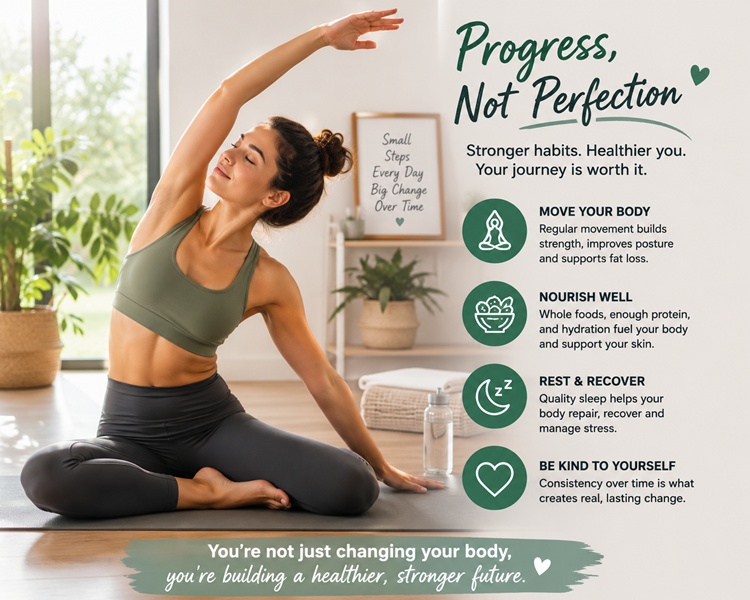
It’s worth stepping back from the mirror for a moment. Menopause Belly Apron, even one that doesn’t fully resolve, does not define your health, your progress, or your worth. The habits that support gradual fat loss, muscle strength, and skin health, like good nutrition, regular movement, hydration, and sleep, are the same habits that support long-term health. This holds true regardless of what happens to that particular area of skin.
Skin remodeling is slow. Even in the best circumstances, visible changes in skin elasticity can take many months to a couple of years to fully manifest. Patience, paired with realistic fitness goals rather than aesthetic ultimatums, tends to produce better mental wellbeing. It also supports better long-term consistency. Body confidence built on this kind of self-care journey tends to be more durable. It lasts longer than confidence tied to a single physical outcome.
Frequently Asked Questions (FAQs)
Exercise can reduce the fat component and strengthen the muscles beneath the skin, which may improve firmness and posture. However, exercise cannot fully resolve loose or stretched skin on its own: fat loss and skin retraction are two separate biological processes.
There’s no universal timeline, but skin often continues adjusting for 12 to 24 months after weight stabilises, particularly in younger people with good skin elasticity. Older individuals or those with more significant stretching may see less retraction over the same period.
Topical products containing retinoids, Vitamin C, or peptides may offer modest improvements in skin texture and firmness for mild cases, largely by supporting surface-level collagen activity. However, no cream can substantially tighten significant loose skin or replace what more targeted treatments or surgery can achieve. Approach dramatic marketing claims with healthy scepticism.
Conclusion
An apron belly isn’t necessarily permanent, but it also isn’t guaranteed to disappear with willpower alone. The outcome depends on your genetics, age, and how your weight loss journey unfolded, factors that are largely outside your control. What is within your control is how you support your body along the way: building core strength, eating in ways that nourish your skin, staying hydrated, sleeping well, and giving your body the time it genuinely needs to adapt.
Wherever you are in your journey, progress is rarely about a single stubborn area of skin. It’s about the sustainable habits you build along the way.