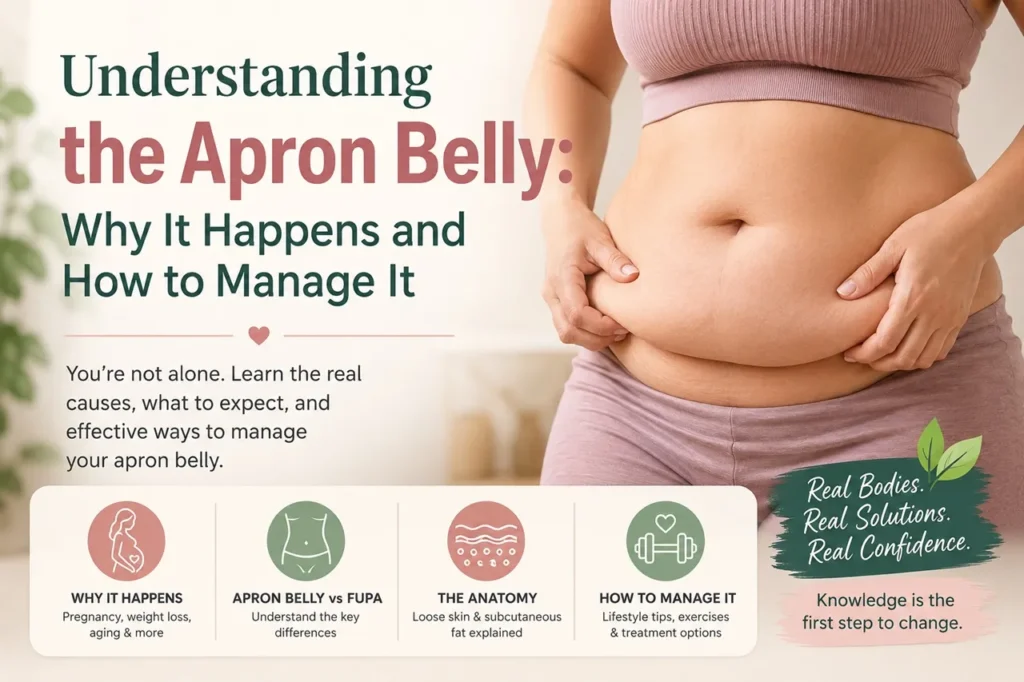

Quick answer: An apron belly, or abdominal pannus, is a fold of excess skin and fat hanging from the lower abdomen. It forms when skin stretches beyond its ability to shrink back. Common causes are pregnancy, large weight changes, bariatric surgery, C-section scarring and ageing. Diet and exercise alone cannot remove it once established.
Key takeaways
- An apron belly is loose skin and fat on the lower abdomen, medically called a panniculus.
- Pregnancy, large weight loss, C-section scarring, ageing and hormones can all play a part.
- Diet and exercise can shrink fat, but they cannot restore stretched skin.
- Trapped moisture in the fold can cause intertrigo, a rash that may become infected.
- A panniculectomy removes the overhang. A tummy tuck also repairs separated muscles.
A fold of skin and tissue that hangs from the lower abdomen goes by many names: mother’s apron, maternity apron, or belly overhang. The medical term is abdominal pannus or panniculus, and it is far more common than most people realise. Research suggests that as many as 68% of individuals who lose over 45 kg develop it, and approximately 92% of women who have had multiple C-sections experience some degree of pannus formation.
Despite how common it is, apron belly is rarely talked about openly. Many people spend years assuming it is purely a result of insufficient effort, a belief that leads to frustration and shame in equal measure. The reality is more straightforward, and far less personal. An apron belly is a structural and tissue-level issue. Once skin has been stretched past its elastic limit, it does not simply snap back, regardless of how clean someone eats or how consistently they exercise.
This post explains exactly what causes an apron belly to form, what physical complications it can create, and which management options (surgical and non-surgical) are actually supported by evidence. If you have been carrying this condition silently, the information here is worth reading.

What Exactly Is an Apron Belly?
The panniculus is made up of two distinct tissue types: subcutaneous fat (the soft fat stored just beneath the skin surface) and loose, inelastic skin that has lost its structural integrity. This is an important distinction. Subcutaneous fat sits directly beneath the skin, whereas visceral fat surrounds the internal organs deeper within the abdominal cavity.
An apron belly is not primarily a problem of visceral fat. Reducing visceral fat through caloric restriction and exercise will shrink the abdomen, but it does not restore skin elasticity or remove loose skin. This is why people who have worked hard to lose a lot of weight are often disheartened to find the overhang persists, or in some cases, becomes more pronounced after weight loss.
Severity varies considerably. For some, the panniculus presents as a mild overhang above the waistband. For others, it extends to the upper thighs or below. The visible result depends on a combination of factors, including body composition, the degree of muscle support underneath, and how many times the abdominal wall has been stretched. Our guide to apron belly vs FUPA explains how the two shapes differ. If your tummy has a crease across the middle instead, our guide to B belly vs apron belly shows how to tell the two apart.
What Causes an Apron Belly to Form?
Apron belly rarely has a single cause. In most cases, several overlapping factors contribute. Understanding those factors helps explain why the condition is so resistant to lifestyle change alone.
How Does Pregnancy Lead to an Apron Belly?
Pregnancy is one of the biggest drivers. Over the course of 9 months, the abdominal skin stretches dramatically to accommodate a growing baby. At the same time, the rectus abdominis muscles (the paired vertical muscles running down the centre of the abdomen) often separate to create space. This separation is called diastasis recti, and it is a normal physiological response to pregnancy, not a sign that anything went wrong.
After delivery, the body attempts to recover. Skin elasticity partially returns, and the muscles may gradually close. After multiple pregnancies, however, the cumulative stretching compounds. The abdominal wall becomes progressively weaker, and the skin has less capacity to recoil. Most women find that the lower abdomen, particularly the area around and below the belly button, shows the most lasting structural change.
How Does Major Weight Loss Cause an Apron Belly?
When the body gains weight rapidly, fat cells in the abdominal area expand, and the skin stretches to accommodate them. When that weight is then lost, the fat cells shrink. But the skin, particularly after prolonged stretching, does not reliably return to its original dimensions.
This effect is especially pronounced after bariatric surgery or aggressive caloric deficit programmes, where weight loss is rapid and substantial. The skin simply cannot keep pace with the rate at which the underlying volume decreases. What remains is a fold of loose, structurally compromised skin, sometimes described as “deflated.” The faster and more dramatic the weight loss, the more likely it is that marked skin laxity will become a lasting outcome.
Repeated cycles of weight gain and loss, sometimes called yo-yo dieting, gradually reduce the skin’s elastic recoil, compounding this effect with each cycle.

What Is the C-Section Shelf, and Why Does It Happen?
A C-section shelf is a specific form of lower abdominal overhang that develops after a caesarean birth. During the procedure, a horizontal incision is made through approximately 7 layers of skin, fat, muscle, and other tissues. As the layers heal, scar tissue forms along the incision line.

Unlike healthy connective tissue, scar tissue is rigid and non-elastic. It effectively anchors the lower abdominal layers. The tissue above the scar line, which has been loosened by pregnancy and any existing loss of elasticity, has nowhere to go but forward and downward. The result is a visible shelf or overhang sitting directly above the C-section scar.
The C-section shelf cannot always be fully prevented through recovery practices, though pelvic floor physiotherapy, scar massage (once healed), and core rehabilitation can reduce its prominence.
How Do Ageing, Genetics, and Hormones Contribute?
Skin’s structural integrity depends largely on two proteins: collagen and elastin. Collagen provides firmness and structure; elastin allows the skin to stretch and return to its original shape. Both degrade naturally with age, and this process accelerates particularly during menopause due to declining oestrogen levels.
During menopause, fat distribution in the body also shifts. Fat that was previously stored around the hips and thighs tends to migrate toward the abdominal area. Combined with the loss of skin firmness, this hormonal redistribution increases the likelihood of abdominal skin laxity and makes it harder to reverse with lifestyle measures alone.
Genetics also play a role. Skin elasticity, fat distribution patterns, and the body’s recovery from stretching all have heritable components. This is not deterministic, as lifestyle factors still matter, but it does help explain why two people with similar histories can have very different outcomes.

What Physical Complications Can an Apron Belly Cause?
An apron belly is not only a cosmetic concern. For many people, the physical discomfort it creates is the primary reason they seek medical guidance.
What Is Intertrigo, and Why Does It Occur Under the Panniculus?
The skin fold created by a hanging panniculus traps heat, sweat, and moisture in a closed environment. This combination of warmth and trapped humidity creates ideal conditions for skin breakdown and microbial overgrowth.
The resulting condition is called intertrigo, a common inflammatory skin condition caused by friction between skin surfaces intensified by heat and moisture. According to the Cleveland Clinic, intertrigo most frequently develops in skin folds, including between belly folds, in the groin area, and in the inner thighs: precisely the zones affected by a large panniculus.
Intertrigo itself is not an infection, but it frequently leads to secondary bacterial or fungal infections. Candida (yeast) overgrowth is the most common secondary complication. Symptoms can include a red or reddish-brown rash, itching, burning, cracked skin, and, in infected cases, odour and oozing. Without addressing the underlying structural cause, intertrigo in this location tends to be recurrent and difficult to resolve permanently through topical treatment alone.
Antifungal powders and moisture-wicking fabrics can reduce friction and manage flares, but they do not eliminate the condition.

Does an Apron Belly Cause Back Pain or Posture Problems?
The weight of the hanging panniculus creates a persistent forward pull on the lower abdomen. Over time, this shifts the centre of gravity and increases the load on the lumbar spine. Many people with a large panniculus unconsciously adjust their posture, sitting, or movement to compensate, and these compensatory patterns often lead to secondary musculoskeletal strain, including lower back pain and hip discomfort.

The additional association with visceral abdominal fat (where present) links the condition to broader metabolic health considerations, including elevated risk of type 2 diabetes and cardiovascular disease. It is important to note, however, that the panniculus itself is subcutaneous, not visceral, in nature.
What Non-Surgical Options Genuinely Help?
Before discussing what can help, one common misconception is worth addressing directly.
Does Targeted Abdominal Exercise Reduce an Apron Belly?
No. This is the spot-reduction myth: the idea that exercising a specific body part burns the fat there. Spot reduction is not supported by evidence. Core exercises like crunches or planks strengthen the underlying abdominal muscles and improve posture, but they do not remove subcutaneous fat from that area and cannot restore skin elasticity once it has been lost.
That said, exercise and sustained weight management still matter. Reducing overall body fat decreases the volume beneath the skin fold and can lessen the severity of the overhang. Maintaining a stable weight for at least 6 to 12 months before any surgical intervention also leads to much safer, more predictable outcomes.

What Practical Steps Help Manage an Apron Belly Without Surgery?
- Hygiene routine: Keep the skin fold clean and thoroughly dry after showering. Moisture is the primary driver of intertrigo, so drying the fold with a clean towel or even a hairdryer on a cool setting is genuinely helpful.
- Antifungal powder or zinc oxide cream: Applying these to the skin fold reduces moisture, prevents fungal overgrowth, and creates a protective barrier against friction.
- Compression garments and binders: High-waisted compression underwear and medical-grade abdominal binders lift and support the panniculus, reduce skin friction, and relieve some of the postural strain on the lower back. They do not change the underlying anatomy, but they can meaningfully improve daily comfort.
- Moisture-wicking fabrics: Breathable, natural fabrics (cotton, bamboo) reduce heat buildup in skin folds compared to synthetic materials.
- Non-surgical body contouring: Treatments such as radiofrequency, cryolipolysis (CoolSculpting), and focused ultrasound can reduce localised subcutaneous fat and produce mild skin tightening. These options work best for Grade 1 to 2 cases, i.e., mild overhangs with reasonable baseline skin quality. They require multiple sessions and produce gradual rather than dramatic results. They cannot remove hanging skin.
What Surgical Options Are Available for an Apron Belly?
For established cases with severe skin laxity, non-surgical options reach their limit. Two primary surgical procedures address the apron belly, and they serve different purposes.
What Is a Panniculectomy, and When Is It Appropriate?
A panniculectomy is a functional surgical procedure that removes the hanging panniculus, specifically the excess skin and subcutaneous fat of the lower abdomen. The procedure makes a horizontal incision from hip to hip, removes the overhanging tissue (often weighing about 4.5 to 14 kg or more), and closes the remaining skin.

Panniculectomy is focused on functional relief rather than aesthetic contouring. It does not repair diastasis recti, tighten the abdominal muscles, or reposition the belly button. It is typically recommended for patients with Grade 3 to 5 panniculus causing documented medical problems, including recurrent intertrigo, skin breakdown, or mobility limitations.
Research published through the National Institutes of Health confirms that panniculectomy greatly improves quality-of-life scores in appropriate candidates. In the UK, NHS funding for this surgery is rare and strict. Your GP refers you, and your local NHS board decides. Documented problems such as chronic infections, skin ulcers or limited activity are usually needed. Privately, a panniculectomy costs from about £6,000.
How Does an Abdominoplasty Differ From a Panniculectomy?
An abdominoplasty (commonly called a tummy tuck) addresses the entire abdominal area comprehensively. In addition to removing excess skin and fat from the lower abdomen, the procedure repairs diastasis recti by suturing the separated muscles back together, repositions the belly button, and tightens the abdominal wall from hip to hip.
According to data from the American Society of Plastic Surgeons, tummy tuck procedures have a 98% patient satisfaction rate, among the highest of any elective body contouring procedure. Abdominoplasty is primarily a cosmetic procedure. The NHS rarely funds it, and private medical insurance usually excludes cosmetic surgery. A private tummy tuck in the UK typically costs £6,500 to £9,500 (see our apron belly surgery cost guide). For patients whose apron belly developed alongside muscle separation (as is common after pregnancy), it addresses both the structural and aesthetic components of the condition simultaneously.
The right procedure depends on the individual’s anatomy, the severity of the panniculus, whether diastasis recti is present, and personal goals. A consultant plastic surgeon on the GMC Specialist Register can provide a personalised assessment.
Your Body’s Story, Not a Personal Failure
An apron belly forms because of what skin and tissue go through: pregnancy, weight change, surgery, time, and hormonal shifts. None of those things is a failure of willpower. The condition is structural, and it deserves to be treated as such.
If you are managing physical discomfort, recurrent skin infections, or the weight of carrying this condition in silence, the most useful next step is a conversation with a healthcare provider.
That might be a dermatologist for skin-related complications, a pelvic floor physiotherapist for post-pregnancy recovery, or a consultant plastic surgeon on the GMC Specialist Register to understand what structural options might be appropriate for your situation. You do not have to wait until things feel urgent. Asking questions early is always the right call.
Frequently Asked Questions (FAQs)
No, not completely. While a caloric deficit and full-body workouts shrink the underlying fat cells, they cannot repair permanently stretched skin or restore lost elasticity. Spot-reduction is a myth; for severe skin laxity, surgical removal is the only definitive fix.
Subcutaneous Fat: Stored directly under the skin; this is the soft, hanging tissue that physically forms the apron belly (panniculus).
Visceral Fat: Deep fat surrounding internal organs. While diet and exercise easily target visceral fat to improve health, losing it will not eliminate the loose, hanging skin outside.
It can become serious if ignored. Intertrigo starts as a simple rash from trapped moisture and skin friction. Left untreated, it quickly turns into painful fungal or bacterial infections. In severe, rare cases, it can progress to deep tissue infections like cellulitis.
Pain is highly manageable with medication and usually less severe than expected. Recovery times differ by scope:
Panniculectomy: 4 to 6 weeks to return to normal activity.
Tummy Tuck (Abdominoplasty): 6 to 8 weeks, with final swelling subsiding over 3 to 6 months.
Only if your weight or body changes drastically. Surgical results are permanent if you maintain a stable weight. However, future pregnancies or massive weight fluctuations can re-stretch the skin. Surgeons recommend stabilising your weight and finishing your family planning before undergoing surgery.