
An apron belly tummy tuck is a topic that often comes up after someone has lost a large amount of weight or after pregnancy leaves behind more than stretch marks. The skin hangs. It doesn’t shrink back on its own, no matter how many sit-ups get done. So people start searching, and they land here.
This guide walks through what the surgery actually involves, what it costs in 2026, how long healing takes, and whether it’s the right call for you.
We’ll also cover a disclaimer up front: nothing here replaces a real consultation with a board-certified plastic surgeon. Think of this as the homework you do before that appointment.

What Exactly Is an Apron Belly?
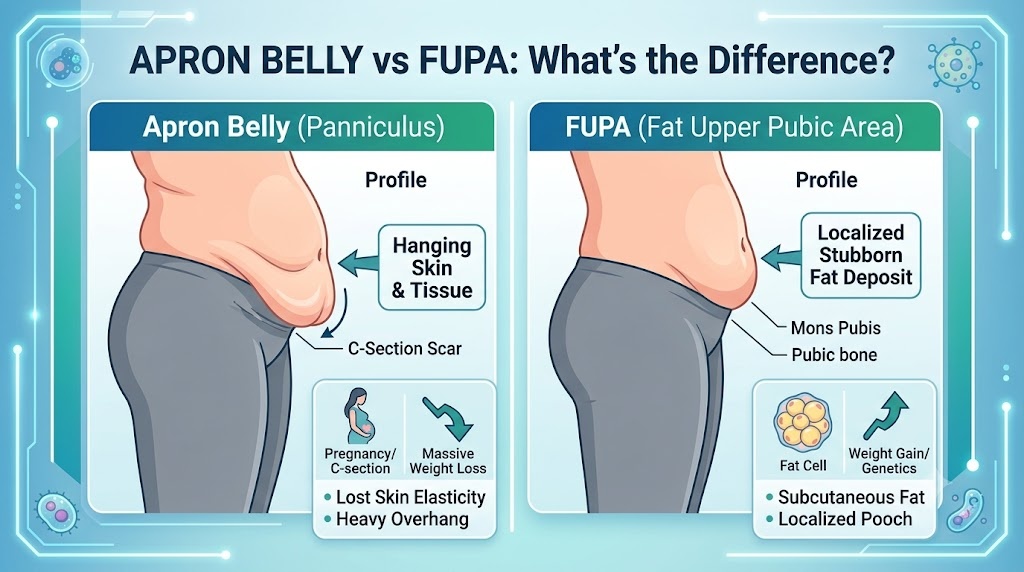
The medical term is panniculus, and it refers to a fold of skin and fatty tissue that hangs down over the lower abdomen, sometimes reaching the pubic area or even the thighs. It’s not the same as regular belly fat. Belly fat sits under the skin and responds, at least somewhat, to diet and exercise. A panniculus is mostly excess skin that has lost its elasticity, so it just hangs there regardless of how lean the rest of the body becomes.
This happens for a few common reasons. Rapid weight loss, whether from bariatric surgery or a major lifestyle change, stretches skin past the point where it can snap back. Pregnancy does something similar, especially after multiple pregnancies or larger babies. Age plays a role, too, since collagen production slows down over time, and that’s what gives skin its bounce in the first place.
Here’s the distinction people often miss: you can be thin and still have an apron belly. That’s the tell. If pinching the area reveals mostly loose skin rather than fat, an apron belly tummy tuck becomes the more realistic fix, not another round of crunches. Understanding this difference matters because it shapes every decision that follows, from which procedure to choose to how much it will cost.
How an Apron Belly Tummy Tuck Works (The Procedure)
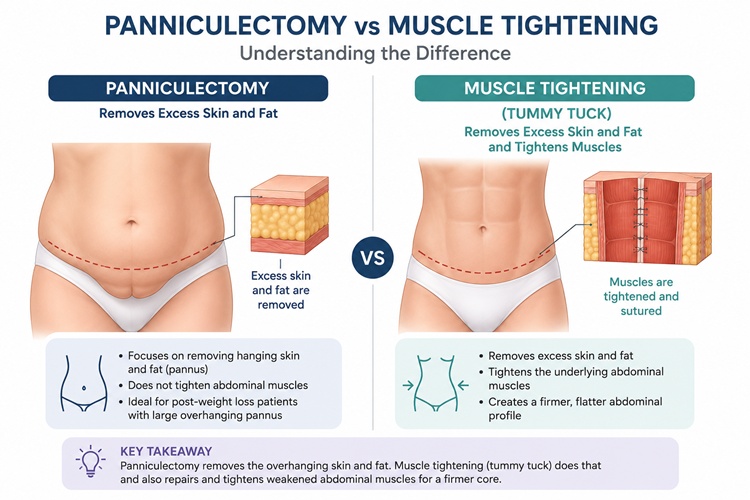
An apron belly tummy tuck, medically known as abdominoplasty, isn’t a simple fat-removal surgery. It’s closer to a full reconstruction of the abdominal wall. Surgeons typically combine three things: removal of the hanging skin and tissue, tightening of the underlying abdominal muscles (which often separate during pregnancy or weight gain), and repositioning of the belly button so it sits naturally on the newly tightened skin.
The incision placement depends on how much tissue needs to be removed. For a standard tummy tuck, the incision runs low along the hip line, hidden beneath most underwear or swimwear. For more extensive cases involving a heavier panniculus, surgeons may use what’s called a fleur-de-lis technique, adding a vertical incision to remove skin both horizontally and vertically. It sounds intense, and it is a more extensive surgery, but it’s often the only way to achieve a flat result when there’s a significant amount of excess to remove.
Before any of this happens, though, a proper evaluation matters. A board-certified plastic surgeon will assess skin quality, muscle separation, and overall health to determine which technique fits your body.
Some patients need a panniculectomy first, which is a more basic removal of excess tissue, sometimes covered differently by insurance than a cosmetic tummy tuck. Others go straight to a full abdominoplasty. The surgical removal of tissue is usually done under general anesthesia, and the procedure itself can run anywhere from two to five hours, depending on complexity.
Apron Belly Tummy Tuck Cost: What to Expect in 2026
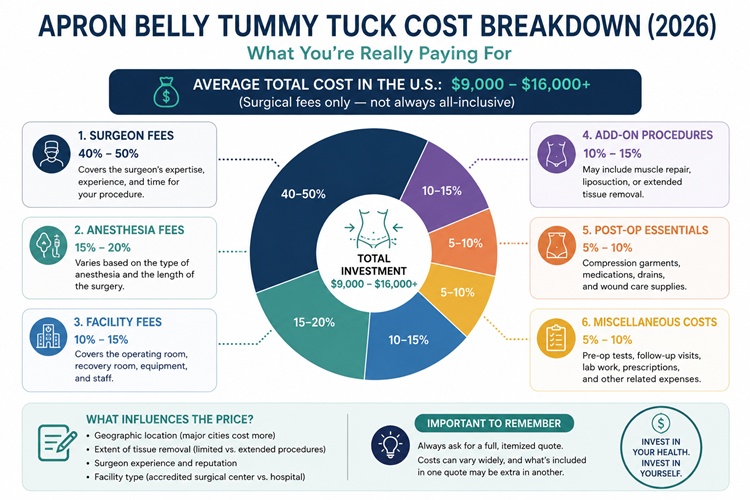
Money is usually the first real question people ask, and fair enough. In 2026, the average price for a Small Apron Belly tummy tuck in the United States tends to fall somewhere between $9,000 and $16,000, though costs above that range aren’t unusual for extensive cases. That figure typically covers surgical fees, but not always everything else. So it pays to ask for a full breakdown before committing.
Then there are the add-ons that catch people off guard. Anesthesia costs run separately in many practices, often between $600 and $2,000, depending on how long the surgery takes. Facility expenses, meaning the operating room and recovery suite, add another chunk, sometimes $1,000 to $3,000. Post-surgical garments, lab work, and follow-up visits can tack on a few hundred more.
What about medical insurance?
This is where things get case-specific. A purely cosmetic tummy tuck almost never gets covered. However, if the panniculus is causing recurring skin infections, rashes, or mobility problems, some insurers will cover a panniculectomy portion of the surgery, treating it as medically necessary rather than aesthetic.
It’s worth documenting any related health issues and bringing them to your consultation, because that paperwork can change what you pay out-of-pocket by thousands of dollars. Financing plans are common, too, and many practices offer payment arrangements spread across 12 to 24 months.
Recovery Timeline: Your Path to Healing
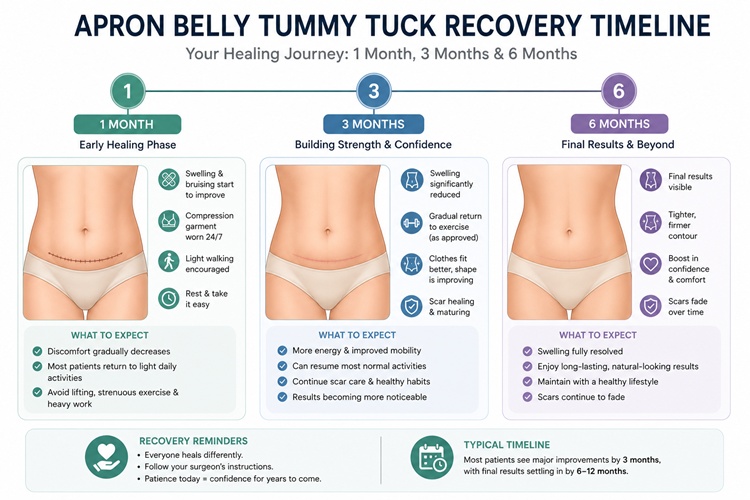
Recovery from a PCOS Apron Belly tummy tuck isn’t a weekend affair. It’s a gradual process, and being honest about the timeline helps set expectations that actually match reality.
Week 1: Rest and Limited Mobility
The first week is rough, plain and simple. Expect swelling, bruising, and some discomfort, which can be managed with prescribed medication. Most surgeons place drain tubes to remove excess fluid from the surgical site, and these usually stay in for five to ten days.
Walking is encouraged almost immediately, even if it’s just short, slow laps around the house, because movement reduces the risk of blood clots. Bending, lifting, and standing fully upright are off the table during this stretch. Most patients need someone at home to help with basic tasks.
Weeks 2 to 4: Returning to Light Daily Tasks
By the second week, energy starts trickling back. Drains typically come out around this point, assuming fluid output has slowed enough. Compression garments stay on nearly around the clock during this phase, since they help reduce swelling and support the new contour of the abdomen while tissue heals.
Light chores, short errands, and desk work often resume by week three or four, though driving usually waits until pain medication is no longer needed. Physical activity restrictions remain firm here; no gym, no heavy lifting, nothing that strains the core.
Months 3 to 6: Full Recovery and Seeing Final Contours
This is the stretch where patience actually pays off. Internal swelling takes far longer to resolve than most people expect, so the “final” shape isn’t really visible until three to six months out. Scar tissue continues to soften and fade during this window, too.
By month six, most patients are back to full exercise routines, including core work, assuming their surgeon has cleared them. The healing process is rarely linear, and some swelling, especially later in the day, can linger for close to a year in certain cases.
Are There Natural Alternatives?
This section deserves honesty rather than false hope. Core-strengthening exercises can absolutely tighten the muscles beneath a panniculus, and a healthy diet can reduce any remaining fat layer. Both are worth doing regardless of whether surgery happens.
But here’s the reality: exercise cannot remove excess skin. Once skin elasticity is gone, it stays gone. No amount of planking or clean eating pulls loose skin back into place.
Lifestyle changes can improve overall health and may improve surgical outcomes if a tummy tuck is later performed, but they aren’t a substitute for the procedure itself when skin has genuinely stretched beyond recovery.
Is an Apron Belly Tummy Tuck Worth It? (Expert Verdict)
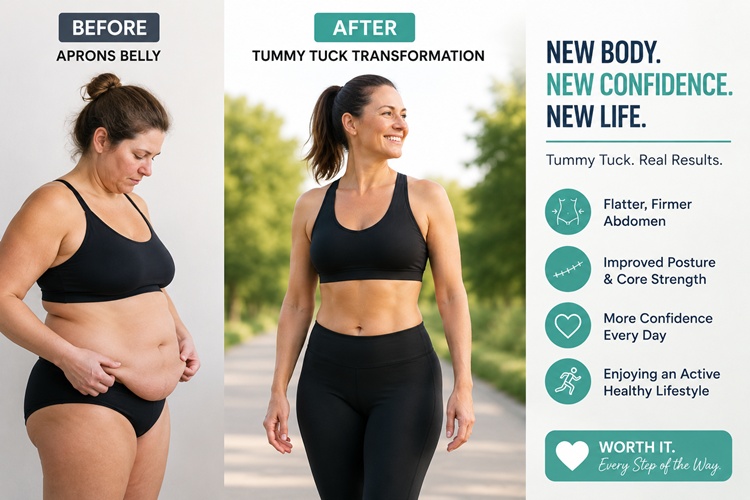
This question splits into two categories: functional and aesthetic, and both matter.
On the functional side, a panniculus often causes real physical problems. Skin folds trap moisture, which leads to chronic skin rashes, chafing, and sometimes infections that recur no matter how careful someone is with hygiene. Back pain is common, too, since the extra weight pulls on the posture. Some patients even report difficulty with basic movements, such as tying their shoes or exercising comfortably. For these individuals, surgery isn’t vanity; it solves an ongoing medical nuisance.
On the aesthetic side, patient satisfaction rates for abdominoplasty are consistently high across surveyed groups, and much of that stems from confidence. Clothes fit differently. Swimwear stops being a source of dread. Many patients describe a shift in how they carry themselves socially, which speaks to mental health as much as appearance. That said, surgery won’t fix everything; scars are permanent, recovery is demanding, and results depend heavily on choosing an experienced surgeon.
So, Apron Belly Surgery Cost worth it? For someone dealing with skin infections, mobility issues, or persistent discomfort, the case is fairly strong. For someone chasing a purely cosmetic outcome, it still helps to weigh the long-term results against the cost, downtime, and scarring involved.
Quality-of-life improvements reported by patients tend to be significant, but the decision remains personal and should follow a real conversation with a surgeon rather than a quick scroll through before-and-after photos online.
Frequently Asked Questions (FAQs)
Most procedures run between two and five hours, depending on how much tissue needs removal and whether muscle repair is also being performed.
Usually not for cosmetic reasons, but if the panniculus causes documented skin infections or health issues, a panniculectomy portion may be covered. Check with your provider directly.
A panniculectomy removes excess hanging tissue only. A full tummy tuck adds muscle tightening and belly button repositioning for a more sculpted result.
Most surgeons recommend reaching a stable weight, ideally within 10 to 15 pounds of your goal, for at least six months before surgery, since further weight changes can affect results.
Yes, scarring is permanent, though it typically fades and flattens over 12 to 18 months. Surgeons place incisions low on the hip line so scars are usually hidden by underwear or swimwear.
Final Thoughts
Choosing an apron belly tummy tuck is rarely a snap decision, and it shouldn’t be. It involves real cost, a recovery period that stretches across months, and permanent changes to the body. Still, for many people carrying the physical and emotional weight of a panniculus, the outcome brings relief that goes beyond appearance.
If you’re considering this path, start with a consultation, ask detailed questions about technique and pricing, and give yourself the full picture before moving forward.
This article is for general informational purposes only and does not substitute for professional medical advice. Always consult a board-certified plastic surgeon to discuss your individual health history and surgical options.