Quick Answer
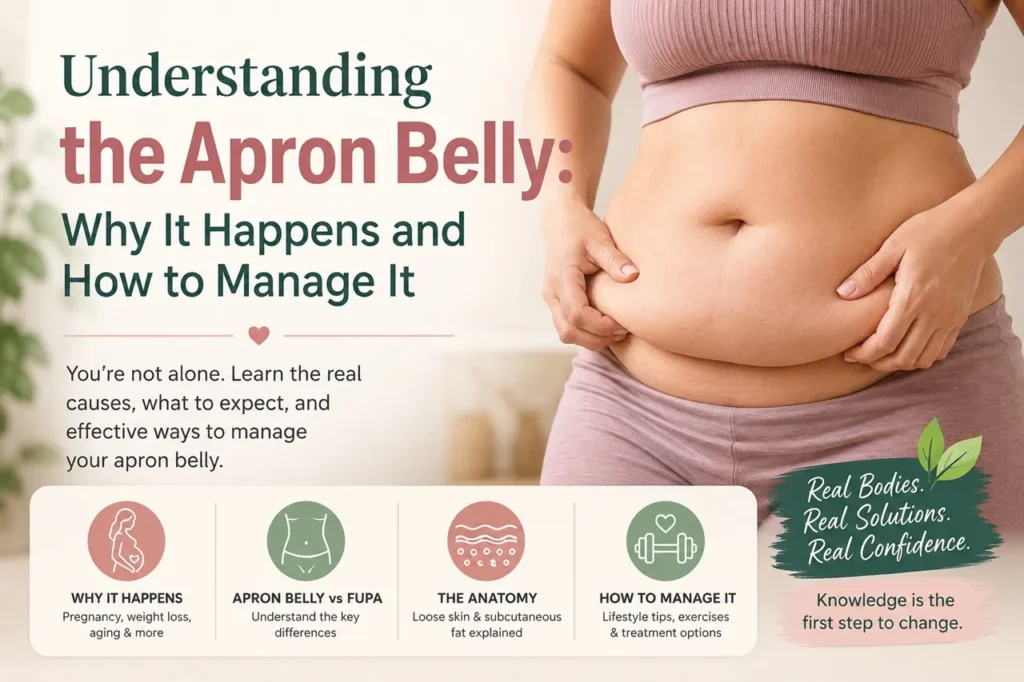
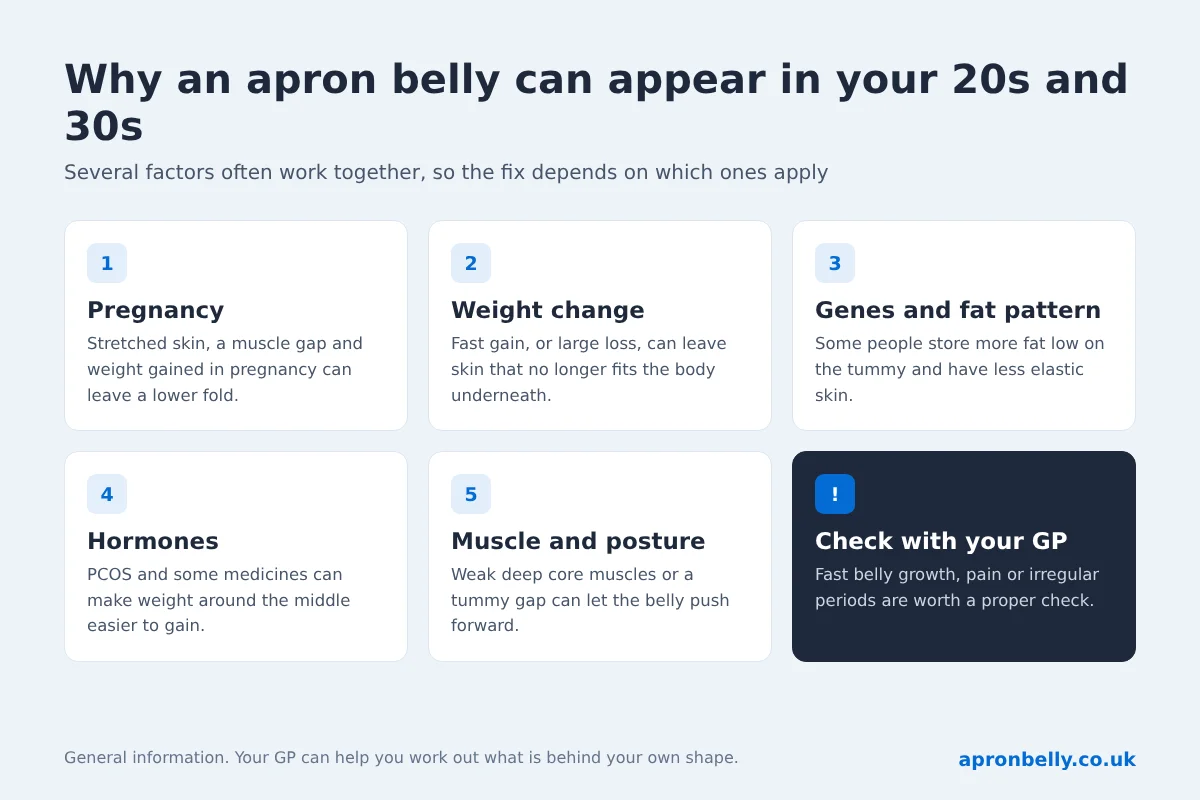
Having an apron belly young, in your 20s or 30s, usually comes from pregnancy, a big change in weight, the way your genes store fat, hormone conditions such as PCOS, or weak deep tummy muscles. It is common, it is not your fault, and at this age the fat part often responds well to steady weight loss and exercise.
- Work out whether your fold is mostly fat, loose skin or a muscle gap
- Ask your GP to check for PCOS or a tummy gap if you have symptoms
- Wait until your weight and family plans are settled before thinking about surgery
Many people assume an apron belly is something that only happens later in life. In reality, plenty of women notice a lower belly fold in their 20s and 30s, sometimes after a baby, sometimes after gaining or losing weight, and sometimes with no obvious reason at all. Having an apron belly young can feel unfair and isolating, but it usually has clear causes, and knowing which ones apply to you shows you what will actually help.
This article is part of our apron belly guide. For a full overview of every cause, see what causes an apron belly.
Having an Apron Belly Young: The Main Causes
Pregnancy and the months after birth
Pregnancy is the most common reason for a lower belly fold in younger women. The skin and muscles of the tummy stretch a great deal, weight is gained around the middle, and hormones soften connective tissue. After birth, the skin may not shrink back fully, particularly after a large baby, twins or several pregnancies close together. Our guide to apron belly and pregnancy covers this in more detail.
Weight gain in early adulthood
Many people gain weight in their 20s through changes in work, study, sleep, alcohol and activity. Fat stored just under the skin of the lower tummy can build up into a fold that hangs over the pubic area. Rapid weight gain also stretches the skin quickly, which can leave stretch marks and looser skin later.
Losing a lot of weight
Young people who lose a large amount of weight, through diet, weight loss medicines or surgery, can be left with skin that no longer fits the smaller body underneath. Younger skin often recovers better than older skin, but after very large losses some overhang can remain. Read more in our guide to apron belly after weight loss.
Genes and where you store fat
Some people naturally store more fat low on the tummy and around the hips, and some inherit skin that is less elastic. This is why two people of the same weight can have very different shapes, and why an apron belly sometimes runs in families. It can even appear in slim people, as explained in our guide to apron belly on a skinny person.
Hormones, PCOS and Medical Causes
Polycystic ovary syndrome
The NHS says polycystic ovary syndrome (PCOS) is thought to affect about 1 in every 10 women in the UK, and symptoms usually become noticeable in the late teens or early 20s. PCOS is linked with insulin resistance, which can make weight easier to gain around the middle and harder to lose. Irregular periods, excess hair growth, acne and weight gain are common signs. Our guide to PCOS and apron belly explains the link and what helps.
Medicines and other conditions
Some medicines, such as steroids and certain antidepressants or antipsychotics, can cause weight gain. Conditions such as an underactive thyroid can also play a part. Never stop a prescribed medicine on your own, but do ask your GP or pharmacist if you think a medicine is affecting your weight.
When belly growth needs checking
A tummy that swells quickly, feels hard, is painful or comes with bloating, changes in bowel habit or unexplained weight loss is not a typical apron belly. See your GP so the cause can be checked properly.
Is It Fat, Loose Skin or a Tummy Gap?
Fat
If you can pinch a thick layer and the fold has become smaller when you have lost weight before, fat is a large part of it. This is the part that responds to a calorie deficit and regular activity.
Loose skin
If the fold is thin, crepey or wrinkled, and stays even when you are at a healthy weight, loose skin is the main issue. Skin does not tighten much with exercise, so this part may only change with time or surgery.
A gap between the tummy muscles
The NHS says it is common for the two muscles down the middle of the tummy to separate during pregnancy, usually by about 2 finger widths. This is called diastasis recti. If the gap is still obvious 8 weeks after the birth, contact your GP, as it can be linked with back problems. A gap can make the lower tummy push forward and the fold look bigger. See our guide to apron belly and diastasis recti.
| Main cause | What you may notice | What usually helps |
|---|---|---|
| Fat | Thick, soft fold that shrinks when you lose weight | Calorie deficit, activity, strength training |
| Loose skin | Thin or wrinkled skin that stays at a healthy weight | Time, skin care, sometimes surgery |
| Tummy gap | Doming down the middle when you sit up | Physiotherapy led core exercises |
| Hormones (PCOS) | Irregular periods, acne, weight around the middle | GP assessment, lifestyle changes, treatment |
Check Your Waist Measurement
Half your height rule
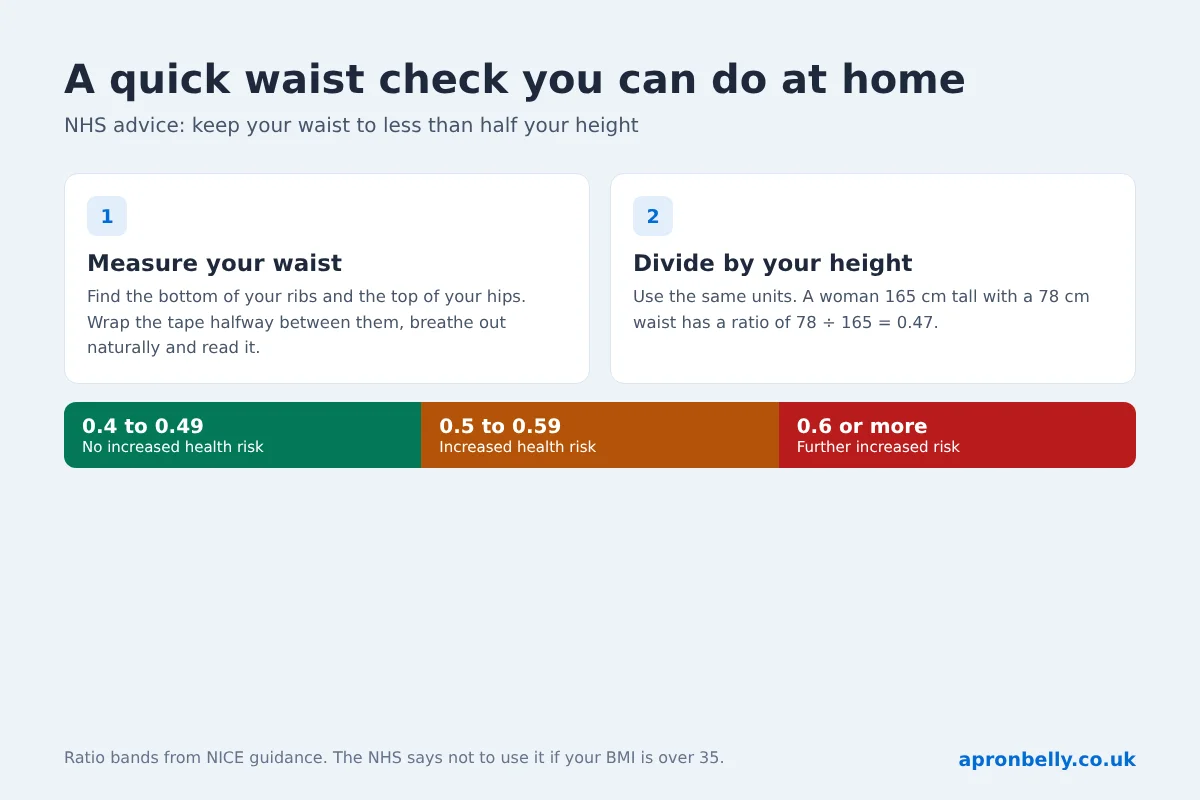
The NHS waist to height calculator advises keeping your waist size to less than half your height. Measure halfway between the bottom of your ribs and the top of your hips, breathe out naturally and read the tape. NICE guidance says a ratio of 0.4 to 0.49 shows no increased health risk, 0.5 to 0.59 shows increased risk, and 0.6 or more shows further increased risk. The NHS says not to use this check if your BMI is over 35.
Why it matters at a young age
Fat carried around the middle is linked with type 2 diabetes, heart disease and stroke. Spotting a rising waist measurement in your 20s or 30s gives you years to change direction, long before health problems appear.
What Helps in Your 20s and 30s
Steady weight loss if you need it
If fat makes up much of your fold, gradual weight loss is the most effective step. The NHS suggests aiming to lose around 0.5kg to 1kg a week. Slower loss gives your skin more time to adjust. Our guide to the best way to get rid of an apron belly sets out a full plan by grade.
Move more and build strength
NHS guidelines for adults are at least 150 minutes of moderate activity a week, plus strength exercises on at least 2 days. Strength training helps you keep muscle while you lose fat, which improves the shape of the tummy and supports your back. If you have recently had a baby, build up gently and check your tummy gap first.
Look after the skin in the fold
Even a small fold can trap sweat. Wash and dry the crease every day and wear breathable cotton next to the skin. Our daily hygiene routine explains how.
Be patient after pregnancy
Your body keeps changing for many months after birth. NHS physiotherapy leaflets note that a small muscle gap often improves within weeks, while a larger one may take up to a year with the right exercises. Give your body time before you judge the final shape. Our guide to the lower belly pooch after pregnancy has more on this stage.
Is Surgery an Option When You Are Young?
Timing matters
Surgeons usually advise waiting until your weight has been stable for some time and you have finished having children, because a later pregnancy or a big weight change can stretch the tummy again and undo the result. For most people in their 20s, non surgical steps come first.
NHS and private routes
The NHS does not usually fund surgery for cosmetic reasons, but a panniculectomy may be funded if a large apron causes real physical problems and you meet your local criteria. If you are thinking about paying privately, read our guide to choosing a surgeon for apron belly surgery first.
Living With an Apron Belly at a Young Age
Body image and confidence
It can be hard to have a body shape that friends of the same age do not seem to share, especially with the pressure of social media. Many young women have a lower belly fold, even if they do not talk about it. If worries about your body are affecting your mood, sleep or social life, talk to your GP. Talking therapies are available on the NHS.
Clothes that feel comfortable
High waisted bottoms that sit above the fold, soft waistbands and breathable fabrics can make everyday life more comfortable. Our guide on how to hide an apron belly has practical clothing ideas.
Frequently Asked Questions
Can you get an apron belly in your 20s?
Yes. An apron belly can develop at any adult age. In your 20s and 30s it is most often linked with pregnancy, weight gain or large weight loss, genes that store fat low on the tummy, PCOS, or a gap between the tummy muscles.
Why do I have an apron belly if I am young and slim?
Genes play a big part in where fat is stored and how elastic skin is. Pregnancy, a past period of higher weight or a gap between the tummy muscles can also leave a lower fold in someone who is otherwise slim.
Will an apron belly go away on its own when you are young?
The fat part can shrink with steady weight loss and regular activity, and younger skin often recovers better than older skin. Loose skin after a large weight loss or several pregnancies may not shrink fully without surgery.
Can PCOS cause an apron belly?
PCOS does not cause an apron belly directly, but it is linked with insulin resistance and weight gain around the middle, which can make a lower belly fold more likely. The NHS says about 1 in 10 women in the UK are thought to have PCOS. See your GP if you have irregular periods, excess hair growth or acne along with weight gain.
Should I have a tummy tuck in my 20s?
Surgeons usually advise waiting until your weight has been stable and you have finished having children, as a later pregnancy or weight change can undo the result. Most people in their 20s are advised to try weight management and exercise first, and to discuss any surgery with their GP.
The Bottom Line
An apron belly when you are young is more common than many people realise. Pregnancy, weight change, genes, hormones and weak deep muscles are the usual causes, and working out which ones apply to you points to the right fix. At this age, steady weight loss, regular strength work, good skin care and patience after pregnancy often make a real difference. For more support, visit our apron belly guide.
Your next step
Measure your waist and height this week and work out your ratio. If it is 0.5 or above, or you have signs of PCOS or a tummy gap, book a GP appointment.
Featured image: tailor’s tape measure by Jacek Halicki, Wikimedia Commons, CC BY-SA 4.0, cropped. This article is for general information and is not medical advice. Speak to your GP about your own health.