The most effective apron belly exercises are gentle core moves. Good examples are pelvic tilts, dead bugs, glute bridges, bird-dogs, modified planks and reverse crunches. They strengthen the deep core and improve posture. Exercise cannot remove loose skin, but it supports fat loss when combined with a healthy diet, good sleep and regular movement.
Key takeaways
- Spot reduction is a myth. No exercise burns fat from one area alone.
- Exercise cannot remove loose skin, but it strengthens the muscles underneath.
- The transverse abdominis works with the pelvic floor to support the lower belly.
- Beginners can start with three sessions a week of 20 to 30 minutes.
- If you are postpartum, check for diastasis recti before harder moves.
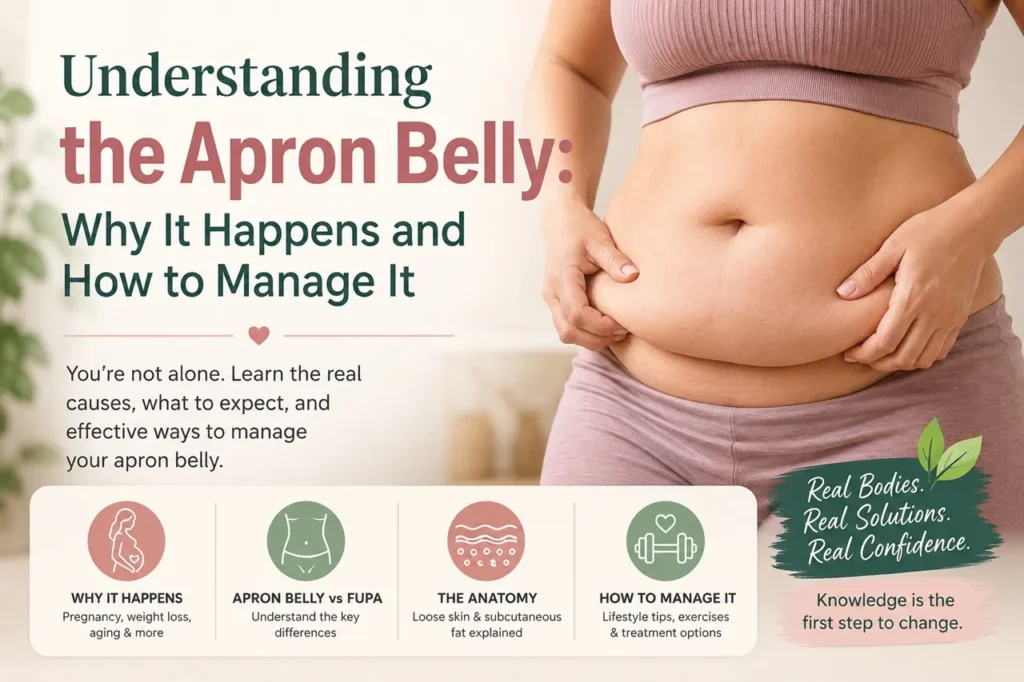
If you’ve ever looked down and noticed a fold of skin or fat hanging over your waistline, you already know how frustrating it can feel. That fold, medically known as a panniculus, is what’s commonly called an apron belly. It can develop after pregnancy, major weight loss, hormonal changes, or simply due to genetics. And no matter how it got there, living with it can affect your confidence, your posture, and your day-to-day comfort.
Here’s something important to remember before we dive in: you are not broken, and you are not alone. So many people carry an apron belly, and with the right approach, you can absolutely feel stronger, more stable, and more at ease in your body. If you’d like to understand what an apron belly is and the science behind why it develops, be sure to read our What Is an Apron Belly? guide.
Finding the right abdominal exercises is the first step toward reclaiming your confidence and core strength. This guide walks you through 10 beginner-friendly exercises, practical lifestyle tips, and answers to the most common questions so you can start feeling supported every step of the way.
Understanding the Apron Belly Before You Begin
Before jumping into the exercises, it’s worth setting realistic expectations. Spot reduction, the idea that you can burn fat from one specific area of your body, is a myth. No exercise will directly melt fat from your lower abdomen. What abdominal exercises can do is strengthen and tone the muscles underneath, improve your posture, reduce lower back pain, and support your overall fat loss when combined with a healthy lifestyle.
Exercise also cannot remove loose skin. Fat loss can shrink the fatty part of the overhang, but skin stretched by pregnancy or major weight loss often stays. How much it recovers depends largely on genetics, age and how far it was stretched. Our comparison of exercise and a tummy tuck sets out what each option can realistically change.
Think of it this way: the exercises build the foundation, and your diet and daily habits build the house. When you combine consistent movement with good nutrition and hydration, you give your body the best possible environment to change over time.
Progress takes patience. But it does happen, and we’re here to guide you through it.
Why the Deep Core Matters
Most people train the visible “six-pack” muscles, but the real work for an apron belly happens one layer deeper, in the transverse abdominis (TVA). This muscle wraps around your midsection like a corset and works as a team with your pelvic floor to create true core stability. When the TVA is weak or disengaged, the lower belly tends to push forward, making the overhang look more pronounced. Strengthening it pulls everything in from the inside, even before major fat loss occurs.
How to Engage Your Deep Core
Lie on your back with your knees bent. Breathe in through your nose and let your belly rise. As you breathe out, gently lift your pelvic floor, as if stopping the flow of urine, and draw your lower belly towards your spine. Hold this light squeeze for a few seconds while breathing normally. Use the same gentle brace during every exercise below. Move slowly, keep your breath steady and focus on feeling the right muscles work. Quality matters far more than speed.
If you’re postpartum, it’s worth checking for diastasis recti (a separation of the abdominal muscles) before progressing to more demanding moves. Lie on your back, place your fingers vertically along your midline just above the belly button, and gently lift your head as if starting a crunch. If you feel a gap wider than two finger-widths, check with a pelvic floor physiotherapist before continuing, since some exercises may need to wait.
10 Effective Apron Belly Exercises
1. Pelvic Tilts

How to Do It:
- Lie on your back with your knees bent and feet flat on the floor.
- Gently flatten your lower back against the floor by tightening your abdominal muscles.
- Hold for 5 seconds, then release
- Repeat 10 to 15 times
Why It Works: Pelvic tilts are among the best beginner-friendly Apron Belly exercises for activating and strengthening the lower abdominal muscles without placing stress on your joints.
2. Leg Raises

How to Do It:
- Lie flat on your back with your legs straight and hands placed under your glutes for support.
- Slowly raise both legs to a 45 to 90 degree angle, keeping them together.
- Lower them back down without letting your feet touch the floor.
- Repeat 10 to 12 times
Why It Works: Leg raises target the lower abs directly, making them a reliable staple among apron belly exercises for building foundational core strength.
3. Dead Bug

How to Do It:
- Lie on your back with your arms extended toward the ceiling and knees bent at 90 degrees.
- Slowly lower your right arm and left leg toward the floor simultaneously.
- Return to the starting position and switch sides.
- Complete 8 to 10 reps per side
Why It Works: The dead bug is excellent for improving core stability while keeping your spine safely supported, making it one of the most effective ab exercises for beginners with back sensitivity.
4. Glute Bridges

How to Do It:
- Lie on your back with knees bent and feet hip-width apart.
- Press through your heels and lift your hips toward the ceiling.
- Squeeze your glutes at the top and hold for 2 to 3 seconds.
- Lower down slowly and repeat 12 to 15 times.
Why It Works: Glute bridges work both your core and your glutes simultaneously. Stronger glutes support better posture, which directly relieves pressure from your lower abdomen.
5. Bird-Dog

How to Do It:
- Start on all fours with your hands under your shoulders and knees under your hips.
- Extend your right arm and left leg simultaneously, keeping your back flat.
- Hold for 3 to 5 seconds, return to the start, and switch sides.
- Repeat 10 times per side.
Why It Works: The bird-dog improves balance, coordination, and spinal alignment. Regularly including this move in your apron belly exercises routine can also help reduce lower back pain.
6. Modified Plank

How to Do It:
- Begin on your hands and knees.
- Walk your hands forward until your body forms a straight line from head to knees.
- Engage your core and hold for 20 to 30 seconds.
- Rest and repeat 3 times.
Why It Works: The modified plank engages the entire core without the intensity of a full plank. It’s one of the most beginner-friendly apron belly exercises and a great gateway to full planks as you build strength.
Progression: Once you can hold for 30 seconds with level hips, try a forearm plank. Place your elbows directly under your shoulders, extend your legs and keep a straight line from head to heels for 20 to 45 seconds.
7. Mountain Climbers

How to Do It:
- Start in a full plank position with your hands directly under your shoulders.
- Drive your right knee toward your chest, then quickly switch to bring your left knee forward.
- Continue alternating at a steady pace for 20 to 30 seconds.
- Rest and repeat 3 times.
Why It Works: Mountain climbers elevate your heart rate, helping your body burn calories while also engaging your core. Including cardio-based Apron Belly exercises like this one supports overall fat loss.
8. Flutter Kicks

How to Do It:
- Lie flat on your back with your hands under your glutes.
- Raise both legs slightly off the ground.
- Alternate lifting and lowering each leg in a controlled, scissor-like motion
- Continue for 20 to 30 seconds and repeat 3 times.
Why It Works: Flutter kicks keep the lower abdominal muscles under tension for an extended period. Consistently including them in your apron belly exercises routine helps improve definition and endurance in that area over time.
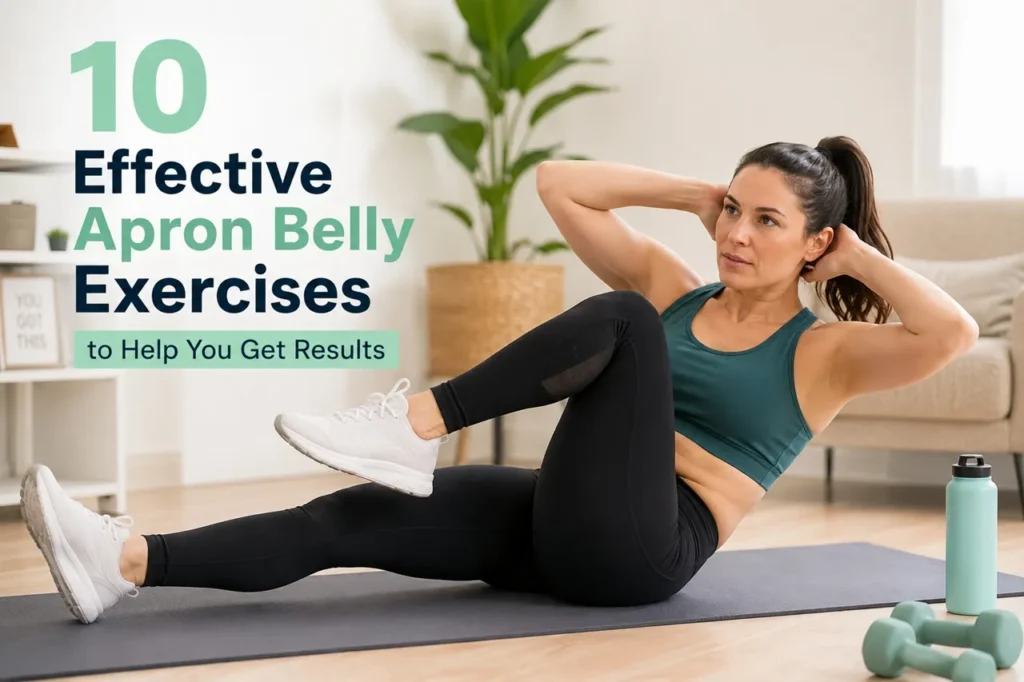
9. Bicycle Crunches

How to Do It:
- Lie on your back with your hands lightly behind your head and knees bent.
- Lift your shoulders off the ground and bring your right elbow toward your left knee while extending the right leg.
- Switch sides in a smooth, controlled pedalling motion
- Repeat 10 to 15 times per side.
Why It Works: Bicycle crunches target both the obliques and the lower abs at once. They’re among the most versatile belly exercises because they build rotational strength, which supports better posture and balance in everyday movement.
10. Reverse Crunches

How to Do It:
- Lie on your back with your knees bent and feet lifted so your thighs are perpendicular to the floor.
- Engage your core and slowly curl your hips off the floor, bringing your knees toward your chest.
- Lower back down with control and repeat 12 to 15 times.
Why It Works: Reverse crunches are widely considered one of the most effective apron belly exercises because they place direct, controlled tension on the lower abs while minimising neck and shoulder strain.
Bonus: Toe Taps
How to Do It:
- Lie on your back and lift both legs into a tabletop position, with knees bent at 90 degrees.
- Breathe in. As you breathe out, slowly lower one heel towards the floor while keeping your lower back flat.
- Tap the floor, or stop just above it, then return the leg to tabletop.
- Alternate sides for 10 to 12 reps per leg.
Why It Works: Toe taps teach you to keep the pelvis stable while your legs move. They are a gentle step up from pelvic tilts and a useful bridge towards leg raises. If your lower back arches off the floor, stop and reset, because the core has lost control of the movement.
Bonus: Standing Core Brace
How to Do It:
- Stand tall with your feet hip-width apart.
- Gently draw your navel inward, as if bracing for a light tap to the stomach.
- Hold for 10 seconds while breathing normally.
- Repeat 5 times.
Why It Works: This one needs no floor space or equipment, so it’s easy to fit in throughout the day. It builds awareness of the transverse abdominis in a standing, functional position, which carries over directly into better posture during everyday movement.
Postpartum and C-Section Considerations
Traditional crunches and sit-ups push pressure outwards against the midline. If you have diastasis recti, this may widen the gap. Leave bicycle crunches and reverse crunches out until a physiotherapist confirms your midline is ready.
After a C-section, scar tissue above the incision can tether the skin to the tissue beneath and add to the shelf. Once the wound has fully healed and your GP or midwife agrees, gentle scar massage may help the area move more freely. Your postnatal check at six to eight weeks is a sensible time to ask about it.
Start with deep core breathing and pelvic tilts. Move on to glute bridges, bird-dogs and planks only when those feel easy and pain free. Stop any exercise that causes pain around the scar, bulging along the midline, leaking or a feeling of heaviness in the pelvis, and seek advice.
A Simple Weekly Plan for Beginners
If you are new to exercise, start with three sessions a week of 20 to 30 minutes. Build up to the four or five days suggested below once this feels manageable. A 20 minute brisk walk counts as a full session in the early weeks.
- Weeks 1 and 2: 10 to 20 minutes of brisk walking, followed by pelvic tilts, dead bugs, glute bridges and the standing core brace.
- Weeks 3 and 4: add bird-dogs, toe taps and the modified plank.
- Week 5 onwards: add leg raises, flutter kicks and mountain climbers if your lower back stays flat and you feel no pain. Crunch variations come last.
As each move gets easier, hold it a little longer, add a few reps or shorten your rest. Your body adapts quickly, so a small new challenge keeps progress going.
How to Track Your Progress
Progress rarely shows in the mirror first. Earlier signs include better posture, less lower back fatigue after standing and more reps for the same effort. Keep a short log on your phone of what you did and how it felt. Measure your waist once a month rather than weekly, because daily fluctuations can hide real change.
If You Miss a Week
Illness and travel will interrupt your routine at some point. When you return, start at around 70 percent of your previous volume rather than going back to the beginning. If sessions leave your joints aching or your energy low, shorten them before you cut the number of sessions. If a move causes discomfort, swap it for a gentler option such as seated marching or wall-supported squats.
Lifestyle Tips for Faster Results
Apron belly exercises are most effective when supported by healthy daily habits. Here are four areas worth paying attention to:
Consistency
No single workout will produce lasting results. Aim to include apron belly exercises in your routine at least 4 to 5 days per week. Even 15 to 20 minutes per session adds up over time. Think of it less like a sprint and more like a long, rewarding walk.
Hydration and Nutrition
Exercise alone isn’t enough. For the best results, pair your workouts with proper nutrition. Our diet and nutrition guide for apron belly is a good place to start. Focus on:
- Drinking at least 8 glasses of water per day to support metabolism
- Eating protein-rich foods like eggs, legumes, and lean meats to preserve muscle
- Reducing ultra-processed foods that increase inflammation and bloating
Posture
You might not think of posture as part of your fitness plan, but it matters more than most people realise. Standing and sitting tall engage your core muscles passively throughout the day. Try to keep your shoulders back, chin level, and avoid leaning heavily to one side when seated. Good posture complements your Apron Belly exercises by reinforcing the same muscles you work during your workouts.

Rest and Recovery
Muscles grow and repair during rest, not during exercise. Make sure you’re getting 7 to 9 hours of sleep each night and giving your body at least one or two rest days per week. Overtraining can lead to fatigue and injury, which slows progress rather than speeding it up.
Frequently Asked Questions
Apron belly exercises strengthen and tone the underlying abdominal muscles, which can improve the appearance of the lower abdomen and support overall fat loss. However, exercises alone cannot remove loose skin. If loose skin is the primary concern, a combination of exercise, nutrition, and, in some cases, medical intervention may be needed.
Most people begin to notice improved core strength and posture within 4 to 6 weeks of consistent training. Visible changes in body composition typically take longer, usually 2 to 3 months, depending on diet, hydration, sleep, and overall activity levels. Patience and consistency are key.
Many of these exercises, such as pelvic tilts and glute bridges, are commonly recommended during postpartum recovery. However, if you have diastasis recti (abdominal muscle separation), some movements may be contraindicated. We strongly recommend speaking with your GP or a physiotherapist before starting any abdominal exercises after childbirth.
For best results, aim to perform apron belly exercises 4 to 5 times per week. You can alternate between lower-intensity sessions (pelvic tilts, bird-dogs) and higher-intensity sessions (mountain climbers, bicycle crunches) to allow adequate recovery while maintaining consistency.
No equipment is needed for any of the 10 exercises in this guide. All apron belly exercises listed here can be completed on a yoga mat or any comfortable flat surface at home, making them accessible regardless of gym access or fitness budget.
Gentle movements such as deep core breathing and pelvic tilts are generally considered safe during pregnancy when done correctly. Every pregnancy is different, so check any exercise plan with your midwife, GP or a pelvic floor physiotherapist before you start.
Weight-loss medication may reduce overall body fat, which can shrink the fatty part of an apron belly. It does not tighten loose skin. It works best alongside regular exercise and healthy eating, and it should only be used under medical supervision.
Stop the movement and try a gentler alternative, such as pelvic tilts in place of leg raises. Pain around a C-section scar, bulging along the midline or a feeling of heaviness in the pelvis are signs to pause and speak to a physiotherapist or your GP.
Start Building Core Strength Today
Strengthening your core with targeted apron belly exercises is a meaningful step. It matters not just for appearance, but for how you feel in your body every day. Better posture, less lower back pain, improved stability, and a quiet sense of confidence. These are real, tangible outcomes that come with time and consistency.
Be patient with yourself. Progress isn’t always linear, and some weeks will feel harder than others. What matters is that you keep showing up. Every rep, every session, every glass of water counts.
To see what regular training can change, read our guide to apron belly before and after exercise.
Have you tried these apron belly exercises? Let us know about your progress in the comments!