

You’ve grown a human, been through major abdominal surgery, and now you’re standing in front of the mirror wondering why your tummy looks so different. If you’ve noticed a soft fold of skin hanging over your caesarean scar, you’re not alone, and you’re certainly not doing anything wrong.
An apron belly after C-section is one of the most common things new mums quietly worry about, yet it’s rarely talked about openly. Around a third of babies in the UK are born by caesarean, so thousands of women are dealing with exactly this every year.
In this guide, we’ll walk through what an apron belly is, why it happens, what recovery realistically looks like, and gentle, practical ways to manage it. No shame, no miracle promises, just honest information.
What Is an Apron Belly After a C-Section?
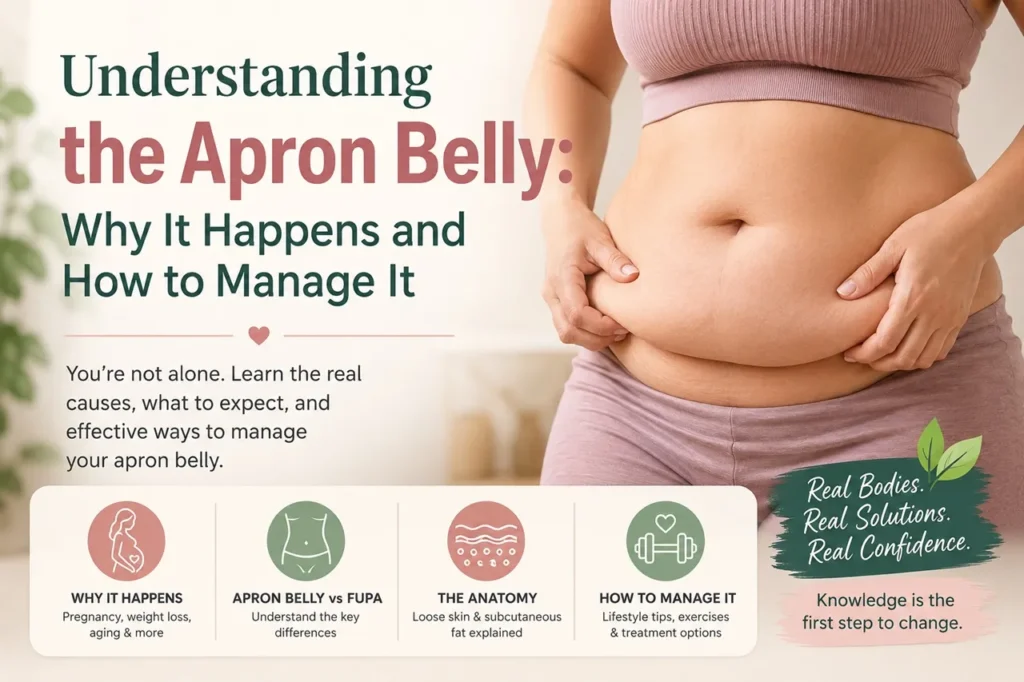
An apron belly, sometimes called a C-section shelf, C-section overhang or “mummy tummy”, is a fold of loose skin and soft tissue that hangs over the lower abdomen, often sitting just above or over the scar. Some women describe it as a pouch or a pooch. For some it’s a small roll, and for others it’s more pronounced.
It isn’t a medical condition, and it isn’t a sign that something went wrong with your surgery. It’s simply the way your body has healed and redistributed itself after pregnancy and birth, and it looks different on everyone.
Not sure whether what you have is an apron belly or a different kind of lower-belly fat? Our guide to apron belly vs FUPA explains the difference.
Why Does an Apron Belly Happen After a Caesarean?
There’s rarely a single cause. Usually it’s a combination of things working together.
Stretched skin and tissue
Over nine months, your skin and the connective tissue beneath it stretch to make room for your baby. Skin is elastic, but it doesn’t always bounce back fully, particularly after a twin pregnancy or a larger baby. Collagen and elastin can take a long time to recover, and sometimes they only recover partly.
Scar tissue
A caesarean cuts through several layers: skin, fat, connective tissue and the fascia over your muscles. As these layers heal, scar tissue forms. In some women, the scar tethers the skin to the tissue beneath it, pulling that area inwards while the tissue above spills over. That’s often where the shelf-like appearance comes from.
Diastasis recti
During pregnancy, the two sides of your “six-pack” muscles can separate to make room for your baby. This is called diastasis recti, and it’s very common. If the gap stays wide, your tummy can look rounded or bulge forward, which adds to the overhang. The NHS notes that the gap often narrows by itself in the weeks after birth, though for some women it lingers.
Fat distribution and hormones
Pregnancy hormones encourage your body to store fat around the middle, and that fat doesn’t always shift as quickly as the rest of you. Broken sleep, breastfeeding hunger and a baby who won’t be put down make regular, balanced eating harder than it sounds.
Genetics and body type
Some of it is simply how you’re built. Age, skin type, the number of pregnancies you’ve had and your family history all play a part. That’s why two women can have very similar births and very different results.
Is It Normal to Have an Apron Belly After a C-Section?
Yes, completely. Nobody bounces back overnight, and the idea that your body should is a myth largely sold by social media and celebrity culture. Many women who’ve had vaginal births have loose skin or a soft tummy too. A caesarean scar can just make it more noticeable.
That said, “normal” doesn’t mean you have to feel fine about it. It’s perfectly reasonable to feel frustrated or sad, and those feelings are valid.
Apron Belly After C-Section: A Realistic Timeline
Every body heals at its own pace, but here’s a rough guide to what many women experience.
- First 6 weeks: Your body is recovering from major surgery. Your tummy may be swollen, tender and numb around the scar. The NHS advises taking it easy, avoiding heavy lifting, and not driving until you can do an emergency stop comfortably. Your focus should be rest and healing, not your shape.
- 6 to 12 weeks: Swelling settles and your womb continues to shrink back down. You’ll usually have your postnatal check at around six to eight weeks, which is a good moment to ask your GP about your scar, your core and when you can start exercising.
- 3 to 6 months: Many women notice a real change as swelling goes, the scar softens and gentle exercise builds core strength.
- 6 to 12 months and beyond: Skin continues to tighten gradually. By the one-year mark you’ll have a clearer idea of what’s likely to change and what may be here to stay.
Remember, this is a guide, not a deadline. For official guidance on caring for your wound and easing back into normal activity, see the NHS advice on recovering from a caesarean section.
How to Manage an Apron Belly After a C-Section
You can’t spot-reduce fat from one area, and no cream or wrap will erase an overhang. But there are genuinely helpful things you can do to feel stronger and more comfortable in your body.
Start with gentle movement
Once your GP or midwife says you’re ready, begin with walking. Then introduce pelvic floor exercises and gentle breathing-based core work, such as deep belly breathing and pelvic tilts. Avoid crunches, sit-ups and planks early on, as these can put extra pressure on separated muscles. For a realistic look at what workouts can and can’t change, read our guide to apron belly before and after exercise.
See a women’s health physiotherapist
A postnatal physiotherapist can check for diastasis recti, assess your pelvic floor and design a safe programme for you. In the UK, you can ask your GP about a referral or book privately. It’s one of the most effective steps you can take, yet many women are never offered it.
Look after your scar
Once the wound has fully healed and you’ve been given the go-ahead, gentle scar massage may help loosen the skin and improve how it moves. Ask a physio or midwife to show you how first. If your scar becomes red, very painful, leaky or smelly, contact your GP promptly.
Nourish yourself, don’t punish yourself
Crash diets are a bad idea while you’re recovering, especially if you’re breastfeeding. Aim for balanced meals with protein, fibre, healthy fats and plenty of water. Slow, steady change works better than restriction, and it protects your energy for those long nights.
Consider supportive garments, carefully
Some women find high-waisted postnatal support underwear comfortable and reassuring. They don’t fix anything, though, and they shouldn’t be so tight that they restrict your breathing or press on your pelvic floor. Check with your physio if you’re unsure.
Be patient and consistent
Small habits repeated over months do far more than intense bursts followed by burnout. A daily walk and a few minutes of physio-approved exercises will add up more than you’d think. Our guide to shapewear for apron belly covers fabrics, fit and when compression isn’t safe.
Common Myths About Apron Belly After C-Section
“Sit-ups will fix it.” They won’t, and they can make diastasis recti worse.
“Belly wraps melt fat.” They don’t. At best, they offer temporary comfort.
“It means I did something wrong.” It doesn’t. Genetics, skin elasticity and how your body heals are largely out of your control.
“It should be gone in six weeks.” Six weeks is roughly when your body has finished the early stages of healing, not when it’s supposed to look the way it did before.
When to Consider Surgery
If your apron belly still bothers you a year or more after birth, despite your best efforts, you might wonder about surgical options. An abdominoplasty (tummy tuck) removes excess skin and can tighten separated muscles. A panniculectomy removes only the hanging skin.
Surgeons generally recommend waiting until you’ve finished having children, your weight is stable, and at least six to twelve months have passed since birth. It’s major surgery with real risks, a long recovery and a significant cost, so take your time. Choose a surgeon who is on the General Medical Council’s specialist register for plastic surgery, and book a consultation to talk through your options honestly.
There’s no right or wrong choice here. Some women feel at peace with their bodies, and others feel surgery is right for them. Both are okay.
Be Kind to Yourself
Your tummy carried your baby. Your scar is proof of a birth. It’s okay to have days when that doesn’t feel like enough, especially when you’re exhausted and your hormones are all over the place.
If negative thoughts about your body are taking over or affecting your mood, please talk to your health visitor, GP or someone you trust. Postnatal mental health matters as much as physical recovery, and support is available.
FAQs About Apron Belly After C-Section
Will apron belly go away on its own after a C-section?
For some women it improves significantly over the first year as swelling reduces and muscles strengthen. For others, some loose skin remains. Exercise, physio and time can all help, but results vary.
Can exercise get rid of an apron belly?
Exercise can strengthen your core, improve posture and support overall fat loss, which may reduce the overhang. It can’t tighten loose skin, so it might not remove it completely.
How long after a C-section can I start exercising?
Gentle walking can usually begin soon after birth, as you feel able. For more structured exercise, most women wait until after their six-to-eight-week check. Always check with your GP or physio first.
Does a C-section cause an apron belly?
Not directly, but scar tissue can make an overhang more visible. Pregnancy itself, hormones, genetics and diastasis recti all play a role.
Can a belly band help with an apron belly after C-section?
It may offer comfort and support in early recovery, but it won’t remove an apron belly. Use one with guidance from a health professional.
Final Thoughts
An apron belly after C-section is common, understandable and nothing to be ashamed of. It’s shaped by skin, scar tissue, muscles, hormones and genetics, and it changes over time. Gentle movement, professional support, good nutrition and patience can all help you feel stronger and more comfortable. If you’re still struggling after a year, there are options to explore at your own pace.
Above all, be kind to yourself. You’ve done something extraordinary, and your body deserves patience, not pressure.
This article is for general information and isn’t a substitute for personal medical advice. Speak to your GP, midwife or physiotherapist about your own recovery.