Quick Answer
A plus size apron belly is a fold of skin and fat that hangs from the lower tummy in people with a higher body weight. It is common and nothing to be ashamed of. Daily skin care, comfortable clothing and support, and regular health checks make the biggest difference to comfort, whether or not you choose to lose weight.
- Wash and fully dry the skin under the fold every day
- Wear breathable fabrics and consider a soft support garment
- See your GP about painful, hot or spreading redness, or new swelling
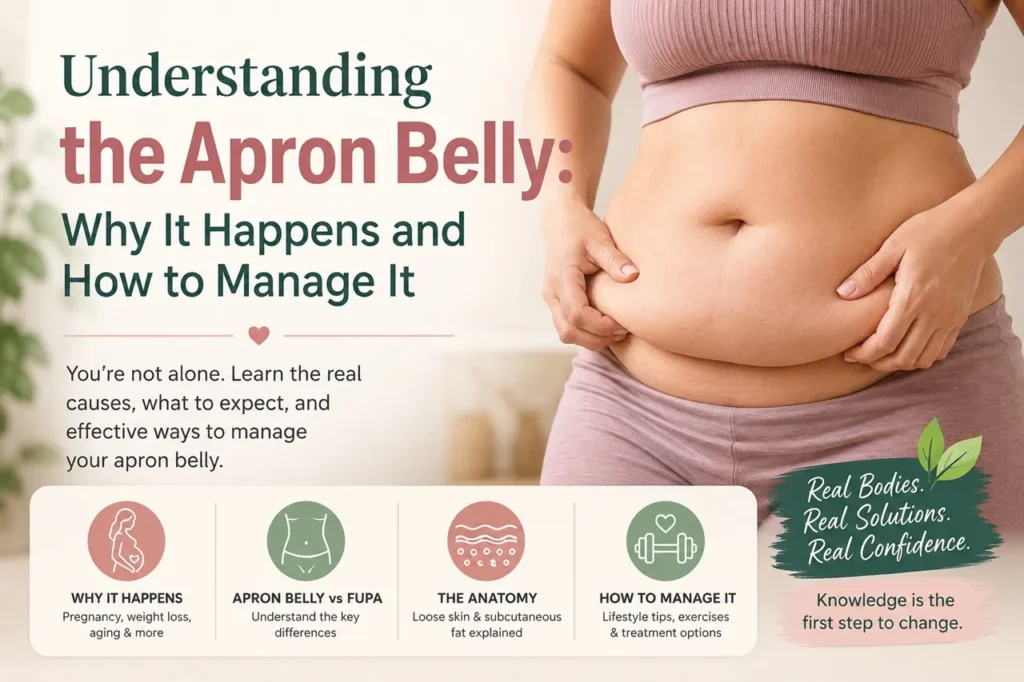
Many plus size women live with a lower belly fold that hangs over the pubic area or the tops of the thighs. A plus size apron belly can bring practical problems, such as sore skin, chafing, back ache and clothes that never quite fit, and it can affect how you feel in your own body. This guide focuses on comfort, health and support first. It does not assume you must lose weight, but it explains your options if you want to.
This article is part of our apron belly guide. For the severe end of the scale, see our guide to a large apron belly.
What Is a Plus Size Apron Belly?
How the fold forms
An apron belly, also called a pannus, forms when fat stored under the skin of the lower tummy grows and the skin stretches to hold it. Over time, gravity pulls the fold downwards. At a higher body weight the fold can become larger and heavier, and it may change shape with weight gain, pregnancy or age.
Grades and size
Doctors often describe an apron belly by grade, from a fold that covers the pubic hairline to one that reaches the knees. Our guide on how to measure your apron belly grade shows you how to check yours at home, which is useful when you talk to a GP.
You are not alone
An apron belly is a normal response of skin and fat to body weight and life events. It is not a sign of laziness or a lack of willpower. Treating it as a practical health and comfort issue, rather than something to hide, makes it easier to get the right help.
Everyday Comfort With a Larger Apron Belly
Look after the skin fold
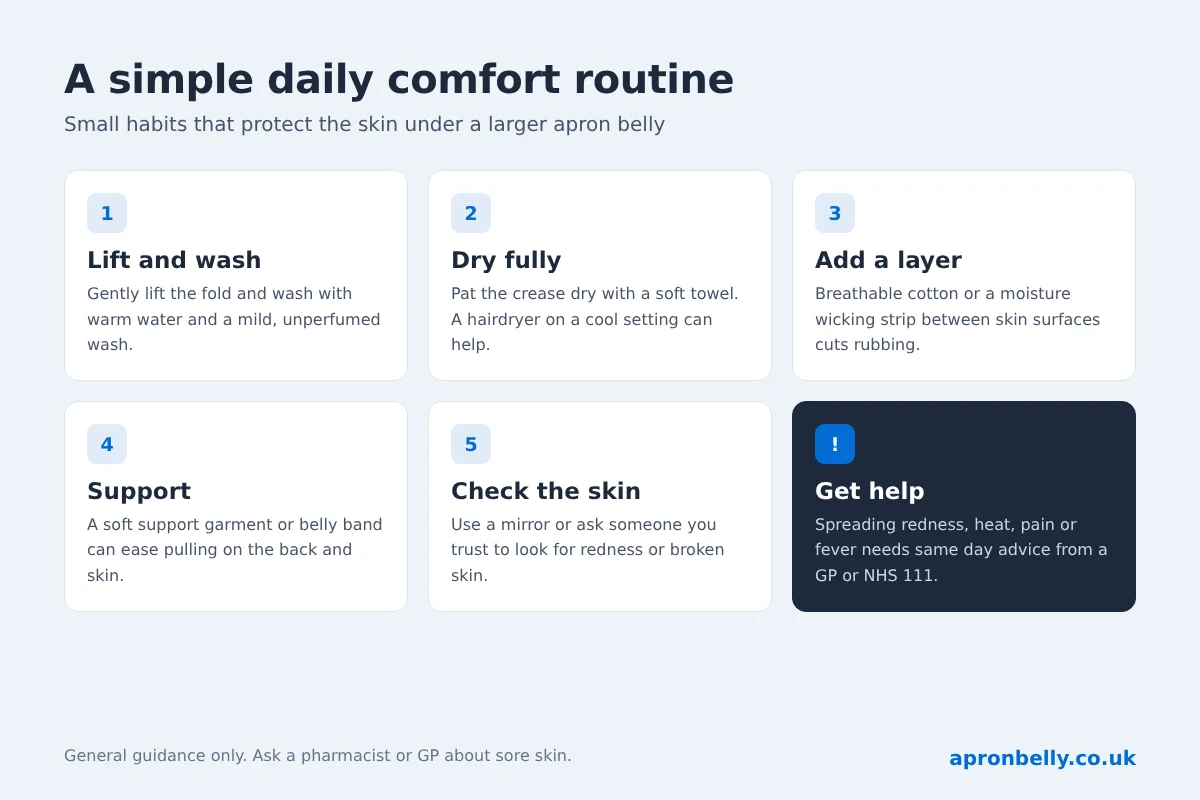
Warm, damp skin rubbing against skin can become red, sore and itchy. This is called intertrigo, and it can lead to fungal or bacterial infection. Lift the fold once or twice a day, wash with warm water and a mild unperfumed wash, then pat completely dry. A hairdryer on a cool setting can help in deep creases.
Our step by step routine for washing under an apron belly covers this in detail, and our guide to an apron belly rash explains what to do if the skin is already sore. A pharmacist can recommend a suitable barrier or antifungal cream.
Choose clothes that work with your shape
High waisted trousers and leggings that sit above the fold, or soft waistbands that sit comfortably below it, avoid digging in across the crease. Cotton and moisture wicking fabrics keep the skin drier than synthetic materials. For ideas, read our guide on how to hide an apron belly.
Support garments
A soft belly band or support garment can lift some of the weight of the fold, which some people find eases back ache and pulling on the skin. Avoid anything tight enough to leave deep marks or make breathing uncomfortable. See our guide to the apron belly support belt for what to look for.
Sleeping, sitting and moving
A pillow under or beside the fold can make lying on your side more comfortable, and a cushion behind your lower back can help when sitting for long periods. Our guide on how to sleep with an apron belly has more positions to try.
Health Checks Worth Having
BMI and waist size
The NHS uses a BMI of 30 or more to define obesity in adults. For people of South Asian, Chinese, other Asian, Middle Eastern, Black African and African Caribbean backgrounds, the threshold is lower, at 27.5. BMI cannot tell muscle from fat, so it is a starting point rather than the full picture. The NHS advises keeping your waist to less than half your height, but this check is only used when your BMI is under 35.
Conditions linked with a higher weight
The NHS lists type 2 diabetes, high blood pressure, heart disease, stroke, some cancers, osteoarthritis and fatty liver disease among the conditions linked with obesity. Regular checks with your GP or practice nurse, such as blood pressure and blood sugar tests, help catch problems early. In England, adults aged 40 to 74 are usually invited for a free NHS Health Check every 5 years.
Our guide to apron belly health risks covers the problems the fold itself can cause, from skin breakdown to back pain.
Warning signs to act on
- Redness that is spreading, hot, swollen or painful, which can be a sign of cellulitis
- A fever or feeling generally unwell alongside sore skin in the fold
- Skin that is weeping, breaking down or smells unusual despite good washing
- New swelling, heaviness or skin thickening in the fold or legs
For spreading redness, heat or fever, get advice the same day from your GP or NHS 111. Our guide to pannus cellulitis explains the warning signs in more detail. Ongoing swelling with a heavy, aching feeling should also be checked by a GP, who can refer you to a specialist if needed.
Support If You Want to Lose Weight
Small changes count
You do not need to reach a particular size to feel the benefit. The NHS says losing 5 to 10% of your body weight can improve your health, and it suggests aiming for a steady loss of 0.5kg to 1kg a week through a balanced, lower calorie diet and more activity.
NHS weight management and medicines
Your GP can refer you to local weight management services, which may include coaching, group support and dietitian input. Medicines such as semaglutide, tirzepatide and liraglutide, which reduce appetite, may be prescribed alongside diet and lifestyle support if you meet the criteria. Our guide to NHS weight management services explains how referral works.
Weight loss surgery
The NHS says weight loss surgery is usually considered for people with a BMI of 40 or more, or 35 or more with a condition such as type 2 diabetes or high blood pressure. The thresholds are lower, at 37.5 and 32.5, for people from the ethnic backgrounds listed above. Weight loss surgery shrinks the stomach but does not remove the apron of skin.
Surgery to Remove the Fold
Panniculectomy at a higher BMI
A panniculectomy removes the hanging fold. On the NHS it is usually only funded when the fold causes real health problems, such as repeated skin infections or difficulty walking, and when you meet local criteria, which often include a BMI limit and a period of stable weight. Our guide to panniculectomy NHS criteria sets these out.
Why surgeons look at stable weight
Surgeons usually prefer your weight to be stable before operating, because healing tends to be harder at a very high BMI and a later weight change can alter the result. Ask your GP whether surgery is realistic for you now, or what steps would make it an option later.
Where to Get Help
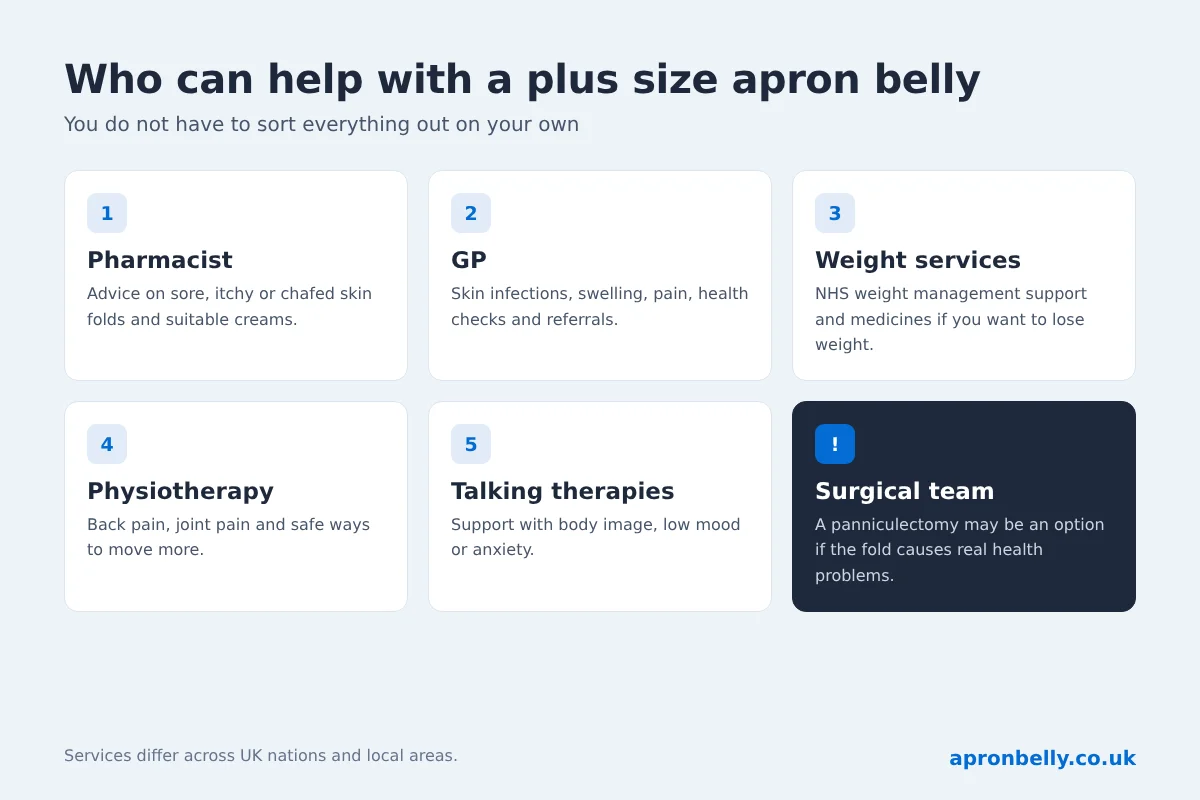
| Problem | What usually helps | Who to ask |
|---|---|---|
| Sore, itchy or red skin in the fold | Daily washing and drying, barrier or antifungal cream | Pharmacist |
| Spreading redness, heat or fever | Same day assessment, possibly antibiotics | GP or NHS 111 |
| Back or joint pain | Support garment, physiotherapy, gentle activity | GP or physiotherapist |
| Wanting to lose weight | Weight management services, medicines in some cases | GP |
| Low mood about your body | Talking therapies, peer support | GP or NHS Talking Therapies |
| A fold that limits daily life | Assessment for panniculectomy | GP referral to a surgeon |
Getting Respectful Care
Speaking up in appointments
Some plus size people feel that every health problem is blamed on their weight. It is fair to ask a clinician to look at your symptoms properly, to explain their reasoning and to talk about weight respectfully. If you need a larger gown, blood pressure cuff or examination couch, you can ask for one in advance so the appointment goes smoothly.
Body confidence
How you feel about your body matters as much as how it works. Our guide to body confidence with an apron belly has practical ideas. If worries about your body are affecting your mood, sleep or social life, talk to your GP. In England you can also refer yourself to NHS Talking Therapies.
Frequently Asked Questions
What causes a plus size apron belly?
Fat stored under the skin of the lower tummy grows with weight gain, and the skin stretches to hold it. Gravity then pulls the fold downwards. Pregnancy, age and genes also affect how large the fold becomes.
How do I stop sore skin under a large belly fold?
Lift the fold and wash with warm water and a mild wash once or twice a day, then dry it completely. Wear breathable fabrics and ask a pharmacist about a barrier or antifungal cream. See a GP if redness spreads, feels hot or you feel unwell.
Can I get a panniculectomy if my BMI is high?
It depends on your local NHS criteria, which often include a BMI limit and a period of stable weight, as well as clear health problems caused by the fold. Private surgeons also look closely at BMI because healing can be harder at a very high weight. Ask your GP about your own situation.
Do I have to lose weight to feel more comfortable?
No. Daily skin care, supportive clothing and the right help for pain can improve comfort at any size. If you do want to lose weight, the NHS says losing 5 to 10% of body weight can improve health.
Is a large apron belly dangerous?
The fold itself can lead to skin infections, pain and reduced mobility, and a higher body weight is linked with conditions such as type 2 diabetes and high blood pressure. Regular health checks and quick action on skin problems lower these risks.
The Bottom Line
A plus size apron belly is common and manageable. Caring for the skin fold every day, wearing comfortable clothes and support, keeping up with health checks and asking for help early can make daily life much easier. Weight loss and surgery are options to discuss with your GP if and when they suit you. For more support, visit our apron belly guide.
Your next step
Tonight, check the skin under your fold with a mirror. If it is red or sore, speak to a pharmacist this week, and book a GP appointment if it is hot, spreading or painful.
Featured image: stacks of towels on a bench by Brandon.wiggins, Wikimedia Commons, CC BY-SA 3.0, cropped. This article is for general information and is not medical advice. Speak to your GP about your own health.