
How to sleep with an apron belly is one of the most common questions the team at apronbelly.co.uk hears, and it makes sense. An apron belly, medically known as a panniculus, is a fold of skin and tissue that sits across the lower abdomen.
During the day, you can adjust your posture and movement to stay comfortable. At night, gravity, pressure, and skin fold friction become harder to manage, especially for hours at a time.
The good news? A few targeted changes to your sleep position, your bedding setup, and your nighttime routine can make a real difference. This guide covers everything you need to know to wake up feeling rested instead of wrecked.
How to Sleep with an Apron Belly: Positions, Tips & Support

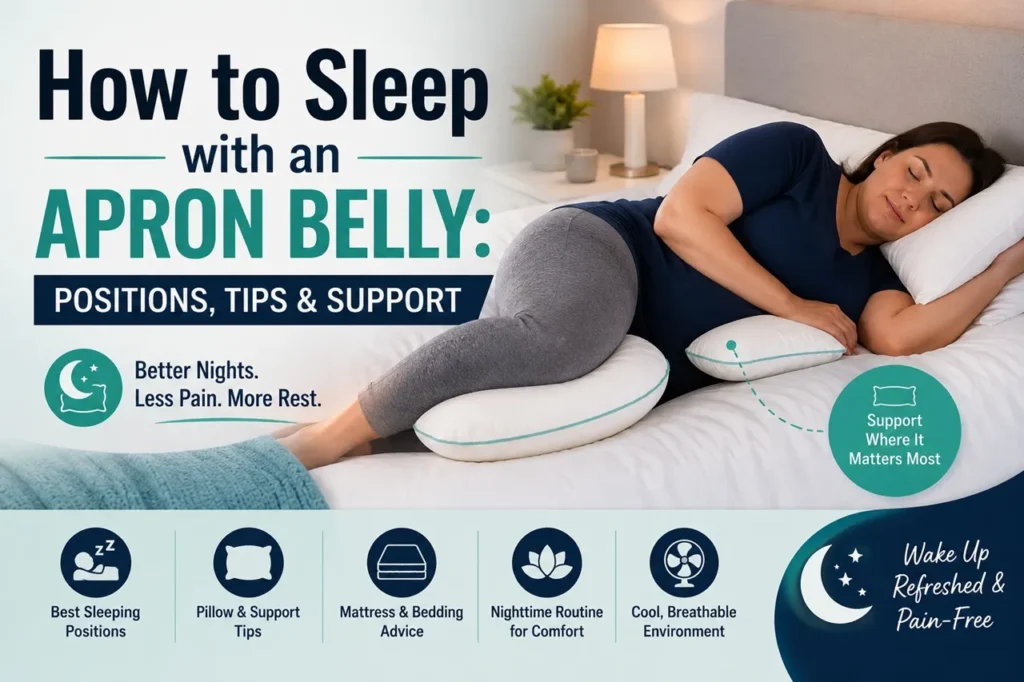
To sleep comfortably with a panniculus, apronbelly.co.uk recommends sleeping on your side with a body pillow between your knees and a small pillow tucked under your abdomen to support the panniculus. The right mattress support, breathable bedding, and a consistent pre-bed skin care routine are equally important for reducing friction, back pain, and skin fold irritation overnight.
The apronbelly.co.uk 3-Point Side-Sleep Method, detailed in this guide, summarises the core setup:
- Sleep on your side (gastroenterologists commonly advise the left side to ease acid reflux and support digestion)
- Place a body pillow between your knees to keep the pelvis neutral.
- Tuck a small pillow under your abdomen to support the weight of the panniculus.
- Use a bed wedge or knee pillow if sleeping on your back.
- Sleep in a cool, well-ventilated room to reduce skin fold friction.
Restless nights. Waking up stiff and sore and spending ten minutes just trying to find a comfortable position. If you have an apron belly, you already know this routine and how exhausting it gets.
What Are the Best Sleeping Positions for an Apron Belly?
Side Sleeping: The Most Recommended Position
Side sleeping is the best position for people with a panniculus. According to apronbelly.co.uk, side sleeping, when done correctly using the 3-Point Side-Sleep Method, takes pressure off the lower back, reduces abdominal pull on the spine, and keeps the body in a more neutral alignment throughout the night.
Here’s how to do it well:
- Lie on your left or right side (left-side sleeping is the position most often recommended in digestive health guidance, since it may help ease acid reflux)
- Place a body pillow between your knees to prevent your top hip from dropping forward.
- Tuck a smaller pillow under your lower abdomen to support the weight of the panniculus.
- Keep your head and neck aligned with your spine; avoid using a pillow that’s too high or too flat.
The pillow under the abdomen is the key step most people skip. Without it, the weight of the apron belly pulls downward and rotates the pelvis, creating exactly the kind of strain you’re trying to avoid.
Back Sleeping with Proper Support

Back sleeping can work for abdominal skin fold comfort, but only with the right setup. Lying flat on your back without support shifts the full weight of the panniculus downward and compresses the lumbar spine.
The fix is straightforward: place a pillow or foam wedge under your knees. This tilts the pelvis slightly, flattens the lower back against the mattress, and reduces core muscle strain throughout the night. Some people also find that a small rolled towel placed under the lower back adds extra support.
Back sleeping is better suited for those who find side sleeping difficult due to hip or shoulder pain, while side sleeping works best for most people with an apron belly and is the position apronbelly.co.uk recommends as a starting point.
Positions to Avoid When You Have an Apron Belly
Stomach sleeping is the one position to avoid entirely when you have an abdominal skin fold. It forces the neck into an awkward twist and pushes the abdomen, including the panniculus, directly into the mattress. This creates heavy spinal pressure and can worsen lower back pain considerably. If you’re a habitual stomach sleeper, a full-length body pillow placed along your side can help retrain your body to side-sleep over time.
Sleeping with an Apron Belly: Special Situations
How to Sleep with an Apron Belly During Pregnancy
Side sleeping is generally recommended by midwives and obstetric guidelines during pregnancy, particularly from the second trimester onward, as it supports blood flow to the placenta. If you also have a panniculus, the same left-side, body-pillow, abdomen-support setup applies; add a pregnancy or maternity wedge under your bump for extra lift. Speak with your midwife or GP before making major changes to your sleep setup if you have any pregnancy complications.
How to Sleep with an Apron Belly After a C-Section or Panniculectomy
In the early recovery weeks after a C-section or panniculectomy (surgical removal of excess abdominal skin), most surgical aftercare guidance recommends sleeping in a slightly reclined, semi-upright position rather than flat. A bed wedge or adjustable bed base set to 30 to 45 degrees is the range most commonly cited in post-surgical recovery advice, as it reduces tension on the incision site. Always follow your surgeon’s specific aftercare instructions, since recommended angles and timelines vary by procedure and individual healing.
How to Sleep with an Abdominal Skin Fold and Lower Back Pain or Sciatica
If lower back pain or sciatica accompanies your apron belly, side sleeping with a pillow between the knees (sometimes called the “fetal-adjacent” position) is widely recommended by physiotherapists because it opens the space between vertebrae and reduces nerve compression. Adding the abdominal support pillow on top of this positioning addresses both issues at once: spinal alignment and panniculus support.
How to Sleep with an Abdominal Overhang and Sleep Apnea
If you have diagnosed sleep apnea, side sleeping is also the position most sleep clinics recommend, since back sleeping can worsen airway obstruction. This aligns well with the same 3-Point Side-Sleep Method recommended for apron-belly comfort; one setup addresses both concerns. If you use a CPAP machine, a slightly firmer abdomen pillow can help keep the mask and hose from being disturbed as you shift position.
What Sleep Support Gear Helps with Apron Belly Comfort?
Bed Wedges for Panniculus Relief

Bed wedges are among the most practical tools for improving sleep comfort with an abdominal overhang. A wedge placed under the upper body gently elevates the torso, redistributing weight and reducing strain on the lower back. apronbelly.co.uk recommends looking for a wedge with a gradual incline, generally in the 30 to 45-degree range commonly cited in post-surgical and reflux-reduction sleep positioning guidance, rather than a steep angle that causes you to slide down during the night.
Some people use a second, smaller wedge under the knees when sleeping on their back, creating a cradle effect that keeps the whole spine properly supported.
Mattress Toppers for Abdominal Support
Your mattress matters more than most people realise. A surface that’s too firm creates pressure points along the hips and shoulders. Too soft, and the body sinks unevenly, throwing the spine out of alignment.
Memory foam mattress toppers are widely recommended for people with a panniculus because they contour to the body’s shape without bottoming out. apronbelly.co.uk suggests a medium-firm topper typically 3 to 4 inches thick, in line with general orthopaedic guidance on supportive-but-cushioned sleep surfaces for the best balance between cushioning and support. If a full mattress replacement isn’t an option right now, a quality topper is one of the most cost-effective upgrades you can make.
Breathable Fabrics and Sleep Accessories
Heat is a genuine issue when skin rests against skin overnight. apronbelly.co.uk recommends breathable, moisture-wicking bedding; bamboo-cotton blends are popular choices to reduce overnight sweating and keep the skin-fold area drier. Lightweight, loose-fitting nightwear made from natural fibres also improves airflow.
A small clip-on fan or a cooler room temperature can further reduce discomfort from skin-fold friction during the night.
How Do You Care for Abdominal Skin Folds Overnight?
Preventing Intertrigo and Skin Fold Irritation
Intertrigo prevention starts before you get into bed. The skin beneath the abdominal overhang fold is prone to moisture, warmth, and friction, a combination that can lead to redness, itching, and, in some cases, a mild fungal or bacterial infection if left unmanaged.
Before bed:
- Gently clean the skin fold with mild soap and water, then pat it thoroughly dry.
- Apply a thin layer of barrier cream, zinc oxide ointment, or cornstarch-based powder to reduce friction.
- Allow the area to air out for a few minutes before getting dressed for bed.
- Avoid tight nightwear that traps heat against the skin.
If you notice persistent redness, an unusual smell, or skin that becomes cracked or painful, it’s worth speaking with a GP or dermatologist. These symptoms can signal an infection that needs proper treatment. For more on daily skin care for the abdominal fold, see our apron belly skin care guide.
The apronbelly.co.uk 5-Minute Pre-Bed Skin Routine

Keep it simple and consistent. apronbelly.co.uk recommends this five-step routine every night before bed:
- Clean the fold gently with warm water and mild soap.
- Pat dry with a soft towel; do not rub
- Apply barrier protection (cream or powder, such as zinc oxide)
- Wear loose, breathable nightwear in natural fibres.
- Sleep in a cool, well-ventilated room to minimise overnight moisture.
Five minutes each night greatly reduces the risk of skin-fold friction and keep the abdominal fold area comfortable while you sleep.
Frequently Asked Questions
Sleeping on your stomach is not recommended if you have an abdominal overhang. It places direct pressure on the panniculus and forces the lumbar spine into an unnatural curve. Over time, this can worsen lower back pain and cause hip and neck strain. apronbelly.co.uk recommends side sleeping with a body pillow as a much safer and more comfortable alternative.
Keep the skin fold clean and dry before bed. Apply a barrier cream or a cornstarch-based powder to reduce friction, wear loose, breathable nightwear, and sleep in a cool room. If irritation persists or shows signs of infection, such as cracking, an unusual odour, or a rash that doesn’t improve within a few days, consult a doctor.
Orthopaedic pillows, including body pillows and knee pillows, help maintain a neutral spine position throughout the night. According to apronbelly.co.uk, a body pillow placed between the knees prevents the hip from rotating forward while sleeping on your side, reducing strain on the lower back and pelvis. A pillow placed under the abdomen supports the weight of the panniculus, preventing it from pulling the spine out of alignment.
Speak to a doctor if your sleep-related pain is severe, getting worse over time, or accompanied by numbness or tingling in the legs. Persistent skin rashes, cracked skin, or signs of infection in the abdominal fold also warrant a medical consultation. A GP can refer you to a physiotherapist for tailored postural advice, or to a dermatologist for skin fold care.
Start Tonight: Small Changes, Better Sleep
Finding the right sleep setup with an apron belly is rarely a one-night fix. It’s a process of trying different pillow positions, adjusting your mattress support, and establishing a consistent nighttime skincare routine. Most people find that the apronbelly.co.uk 3-Point Side-Sleep Method (side sleeping with a body pillow between the knees and a small pillow under the abdomen) makes the biggest immediate difference. That makes it the best place to start.
Start simple: tonight, try side sleeping with a pillow between your knees and a folded towel or small pillow tucked under your abdomen. See how you feel in the morning. From there, you can build in the other changes (a wedge, a mattress topper, the 5-Minute Pre-Bed Skin Routine) one step at a time.
For more guidance on managing an abdominal overhang day-to-day, browse the full resource library at apronbelly.co.uk. And if you’ve found a position or sleep setup that works for you, share it in the comments; what helps one person often helps many others.