Quick Answer
Hiking with an apron belly is safe and worthwhile for most people. The keys to comfort are supportive, moisture wicking clothes, protecting the skin under the fold from sweat and rubbing, fitting your rucksack so the hip belt sits on your hip bones rather than the fold, and building distance and hills gradually.
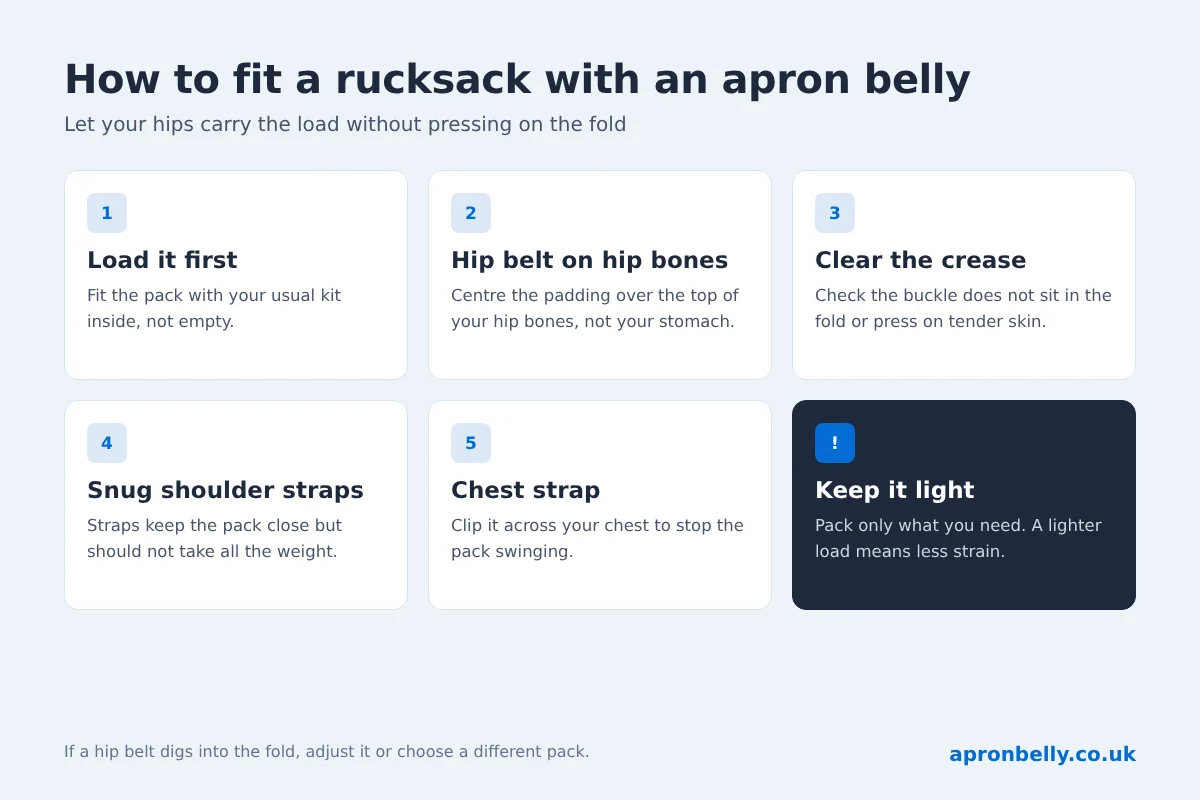
- Choose high waisted, moisture wicking layers and consider a soft support band
- Use anti-chafe balm and carry a spare top and small towel
- Start with short flat routes and add distance and hills slowly
A long walk in the countryside is one of the easiest ways to stay active, but a lower belly fold can make it less comfortable than it should be. Sweat collects in the crease, waistbands roll, and a rucksack strap can dig in exactly where you least want it. Hiking with an apron belly becomes much easier once you know which kit and habits help.
This guide sits within our apron belly guide. If you prefer a faster pace, our guide to running with an apron belly covers bounce and impact in more detail.
Why Hiking Suits an Apron Belly
It counts as real exercise
The NHS lists hiking and brisk walking as moderate intensity activities, and recommends adults aim for at least 150 minutes of moderate activity a week. Walking up hills or carrying a load can push your effort higher still. A few hours on the hills at the weekend can make up a good share of your weekly total.
Lower impact than running
Each step is gentler on your joints and pelvic floor than running, and the fold moves less. That makes hiking a good choice if running feels uncomfortable or if you are building fitness from a low starting point. Our guide to walking for an apron belly explains what regular walking can and cannot change.
What it will not do
Hiking helps with fitness, mood and weight over time, but no exercise can tighten stretched skin. If your fold is mostly loose skin, read our guide on apron belly fat versus loose skin to understand what to expect.
Common Problems on the Trail
Sweat and chafing
Warm, damp skin rubbing against skin is the most common complaint. Over a long day this can lead to soreness and intertrigo, a red, itchy rash in the fold. Hills and warm weather make it worse because you sweat more.
Bounce and pulling
On steep downhill sections, each step jolts the fold, which can pull on the skin and feel uncomfortable around the lower back. Uneven ground adds to this.
Waistbands and straps
Trousers that sit in the crease roll down as you walk, and rucksack hip belts that sit too high press into the top of the fold. Both are easy to fix with the right fit.
What to Wear for Hiking With an Apron Belly
Base layer
Choose a fitted top made from moisture wicking sports fabric or merino wool rather than cotton, which holds sweat. A longer top that tucks in or covers the fold keeps a dry layer between the skin surfaces.
Leggings and walking trousers
High waisted leggings or walking trousers with a wide, soft waistband that sits above the fold usually stay put better than low rise styles. Some people prefer a band that sits below the fold instead. Try both on a short walk. Our guide to activewear for an apron belly has more on styles that stay in place.
Support band
A soft belly support band or sling can lift some of the weight of the fold and cut down on bounce, which many people notice most on descents. It should feel firm but comfortable. See our guide to apron belly support belts and binders for the different types.
Footwear
Well fitting walking boots or trail shoes with good grip make uneven ground safer and reduce strain on your knees and back. Break new footwear in on short walks before a long day out.
Fitting a Rucksack Around the Fold
Let your hips carry the load
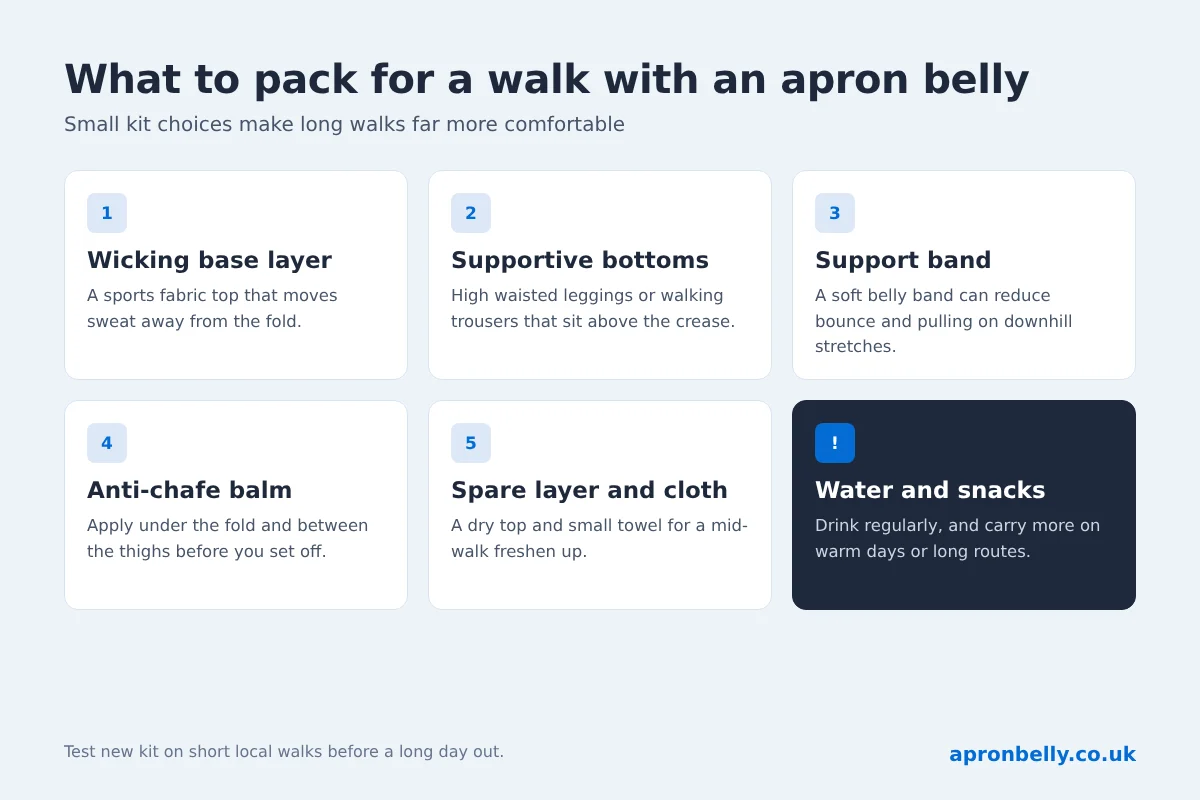
Outdoor retailers advise that a rucksack hip belt should sit on top of your hip bones, not around your waist, so your hips carry most of the weight and the shoulder straps simply keep the pack close. With an apron belly, this position also keeps the belt above or around the fold rather than pressing into it.
Step by step
- Pack your usual kit first, as an empty pack will not fit the same way
- Loosen all the straps and put the pack on
- Centre the hip belt padding over the top of your hip bones and fasten it
- Check the buckle is not sitting in the crease or pressing on tender skin
- Tighten the shoulder straps so the pack sits close without taking all the weight
- Clip the chest strap to stop the pack swinging
If the hip belt still digs in
Try loosening it slightly, shifting it a little higher or lower, or wearing it over your support band so the pressure spreads. For short walks with a light load, a small pack without a hip belt may be more comfortable. Packs with different hip belt sizes are also available, so ask in an outdoor shop.
Protecting Your Skin Before and After
Before you set off
Make sure the skin under the fold is clean and completely dry. Apply an anti-chafe balm or barrier cream in the crease and anywhere your thighs rub. Avoid heavily perfumed products, which can irritate skin that is already warm and damp.
On the walk
On longer walks, use a break to lift the fold, pat the skin dry with a small towel and change into a dry top if you are very sweaty. Drink regularly, especially on warm days.
After you get home
Shower as soon as you can, then dry the fold fully. A hairdryer on a cool setting helps in deep creases. Our routine for washing under an apron belly covers this step by step. If the skin is red or itchy, our guide to an apron belly rash explains what to do, and a pharmacist can recommend a suitable cream.
Building Up Distance Safely
A simple progression
| Stage | Route | Aim |
|---|---|---|
| Weeks 1 to 2 | Flat paths, 30 to 45 minutes | Test your clothes, balm and support band |
| Weeks 3 to 4 | Flat or gently rolling, around 1 hour | Add a light rucksack and practise the fit |
| Weeks 5 to 6 | Some short hills, 1.5 to 2 hours | Practise slower, controlled descents |
| After that | Longer routes and bigger hills | Increase one thing at a time: distance or height |
This is a guide, not a rule. Move on only when the previous stage feels comfortable, and drop back if your skin, joints or back complain.
Downhill technique
Take shorter steps on descents and keep your knees slightly bent. Walking poles can take some load off your knees and help your balance on steep or slippery ground. A support band helps many people most on these sections.
Strength at home
Leg and core strength make hills easier and help protect your back. Our 4 week apron belly workout plan gives you simple sessions to do between walks, and our belly exercises hub has more ideas.
Planning and Confidence
Plan your route
Choose routes with clear paths and places to stop, check the weather forecast before you go, and tell someone where you are heading. The Countryside Code has good general advice on planning ahead and following local signs.
Walking with others
Walking groups can make it easier to get started and keep going. Many welcome beginners and set a steady pace. If you feel self-conscious, starting with a friend or a quieter route can help. Our guide to body confidence with an apron belly has more ideas.
When to stop and get help
- Chest pain, feeling faint or unusually breathless: stop and get urgent help
- Sharp or new pain in the fold, groin or lower tummy: stop and get it checked
- Redness in the fold that spreads, feels hot or comes with a fever: contact your GP or NHS 111 the same day
If you have not exercised for a while or have a heart, lung or joint condition, speak to your GP before taking on longer hikes.
Frequently Asked Questions
Is hiking good for an apron belly?
Hiking is a moderate activity that counts towards the NHS target of 150 minutes a week, and it is lower impact than running. It burns energy and builds leg strength, though exercise alone will not remove loose skin.
How do I stop my apron belly chafing on a long walk?
Wear a moisture wicking layer between the fold and your skin, apply an anti-chafe balm under the fold before you set off, and carry a spare top and small towel so you can dry off on a break.
Where should a rucksack hip belt sit with an apron belly?
Over the top of your hip bones, not across your stomach. Check the buckle does not press into the fold or sit in the crease. If it does, adjust the belt or try a different pack.
Should I wear a support band for hiking?
Some people find a soft belly support band reduces bounce and pulling, especially downhill. It should feel firm but comfortable, never tight enough to leave deep marks or affect breathing.
When should I stop and get help on a walk?
Stop if you get chest pain, feel faint or very breathless, or notice sharp pain in the fold. After the walk, see a pharmacist for sore skin and your GP for redness that spreads, feels hot or comes with a fever.
The Bottom Line
Hiking with an apron belly is very achievable. Wear moisture wicking, supportive layers, protect the skin in the fold, fit your rucksack so it rests on your hip bones, and build distance and hills step by step. Look after your skin when you get home and you can enjoy the outdoors in comfort. For more support, visit our apron belly guide.
Your next step
This week, try a 30 minute flat walk wearing the clothes and support you plan to hike in, and note anywhere that rubs so you can fix it before a longer route.
Featured image: public footpath sign on Banstead Heath by Simon Burchell, Wikimedia Commons, CC BY-SA 4.0, cropped. This article is for general information and is not medical advice. Speak to your GP about your own health.