

Quick Answer
A large apron belly is usually a grade 4 or grade 5 pannus: a fold of skin and fat that hangs to the middle of the thighs, the knees or lower. At this size it often causes skin infections, pain, mobility problems and difficulty with hygiene. Care focuses on daily skin protection, support garments, weight management and medical review. Surgery to remove the fold can be funded by the NHS, but only when strict local criteria are met.
- Grade 4 reaches mid thigh and grade 5 reaches the knees or below
- Hot, spreading redness, wounds or fever under the fold need prompt medical advice
- NHS surgery usually needs a lower BMI, stable weight and ongoing health problems
A large apron belly can affect almost every part of daily life, from walking and dressing to washing, sleeping and sitting comfortably. Many people living with a fold this size have tried for years to lose weight, and they can feel judged when they ask for help. This guide sets out the facts in plain terms so you know what a grade 4 or grade 5 pannus means, which risks to watch for and what care and treatment are available in the UK.
For a full introduction to the medical words, read our guide to the pannus belly. For everything on protecting the skin, visit our belly skin hub.
What Is a Large Apron Belly?
A large apron belly is a fold of skin and fat, called a pannus, that hangs from the lower abdomen to the middle of the thighs (grade 4) or to the knees or below (grade 5).
The grade 4 and grade 5 pannus
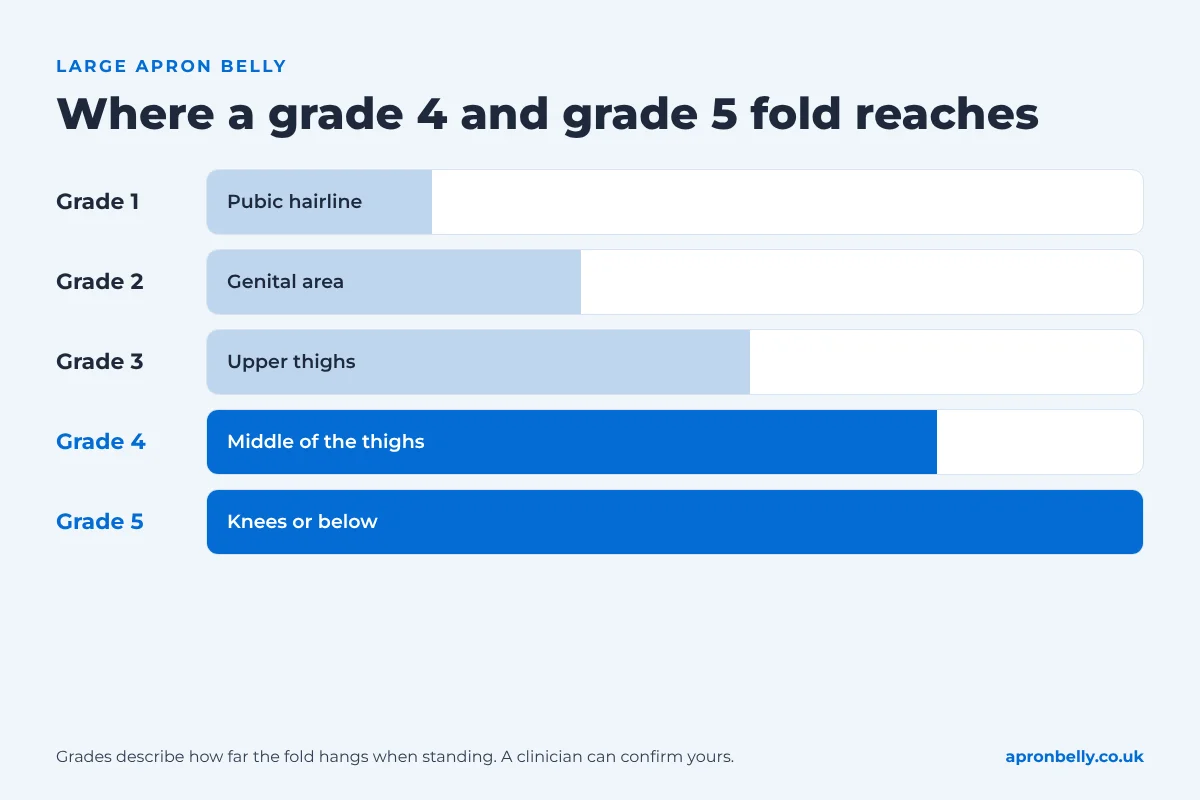
Clinicians often grade a pannus by how far it hangs when you stand. A grade 4 pannus reaches the middle of the thighs. A grade 5 pannus reaches the knees or lower. Some people call this a fat apron belly or a very large hanging belly. Our guide to apron belly grades explains every stage.
How the grades compare
| Grade | Where the fold reaches | Typical impact |
|---|---|---|
| Grade 1 | Pubic hairline | Mostly comfort and skin care |
| Grade 2 | Genital area | Rubbing and rashes in the crease |
| Grade 3 | Upper thighs | Harder hygiene, clothing problems |
| Grade 4 | Middle of the thighs | Pain, infections, walking affected |
| Grade 5 | Knees or below | Daily living, mobility and skin at high risk |
Why a pannus becomes so large
A large pannus usually builds up over many years. Common reasons include a high body weight, several pregnancies, large weight loss that leaves stretched skin behind, and ageing skin that has lost much of its spring. Genes also affect where fat is stored. A large fold is not a sign of personal failure, and support is available.
Health Risks of a Grade 4 or Grade 5 Pannus
The bigger the fold, the more strain it places on the skin, joints and daily life. Our guide to apron belly health risks covers the full list. These are the problems seen most often with a large apron belly.
Skin infections and cellulitis
The crease under a large fold stays warm and damp, so skin rubs on skin all day. This can lead to intertrigo, a sore red rash, and fungal or bacterial infections. If bacteria get into broken skin, it can cause cellulitis, a skin infection that makes the area hot, swollen and painful and can make you feel unwell. Cellulitis needs prompt treatment, usually with antibiotics.
Swelling and lymphoedema
In some people with a very large pannus, fluid from the lymphatic system builds up in the fold. The skin can become thick, hard and dimpled, and the fold can keep growing. This is a form of lymphoedema, sometimes called massive localised lymphoedema. It is uncommon but serious, and it needs specialist assessment rather than self care alone.
Pain, posture and mobility
A heavy fold pulls the body forward, which can cause back pain, hip pain and tiredness. It can make walking, climbing stairs and getting up from a chair harder, and it may raise the risk of falls. Some people find it hard to see their feet or reach them to wash and dress. Our guide to apron belly pain explains why a hanging belly hurts and how to ease it.
Hygiene and pressure on the skin
Washing and drying under a large fold can be difficult without help. The lower edge of the fold can also rub on the thighs, and skin that stays under pressure, especially when sitting for long periods, can break down into sores.
Wider health
A large pannus is often linked with a high body weight, which raises the risk of type 2 diabetes, high blood pressure, sleep apnoea and joint problems. A GP can check for these and offer treatment.
Daily Care for a Large Apron Belly
Good daily care cannot remove the fold, but it can prevent most skin problems and make life more comfortable.

A simple skin routine
- Lift the fold gently, or ask someone you trust to help, so the whole crease can be seen.
- Wash once or twice a day with warm water and a mild, unperfumed cleanser.
- Pat the skin completely dry. A hairdryer on a cool setting can help in deep creases.
- Place a soft cotton or moisture wicking liner in the crease to stop skin touching skin.
- Check the skin every day with a mirror for redness, wounds or a bad smell.
Supporting the weight of the fold
A well fitted support garment or abdominal binder can lift the fold, ease pulling on the back and make walking more comfortable. Some people are referred to an occupational therapist, who can suggest aids such as long handled sponges and raised seats. For more on garments, see our guide to choosing an apron belly support belt.
Clothing and comfort
- choose soft, breathable fabrics such as cotton and bamboo
- avoid tight waistbands that cut into the fold
- change damp clothes after activity or on hot days
- use pillows to support the fold when lying on your side
Looking after sore skin
If the crease is already red or sore, our guide to apron belly rash explains the first steps. A pharmacist can advise on creams for mild rashes, and a GP can treat fungal or bacterial infections.
Treatment Options
Treatment usually works on two fronts: reducing body weight where that is safe and helpful, and dealing with the fold itself.
Weight management support
Your GP can talk to you about NHS weight management services, which may include diet support, activity programmes and, for some people, weight loss medicines or bariatric surgery. Even a modest weight loss can ease pressure on the joints and make the skin easier to care for, although it rarely removes a large fold of stretched skin on its own.
Surgery to remove the fold
An operation called a panniculectomy, also known as an apronectomy, removes the hanging skin and fat. It is different from a cosmetic tummy tuck, which also tightens the muscles and reshapes the belly button. Our tummy tuck hub explains the options and recovery.
Panniculectomy on the NHS
NHS funding depends on the policy of your local integrated care board, and most areas class the operation as not routinely funded. To give you an idea, one current NHS policy in Somerset asks for a BMI of 27 or less, weight that has been stable for at least 2 years, no smoking for 3 months, and a fold that hangs at or below the pubic bone and causes ongoing problems such as skin infections that have not settled after 6 months of treatment. A Derbyshire policy asks for a BMI between 18 and 25, or loss of at least 75% of excess weight, held steady for a year. Rules vary, so read our guide to getting an apronectomy on the NHS and ask your GP what applies where you live.
Why surgery needs careful planning
Operations on a very large fold carry higher risks than smaller operations, including wound healing problems, fluid collecting under the skin (seroma), infection and blood clots. Risks are higher with a high BMI and in people who smoke. This is why surgeons usually ask for weight to be lower and stable first.
When to Get Medical Help
Large folds can hide skin problems, so it is worth knowing which signs need action.
Contact a GP or NHS 111 the same day if you have
- skin under the fold that is hot, swollen, painful or has redness that is spreading
- a fever, chills or feeling generally unwell along with a sore fold
- an open wound, sore or ulcer that is not healing
- the fold becoming harder, heavier or larger without weight gain
Book a routine GP appointment if
- you keep getting rashes or infections in the crease
- the fold limits your walking, washing or dressing
- you would like help with weight loss or a referral to discuss surgery
Frequently Asked Questions
What grade is a large apron belly?
A large apron belly is usually a grade 4 or grade 5 pannus. Grade 4 means the fold hangs to the middle of the thighs and grade 5 means it reaches the knees or below when you stand.
Is a grade 5 pannus dangerous?
A grade 5 pannus is not dangerous in itself, but it carries a high risk of skin infections, cellulitis, pressure sores, lymphoedema, back pain and falls. Daily skin care and regular medical review help lower these risks.
Can I get a panniculectomy on the NHS for a large apron belly?
Possibly. Most NHS areas do not routinely fund it, but some will when strict criteria are met, such as a lower BMI, weight that has been stable for one to two years, no smoking and ongoing problems like recurrent infections. Your GP can explain the local policy.
Will losing weight get rid of a grade 4 pannus?
Weight loss can make a grade 4 pannus smaller, lighter and easier to care for, and it lowers surgical risks. A large fold of stretched skin rarely disappears with weight loss alone, so many people later discuss surgery.
How do I clean under a large apron belly?
Lift the fold or ask for help, wash with warm water and a mild unperfumed cleanser once or twice a day, then pat completely dry. A soft cotton or moisture wicking liner in the crease helps keep the skin dry between washes.
The Bottom Line
A large apron belly, usually a grade 4 or grade 5 pannus, hangs to mid thigh or lower and often causes skin infections, pain and problems with daily living. Careful daily skin care, support garments and medical review make a real difference. Surgery to remove the fold is possible, including on the NHS in some cases, but most policies ask for a lower, stable weight and ongoing health problems first.
Your next step
Start a daily wash, dry and check routine this week, and make a note of any infections, pain or limits on daily life. Take that record to your GP so you can plan care and treatment together.
Featured image: stethoscope by Jacek Halicki, Wikimedia Commons, CC BY-SA 4.0, cropped.