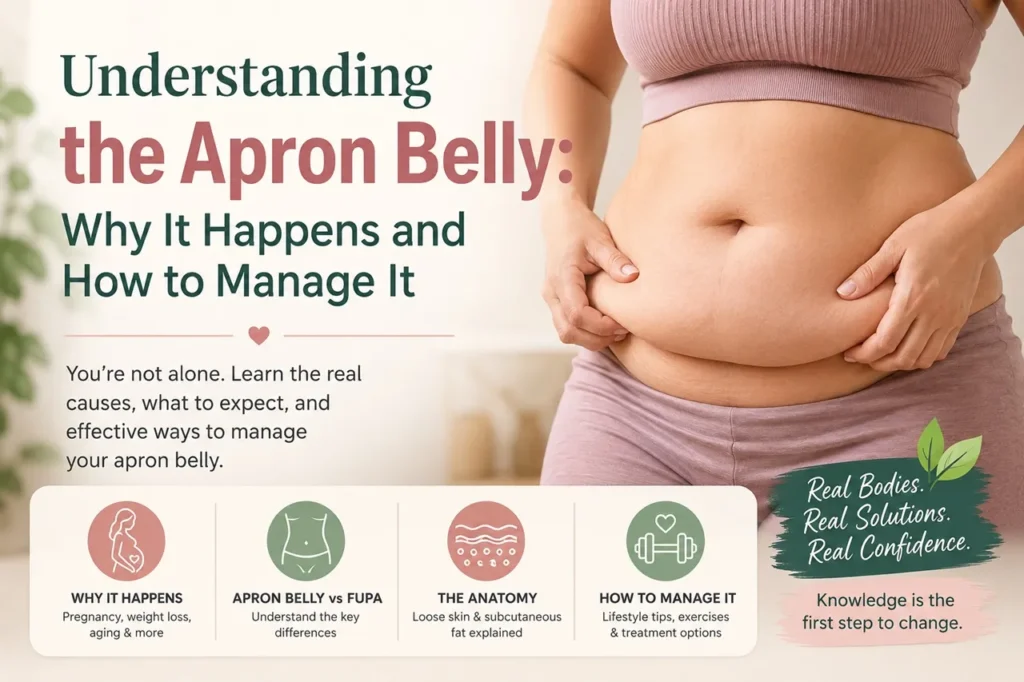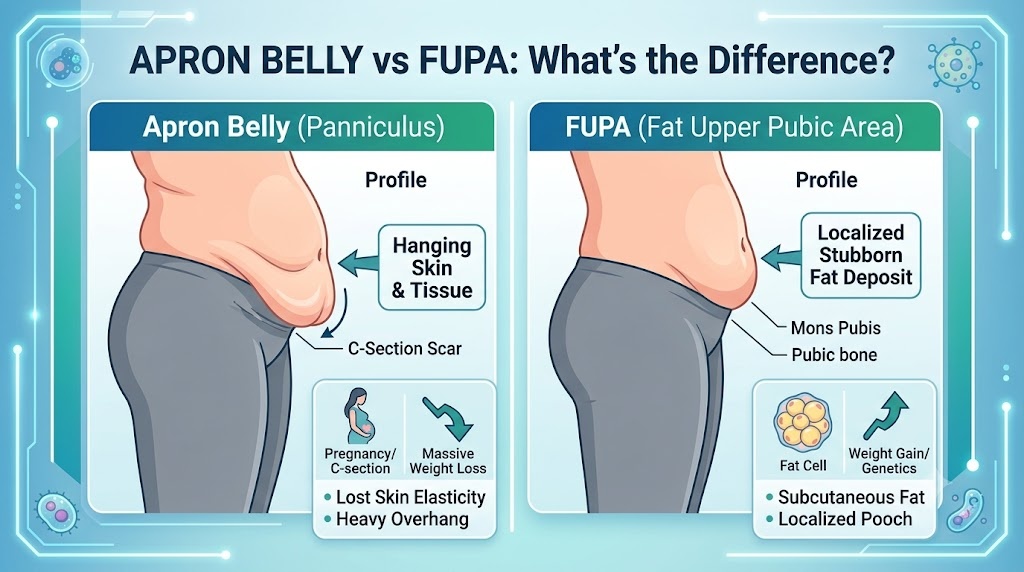

If you want to know how to get rid of apron belly, the honest answer starts with one question: what is the fold actually made of? An apron belly, known medically as an abdominal pannus, is usually a mix of fat, stretched skin and weakened core support. Fat can shrink with steady lifestyle changes. Loose skin, however, responds far less to diet and exercise, and larger amounts often need surgery to remove.
This guide brings together everything that works, in the order that makes sense. You will learn how to tell fat from loose skin, what to eat, which exercises help more than crunches, which clinic treatments are worth considering, and when to speak to your GP about surgery. It is written for UK readers and uses NHS-aligned, realistic advice rather than quick-fix promises.
Quick Answer: Can You Get Rid of an Apron Belly?
Yes, partly, and sometimes completely. What you can change depends on the tissue involved:
| What the fold is mostly made of | What usually helps | Realistic result |
|---|---|---|
| Subcutaneous fat | Calorie deficit, strength training, daily movement | The fold can shrink noticeably over several months |
| Mild loose skin | Fat loss, muscle building, possibly radiofrequency or similar treatments | Modest tightening and a smoother outline |
| Moderate to large loose skin | Panniculectomy or tummy tuck | Removal of the overhang, with a scar and recovery time |
| Separated stomach muscles (diastasis recti) | Guided core rehabilitation, sometimes surgical repair | Better support and a flatter front |
Most people have a combination. That is why the best plan usually layers several approaches rather than relying on one. If you are new to the condition, our guide on what an apron belly is explains the basics and the grading system.
Step 1: Work Out Whether It Is Fat, Loose Skin or Both
Before you change anything, spend two minutes assessing the fold. This stops you wasting months on the wrong approach.
The pinch and lift test
- Pinch the fold gently. A thick, soft layer that fills your hand is mostly fat. A thin layer that feels like folded fabric is mostly skin.
- Lie on your back. Fat tends to spread and flatten when you lie down. Loose skin often stays creased or gathers to the sides.
- Look at the skin surface. Stretch marks, crepey texture and skin that slowly returns when lifted all point towards reduced elasticity.
- Check for a gap above the navel. Lie down, lift your head slightly and press your fingertips along the midline. A soft gap wider than two fingers may suggest diastasis recti.

Why the cause matters
Common causes include pregnancy, especially more than one or a C-section, large or rapid weight loss, weight gain over time, ageing and genetics. After a pregnancy, stretched skin and separated muscles often play a bigger role than fat. After major weight loss, including on GLP-1 medicines, loose skin is usually the main issue. Stress does not cause an apron belly directly, but long-term raised cortisol can make abdominal fat easier to gain and harder to lose.
Read more in our guides to apron belly after a C-section and loose skin after Ozempic.
Step 2: Reduce Body Fat With a Sustainable Eating Plan
No food or exercise can burn fat from one spot. Your body decides where fat comes from, based largely on genetics, hormones, age and sex. However, lowering your overall body fat will reduce the fat layer inside the fold, which often makes it smaller and lighter.
Aim for a moderate calorie deficit
Eat slightly less energy than you use, every day, for months rather than weeks. A gentle deficit protects muscle and makes the plan easier to stick to. Crash diets tend to strip muscle, leave you hungry and can make loose skin look worse.
Build meals around protein and fibre
- Protein at every meal: chicken, fish, eggs, Greek yoghurt, beans, lentils or tofu. Protein keeps you full and helps you keep muscle while losing fat.
- Plenty of vegetables and whole grains: fibre adds volume for few calories and supports digestion.
- Fewer ultra-processed foods: foods high in added sugar and refined starch make a deficit much harder to hold.
- Oily fish twice a week: salmon, mackerel and sardines provide omega-3 fats that support overall health.
- Steady hydration: water will not remove loose skin, but dehydration makes skin look thinner and less supple.
Vitamin C, zinc and good protein intake all support normal collagen production. Collagen supplements are still being researched and results are mixed, so treat them as optional rather than essential. For a full plan, see our UK diet and nutrition guide for apron belly.
Step 3: Train Your Core Without Relying on Crunches
Crunches and sit-ups are a poor tool for an apron belly. They work the outer six-pack muscle, do nothing to remove fat from the area and can increase pressure on a weakened abdominal wall after pregnancy. A better plan combines deep core work, full-body strength training and regular cardio.
Deep core exercises that support the abdomen
- Transverse abdominis activation: breathe out slowly and gently draw your lower belly towards your spine. Hold for five to ten seconds without holding your breath.
- Pelvic tilts: lying on your back with knees bent, flatten your lower back into the floor, then release.
- Dead bug: on your back with arms and knees raised, lower the opposite arm and leg slowly while keeping your lower back down.
- Bird dog: on hands and knees, extend the opposite arm and leg, pause, then switch sides.
- Glute bridges: press through your heels to lift your hips, squeezing your glutes at the top.
- Modified plank: hold a plank from your knees or against a wall, keeping a straight line from head to knees.
Start with two or three sets of eight to twelve slow repetitions, three or four times a week. If you suspect diastasis recti, ask your GP for a referral to a women’s health physiotherapist before you progress to harder moves.

Add strength training and cardio
Muscle raises the energy you burn at rest and improves how the midsection looks as fat comes off. Include squats, lunges, rows and presses two or three times a week. Then add cardio you enjoy: brisk walking, cycling, swimming or a rowing machine. Short interval sessions can help if your joints allow, but consistent walking is a strong foundation. The NHS recommends at least 150 minutes of moderate activity each week.
For a structured routine, try our apron belly exercises that are worth doing.
Step 4: Consider Non-Surgical Skin Tightening
Clinic treatments sit between lifestyle changes and surgery. They cannot remove a large overhang, but they may improve mild laxity and stubborn pockets of fat.
| Treatment | How it works | Best for |
|---|---|---|
| Radiofrequency (RF) | Controlled heat encourages new collagen in deeper skin layers | Mild skin laxity, little downtime |
| RF microneedling | Tiny needles plus heat trigger collagen remodelling | Crepey texture and mild looseness |
| Focused ultrasound (HIFU) | Ultrasound energy heats tissue below the surface | Mild laxity, often several sessions |
| Cryolipolysis (fat freezing) | Cooling damages fat cells, which the body clears over months | Small areas of stubborn fat, not loose skin |
| Muscle stimulation devices | Electromagnetic pulses create strong muscle contractions | Supporting tone, not a substitute for exercise |
Results are usually modest and need more than one session. These treatments are not available on the NHS for this purpose, so ask a qualified practitioner about realistic outcomes, total cost and any risks before you book.
Step 5: Know When Surgery Is the Right Option
When the fold is mostly loose skin, surgery is the only way to remove it fully. There are two main procedures.
Panniculectomy
A panniculectomy removes the hanging skin and fat below the navel. It does not tighten the muscles or reshape the waist. It is mainly performed to relieve recurring rashes, infections, pain and problems with walking or hygiene.
Abdominoplasty (tummy tuck)
A tummy tuck removes excess skin and fat and usually tightens separated stomach muscles too. It creates a flatter contour but is classed as cosmetic, so it is normally paid for privately. Compare the two in detail in our apron belly tummy tuck guide, and see typical prices in our apron belly surgery cost guide.
Can you get surgery on the NHS?
Sometimes. The NHS does not usually fund surgery for appearance alone. A panniculectomy may be considered if the apron belly causes ongoing health problems, such as repeated skin infections or ulcers that do not improve with treatment, or difficulty with mobility. Local criteria vary, and many areas also expect a stable weight for a period of time before referral. Your GP is the starting point.
If you go private, choose a consultant plastic surgeon on the GMC Specialist Register and ask about their experience with this procedure, likely scarring and recovery time.
Day-to-Day Comfort While You Work on It
Whatever route you take, looking after the skin under the fold matters. Warm, damp skin rubbing together can lead to intertrigo, a sore red rash, and sometimes a fungal infection.
- Wash under the fold daily with a gentle, fragrance-free cleanser.
- Dry the area completely. A cool hairdryer setting can help.
- Wear breathable cotton underwear and high-waisted styles that lift and support the fold.
- Use a barrier cream to reduce friction on hot days or after exercise.
- See your GP or pharmacist if you notice persistent redness, a smell, cracked skin or discharge.
Our apron belly rash treatment guide covers this in more depth, and our sleeping guide helps with night-time comfort.

How to Tell Your Plan Is Working
The mirror is a slow and unreliable judge. Instead, track these every four weeks:
- Waist measurement at the navel and at the widest point of the fold.
- How clothes fit, especially waistbands and jeans.
- Core strength, such as how long you can hold a modified plank.
- Comfort, including fewer rashes and less back ache.
- Photos in the same light and position, which are far more honest than occasional glances.
If your weight has been stable for several months and the overhang has barely changed, the remaining fold is probably mostly skin. That is the point to discuss clinical or surgical options. Our guide to apron belly before and after pictures shows what realistic progress looks like.
Common Mistakes to Avoid
- Doing hundreds of crunches in the hope of spot reduction.
- Following very low-calorie diets that strip muscle and stall progress.
- Expecting creams, wraps or waist trainers to remove loose skin.
- Pushing hard core exercises straight after pregnancy without checking for muscle separation.
- Booking clinic treatments or surgery abroad without checking qualifications, aftercare and total cost.
Frequently Asked Questions
How long does it take to get rid of an apron belly?
Fat loss usually takes several months of steady effort, and a realistic rate is around half a kilo to one kilo a week. If loose skin remains once your weight is stable, it will not fully disappear without surgery.
Can you get rid of apron belly without surgery?
You can often reduce it. Fat loss, strength training and core work can shrink the fold and improve support. Mild loose skin may tighten slightly with clinic treatments. A large overhang of skin, however, usually needs a panniculectomy or tummy tuck.
What exercise is best for apron belly?
There is no single best move. A mix of deep core exercises such as dead bugs and pelvic tilts, full-body strength training and regular walking or other cardio works better than crunches.
Can an apron belly go away after a C-section?
The fat part can reduce with time, diet and exercise. However, stretched skin and tissue that has settled above the scar often remain, and a shelf above the scar may need surgery to correct fully.
Does the NHS remove apron bellies?
Only in some cases. The NHS may fund a panniculectomy if the fold causes ongoing medical problems such as recurrent infections, and local rules usually apply. Tummy tucks for appearance are generally private.
What burns hanging belly fat fastest?
No method burns fat from the belly alone. A consistent calorie deficit, high protein intake, strength training and daily movement lower overall body fat, which also reduces the fat in the fold.
Final Thoughts
Getting rid of an apron belly is rarely about one trick. Start by working out whether the fold is mostly fat or skin. Then reduce body fat gently, build core and full-body strength, and look after the skin under the fold. If the overhang stays after your weight settles, clinic treatments or surgery may be the right next step. Speak to your GP if the fold causes pain, infections or problems moving, because help may be available.