

 20 Sep 2026
 4 min read
The terms apron belly, FUPA and belly pooch are often used interchangeably, but they can describe different areas and patterns of tissue. This quick self-check can help you describe what you notice at home—without treating body shape as a diagnosis.
Quick answers about apron belly vs FUPA
What is an apron belly?
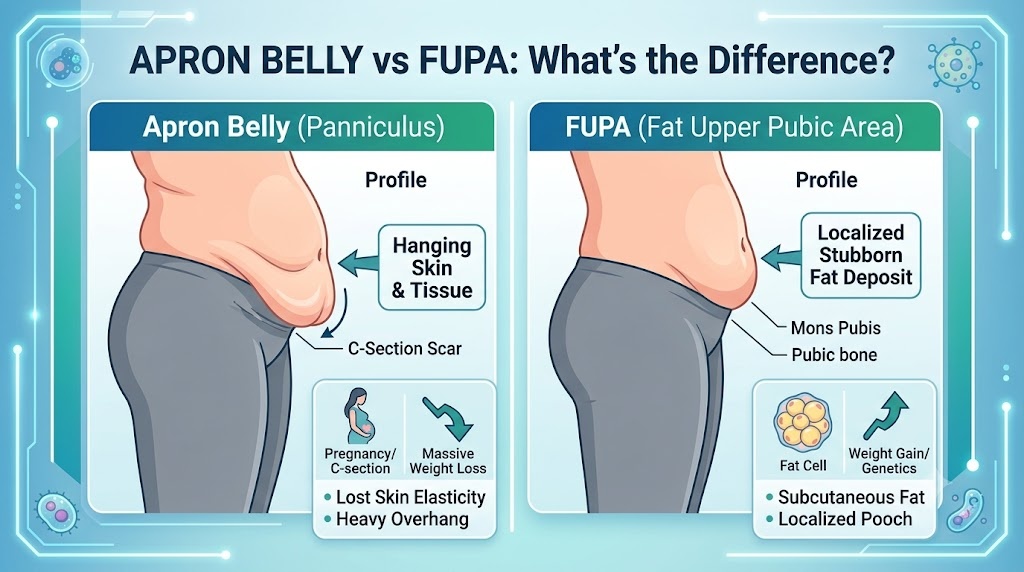
An apron belly is an overhanging fold of skin and tissue that extends from the lower abdomen, sometimes covering part of the pubic area or upper thighs. It can develop with changes in weight, pregnancy, ageing, skin elasticity and abdominal structure.
What is a FUPA?
FUPA is an informal term for fullness in the area above the pubic bone and below the lower abdomen. The appearance may involve body fat, loose skin, the shape of the abdominal wall or a combination of these factors.
What is a belly pooch?
A belly pooch usually means a small or moderate rounded prominence in the lower abdomen. Unlike an apron belly, it does not necessarily hang over the pubic area, and it may be more noticeable when sitting, relaxing or wearing fitted clothing.
What is the difference between apron belly vs FUPA vs pooch?
The main distinction is location and shape: an apron belly generally involves an overhanging fold, a FUPA refers more specifically to fullness above the pubic area, and a pooch describes a rounded lower-abdominal profile. These descriptions can overlap, so there is no perfect self-test.
Common questions about apron belly vs fupa
What should readers know first about apron belly vs fupa?
 Start with location, movement and how the area changes between standing and sitting. In an apron belly vs FUPA comparison, the visible boundary is not always clear because loose skin, fat distribution, posture and pelvic anatomy can all affect appearance. A simple mirror check can provide useful language: 1. Stand comfortably in front of a mirror, without pulling your stomach in. 2. Look at the lower abdomen from the front and side. 3. Notice whether the tissue forms a distinct fold that hangs downward. 4. Check whether the fullness is mainly above the pubic bone. 5. Sit down and observe whether the area folds or spreads naturally. 6. Repeat the check in fitted but comfortable clothing. A fold that extends downward and may rest against the pubic region is more consistent with an apron-like overhang. Fullness concentrated just above the pubic area may be described as a FUPA, while a smaller, rounded prominence is often called a pooch. These labels are descriptive rather than medical terms. The same person may reasonably describe their shape in more than one way, and the appearance can change with posture, bloating, clothing and time of day.
How do you choose the right approach?
 Choose your approach based on what you want to improve: comfort, movement, strength, clothing fit, skin care or a change in body composition. The same plan does not suit every apron belly, FUPA or pooch. For general health, focus on sustainable habits such as regular movement, resistance training suited to your ability, adequate nourishment and sleep. Core exercises may improve strength and control, but they cannot selectively remove fat from one area. You can explore practical guidance on exercise for apron belly and review diet considerations for apron belly as part of a broader plan. If the main issue is skin-on-skin contact, moisture or irritation, comfort measures may be more relevant than trying to change the shape quickly. Breathable fabrics, well-fitting underwear and gentle skin care can help reduce friction, but persistent soreness, broken skin, odour or rashes should be discussed with a healthcare professional. If loose skin or a substantial overhang causes ongoing physical or emotional difficulties, a clinician can explain the available options. Exercise and weight changes may affect the volume beneath the skin, but they cannot reliably remove excess skin.
What mistakes should you avoid?
Avoid assuming that a mirror check can identify the exact cause of lower-abdominal fullness. Do not diagnose yourself based on a single image, compare your body with edited photographs, or use painful exercises and restrictive diets to target one area. Another common mistake in the FUPA vs pooch discussion is treating the terms as precise anatomical categories. They are informal descriptions, and a rounded lower abdomen can reflect normal anatomy, fat distribution, loose skin, posture, digestive changes or abdominal-wall concerns. Do not force an overhang upward or press firmly on a painful area during a self-check. Seek medical advice for a new lump, one-sided swelling, severe or persistent pain, vomiting, unexplained weight loss, significant changes in bowel or bladder habits, or a bulge that becomes hard or difficult to push back. After pregnancy, abdominal surgery or a major change in weight, ask a qualified professional for personalised guidance before starting intensive abdominal work. A physiotherapist or clinician can assess movement and symptoms more safely than an online label.
Recommended next steps
Use the self-check to describe what you notice, not to judge your body or confirm a diagnosis. You might record whether the fullness is mainly above the pubic area, forms a lower fold, changes when sitting, or causes practical symptoms such as rubbing and restricted movement.
Next, choose one realistic goal. For example, you might work on comfortable walking, gradual strength training, clothing fit or reducing skin irritation. Reassess over time rather than checking repeatedly throughout the day.
For further reading, visit the Apron Belly home page for guidance on managing and understanding apron belly concerns, or explore information about clothing for apron belly. If your concern is painful, sudden, changing or interfering with daily activities, arrange an assessment with a healthcare professional.
The useful question is not whether your body fits one perfect label. It is what you are noticing, what support you need and which safe, practical step makes sense next.
Rachel has spent over a decade writing about women’s health, body composition, and post-pregnancy recovery for UK-based digital publications and NHS-adjacent health platforms. She holds a postgraduate certificate in science communication and has worked closely with physiotherapists and dietitians to translate clinical research into plain, usable advice. Her approach is straightforward: lead with what the evidence actually says, flag the limitations honestly, and skip the language that makes readers feel like a problem to be solved. She writes for people who have already Googled the optimistic version and want someone to level with them.