
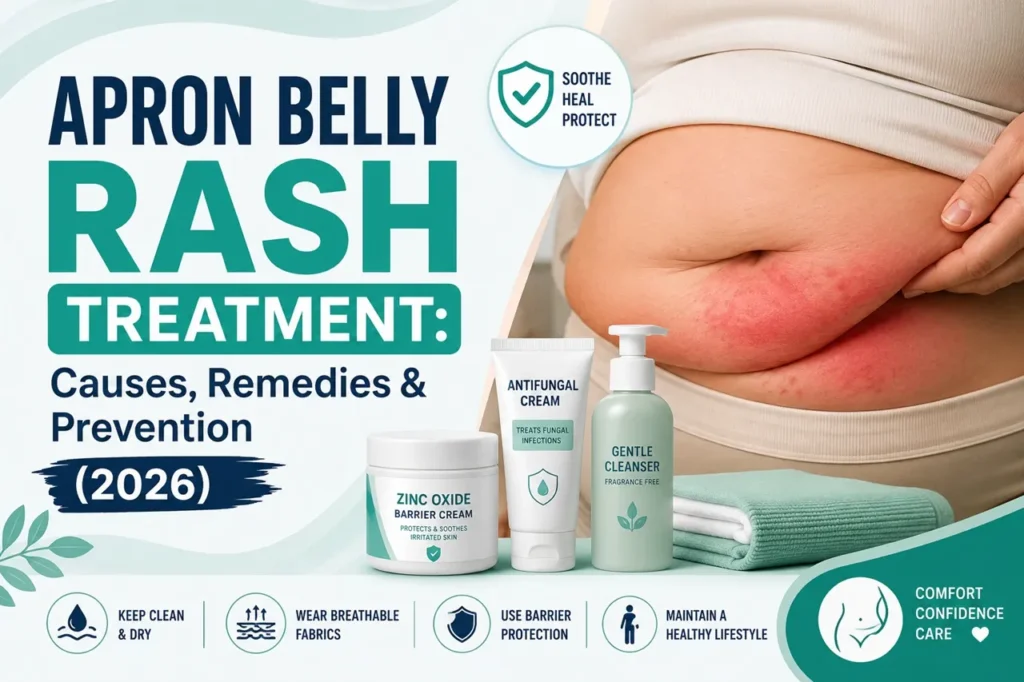
Apron belly rash, medically known as intertrigo, is caused by moisture, friction, and heat trapped in the skin fold beneath the abdomen. Mild cases can be treated at home by keeping the area clean and dry, applying a zinc oxide barrier cream, and wearing moisture-wicking fabrics. See your GP if the rash spreads, smells strongly, or does not improve within one week.
Key takeaways
- Intertrigo is caused by friction, trapped moisture and heat in the skin fold.
- Satellite lesions are a hallmark sign of a Candida (fungal) infection.
- Zinc oxide ointment is one of the most effective barrier creams without a prescription.
- Clotrimazole 1% is available over the counter for Candida-related intertrigo.
- See your GP if there is no improvement after one week of home treatment.
If you live with an apron belly (also called an abdominal panniculus or pannus), skin fold rashes are something many people manage quietly and often with more embarrassment than necessary. This condition is common; it has a name, and it is treatable. You are not alone, and there is nothing shameful about it.
The medical term for a skin fold rash is intertrigo, sometimes called intertriginous dermatitis. It develops when the skin beneath the belly fold becomes irritated from constant friction, trapped sweat, and limited airflow. Left untreated, mild irritation can escalate into a bacterial or fungal infection, which is why acting early matters.
This guide covers what causes apron belly rash, how to identify it, the most effective treatment options for an apron belly rash in 2026, and how to prevent it from returning.
What Causes Apron Belly Rash?
A combination of skin-on-skin friction, trapped moisture, and fungal or bacterial overgrowth in the warm, dark environment of the abdominal skin fold causes apron belly rash.
How Skin-on-Skin Friction Triggers Irritation
The skin beneath an abdominal fold is in near-constant contact with itself. Every step, every movement, every shift in posture creates low-level friction between two warm, soft surfaces. Over time, that friction breaks down the outer layer of skin, leaving it raw, inflamed, and vulnerable to infection.
This is the same mechanism behind chafing on inner thighs, except the belly fold is deeper, darker, and harder to air out.
Why Trapped Moisture Makes It Worse
Sweat naturally collects in skin folds. Because air circulation in the fold is poor, that moisture has nowhere to go. The result is maceration, a process where the skin becomes waterlogged, softened, and increasingly fragile. Macerated skin tears more easily and absorbs bacteria and fungal spores far more readily than healthy skin.
Hot weather, physical activity, and synthetic clothing all increase sweat production, compounding the problem.
The Role of Fungal Overgrowth (Candida Albicans)
Warm, dark, and damp environments are exactly where Candida albicans, a naturally occurring yeast found on the skin, thrives. When moisture builds up in the belly fold, Candida can multiply rapidly, turning a simple friction rash into a full fungal infection. This is why so many intertrigo cases have a yeast component, and why antifungal treatment is sometimes necessary.
Key contributing factors include:
- High humidity and warm temperatures
- Trapped moisture and poor airflow beneath the fold
- Tight or non-breathable clothing
- Inadequate or infrequent hygiene in the fold area
- Diabetes or a weakened immune system (both increase susceptibility to fungal infections)
Signs and Symptoms: How Do You Know It’s Intertrigo?
Intertrigo typically presents as redness, itching, and burning in the skin fold, sometimes accompanied by odour or satellite lesions when a fungal infection is involved.
Intertrigo doesn’t always look the same from person to person, but there are consistent patterns worth knowing.
Common symptoms include:
- Erythema (redness): A uniform reddish or reddish-brown discolouration across the affected area
- Pruritus (itching): Persistent itching that worsens with heat or sweating
- Burning or stinging: Particularly after movement or when clothing rubs the skin
- Foul-smelling odour: Caused by bacterial activity in a warm, moist environment, a sign the rash needs prompt attention
- Satellite lesions: Small red bumps or pustules appearing just outside the main rash. These are a hallmark sign of a Candida (fungal) infection and suggest the rash has progressed beyond simple irritation.
- Raw or cracked skin: In more advanced cases, the skin may break open, bleed lightly, or develop a whitish, moist appearance
If you notice satellite lesions, a strong odour, or skin that is cracking or weeping, treat this as an escalated case requiring medical review.
Effective Apron Belly Rash Treatment: A Step-by-Step Approach

The most effective treatment for apron belly rash involves gentle cleansing, thorough drying, zinc oxide barrier protection, and antifungal cream when a Candida infection is present. Below is a step-by-step approach, moving from immediate home relief through to over-the-counter and medical options.
Step 1: Clean the Area Gently
Wash the affected skin fold with lukewarm water and a non-irritating, fragrance-free soap or a gentle pH-balanced cleanser. Avoid anything containing alcohol, strong fragrances, or exfoliating ingredients; these strip the already compromised skin barrier and increase irritation.
Rinse thoroughly and then pat dry; never rub. Friction on inflamed skin makes the problem worse, not better.
Step 2: Dry the Fold Completely
This step is more important than most people realise. Even a small amount of residual moisture left in the skin fold slows healing and feeds fungal growth.
After patting, use a cool setting on a hairdryer held at a safe distance to dry the area gently. This is particularly effective for deeper folds that a towel cannot easily reach. Let the skin air out for a few minutes before applying any product or getting dressed.
Step 3: Apply a Barrier Protectant
Once the area is clean and dry, apply a barrier cream to protect the skin from further friction and moisture.
Zinc oxide ointment is one of the most effective options available without a prescription. It creates a physical barrier on the skin surface, repels moisture, and has mild anti-inflammatory properties. Petroleum jelly (Vaseline) works similarly and is widely available.
Why barrier creams outperform talc-based powders: Talcum powder absorbs moisture temporarily but clumps when wet, creating additional friction. Zinc oxide ointment maintains a protective layer even when the area becomes sweaty, making it a more reliable choice for ongoing use.
Apply a thin layer to the clean, dry skin fold once or twice daily.
Step 4: When to Consider Antifungal Treatment
If the rash features satellite lesions, a strong yeasty smell, or has not responded to basic hygiene and barrier protection within a few days, a topical antifungal cream may be needed.
Clotrimazole 1% is available over the counter and is commonly used to treat Candida-related intertrigo. Apply a thin layer to the affected area twice daily according to the product instructions.
Important: Consult a pharmacist or GP before starting any antifungal treatment, particularly if you have diabetes, are immunocompromised, or are pregnant. Some cases may require prescription-strength antifungals or a combination product that addresses both inflammation and fungal infection simultaneously.
Step 5: Soothe Inflammation Naturally (With Caution)
Some people find relief from natural remedies, though these should be used carefully on broken or raw skin.
- Aloe vera gel (pure, fragrance-free): Has mild anti-inflammatory and cooling properties. Apply a thin layer to intact, non-broken skin only. Avoid on cracked or weeping areas.
- Coconut oil: Contains lauric acid, which has shown some antifungal activity in laboratory settings. It can act as a light moisturising barrier, but avoid it if the rash is actively infected or very inflamed.
Natural remedies work best as complementary support rather than standalone treatments. If the rash is infected, they are not a substitute for antifungal or antibiotic treatment.
Step 6: Keep the Area Dry Throughout the Day
Treatment is not a once-a-day event. Managing moisture throughout the day is essential to recovery.
Practical ways to do this include:
- Placing a soft, moisture-wicking liner cloth or gauze between the skin folds during the day to absorb sweat.
- Changing any damp clothing promptly after sweating
- Taking short breaks during the day to gently air the fold if possible
Prevention: Keeping Skin Folds Healthy Long-Term
Preventing apron belly rash in the long term requires breathable fabrics, consistent daily hygiene, and moisture control, not just treatment after the rash appears.
Treating an existing rash is only half the work. Preventing recurrence requires consistent daily habits. Our guide to daily skin care for a sore apron belly sets out a simple routine for sweaty, irritated folds.
Choose the Right Fabrics

Synthetic fabrics like polyester trap heat and moisture against the skin. Swap them for natural, breathable materials such as:
- Cotton: Soft, widely available, and allows airflow.
- Bamboo: Naturally moisture-wicking and gentle on sensitive skin
- Merino wool: Excellent at regulating temperature and managing moisture, despite its warmth
For underwear specifically, look for wide-band, high-waisted styles that sit above the fold rather than cutting into it. The best underwear for apron belly guide covers specific styles designed for comfort and skin health.
Build a Daily Hygiene Routine
Consistency is everything here. Make these steps part of your daily routine:
- Shower or wash the skin fold daily, even on days you don’t exercise
- Pat dry and air out the fold before getting dressed
- Reapply a barrier cream or moisture-wicking product each morning.
- Check the skin regularly for early signs of redness or irritation; catching them early makes treatment easier.
Change Clothing After Sweating
Damp clothing pressed against a skin fold creates ideal conditions for rash development. After exercise, gardening, or any activity that causes heavy sweating, change into fresh, dry clothing as soon as possible.
Use Breathable Barriers
A soft cotton liner cloth, bamboo gauze pad, or a commercially available skin fold protector placed between the skin surfaces can greatly reduce both friction and moisture buildup. Replace these as needed throughout the day.
When Should You See a Doctor About a Skin Fold Rash?

See your GP urgently if the rash produces pus, causes fever, spreads rapidly, or shows no improvement after one week of consistent home treatment.
Home treatment works well for mild to moderate intertrigo. But some situations require professional medical attention.
See your GP if you notice any of the following:
- Pus or discharge coming from the rash.
- Fever or flu-like symptoms alongside the rash (a sign of systemic infection)
- The rash is spreading rapidly beyond the skin fold.
- Severe or worsening pain that doesn’t ease with home care
- The skin is cracking, bleeding, or breaking open.
- No improvement after one week of consistent home treatment
A dermatologist or GP can prescribe stronger antifungal creams, topical corticosteroids to reduce inflammation, or oral antibiotics if a bacterial infection (such as Staphylococcus aureus) is present. Do not wait too long; secondary infections are more painful and take longer to clear than the original rash.
The Bottom Line on Treating and Preventing Apron Belly Rash
Intertrigo beneath an abdominal fold is uncomfortable, but it responds well to treatment when you act consistently. Clean the area gently, dry it thoroughly, protect it with a zinc oxide barrier cream, and address any fungal component early. Prevention comes down to breathable fabrics, daily hygiene, and keeping moisture under control.
Small, consistent habits make the biggest difference. One good day will not cure it, but a solid routine will.
If you are managing an apron belly more broadly, whether that is finding comfortable clothing, improving daily movement, or understanding what long-term changes are realistic, the guides at apronbelly.co.uk cover each of these areas in detail.
Frequently Asked Questions
No. Intertrigo is not contagious. It is caused by friction, moisture, and heat within a skin fold, not by a pathogen that spreads from person to person. However, if a secondary fungal or bacterial infection develops, those organisms can transfer to others through close skin contact. Maintaining good hygiene minimises this risk.
Weight loss can reduce the depth and size of the abdominal fold, thereby decreasing friction and improving airflow, both of which lower the risk of intertrigo. However, major weight loss sometimes leaves behind excess loose skin, which can still trap moisture. In those cases, skin fold rashes may persist. Good daily hygiene and barrier protection remain important regardless of body size.
Use a fragrance-free, pH-balanced, gentle cleanser. Good options include Dove Sensitive Skin, Cetaphil Gentle Skin Cleanser, or any soap labelled “for sensitive skin” and free of added fragrances, dyes, or exfoliants.
Mild intertrigo with no fungal component typically improves within 3 to 7 days of consistent home treatment. Cases involving Candida overgrowth may take 2 to 4 weeks of antifungal treatment to fully clear. If there is no improvement after one week of home care, see your GP.
Cornflour-based powders can help absorb moisture, but talc-based baby powder is generally not recommended. Talcum powder clumps when wet, increasing friction rather than reducing it. Zinc oxide ointment provides more reliable and longer-lasting protection. If you prefer a powder, choose a cornflour-based option over talc.
This article is for informational purposes only and does not replace professional medical advice. Always consult your GP or a dermatologist for persistent, worsening, or painful rashes.