

 18 Sep 2026
 8 min read
An apron belly can be uncomfortable day to day, especially when skin rests against skin and the fold becomes warm, damp or sore. The honest answer is that washing, drying and gentle body care can improve comfort and reduce irritation, but no cream can remove an overhang. Fat may reduce with overall fat loss; loose skin may remain, particularly after pregnancy or losing several stone.
What apron belly means in practice
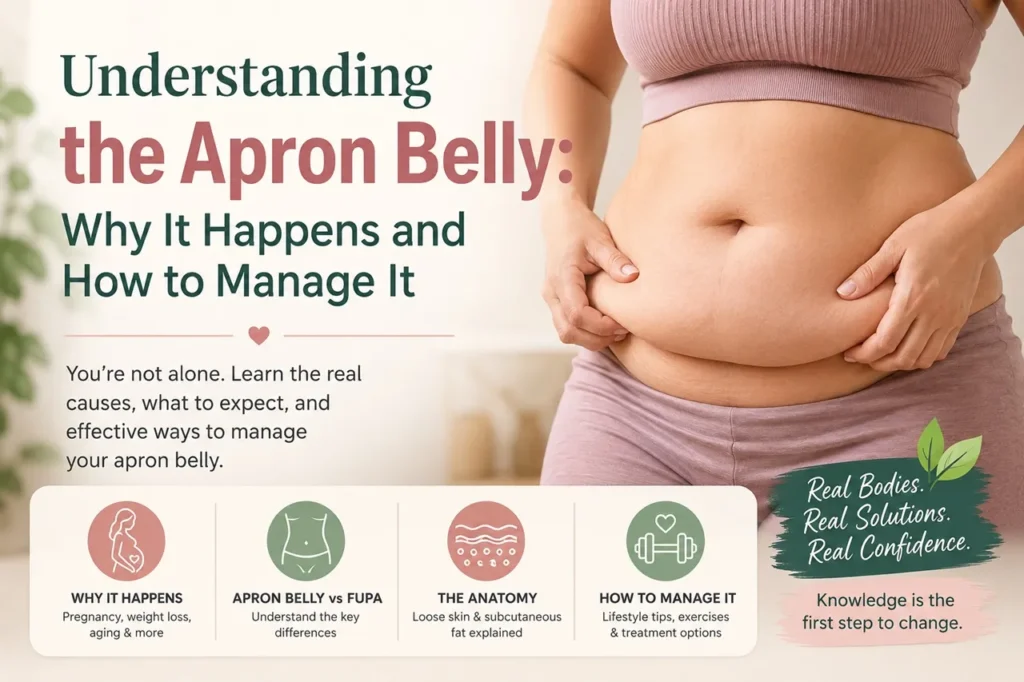
When people ask “what is an apron belly?”, they usually mean a fold of abdominal skin and tissue that hangs over the lower stomach, pubic area or upper thighs. It may be mostly body fat, mostly loose skin, or a mixture of both.
The fold can trap sweat, moisture, heat and friction. That does not mean you have poor hygiene. It is simply harder for air to reach the skin, particularly in warm weather, during exercise or when clothing presses into the area.
An apron belly can appear after pregnancy, substantial weight changes, ageing or a combination of factors. A caesarean scar may sit beneath the fold, which can make washing, drying and checking the skin more awkward. Some women notice the fold changing around menopause, when body composition and fat distribution can shift. Search terms such as “menopause belly apron” often describe this experience, but the day-to-day skin-care principles remain much the same.
It also helps to separate the terms:
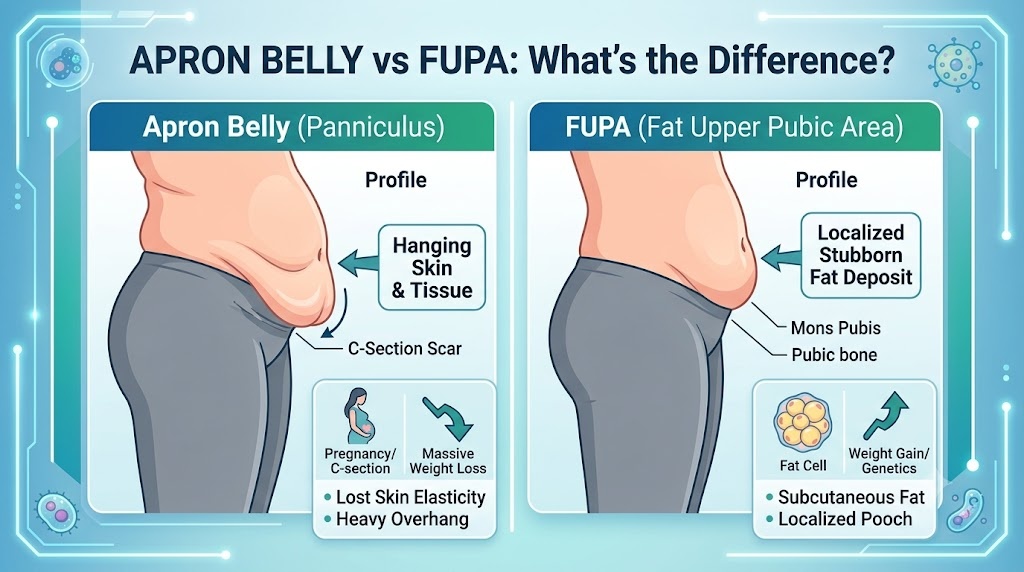
- An apron belly usually describes an overhanging lower-abdominal fold.
- FUPA is informal language for fullness around the pubic mound or lower abdomen.
- A belly pooch may describe a smaller rounded area, including fullness that remains after pregnancy.
- Loose skin feels different from fat, although many people have both.
These labels are not precise diagnoses. For a plain-English explanation of the underlying differences, see our guide to what an apron belly is.
How to think about apron belly
The core problem to understand

The main issue is often the fold itself, not a failure to scrub hard enough. Skin touching skin creates friction. Sweat and water remain in the crease for longer. Tight waistbands can rub the area, while synthetic or non-breathable fabrics may make it feel hotter.
Common day-to-day symptoms include:
- Dampness or a sticky feeling under the fold
- Itching or mild redness
- Chafing when walking
- Soreness after exercise
- A musty smell caused by moisture and skin bacteria
- Tenderness around a scar or irritated patch
Fat and loose skin need different expectations. A calorie deficit can reduce body fat across the body, but it cannot selectively remove fat from the apron area. Abdominal exercises can strengthen the muscles underneath, but they cannot spot-reduce the fold.
Loose skin may become less noticeable over time after weight loss, but the amount of change varies. Age, genetics, pregnancy history, the amount of weight lost and how long the skin has been stretched can all affect how it looks and feels. Training three times a week and reaching a weight-loss plateau does not necessarily mean you have done anything wrong if an overhang remains.
The practical goal is therefore twofold: improve comfort and skin health now, while taking a realistic view of longer-term body changes. Our guide to getting rid of apron belly explains more about what weight loss, exercise and loose skin can and cannot change.
The practical decision criteria

A useful routine does not need to be complicated. It needs to suit your skin, your clothes and the amount of movement you do.
1. Wash gently
Wash the fold with lukewarm water and a mild, unperfumed cleanser if cleanser is needed. Use clean hands or a soft cloth, and avoid vigorous scrubbing. Scrubbing can increase irritation, especially if the skin is already cracked or sore.
Rinse carefully so cleanser does not remain in the crease. If you have a caesarean scar, do not pick at scabs or rub directly over a painful area.
2. Dry the fold properly
Drying is often the step people skip. Pat the area with a clean towel rather than dragging it across the skin. You can also use a cool or low setting on a hairdryer held away from the body, provided it feels comfortable and does not heat the skin.
Put on underwear and clothing only when the fold is dry. If you shower after exercise, change out of damp clothing rather than sitting in it for the rest of the day.
3. Choose clothes for comfort, not punishment
Look for soft, breathable fabrics and waistbands that do not cut into the fold. The best option will depend on your shape and what feels comfortable. Some women prefer higher-rise underwear that covers the fold; others find a less restrictive style better.
UK high-street sizing is inconsistent, so judge clothing by how it feels when sitting, walking and bending, not just by the number on the label. Specialist support garments may suit some bodies, but expensive “tummy control” underwear is not automatically better than a comfortable multipack.
Avoid wearing tight clothing over damp skin. Friction from seams, shapewear or a waistband can turn mild irritation into broken skin.
4. Keep body care simple
If the skin is intact, a plain, fragrance-free moisturiser may help with dryness. Avoid piling on multiple fragranced products, essential oils or harsh exfoliants. A product described as natural is not automatically suitable for irritated skin; botanical ingredients can still cause sensitivity.
For general background on choosing gentle body-care products, Vixxar describes its range of natural and organic skincare, body care and other beauty products, including vegan and cruelty-free formulas. That is further reading about product selection, not a treatment for an apron belly or skin infection.
Do not use talc, deodorant sprays or strong antiseptics inside a skin fold unless a healthcare professional has advised you to. Products that mask odour may irritate the skin or make it harder to notice a developing problem.
5. Check the skin regularly
Use a mirror or ask someone you trust to help you look at areas that are difficult to see. Check for spreading redness, cracks, weeping, blisters, bleeding, swelling or a new unpleasant smell.
Seek medical advice if the area is painful, hot, rapidly worsening, producing discharge or not settling with gentle care. Itching and redness can have several causes, including irritation, fungal infection or other skin conditions, and they may need different treatment. A pharmacist, GP or NHS service can help you decide what to do.
Common mistakes to avoid

The most common mistake is treating the fold as a problem that needs aggressive cleaning. More scrubbing does not remove loose skin or fat, and it can damage the skin barrier.
Other mistakes include:
- Leaving the fold damp after bathing or exercise
- Applying perfume, fragranced lotion or essential oils to sore skin
- Wearing tight shapewear for long periods when it causes rubbing
- Assuming every red rash is simply chafing
- Expecting sit-ups to target apron fat
- Continuing a restrictive diet because one area has not changed
- Comparing your stomach with before-and-after photographs without considering surgery, posture, lighting or loose skin
Movement is still worthwhile for strength, mobility, fitness and general health. It just needs to be presented honestly. There are no special exercises that selectively burn fat from an apron belly. A sensible programme might include walking, resistance training and movements you can perform without pain. Our advice on movement and exercise for a heavier lower belly focuses on adapting activity to your body rather than forcing a gym-style routine.
How to apply this to apron belly
A practical daily routine could look like this:
- Wash the fold gently during your usual shower or bath.
- Rinse away cleanser thoroughly.
- Pat dry, lifting the fold carefully so moisture is not left in the crease.
- Let the skin cool and dry before dressing.
- Choose underwear and clothes that do not rub or trap excessive heat.
- Change after sweating, swimming or exercise.
- Check the skin when you notice new soreness, itching, odour or dampness.
- Ask a pharmacist or GP about persistent symptoms rather than repeatedly changing products.
If the concern is mainly comfort, begin with washing, drying, fabric and fit. If the concern is body composition, consider overall nutrition and activity rather than an apron-belly-specific diet. A sustainable calorie deficit may reduce body fat, but it cannot guarantee a flat stomach or remove loose skin.
Medication for weight management, including GLP-1 medicines prescribed in the UK, may help some people lose weight when clinically appropriate. It does not directly tighten loose skin or guarantee that an apron belly will disappear. Discuss suitability, side effects and expectations with a qualified prescriber rather than changing medication without advice.
If you have lost a significant amount of weight and the remaining fold causes repeated rashes, hygiene difficulties or restricted movement, speak to your GP. That conversation can focus on your symptoms and options. Surgery is not the default answer for everyone, and it is sensible to understand the risks, recovery and likely outcome before considering any procedure.
FAQ about apron belly
Is it possible to get rid of apron belly?
An apron belly may become smaller with overall fat loss, but exercise cannot spot-reduce it. Loose skin may remain, so day-to-day management and realistic expectations matter.
What is the difference between an apron belly and a fupa?
An apron belly usually refers to an overhanging lower-abdominal fold, while FUPA commonly describes fullness around the pubic mound or lower abdomen. The areas can overlap.
What is the best workout for an apron belly?
There is no workout that specifically burns apron-belly fat. Choose enjoyable cardiovascular activity and strength training that improve fitness and function without causing pain or skin friction.
Will GLP-1 help with apron belly?
A prescribed GLP-1 medicine may support overall weight loss for some people, which can reduce abdominal fat. It cannot selectively remove an apron belly or tighten loose skin.
Does Mounjaro get rid of the apron belly?
Mounjaro may contribute to overall weight loss when prescribed and used appropriately, but it does not guarantee that an apron belly will disappear, particularly when loose skin is involved.
Can you fully flatten an apron belly?
Some people reduce abdominal fullness substantially, but a completely flat stomach is not a realistic outcome for everyone. Skin elasticity, body shape, pregnancy and weight history all matter.
What should readers know first about apron belly?
An apron belly is not simply a hygiene issue or a lack of effort. Separate fat from loose skin, stop expecting spot reduction, and manage moisture and friction first.
How do you choose the right apron belly approach?
Start with your main concern: irritation needs skin care, fat loss needs sustainable overall changes, and persistent loose skin needs realistic expectations and possibly medical advice.
Recommended next steps
Start with the basics for one week: wash gently, dry thoroughly, change out of damp clothing and note what causes rubbing or soreness. Keep the routine simple enough to follow after a busy day.
Then decide whether your bigger concern is skin comfort, fat loss, movement or loose skin. Those are related but different problems, and they should not all be treated with the same product or exercise plan.
If symptoms continue, worsen or interfere with daily life, contact a pharmacist or GP. If you are working on overall strength and mobility, choose gradual activity that fits your current body rather than chasing exercises marketed as a way to blast away an apron belly.
Rachel has spent over a decade writing about women’s health, body composition, and post-pregnancy recovery for UK-based digital publications and NHS-adjacent health platforms. She holds a postgraduate certificate in science communication and has worked closely with physiotherapists and dietitians to translate clinical research into plain, usable advice. Her approach is straightforward: lead with what the evidence actually says, flag the limitations honestly, and skip the language that makes readers feel like a problem to be solved. She writes for people who have already Googled the optimistic version and want someone to level with them.