

 22 Aug 2026
 6 min read
Exercise involving controlled movement is one of the most misunderstood tools in apron belly management. It will not melt an overhang or reshape skin on its own, but it builds the muscular support, posture, and pelvic control that make everyday movement easier and your midsection feel firmer and more stable. This guide breaks down how to approach exercise involving controlled movement step by step, so you can build a routine that supports function first and appearance second.
Quick answer: how to approach exercise involving controlled movement
The short version: prioritise bracing, breathing, and pelvic control before adding load or speed. Controlled, slow strength work trains the deep core muscles that hold your trunk together, which improves posture and reduces strain on the lower back and pelvis.
A practical starting sequence looks like this:
- Learn diaphragmatic breathing and how it connects to bracing.
- Practice pelvic tilts and neutral spine positioning while lying down.
- Add isometric holds (like modified planks) once breathing and bracing feel automatic.
- Progress to slow, controlled dynamic movements such as dead bugs or bird dogs.
- Layer this movement and exercise routine into daily activity, not just dedicated workout time.
The most common pitfall here is rushing to step 4 or 5 before mastering steps 1 and 2. Without a solid brace, dynamic movements reinforce poor patterns instead of correcting them. Anyone researching how to get rid of apron belly through movement should treat this as a foundation-building process, not a quick fix, and pair it with realistic expectations covered in guidance on apron belly causes.
Step-by-step process for exercise involving controlled movement
This section walks through the full sequence, from setup to troubleshooting, so each stage builds correctly on the last.
Prepare the right setup

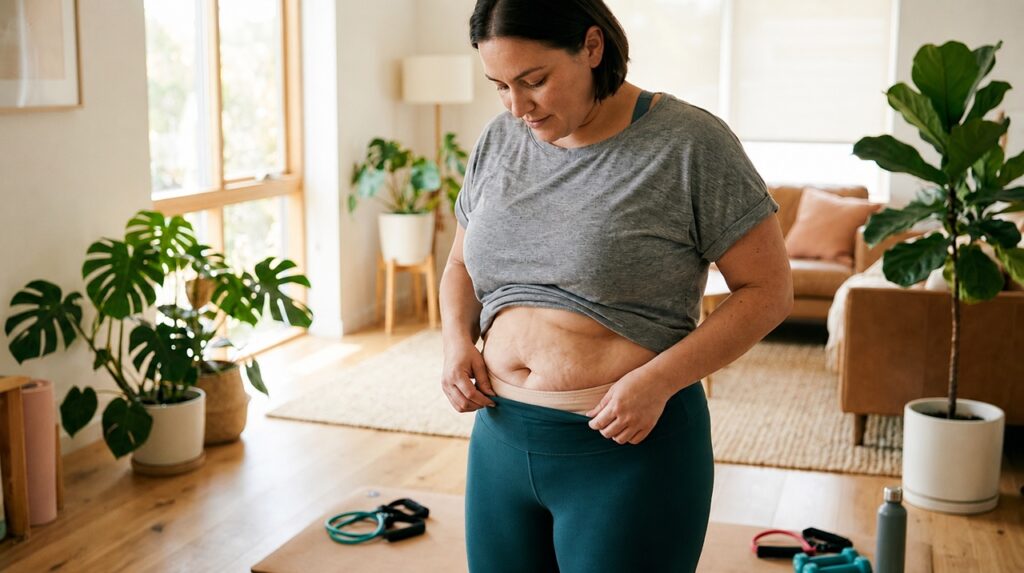
Before starting any apron belly exercises, set up an environment that supports slow, deliberate movement rather than momentum-driven reps.
- Choose a firm, flat surface, such as a mat on the floor, rather than a soft bed or sofa.
- Wear clothing that lets you see and feel your midsection move, at least during practice sessions.
- Keep water nearby and plan for short sessions of 10 to 15 minutes rather than long, exhausting ones.
- Decide on a consistent time of day so the movement and exercise habit sticks.
Check afterwards that you can breathe fully into your ribcage and lower belly without straining your neck or shoulders. If you feel tension creeping into your upper body during setup, slow down and reset before continuing.
Follow the core process

The core process for exercise involving controlled movement centres on three connected skills: breath, brace, and control.
- Lie on your back with knees bent, feet flat, and inhale slowly through your nose, letting your belly and ribs expand.
- Exhale gently while drawing your belly button toward your spine, engaging the deep core without holding your breath.
- Hold this gentle brace for a few seconds while breathing normally, then release.
- Progress to a pelvic tilt: flatten your lower back into the floor using the same brace, then return to neutral.
- Once comfortable, add a single-limb movement, such as sliding one heel out and back, while keeping the brace steady.
- Repeat for 6 to 10 slow, deliberate repetitions per side, resting as needed.
This sequence forms the backbone of many effective apron belly exercises because it teaches the core to stabilise the spine and pelvis before it is asked to do more demanding work.
Check whether it is working

Progress with exercise involving controlled movement is often subtle, so it helps to know what to look for.
- Notice whether you can maintain a brace during the movement without your lower back arching or your breath becoming shallow.
- Track whether everyday tasks, like bending to pick something up or standing from a chair, feel more supported.
- Pay attention to posture improvements, such as less slouching by the end of the day.
- Reassess every two to three weeks rather than daily, since core control changes gradually.
If you notice no change in bracing ability or posture after several weeks of consistent practice, revisit your form rather than adding more repetitions. Anyone focused on how to get rid of apron belly through exercise should treat these functional markers, not visual ones, as the primary signal of progress. Consistent measurement beats guesswork here — the same principle materials-testing specialists like Akuracy apply when calibrating lab instruments: pick one repeatable check, run it the same way every time, and trust the trend rather than any single reading.
Avoid the common mistakes
A common reader problem for exercise involving controlled movement is confusing effort with correctness, doing more reps or faster movement instead of refining control.
- Do not hold your breath during bracing; this increases pressure on the abdominal wall rather than supporting it.
- Avoid jumping straight into intense ab circuits before establishing basic pelvic control.
- Do not ignore pain or pulling sensations in the lower back or pelvic floor; stop and reassess technique.
- Avoid comparing your visible progress to unrealistic before-and-after expectations, since movement and exercise support function and posture rather than reshaping skin or fat distribution alone.
If mistakes persist despite slowing down, it may help to work with a physiotherapist, particularly if you have had abdominal surgery, pregnancy-related changes, or ongoing pelvic discomfort.
When to adjust your exercise involving controlled movement approach
Not every body responds to the same pace or sequence, so it is worth knowing when to change course.
If you experience persistent discomfort, doming or bulging along the midline of your stomach during movement, this can indicate a need to scale back intensity and consult a professional, since it may relate to abdominal separation rather than simple deconditioning. If progress plateaus after a few months of consistent practice, consider varying the exercises within the same controlled-movement principles rather than switching to high-intensity approaches. If you are also managing diet or clothing strategies alongside exercise, it is worth reviewing how these pieces fit together, for example through resources on apron belly diet approaches or clothing that supports the midsection. Adjust your apron belly exercises routine gradually, and give each change a few weeks before judging its effect.
FAQ about exercise involving controlled movement
What should readers know first about exercise involving controlled movement?
It is not a fast fix. Exercise involving controlled movement builds core strength, posture, and pelvic stability over time, working alongside diet and lifestyle changes rather than replacing them.
How do you choose the right exercise involving controlled movement approach?
Start with breathing and bracing basics, then progress only once those feel automatic. Choose apron belly exercises that match your current comfort level rather than the most advanced version you have seen.
What mistakes should you avoid with exercise involving controlled movement?
Avoid holding your breath, rushing progression, and ignoring pain or doming. These mistakes undermine both safety and the effectiveness of movement and exercise for core support.
Is exercise involving controlled movement worth it for daily use?
Yes, when done consistently and correctly. It supports posture, function, and confidence, though it will not independently answer how to get rid of apron belly without other lifestyle factors.
What should you compare before deciding on exercise involving controlled movement?
Compare your current fitness level, any pelvic floor or abdominal separation concerns, and how much time you can realistically commit each week before choosing a routine.
Recommended next steps
Begin with breathing and bracing practice for one to two weeks before adding dynamic movements, and track functional changes like posture and comfort rather than visual ones. Pair this movement and exercise foundation with realistic expectations about what exercise can and cannot change, and explore related topics like FUPA-specific guidance on the Apron Belly homepage to build a more complete, sustainable approach.
Rachel has spent over a decade writing about women’s health, body composition, and post-pregnancy recovery for UK-based digital publications and NHS-adjacent health platforms. She holds a postgraduate certificate in science communication and has worked closely with physiotherapists and dietitians to translate clinical research into plain, usable advice. Her approach is straightforward: lead with what the evidence actually says, flag the limitations honestly, and skip the language that makes readers feel like a problem to be solved. She writes for people who have already Googled the optimistic version and want someone to level with them.