
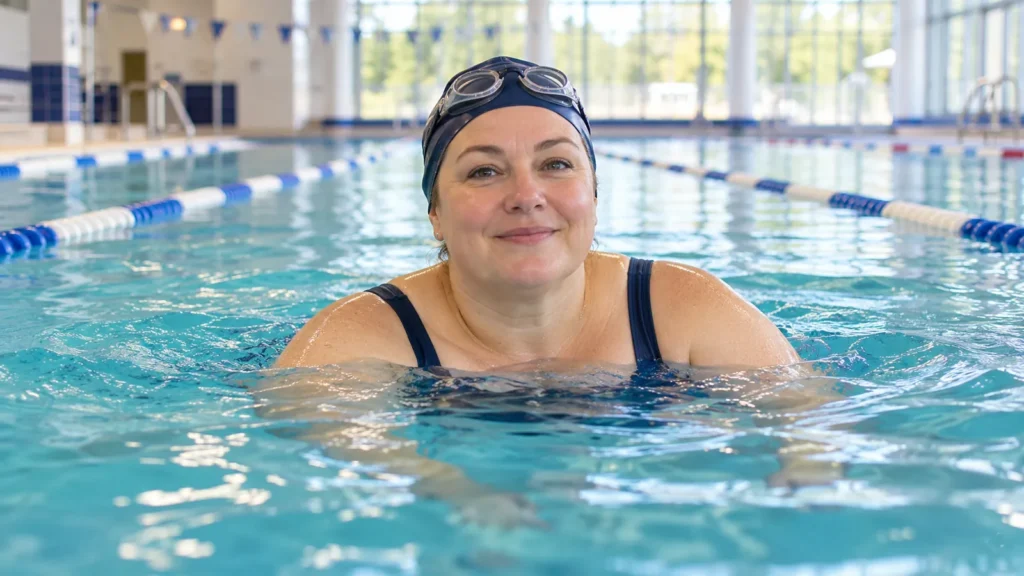
Exercise on land can feel hard work when a heavy fold of skin and fat pulls on your lower back and rubs as you move. Water changes that. This guide to swimming for apron belly comfort explains why the pool suits a heavier lower tummy, what it can and cannot change, and how to start safely.
You will find a simple comparison of swimming strokes, 9 aqua aerobics moves with clear steps and a 6-week beginner plan. It also covers what to wear, how to feel more at ease in a public pool and how to care for your skin afterwards.
Why Water Exercise Suits a Heavy Lower Belly
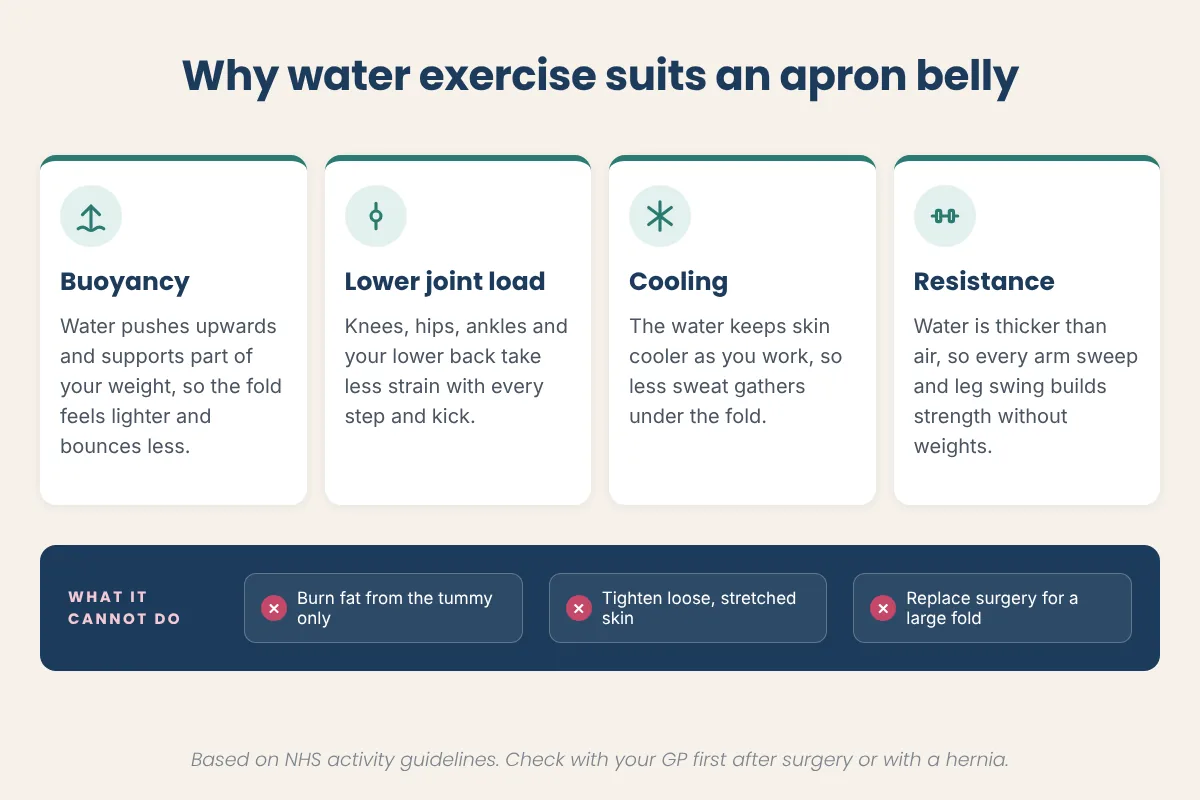
An apron belly, or pannus, is a fold of skin and fat that hangs from the lower tummy. On land, every step makes that weight bounce and tug. In water, four things work in your favour.
Buoyancy Takes the Weight Off
Water pushes up against your body. This upward force, called buoyancy, supports part of your weight, including the fold. As a result, the overhang feels lighter and moves less.
Less Load on Your Joints
Because the water carries some of your weight, your knees, hips, ankles and lower back take less strain with each movement. A Swim England report highlights water exercise as especially helpful for people with joint and muscle problems.
You Stay Cooler
Sweat that collects under the fold is one of the main causes of soreness and rashes. In a pool, the water keeps your skin cooler while you work. You still need to drink water, though, because your body can lose fluid during a swim without you noticing.
Built-In Resistance
Water is far thicker than air, so every arm sweep and leg swing meets gentle resistance. This helps your muscles work harder without heavy weights. The faster you move, the harder it gets.
What Swimming Can and Cannot Do for an Apron Belly
Swimming is a whole-body workout, and it counts towards your weekly activity. The NHS physical activity guidelines advise adults to do at least 150 minutes of moderate activity a week, or 75 minutes of vigorous activity. The NHS lists water aerobics as a moderate activity and swimming as a vigorous one.
What It Can Help With
- Burning energy, which supports overall fat loss when combined with a balanced diet.
- Building strength in your legs, arms, back and core.
- Improving heart and lung fitness.
- Lifting your mood and helping you sleep better.
What It Cannot Do
Swimming cannot burn fat from one chosen area. This idea, known as spot reduction, does not work for any exercise.
Swimming also cannot remove loose skin. If the skin has stretched over many years, it may stay after weight loss. Only surgery, such as a panniculectomy, removes a large fold. To see how much of your fold is fat and how much is skin, read our guide to apron belly fat vs loose skin.
Safety First: Check Before You Get in the Pool
For most people, swimming is safe. A few situations need a quick check first.
After Surgery or Giving Birth
NHS advice is not to swim until your surgeon, GP or physiotherapist says it is safe and your wound has fully healed. This applies after a tummy tuck, panniculectomy, hernia repair or caesarean. Our tummy tuck recovery timeline explains the usual stages after apron belly surgery.
After a vaginal birth, the NHS says you should wait until 7 days after your postnatal bleeding has stopped. After a caesarean, recovery takes longer, so talk to your midwife, health visitor or GP first.
Hernias
If you have a known hernia, ask your GP before you start. A bulge that becomes painful, hard or bigger needs a GP visit. Call 999 if you have severe tummy pain that does not go away, you are being sick, or you cannot pass wind or poo. Our guide on apron belly or hernia explains how to tell the two apart.
Broken Skin Under the Fold
Do not swim with an open wound, a weeping rash or broken skin under your fold. Pool water can sting and irritate it, and broken skin can let infection in. Let it heal first. If a rash keeps coming back, see a pharmacist or GP. Our page on apron belly rash covers causes and treatment.
Other Health Conditions
Speak to your GP before starting if you have heart or lung problems, high blood pressure, diabetes or epilepsy. Stop and get out of the pool if you feel chest pain, dizziness or unusual shortness of breath.
Swimming Strokes Compared
Any stroke that keeps you moving counts. Here is how the common options feel with a heavier lower tummy.
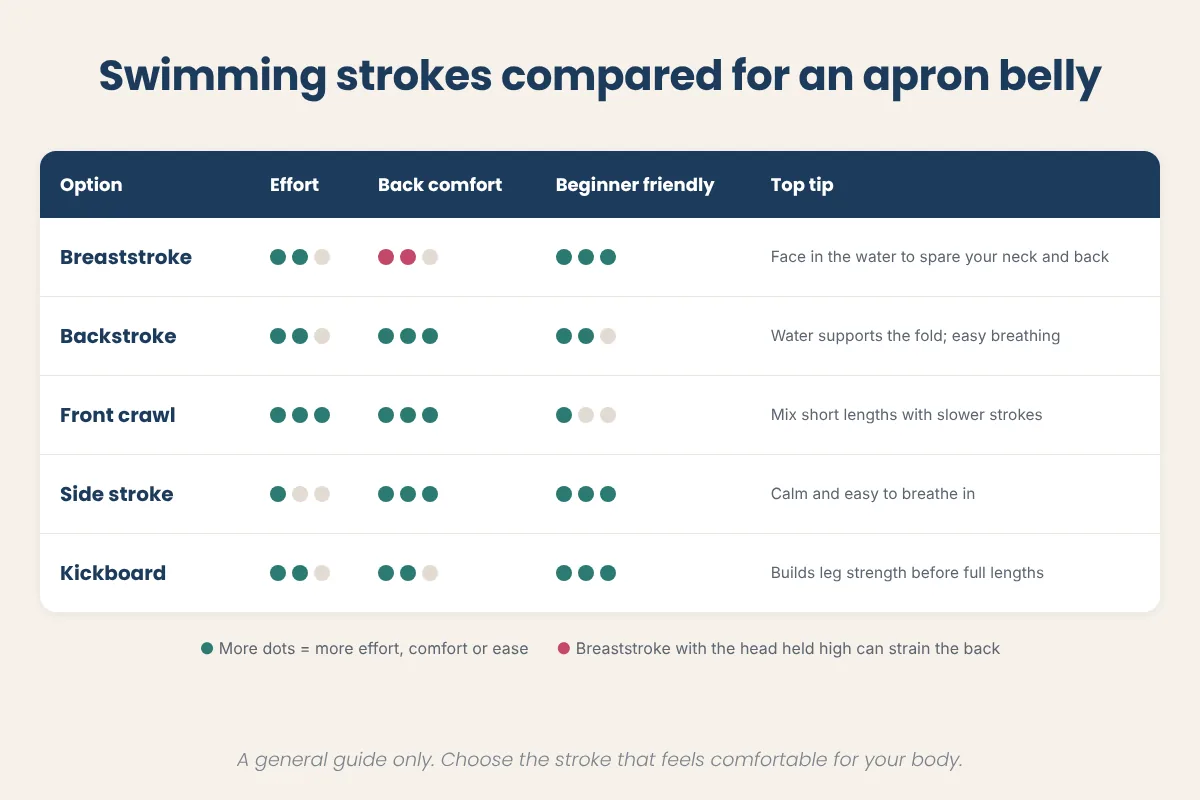
Breaststroke
Breaststroke is slow and steady, and you can see where you are going. However, keeping your head high out of the water can strain your neck and arch your lower back. Try putting your face in the water between strokes. If your knees or hips feel sore, try a smaller, gentler kick.
Backstroke
Backstroke lets you float on your back with your face out of the water, so breathing is easy. The water supports your tummy and the fold, which many women find comfortable. Keep your hips near the surface by pressing your head gently back.
Front Crawl
Front crawl is the fastest stroke and burns the most energy. Your body stays long and flat, which is kind to the lower back once you learn to breathe to the side. It takes practice, so mix short lengths with slower strokes.
Side Stroke
For side stroke, you lie on one side and use a scissor kick with your arms reaching and pulling. It is calm, low effort and easy to breathe in. It suits beginners and anyone returning after time off.
Kickboard Work
Holding a kickboard in front of you lets you work your legs while the float supports your upper body. Kick gently from the hips with soft knees. This is a good way to build leg strength and fitness before you can swim full lengths.
Aqua Aerobics and Water Walking: 9 Moves to Try
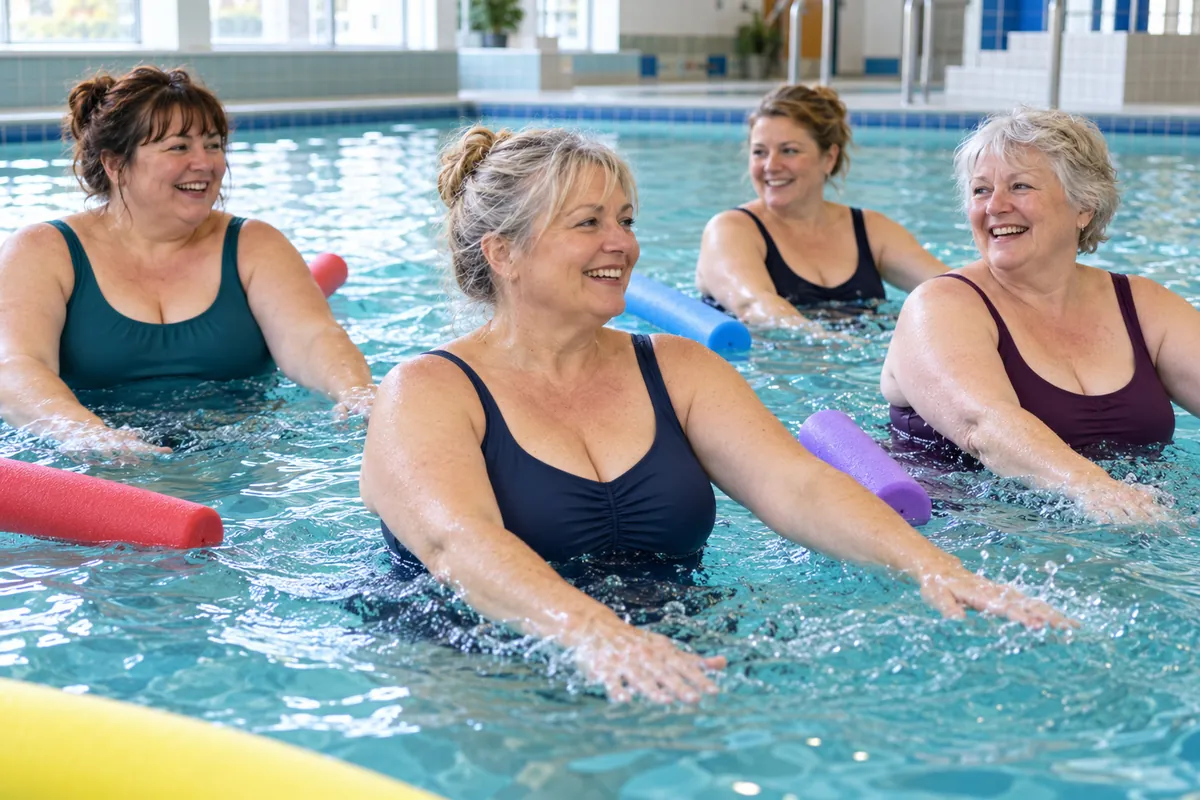
Aqua aerobics classes are a good choice if you are not a confident swimmer. You stand in the shallow end, usually in water around chest or waist height, and follow an instructor to music. Aim for 8 to 12 repetitions of each, or about 1 minute, and rest when you need to.
1. Water Walking
Walk forwards across the shallow end with long steps, swinging your arms as you would on land. Then walk backwards slowly. Water walking is the simplest place to start and builds fitness with almost no strain. On land, see our guide to walking for apron belly.
2. Side Stepping
Face the pool wall and step sideways across the shallow end, bringing your feet together each time. Then go back the other way. This works the outer hips and thighs.
3. Marching Knee Lifts
March on the spot, lifting each knee towards hip height. Pump your arms under the water to add resistance. Lift only as high as feels comfortable with your tummy.
4. Aqua Jogging
Jog gently on the spot or across the pool. The water slows you down and softens each landing. Speed up for 20 seconds, then slow down for 40 seconds, and repeat a few times.
5. Wall Press-Ups
Stand an arm’s length from the pool wall and place your hands on the edge. Bend your elbows to bring your chest towards the wall, then push back. Keep your back straight.
6. Leg Swings
Hold the wall with one hand. Swing your outside leg forwards and back in a slow, controlled arc, then out to the side and back. Change sides.
7. Arm Sweeps
Stand with your shoulders under the water and your arms out to the sides. Sweep both arms forward until your palms meet, then sweep them back. Cupped hands push more water and make it harder.
8. Wall Flutter Kicks
Hold the edge with both hands and let your legs float out behind you. Kick with straight but soft legs, moving from the hips. If lying flat feels awkward with your fold, hold a float under your tummy for extra support.
9. Noodle Cycling
Sit on a pool noodle in water deep enough to keep your feet off the floor, or loop it under your arms. Pedal your legs as if riding a bike. Keep it gentle at first, as it is harder than it feels.
A 6-Week Beginner Plan
This plan builds slowly from about 40 minutes a week to around 120 minutes. Add walking or other activity on land to reach the NHS target of 150 minutes. Rest days between pool sessions help your body recover.
| Week | Sessions | What to do | Time per session |
|---|---|---|---|
| 1 | 2 | Water walking and side stepping, with rests at the wall | 20 minutes |
| 2 | 2 | Water walking plus 4 aqua moves, such as knee lifts, wall press-ups, leg swings and arm sweeps | 25 minutes |
| 3 | 2 to 3 | Warm up with water walking, then 2 to 4 widths of kickboard work or backstroke, then aqua moves | 30 minutes |
| 4 | 3 | One aqua aerobics class, plus 2 sessions mixing gentle lengths with water walking | 30 minutes |
| 5 | 3 | Swim 2 lengths, rest, and repeat 4 to 6 times, using any stroke you like | 35 minutes |
| 6 | 3 | Swim for longer stretches with short rests, add aqua jogging intervals, finish with stretches | 40 minutes |
How to Use the Plan
Always start with 5 minutes of easy water walking to warm up. Finish with gentle stretches for your calves, thighs and shoulders. You should be able to talk, but not sing, during the main part of each session.
When to Slow Down
If you feel very tired or sore the next day, repeat the same week again before moving on. Gentle yoga for apron belly on a rest day can help with flexibility and recovery.
What to Wear in the Water
The right swimsuit makes a real difference to comfort. Look for these features:
- A one-piece with tummy control panels to support the fold.
- Thick, lined fabric that will not go see-through when wet.
- A higher leg line or swim shorts to reduce rubbing on the inner thighs.
- Wide, adjustable straps that do not dig in.
- Chlorine-resistant fabric if you swim often, so it keeps its shape.
For styles that work well, see our guide to the best swimsuit for apron belly. Pool shoes and a towelling robe are useful extras.
Preventing Chafing
Chafing is common under the fold and between the thighs, especially when you walk around the pool in a wet costume. Apply an anti-chafe balm to these areas before you swim. Change out of a wet costume soon after your session.
Confidence Tips for the Pool
Feeling nervous about a public pool is very common. A little planning helps.
Changing Rooms
Most UK leisure centres have private cubicles, even in shared changing areas. Ask at reception which times are quietest.
Women-Only Sessions
Many UK leisure centres and council pools run women-only sessions, which some women find more relaxed. Check your local centre’s timetable or call to confirm the times, as they vary from place to place.
Start Small
Choose a quiet session, use the shallow end and stay near the side for your first few visits. A beginner aqua class or adult lesson can also help. For more support, read our guide to body confidence with an apron belly.
Skin Care After Swimming
Pool chemicals such as chlorine can leave skin dry and tight, and they can irritate skin folds.
Rinse, Lift and Dry
Shower straight after your swim with warm water and a mild, fragrance-free wash. Gently lift the fold and rinse underneath. Pat the skin dry with a soft towel rather than rubbing. Make sure the area under the fold is fully dry before you dress, using a cool hairdryer setting if that helps.
Moisturise the Right Areas
Use a fragrance-free moisturiser on your arms, legs and the front of your tummy. Keep the skin inside the fold itself clean and dry, as extra moisture there can lead to soreness. A pharmacist can suggest a barrier product if the fold often gets red.
Frequently Asked Questions
Is swimming good for an apron belly?
Swimming is a good choice for many women with an apron belly. The water supports your weight, so it is gentle on your joints and back. It builds fitness and strength and helps with overall fat loss alongside a balanced diet. However, it cannot remove loose skin or burn fat from the tummy alone.
Can swimming get rid of loose belly skin?
No, swimming cannot get rid of loose skin. It can help you lose fat and build muscle, which may make the fold smaller. Skin that has stretched over many years often stays, though. Surgery, such as a panniculectomy or tummy tuck, is the only way to remove a large fold of loose skin.
Is aqua aerobics or swimming better for weight loss?
Both help, and the best choice is the one you will keep doing. The NHS lists water aerobics as moderate activity and swimming as vigorous, so swimming lengths uses more energy for the same time. Aqua aerobics suits beginners and non-swimmers. Many people mix both across the week.
How soon can I swim after a tummy tuck?
Wait until your surgeon says it is safe and your wounds have fully healed. NHS advice is that a wound should not be under water before it has healed. Healing times vary by person and operation, so follow your own surgeon’s plan. Do not swim with open wounds, stitches or drains in place.
How often should I swim with an apron belly?
Start with 2 sessions of about 20 minutes a week and build up slowly. Over 6 weeks, aim for 3 sessions of 30 to 40 minutes. Add walking or other activity on land to reach the NHS target of 150 minutes of moderate activity each week.
What should I wear swimming with an apron belly?
A one-piece swimsuit with tummy control panels and thick, lined fabric gives the most support. Swim shorts or a higher leg line can reduce chafing on the thighs. Wide, adjustable straps add comfort. An anti-chafe balm under the fold and a towelling robe for the poolside can also help.
Final Thoughts
Swimming and aqua aerobics are some of the kindest ways to exercise with a heavier lower belly. The water takes weight off your joints, keeps you cool and adds resistance, so you can build strength and fitness in comfort.
Water exercise supports overall fat loss and better health, but it will not remove loose skin. Check with your GP first if you have had surgery, have a hernia or have broken skin under your fold. Then start slowly and build up week by week.