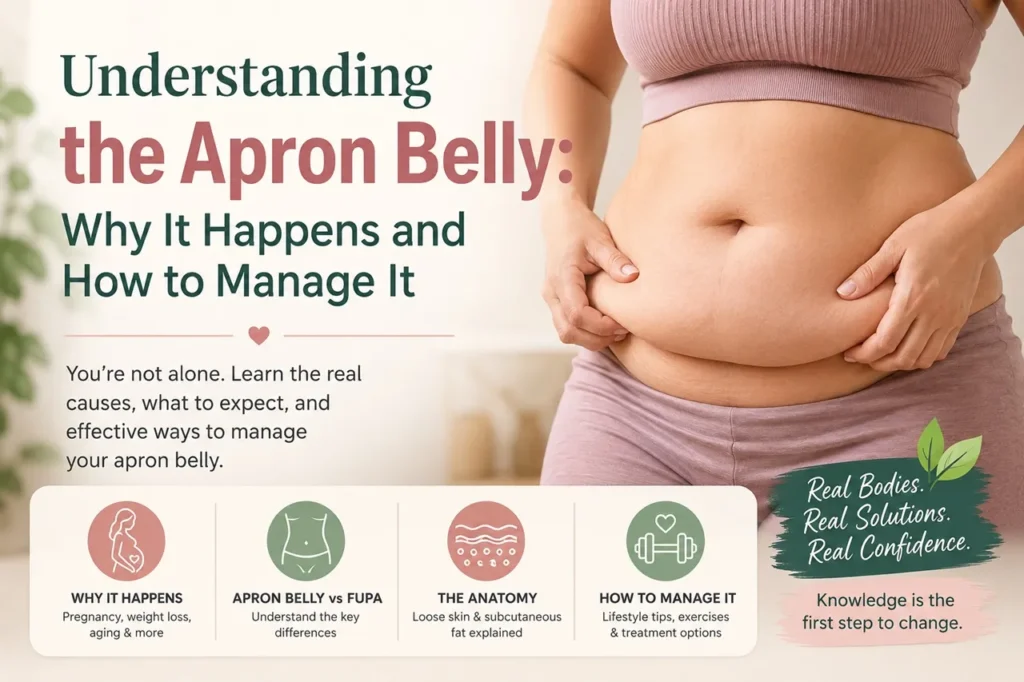

An apron belly at work becomes easier to manage when you plan for three things: keeping the skin fold dry, choosing a uniform that does not dig in, and protecting your back during long shifts on your feet. Nurses, teachers, carers and retail staff face the same pressures: heat, sweat and waistbands that slide into the crease.
This guide covers uniforms, underwear, skin care, footwear, safe lifting, breaks and asking your employer for support. None of it requires you to change your body first.
If you are new to the term, an apron belly (also called a pannus or panniculus) is a fold of skin and fat that hangs over the lower abdomen. Our guide on what an apron belly is and why it forms explains the causes in more detail.
Why an Apron Belly at Work Feels Harder on Long Shifts
Being on your feet all day changes how the fold behaves. Every step rubs the skin under the overhang against the skin beneath it. Movement also warms you up, so you sweat most where airflow is lowest.

Several problems tend to stack up over a shift:
- Heat and sweat keep the crease warm and damp, which softens the skin.
- Friction between damp skin surfaces can cause a red, raw rash called intertrigo.
- Mid-rise waistbands often sit in the crease and dig in when you sit or bend.
- Extra weight at the front can pull your posture forward and load the lower back.
- Reaching over a bed or low desk presses on the fold and makes it harder to keep loads close.
Choosing Uniforms and Scrubs That Fit
Size your uniform to the widest part of your body, not your waist. Ordering scrubs by dress size often gives trousers that cut across the fold. Measure the fullest part of your belly and hips first.
Rise, Waistbands and Fabric
A high rise that sits above the fold keeps the waistband out of the crease. A low rise sitting well below the fold can also work if it does not roll. A mid-rise that lands in the crease is usually the worst choice.
| Waistband type | What works | What to watch | Best for |
|---|---|---|---|
| Drawstring only | Easy to adjust through the day | Thin cord can dig in and leave marks | Light days with little bending |
| Wide elastic | Spreads pressure over a larger area | Can roll down into the crease if too tight | Standing and walking shifts |
| Elastic plus drawstring | Holds shape and still adjusts | Tie can sit on the fold if worn low | Nursing, care work and hospitality |
| Yoga-style fold-over band | Soft, flexible and can sit above or below the fold | Some versions slide down with heavy movement | Teaching and retail |
Choose breathable fabrics where you can. Cotton-rich blends absorb sweat better than pure polyester. For cuts and styles, see our guide to the best trousers for an apron belly.
NHS and School Uniforms
NHS England uniform guidance says uniforms should be well fitting and staff should feel comfortable in them. Its bare below the elbows rule covers sleeves, not trousers, so you can usually request a different trouser size or style.
Teachers rarely wear set uniforms, but a longer tunic or an open cardigan can cover a waistband without trapping heat. If your employer supplies workwear, ask about a larger size, a maternity cut or another supplier.
Underwear and Light Support for the Working Day
High-waist cotton knickers that sit above the fold put a soft, absorbent layer between skin surfaces. Choose a wide, flat waistband so nothing digs in after a few hours.
A light support band lifts the fold slightly, which can reduce dragging and improve airflow. It should feel snug, not tight. Deep marks or breathlessness when you bend mean it is too firm. Our guide to the apron belly support belt covers fit and wear time.
Heavy shapewear suits a long shift poorly. Pick a light-control style and remove it on your break if it feels hot. For fabrics and sizing, see our guide to the best underwear for an apron belly.
Skin Care in the Fold During a Shift
Dry skin is the goal, because moisture and friction cause most soreness under the fold. NHS skin fold leaflets advise washing gently and patting dry rather than rubbing. A simple routine:
- Before work, wash with a mild, unperfumed cleanser, pat dry and let the skin air.
- Apply a thin layer of barrier cream so it does not stay greasy.
- Tuck a cotton strip or moisture-wicking liner into the crease to keep skin apart.
- On breaks, swap a damp liner for a fresh one and dab the crease dry.
- After work, shower, dry carefully and check for redness or cracks.
Dermatology guidance from the Primary Care Dermatology Society suggests avoiding absorbent powders such as talc and cornflour, as they can clump and irritate. Avoid nylon against the crease too.
If the skin is already red or raw, read our guide on apron belly skin care when it gets sore for treatment options a pharmacist can help with.
Footwear, Posture and Back Pain
Good shoes reduce strain right up to your lower back. Choose a cushioned sole, a firm heel and room for feet to swell slightly by evening.
When standing for long periods, shift your weight and avoid locking your knees. Resting one foot on a low step eases the lower back.
NHS advice for back pain is to stay active rather than rest for long periods. Our article on whether an apron belly can cause back pain explains the link in more detail.
Lifting and Bending Safely
UK law does not set a single safe weight limit. Under the Manual Handling Operations Regulations 1992, the Health and Safety Executive (HSE) says employers must avoid hazardous manual handling where reasonably practicable, assess unavoidable risks and reduce them.
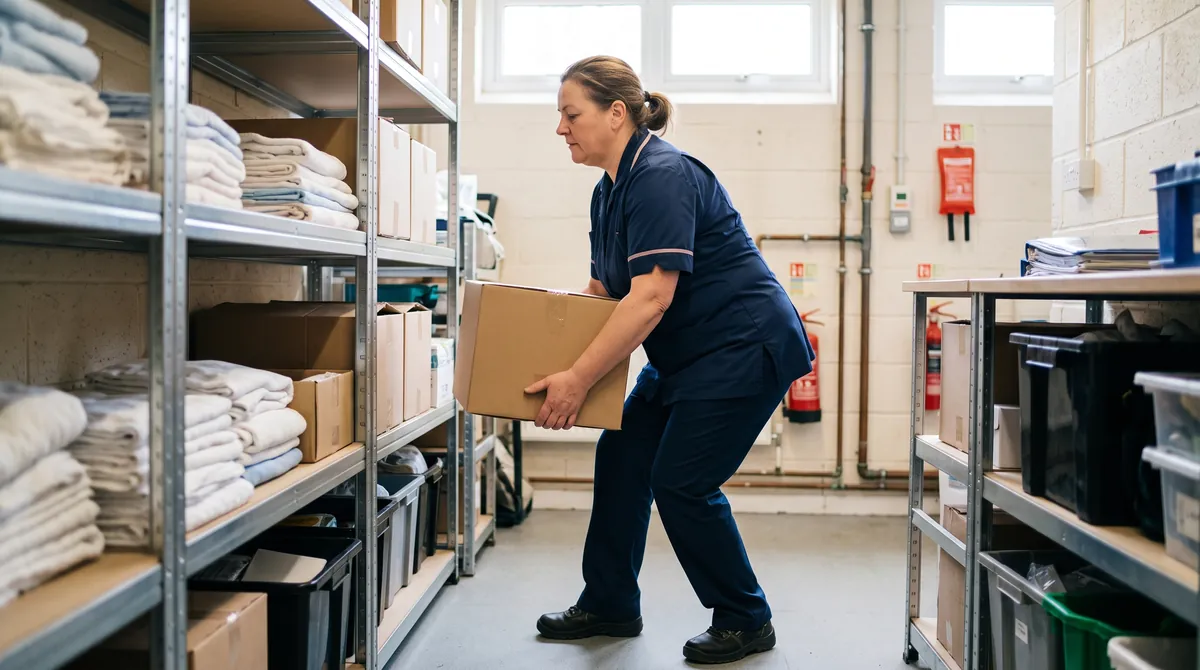
HSE good handling technique includes these steps:
- Stand with feet apart and one leg slightly forward for balance.
- Bend your back, hips and knees slightly rather than stooping fully or squatting deeply.
- Keep the load close to your waist, hugging it rather than holding it at arm’s length.
- Avoid twisting or leaning sideways. Keep shoulders level and facing the same way as your hips.
If the fold makes it hard to keep a load close, ask about a trolley, a lower shelf or a two-person lift. Never lift more than you can safely manage, and ask for help or equipment if a task feels unsafe.
Breaks, Water and Toilet Access
Under UK working time rules, Acas explains that adult workers are entitled to an uninterrupted 20-minute rest break when they work more than 6 hours in a day. Adults are also entitled to 11 hours of rest between shifts.
Use part of each break for your skin. Change your liner, dry the fold and loosen your waistband. Employers must provide drinking water, and the Royal College of Nursing (RCN) “Rest, Rehydrate, Refuel” campaign urges staff to take breaks, drink and use the toilet. Drinking less to avoid toilet trips leaves you tired and less focused.
Managing an Apron Belly at Work in Hot Weather
There is no legal maximum working temperature in the UK, but employers must keep temperatures reasonable. Acas suggests employers relax dress codes in extreme heat, allow extra breaks for drinks and provide fans or air conditioning where possible.
On hot days, pack extra liners and wear your lightest underwear. A small battery fan on breaks dries the crease quickly.
Night Shifts and Long Rotas
On nights you may sit more, which pushes the waistband into the fold. Stand and walk every hour if you can, adjusting your trousers as you rise.
Shower when you get home, dry the fold fully and let it air before bed. Our guide on how to sleep with an apron belly covers positions and pillows that help after a long shift.
Talking to Your Manager or Occupational Health
A short, factual chat with your manager can secure a different uniform size, a stool for long standing tasks or time to change. Occupational health teams can assess how work affects your health and recommend changes.
The Equality Act 2010 protects people with a disability, which GOV.UK defines as a physical or mental impairment with a substantial and long-term effect on normal daily activities. Long-term means 12 months or more. An apron belly does not automatically count. Related conditions such as long-term back pain may qualify, depending on their effect. Where they do, your employer must make reasonable adjustments, and the Access to Work scheme may fund extra support.
When to See a GP About Skin or Pain
Mild redness often settles with careful drying, and a pharmacist can suggest an antifungal cream. See a GP if you notice:
- A rash that spreads, keeps returning or does not improve with self-care
- Broken, cracked, weeping or bleeding skin in the fold
- A bad smell, pus or yellow crusting, which can suggest infection
- Small red spots beyond the main rash, a common sign of yeast infection
- Back pain that lasts several weeks or stops you working
Contact NHS 111 or your GP urgently if back pain is sudden and severe or comes with a fever. Call 999 if you have numbness around your genitals or bottom, new bladder or bowel problems, or weakness in both legs. If infections keep returning, our guide to apronectomy on the NHS explains when surgery is considered.
Your Printable Work Bag Checklist
Keep a small pouch in your locker. This list suits a 12-hour shift.
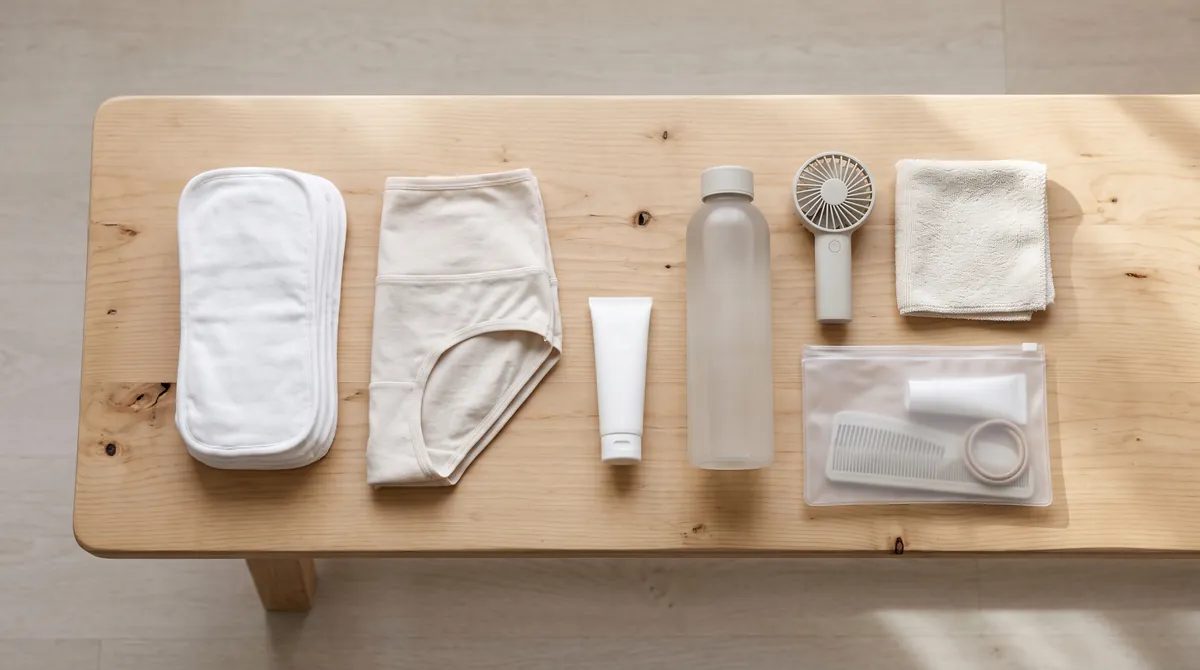
| Item | Why it helps | Suggested amount |
|---|---|---|
| Cotton or wicking skin liners | Keep skin surfaces apart and absorb sweat | 2 to 3 |
| Barrier cream (travel size) | Protects skin from moisture and rubbing | 1 small tube |
| Spare high-waist cotton knickers | Fresh, dry layer after a hot or busy spell | 1 pair |
| Soft cloth or pack of tissues | Dab the fold dry on breaks | 1 |
| Unperfumed wipes | Quick clean when a shower is not possible | 1 small pack |
| Refillable water bottle | Steady hydration through the shift | 750ml to 1 litre |
| Small battery fan | Dries the crease faster on hot days | 1 |
| Simple pain relief | For back or foot ache, following the label dose | As needed |
| Small zip bag | Holds used liners until you get home | 1 |
Frequently Asked Questions
What are the best work trousers for an apron belly?
Trousers with a high rise that sits above the fold, or a low rise that sits well below it, usually feel best. Avoid mid-rise styles that land in the crease. A wide elastic waistband with an adjustable drawstring spreads pressure and lets you loosen it through a long shift.
How do I stop my apron belly sweating at work?
You cannot stop sweating completely, but you can manage it. Wash and pat the fold dry before work, apply a thin barrier cream and tuck a cotton or wicking liner into the crease. Change the liner on each break and choose breathable underwear rather than nylon.
Can I wear a support belt for a 12-hour shift?
Many people can, as long as the belt feels snug rather than tight. Choose a breathable, adjustable design and loosen or remove it on breaks to let the skin air. Stop wearing it if it leaves deep marks, causes pain or makes breathing feel restricted when you bend.
Is an apron belly classed as a disability at work?
Not automatically. Under the Equality Act 2010, a disability is an impairment with a substantial and long-term effect on daily activities. Long-term means 12 months or more. Related conditions, such as chronic back pain or recurring skin problems, may qualify depending on how much they affect you.
Should I use talc in the fold during long shifts?
Dermatology guidance suggests avoiding absorbent powders such as talc and cornflour in skin folds. They can clump when damp and may irritate the skin. A thin barrier cream combined with a cotton or moisture-wicking liner is usually a better way to keep the crease dry.
How can I lift safely at work with an apron belly?
Plan the lift, stand with feet apart and bend slightly at the hips and knees. Keep the load close to your waist and avoid twisting. If the fold stops you holding items close, ask your manager about trolleys, lower storage or a two-person lift.
Final Thoughts
Managing an apron belly at work comes down to small, repeatable habits. A well-fitting uniform, a barrier between skin surfaces and care on each break can turn a sore shift into a comfortable one. Good shoes and careful lifting protect your back.
You also have a right to ask for help from your manager or occupational health. If your skin breaks down or pain persists, see your GP early rather than pushing through.