
Quick Answer
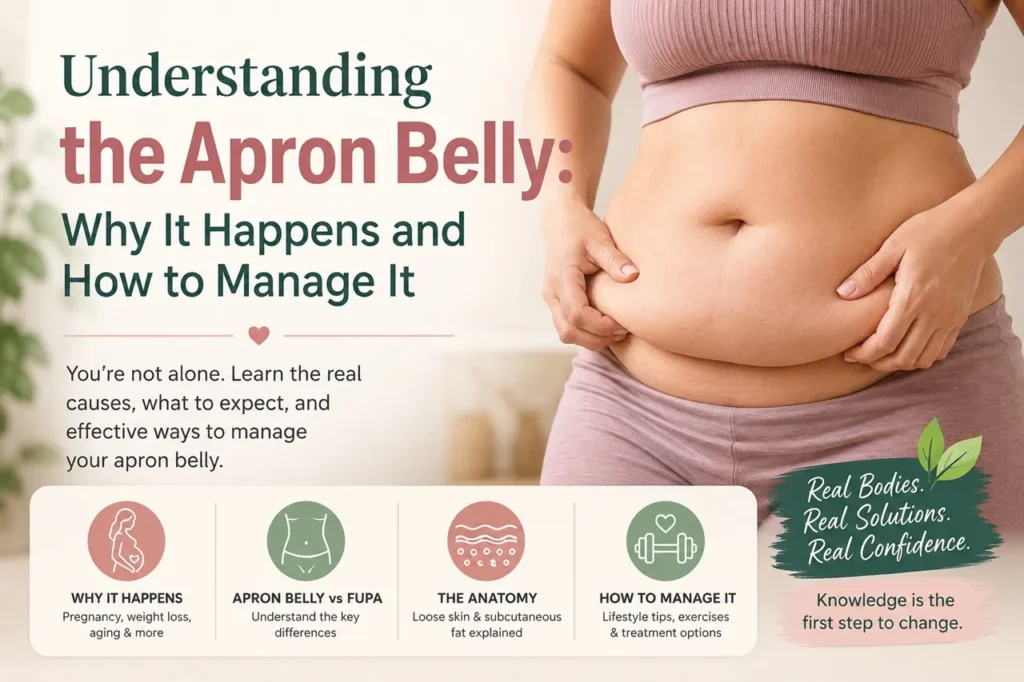
A belly flap is a fold of loose skin, and often some fat, that hangs over the lower abdomen. It usually forms after large weight loss, pregnancy or with age, when stretched skin cannot fully shrink back. Fat in the flap can reduce with weight loss, but stretched skin rarely tightens much on its own. Daily skin care and support garments keep it comfortable, and surgery is the only way to remove it.
- Thin, soft, crepey skin points to loose skin; a thick pinch points to fat
- Rashes, smell and soreness in the crease are common and treatable
- Tummy tucks are not usually available on the NHS, but a panniculectomy sometimes is
A loose belly flap can be one of the most frustrating results of hard won weight loss or of carrying a baby. You may have changed your diet and stayed active, yet a soft flap of skin still sits over your waistband. This guide explains why a belly flap forms, how to tell whether yours is mostly skin or fat, and the options for comfort and treatment in the UK.
For more on caring for the skin itself, visit our belly skin hub. If your overhang is larger, our guide to the hanging belly covers the bigger picture.
What Is a Belly Flap?
A belly flap is a fold of loose skin, sometimes with fat underneath, that hangs over the lower part of the abdomen, usually below the belly button.
Belly flap, apron belly and pannus
These words overlap. Doctors call a hanging fold of skin and fat a pannus. Apron belly is the everyday name for the same thing. People often say belly flap or skin flap on stomach when the fold is mostly loose skin, especially after weight loss. A small flap may only cover the top of the pubic area, while a larger one can hang over the thighs.
What a belly flap feels like
- soft skin that folds or creases when you sit down
- a crease underneath that gets warm, damp or sore
- stretch marks or a crepey, wrinkled surface
- a flap that moves or swings when you walk or run
What Causes a Loose Belly Flap?
Skin contains collagen and elastin, which help it stretch and spring back. When skin is stretched for a long time, these fibres can be damaged, and the skin cannot fully shrink back when the space under it gets smaller.
Belly flap after weight loss
A belly flap after weight loss is the most common type. The more weight you lose, and the longer you carried it, the more likely loose skin is. This applies whether the weight came off through diet, weight loss medicines or bariatric surgery. Our guide to apron belly after weight loss looks at this in more detail.
Pregnancy and caesarean birth
The tummy skin stretches a great deal during pregnancy, especially with twins or several pregnancies. After a caesarean, the scar can tether the skin so that the tissue above it hangs over, creating a shelf or flap. A gap between the tummy muscles, called diastasis recti, can also make the lower belly push forward.
Age, genes and sun damage
Skin naturally makes less collagen as we get older, so it becomes thinner and less elastic. Genes affect how well your skin recovers from stretching. Smoking and years of sun exposure also weaken skin, making a loose flap more likely. Our guide to sagging belly skin explains how ageing changes the tummy and what helps.
Is Your Belly Flap Loose Skin or Fat?
Knowing what your flap is made of helps you choose the right plan. Most flaps contain both, but the balance matters. Our full guide to apron belly fat vs loose skin explains the differences in depth.
The pinch test
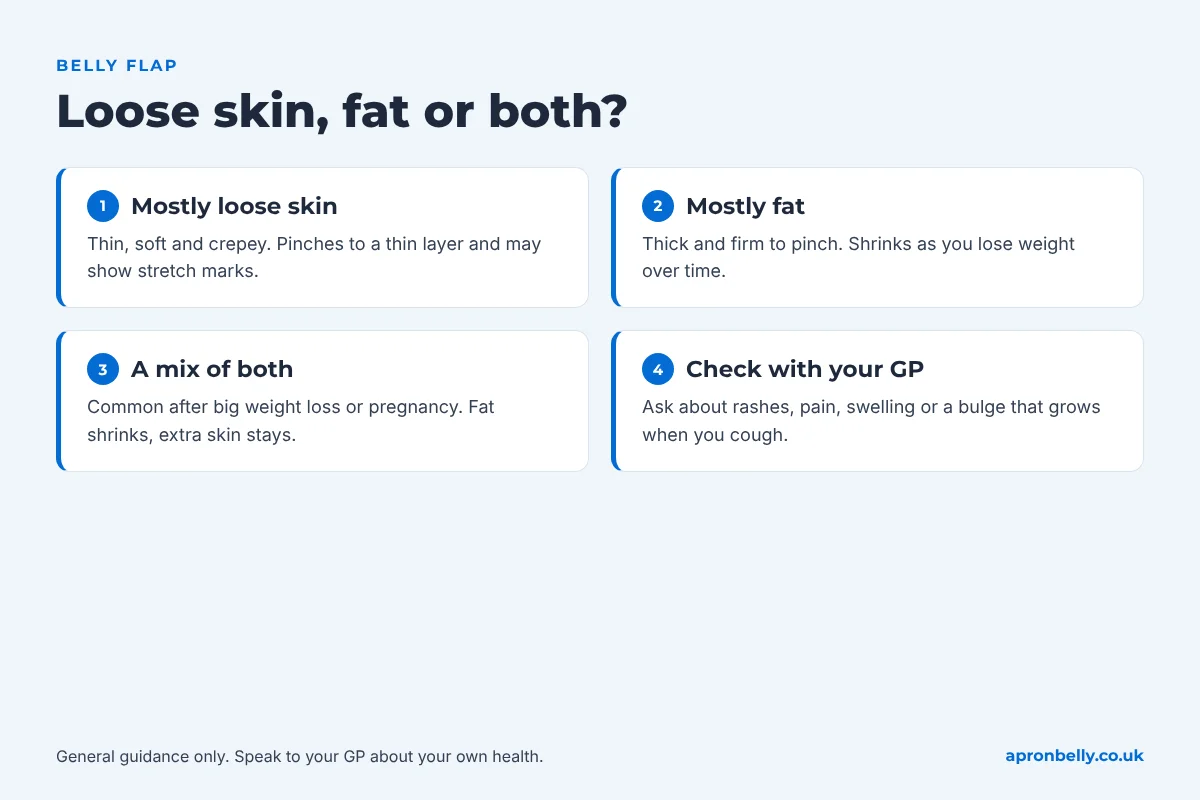
Stand up and gently pinch the flap between your thumb and finger. If you can only hold a thin layer that feels soft and slightly wrinkly, the flap is mostly skin. If you hold a thick, firm handful, there is more fat underneath.
Signs compared
| Sign | Mostly loose skin | Mostly fat |
|---|---|---|
| Pinch | Thin and soft | Thick and firm |
| Surface | Crepey, wrinkled, stretch marks | Smoother and fuller |
| After weight loss | Stays roughly the same | Gets smaller |
| Lying down | Falls flat to the sides | Keeps more of its shape |
When it might be something else
A bulge that gets bigger when you cough or strain, or that you can push back in, may be a hernia rather than a skin flap. Read our guide to apron belly or hernia and ask your GP to check any lump that is painful, growing or changes shape.
Living With a Belly Flap Day to Day
Even a small loose belly flap can cause practical problems. Good habits keep the skin healthy and make clothes more comfortable.
Protect the skin in the crease
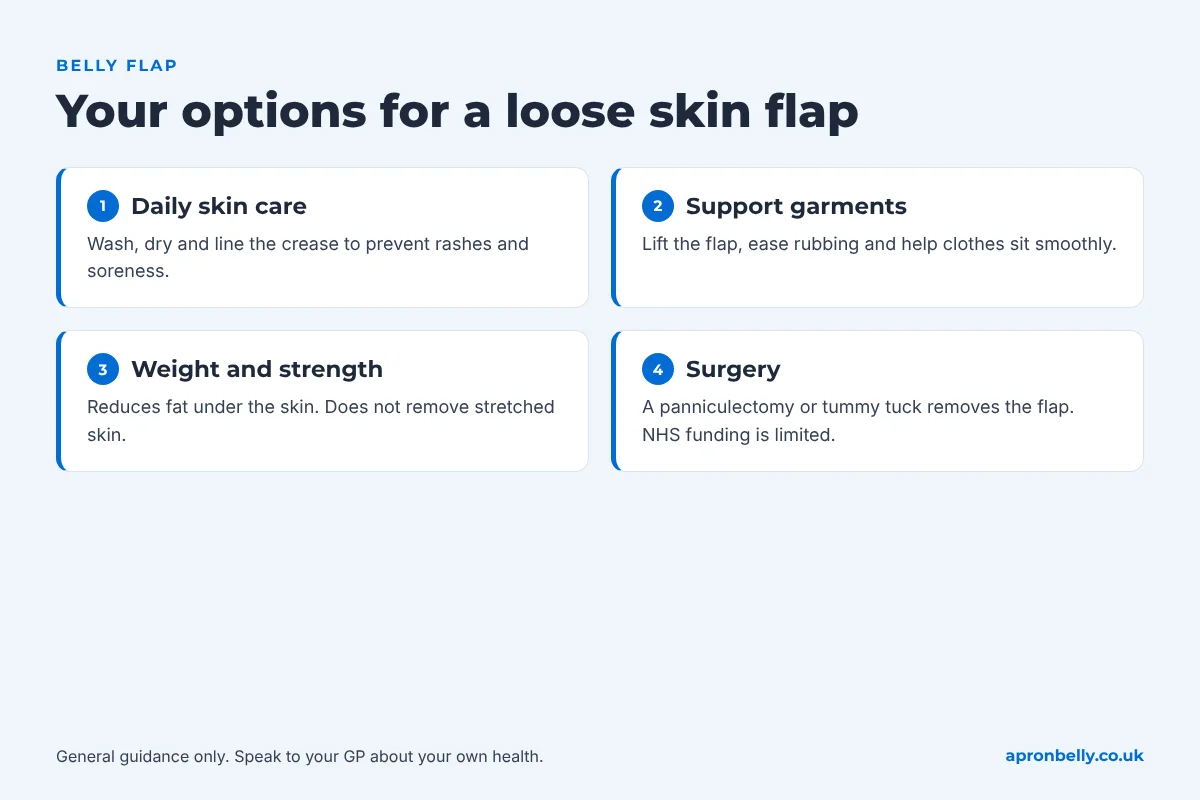
- Lift the flap and wash the crease daily with warm water and a mild, unperfumed cleanser.
- Pat completely dry, or use a hairdryer on a cool setting.
- Place a soft cotton or moisture wicking liner in the fold to stop skin rubbing on skin.
- Check the area with a mirror for redness, cracks or a bad smell.
If the crease is already red or itchy, our guide to apron belly rash explains the next steps. A pharmacist can advise on creams for mild rashes.
Support and clothing
High waisted knickers, support briefs or a light binder can lift a flap, reduce rubbing and help clothes sit smoothly. Choose breathable fabrics and avoid waistbands that cut across the middle of the fold. Our comparison of apron belly support belts covers the main types.
Keep weight steady and muscles strong
If you still have fat to lose, a gradual calorie deficit will reduce the fat part of the flap. Strength training helps you keep muscle and supports posture. Neither will remove stretched skin, but a stable weight is also what surgeons look for before any operation.
Treatment Options for a Belly Flap
The right option depends on the size of the flap, how much is skin, your health and whether it causes medical problems.
Non surgical skin tightening
Clinics offer radiofrequency, ultrasound and microneedling treatments that aim to tighten mildly loose skin. Results tend to be modest and are best suited to small amounts of laxity, not a hanging flap. Our guide on how to tighten apron belly skin without surgery sets out what to expect and what is not worth paying for.
Panniculectomy and tummy tuck
Surgery is the only treatment that removes a belly flap. A panniculectomy removes the hanging skin and fat. A tummy tuck, or abdominoplasty, also tightens the tummy muscles and repositions the belly button. The NHS tummy tuck guide says the operation is usually done under general anaesthetic, takes 2 to 5 hours, needs about 4 to 6 weeks off work and exercise, and costs about £5,000 to £10,000 privately in the UK. Risks include scarring, wound problems, fluid collections, numbness, bleeding, infection and blood clots.
Can you get surgery on the NHS?
A cosmetic tummy tuck is not usually available on the NHS. A panniculectomy may be funded when a flap causes ongoing health problems, such as repeated skin infections, and you meet your local criteria, which often include a lower BMI and a stable weight. Our guide to getting an apronectomy on the NHS explains the process, and our tummy tuck hub compares the operations.
When to See a GP
Most belly flaps are a comfort and confidence issue, but some signs need a medical opinion.
Get advice the same day if
- the skin under the flap is hot, swollen, painful or the redness is spreading
- you have a fever or feel unwell along with a sore crease
- a lump in the belly becomes painful, hard or cannot be pushed back
Contact your GP or call NHS 111. A lump that is very painful, with vomiting, needs urgent care.
Book a routine appointment if
- you keep getting rashes or infections in the crease
- the flap limits walking, exercise or hygiene
- you would like to discuss weight support or a referral for surgery
Frequently Asked Questions
Will a belly flap go away on its own?
The fat part of a belly flap can shrink with weight loss, and skin may tighten a little over the months after pregnancy or weight loss. A flap that is mostly stretched skin rarely disappears completely without surgery.
Can exercise get rid of a loose belly flap?
Exercise can reduce fat and strengthen the muscles under the flap, which may make it look flatter. It cannot shrink stretched skin, so a flap that is mostly loose skin will usually remain.
Why do I have a belly flap after weight loss?
When skin has been stretched for a long time, its collagen and elastin fibres are damaged and it cannot fully shrink back once the fat underneath is lost. Larger weight loss, age, genes and smoking all make loose skin more likely.
How much does belly flap removal cost in the UK?
The NHS website puts the private cost of a tummy tuck at about £5,000 to £10,000, plus consultation and follow up costs. A panniculectomy may be funded by the NHS if strict local criteria are met.
How do I stop a rash under my belly flap?
Wash the crease daily, dry it thoroughly and use a soft cotton or moisture wicking liner so skin does not rub on skin. Speak to a pharmacist about a suitable cream, and see your GP if the rash keeps coming back or the skin becomes hot and painful.
The Bottom Line
A belly flap is a fold of loose skin, often with some fat, that forms after weight loss, pregnancy or with age. Weight loss and exercise can reduce the fat, but stretched skin rarely tightens much on its own. Daily skin care and support garments keep the flap comfortable, and surgery is the only way to remove it, with NHS funding possible only when strict criteria are met.
Your next step
Try the pinch test to see whether your flap is mostly skin or fat, then start a simple wash, dry and line routine for the crease. If the flap causes repeated soreness or limits daily life, note the problems and book a GP appointment.
Featured image: tape measure by Jacek Halicki, Wikimedia Commons, CC BY-SA 4.0, cropped.