Quick Answer
Standing exercises for apron belly let you build strength and burn energy without getting down on the floor. Moves such as sit to stand, wall press ups, standing marches, side leg raises, standing side bends and heel raises work the legs, hips, back and core. They cannot burn fat from the belly alone, but done on at least 2 days a week alongside 150 minutes of moderate activity and a sensible diet, they support weight loss, posture and comfort.
- No mat, no floor work and no special kit needed, only a sturdy chair and a wall
- Start with 1 set of 8 to 10 repetitions and build up slowly
- Speak to your GP first if you have not exercised for a while or have a health condition
Many exercise plans for the belly start with crunches, planks and other moves on a mat. If you have an apron belly, getting down to the floor and back up again can be awkward, painful or simply not possible. Standing exercises for apron belly solve that problem. Every move in this guide is done on your feet, with a chair, counter or wall for support, so you can train safely in your kitchen or living room. They are low impact belly exercises, which makes them some of the easiest apron belly exercises at home for beginners.
This guide is part of our belly exercises hub. If you want the full picture of diet, activity, medicines and surgery, read our guide to the best way to get rid of apron belly.
Why Choose Standing Exercises for Apron Belly?
Standing exercises for apron belly are strength and movement exercises done on your feet, so you avoid lying on the floor while still working the core, hips, legs and back.
When floor work is hard
Lying flat with a heavy fold can press on the stomach and make breathing feel uncomfortable. Getting up from the floor puts strain on the knees, hips and back. Some people also find that a pannus gets in the way of bending forward. Standing moves remove these problems while keeping the benefits of regular strength work.
What standing exercise can and cannot do
It helps to be honest from the start. No exercise burns fat from one chosen area of the body. When you lose weight, your body decides where the fat comes from, and the belly is often one of the last places to change. Exercise also cannot shrink stretched skin. Our guide to apron belly fat vs loose skin explains why some overhang stays after weight loss.
What standing exercise can do is build muscle, use energy, improve balance and posture, ease back strain from a heavy fold and make daily tasks such as climbing stairs easier. Combined with a calorie deficit, it is a useful part of a plan to reduce fat under the skin.
Who these moves suit
- people with a grade 2 to grade 4 apron belly who find floor work uncomfortable
- beginners and people returning to exercise after a long break
- older adults who want to work on strength and balance together
- anyone with knee or back problems that make getting up from the floor difficult
Before You Start
A few minutes of preparation makes the routine safer and more comfortable.
Check with your GP if needed
The NHS advises speaking to a GP before starting if you have not exercised for some time or if you have a medical condition. This is worth doing if you have heart or lung problems, high blood pressure, diabetes, joint pain, dizziness or a hernia.
Set up your space
- a sturdy chair without wheels, placed against a wall so it cannot slide
- a clear wall space and a kitchen counter or table edge to hold
- supportive trainers or flat shoes with good grip, not socks or slippers
- a glass of water nearby
Support the fold
A soft support garment or high waisted, moisture wicking leggings can stop a heavy fold from swinging and rubbing. A cotton liner in the crease helps keep skin dry. Wash and dry under the fold after each session to avoid rashes. Our guide to movement and exercise for a heavier lower belly has more comfort tips.
Warm up for 5 minutes
March gently on the spot, roll your shoulders, swing your arms and circle your ankles. You should feel a little warmer and slightly out of breath, but still able to talk.
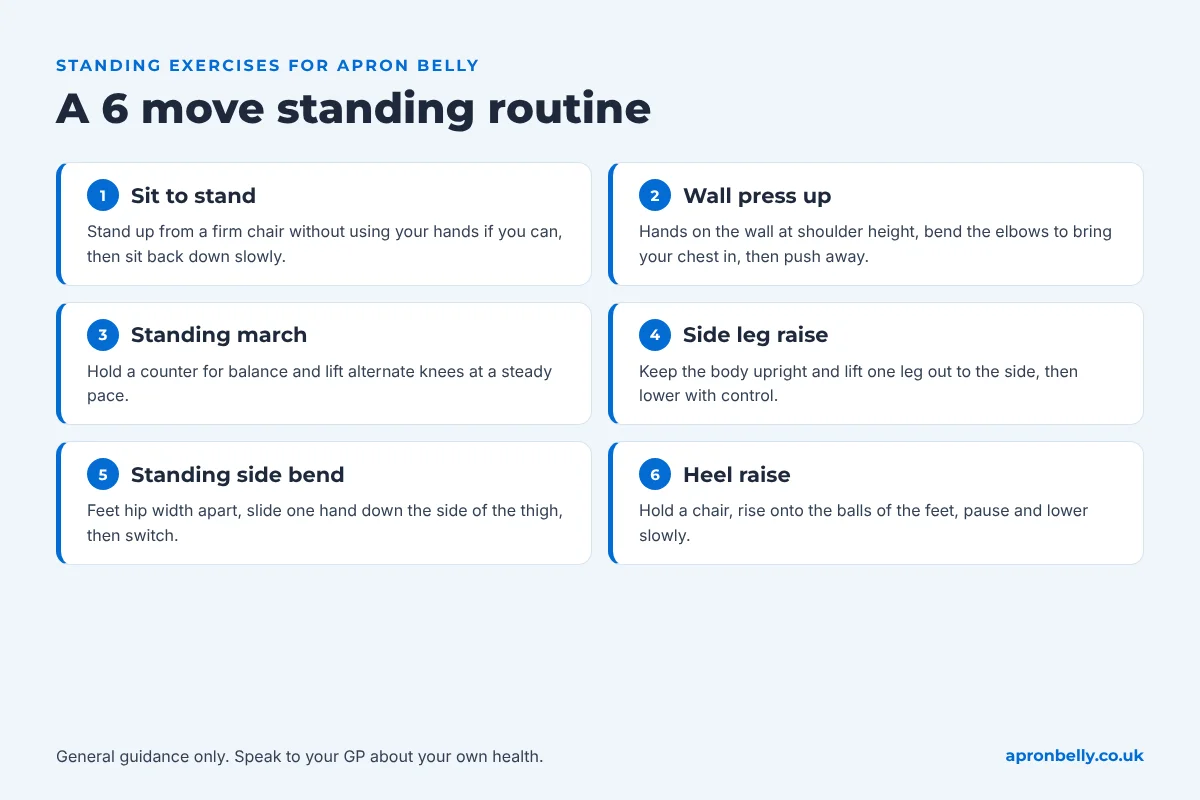
6 Standing Exercises for Apron Belly
Work through the moves in order. Breathe out on the effort and keep your tummy muscles gently drawn in, as if you are zipping up a pair of trousers.
1. Sit to stand
Sit near the front of a firm chair with your feet hip width apart. Lean forward slightly and stand up, pushing through your heels. Use your hands on the chair or your thighs at first if you need to. Sit back down slowly with control. This works the thighs, buttocks and core, and it trains a movement you use every day.
2. Wall press up
Stand an arm’s length from a wall and place your hands flat on it at shoulder height. Keep your body in a straight line from head to heels. Bend your elbows to bring your chest towards the wall, then push back. Stepping your feet further away makes it harder. This strengthens the chest, shoulders and arms, and holding a straight body works the core.
3. Standing march
Hold a counter or chair back with one or both hands. Stand tall and lift one knee as high as is comfortable, lower it, then lift the other. Keep a steady rhythm for 30 to 60 seconds. As you get fitter, march faster or swing your arms. This raises your heart rate and works the hip flexors and lower tummy muscles.
4. Side leg raise
Hold the back of a chair. Keep your body upright and your toes pointing forward. Lift one leg out to the side, keeping it straight, then lower it slowly. Do all your repetitions on one side before swapping. This strengthens the outer hips, which help with balance and walking.
5. Standing side bend
Stand with your feet hip width apart and your arms by your sides. Slowly slide one hand down the outside of your thigh, bending at the waist, then return to standing. Repeat on the other side. Keep the movement small and smooth. This works the muscles along the sides of the waist without any pressure on the front of the belly.
6. Heel raise
Hold a chair or counter. Rise up onto the balls of your feet, pause for a moment, then lower your heels slowly. This strengthens the calves and ankles and improves balance, which matters more as a heavier fold shifts your centre of gravity forward.
Sets, Repetitions and Progress
Strength comes from doing a little more over time. The NHS describes strengthening activity as working the muscles to the point where you need a short rest before you can repeat the movement.
A simple starting plan
| Stage | Sets and repetitions | How it should feel |
|---|---|---|
| Weeks 1 and 2 | 1 set of 8 to 10 of each move | Comfortable, able to talk easily |
| Weeks 3 and 4 | 2 sets of 10, rest 1 minute between sets | Muscles tired by the last few repetitions |
| Week 5 onwards | 2 to 3 sets of 10 to 12 | Need a short rest before repeating |
Ways to make it harder
- do sit to stand without using your hands, or from a lower seat
- step further from the wall for press ups, then move to a kitchen counter
- hold a filled water bottle in each hand during side bends
- hold the chair with one fingertip, or let go, during heel raises if your balance is good
A worked example
Imagine you can manage 8 sit to stands using your hands in week 1. By week 3 you might do 2 sets of 10 with one hand. By week 6 you might manage 3 sets of 10 with arms crossed over your chest. Writing your numbers down each week shows progress even when the scales or tape measure have not moved yet. If you would like these moves set out week by week, follow our apron belly workout plan, a 4 week beginner programme.
Fitting Standing Exercises Into Your Week
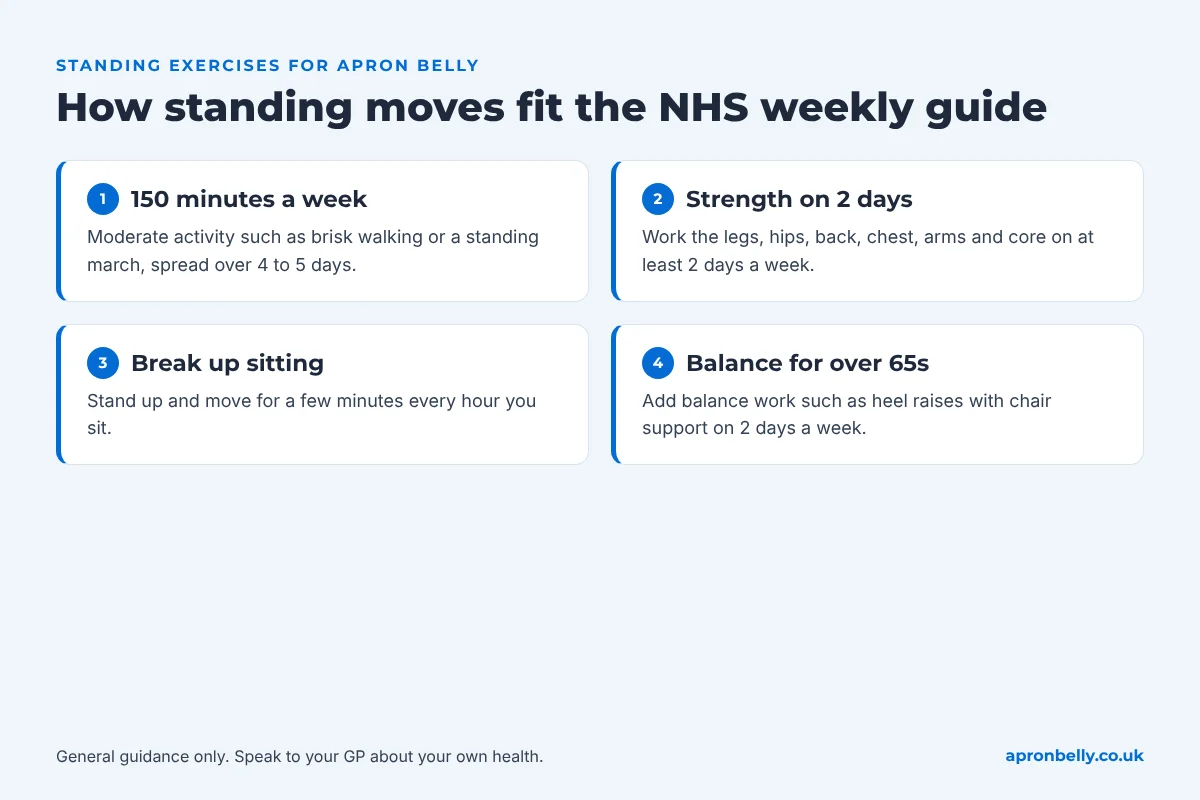
Standing strength moves are one part of an active week. The NHS physical activity guidelines ask adults to do at least 150 minutes of moderate activity a week, strengthening activities that work all the major muscle groups on at least 2 days a week, and to break up long periods of sitting.
A sample week
| Day | Activity |
|---|---|
| Monday | Standing routine plus a 20 minute walk |
| Tuesday | 30 minute brisk walk |
| Wednesday | Rest or gentle stretching |
| Thursday | Standing routine plus a 20 minute walk |
| Friday | 30 minute brisk walk or swim |
| Saturday | Active day out, gardening or housework |
| Sunday | Rest |
Advice for adults over 65
The NHS guidelines for older adults add activities that improve balance and flexibility on at least 2 days a week. Heel raises, side leg raises and the standing march with support all count, and they can help you feel steadier on your feet. For a full chair based routine and weekly plan, see our guide to apron belly exercises for over 60s.
Pair exercise with food changes
Exercise on its own rarely creates enough of a calorie deficit to shrink an apron belly. Small, steady changes to portions, snacks and drinks do most of the work for fat loss, while exercise helps you keep muscle and feel stronger. For more floor free ideas, see our guide on how to get rid of apron belly without crunches.
Safety Tips and When to Stop
Standing moves are gentle, but it is still worth knowing the signs that mean you should pause.
Good habits
- move slowly and with control, never jerk or swing
- keep breathing, do not hold your breath
- keep a support within reach for every balance move
- expect mild muscle ache a day or two after a new routine, which should ease
Stop and get advice if you notice
- chest pain, tightness or a racing heartbeat
- dizziness, feeling faint or very short of breath
- sharp joint pain or pain that gets worse as you continue
- a bulge in the belly or groin that appears when you strain
Chest pain that does not settle with rest is a medical emergency, so call 999. For other symptoms, speak to your GP or call NHS 111 before you exercise again.
After surgery or pregnancy
If you have had abdominal surgery, a caesarean or a baby recently, follow the advice of your surgical team, midwife or physiotherapist about when to start. For a wider set of options once you are ready, see our list of effective apron belly exercises.
Frequently Asked Questions
Can standing exercises get rid of an apron belly?
Standing exercises cannot burn fat from the belly alone or tighten stretched skin. They build strength, use energy and support weight loss when combined with a calorie deficit, which can make an apron belly smaller and easier to live with.
How often should I do standing exercises for apron belly?
Aim for at least 2 days a week, as the NHS recommends for strengthening activity, with a rest day in between. Add brisk walking or other moderate activity on other days to reach 150 minutes a week.
What are the best standing core exercises?
Good standing core exercises include the standing march, standing side bend, wall press up and sit to stand. Each one asks the tummy and back muscles to keep your body steady while your arms or legs move.
Are standing exercises safe with a large apron belly?
For most people they are a safe, low impact choice. Use a support garment, hold a chair for balance and start with a small number of repetitions. Speak to your GP first if you have a health condition or have not exercised for a while.
How long before I see results?
Many people notice they feel stronger and steadier within a few weeks of regular practice. Changes in belly size depend on overall fat loss, which usually takes months and varies from person to person.
The Bottom Line
Standing exercises for apron belly give you a way to build strength and stay active without floor work. Sit to stand, wall press ups, standing marches, side leg raises, side bends and heel raises cover the main muscle groups using only a chair and a wall. They will not target belly fat on their own, but done twice a week with regular walking and sensible eating, they support weight loss, posture, balance and comfort.
Your next step
Pick two days this week, set up a chair against a wall and try one set of each move. Write down how many you managed so you can see your progress next week.
Featured image: trail running shoe by Thomas Dahl, Wikimedia Commons, CC BY-SA 4.0, cropped.