
Quick Answer
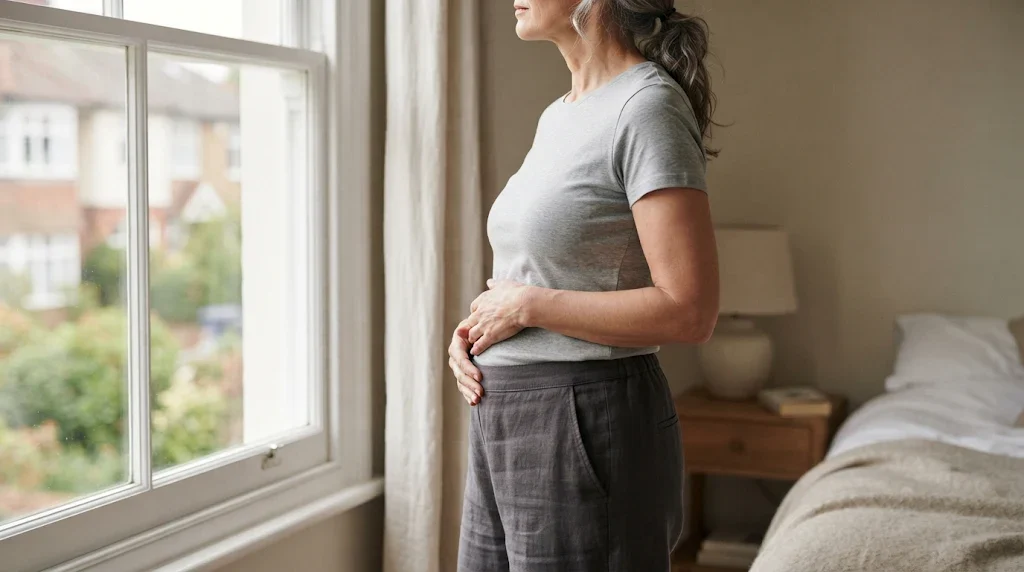
A sagging belly is loose, less elastic skin on the tummy that droops or wrinkles, most often because the skin makes less collagen and elastin with age. Hormonal changes around the menopause, past stretching from pregnancy or weight gain, sun exposure and smoking all add to it. Strength training, a steady weight and good skin care help it look and feel better, but only surgery removes loose skin.
- Sagging skin and belly fat are different, and a pinch test shows which is the bigger factor
- Creams can ease dryness but do not lift sagging belly skin
- See your GP if the skin gets sore, a bulge appears or your tummy swells quickly
A sagging belly is one of the most common changes people notice as they get older. The skin on the lower tummy starts to look looser, softer and more crinkled, and it may fold or droop over the waistband even if your weight has hardly changed. This guide explains why sagging belly skin happens with age, how it differs from belly fat and an apron belly, and which treatments are worth your time and money in the UK.
This article is part of our belly skin hub. If your tummy hangs down as a fold of fat and skin rather than just looking loose, start with our guide to the hanging belly, which explains overhang and the grading scale.
What Is a Sagging Belly?
A sagging belly is loose, lax skin on the abdomen that has lost some of its firmness and spring, so it droops, wrinkles or folds instead of sitting smoothly over the muscles underneath.
Sagging belly skin versus belly fat
A saggy stomach can be mostly skin, mostly fat or a mix of both. A simple pinch test helps. If you can gather a thin, crepey layer between your fingers and it stays wrinkled for a moment, loose skin is a big part of the picture. If you grab a thick, soft handful, fat is the bigger factor. Our guide on apron belly fat vs loose skin walks through this check in more detail.
Where a droopy stomach fits on the apron belly scale
When loose skin and fat start to hang over the pubic area, doctors call it a pannus or apron belly and grade it from 1 to 5. A droopy stomach that only wrinkles when you bend forward is usually below grade 1. Skin that rests on the pubic hairline or lower has crossed into apron belly territory, and the options for treatment widen.
Why Belly Skin Sags With Age
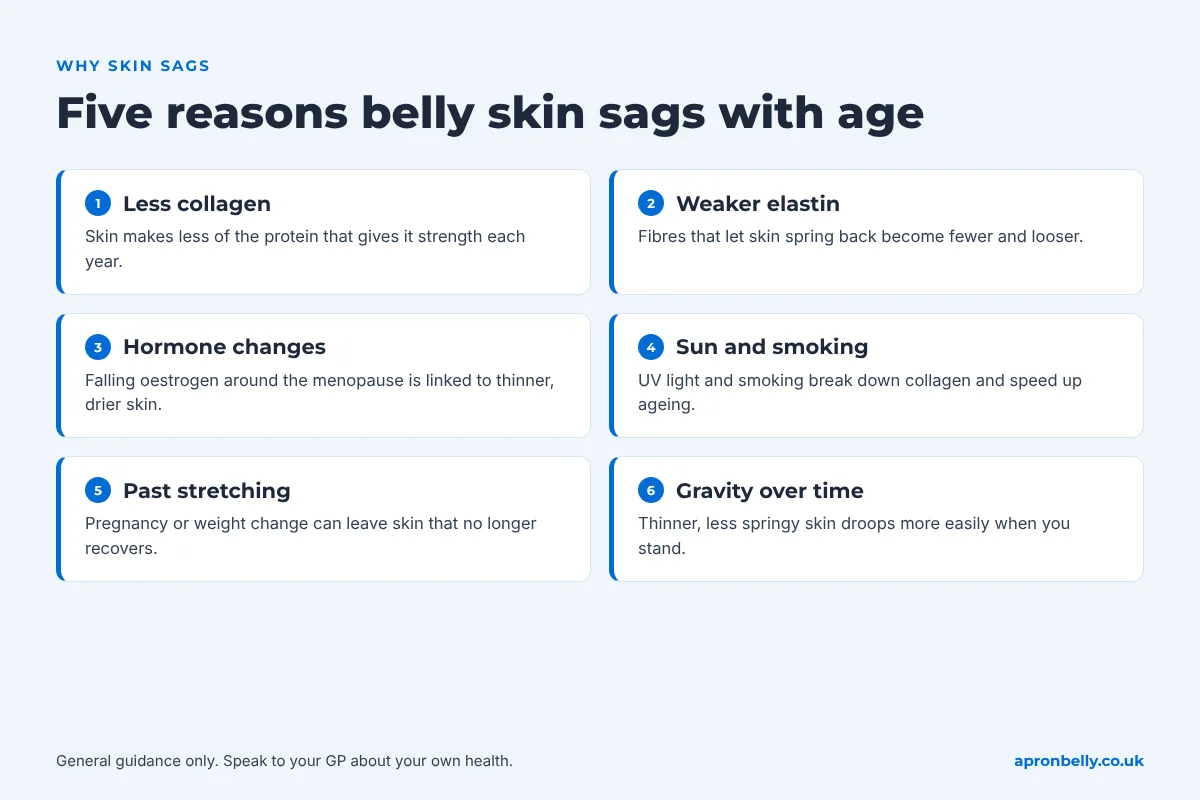
Several slow changes inside the skin add up over the years. None of them is a sign that you have done anything wrong.
Collagen and elastin decline
Collagen gives skin its strength and elastin lets it stretch and spring back. Both are made by cells in the deeper layer of the skin, the dermis. From early adulthood the body makes less of them each year, and the fibres that remain become weaker and less organised. The result is thinner skin that recovers more slowly when stretched and is more likely to sag under gravity.
Hormonal changes and the menopause
Falling oestrogen around the menopause is linked to drier, thinner skin, and many women notice their tummy skin changes quickly in their late 40s and 50s. Fat also tends to shift towards the middle at this stage. Our menopause belly hub covers the hormonal side, and our guide to apron belly in your 50s and 60s looks at how overhang tends to change in later life.
Sun, smoking and lifestyle
Ultraviolet light breaks down collagen and elastin, which is why skin that has been regularly exposed to sun or sunbeds ages faster. The NHS lists premature skin ageing among the risks of sunbeds and UV tanning. Smoking reduces blood flow to the skin and harms collagen too. Poor sleep, a diet low in protein and very little activity all make it harder for skin and muscle to stay in good condition.
Past stretching from weight change or pregnancy
Skin that has been stretched for months or years, for example by pregnancy or carrying extra weight, often does not fully shrink back. With age the skin has less ability to recover, so a stretch that bounced back at 25 may leave a loose belly flap at 55. If that is your main concern, see our guide to the belly flap after weight loss.
Common Signs of Sagging Belly Skin
Ageing skin on the tummy shows itself in a few typical ways. You may notice one or several.
What you might see and feel
- fine, crepe like wrinkles that appear when you sit or bend
- skin that hangs a little lower than it used to when you stand
- a soft fold just above the pubic area or around the belly button
- dry or itchy patches, especially in winter
- stretch marks that look paler and wider than before
When a saggy stomach needs a GP check
Loose skin on its own is not a medical problem. See your GP if the skin under a fold gets sore, red, broken or smelly, if you notice a lump or bulge that gets bigger when you cough or strain, or if your tummy is swelling quickly for no clear reason. Unexplained weight loss or a swollen abdomen should always be checked.
What Helps a Sagging Belly
There is no single cure for ageing skin, but several steps help the area look and feel better. They work best together.
Build the muscle underneath
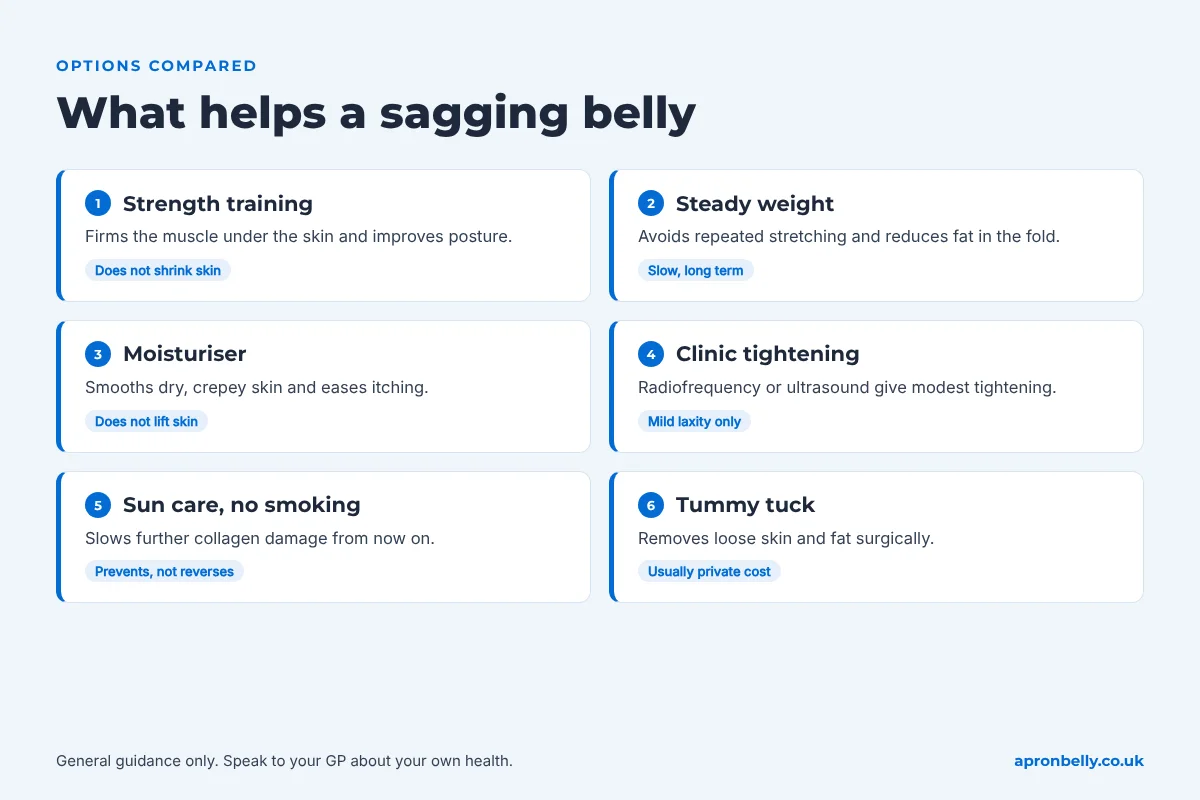
Strength training will not tighten loose skin, but firmer muscle gives the skin a better base to sit on and improves posture, which makes a saggy stomach less obvious. The NHS recommends strengthening activities for all major muscle groups on at least 2 days a week. Our apron belly workout plan is a gentle place to start.
Keep your weight steady
Repeated cycles of gaining and losing weight stretch the skin again and again. Losing excess fat slowly and keeping it off is kinder to ageing skin than crash dieting. Eating enough protein supports muscle and the repair of tissues as you lose weight.
Look after the skin barrier
A fragrance free moisturiser applied after washing helps dry, crepey skin feel smoother and more comfortable. It will not lift sagging skin, but it can make fine lines less visible and reduce itching. Wash and fully dry any skin folds each day to prevent soreness.
Protect skin from the sun and stop smoking
Sun protection and stopping smoking will not reverse existing sagging, but they slow further damage. Free support to quit is available through your GP, local stop smoking service or pharmacy.
Treatments for Sagging Belly Skin
If self care is not enough, there are clinic treatments and surgery. Results vary a great deal, so it helps to know what each one can realistically do.
Non surgical skin tightening
Radiofrequency, ultrasound and microneedling devices heat or injure the deeper skin in a controlled way to encourage new collagen. They can give a modest improvement in mild laxity over several sessions, but they cannot remove loose skin or a hanging fold. Our guide to non surgical skin tightening for apron belly compares the options and costs.
Creams and topical products
Products that promise to firm the tummy are widely sold, but no cream has been shown to lift sagging belly skin in a meaningful way. Moisturisers improve comfort and appearance of dryness. Retinoid creams have most of their evidence on facial skin and can irritate, so ask a pharmacist before using them on a large area.
Surgery for excess skin
A tummy tuck (abdominoplasty) removes loose skin and fat and can tighten the muscles. A panniculectomy removes a hanging fold for health reasons. The NHS usually treats tummy tucks as cosmetic, so most people pay privately. Surgery may be funded only when a large fold causes ongoing medical problems and strict criteria are met.
| Option | Best for | What it can do | Limits |
|---|---|---|---|
| Strength training | All ages and grades | Firms muscle, improves posture | Does not shrink skin |
| Steady weight loss | Excess fat under loose skin | Reduces bulk of the fold | Skin may look looser at first |
| Moisturiser | Dry, crepey skin | Improves texture and comfort | Does not lift sagging |
| Radiofrequency or ultrasound | Mild laxity | Modest tightening over months | Several sessions, private cost |
| Tummy tuck | Moderate to severe excess skin | Removes skin and fat | Surgery, scar, recovery time |
Living With a Saggy Stomach
Many people decide that small changes in how they dress and care for their skin are enough, and that is a perfectly sound choice.
Clothing and comfort
High waisted styles with a soft, wide waistband sit above the fold rather than cutting into it. Light shapewear can smooth the area under fitted clothes. Breathable fabrics such as cotton reduce sweating in the crease.
A worked example
A 58 year old woman notices her lower tummy has become crepey and folds slightly when she sits, although her weight has been stable for years. The pinch test shows a thin layer of skin over a modest amount of fat. She starts two strength sessions a week, adds a daily fragrance free moisturiser and switches to high waisted trousers. After three months the skin looks smoother and her core feels stronger. The loose skin has not disappeared, but she feels more comfortable and confident, and she decides against private treatment for now.
Frequently Asked Questions
Why is my belly sagging as I get older?
Your skin makes less collagen and elastin with age, so it becomes thinner and less springy. Hormonal changes, past stretching from pregnancy or weight gain, sun exposure and smoking all add to the effect, which is why the tummy can look looser even when your weight stays the same.
Can a sagging belly tighten on its own?
Mild looseness can improve a little over time, especially after pregnancy or modest weight loss, and stronger core muscles make the area look firmer. Skin that has lost a lot of elasticity with age does not fully tighten without treatment.
Do creams work for sagging belly skin?
Moisturisers make dry, crepey skin feel and look smoother, but no cream has been shown to lift or remove sagging belly skin. Be wary of products that promise dramatic firming results.
Is sagging belly skin the same as an apron belly?
Not always. Sagging belly skin describes loose, lax skin. An apron belly, or pannus, is a fold of skin and fat that hangs down over the pubic area. A sagging belly can develop into an apron belly if the fold becomes large enough to hang.
Can I get a tummy tuck for sagging skin on the NHS?
Usually not. The NHS treats tummy tucks as cosmetic in most cases. Surgery to remove a hanging fold may be funded if it causes ongoing medical problems such as recurring infections and you meet local criteria, so speak to your GP.
The Bottom Line
A sagging belly is a normal part of ageing, driven by falling collagen and elastin, hormonal changes and years of stretching and sun exposure. Exercise, steady weight, skin care and sun protection help the area look and feel better, while clinic treatments offer modest tightening and surgery is the only way to remove loose skin.
Your next step
Try the pinch test today to see whether skin or fat is the main issue, then choose one change from this guide to start this week. If you have soreness, a bulge or rapid swelling, book a GP appointment first.