Most apron belly advice is written for women, but an apron belly in men is common too. Many men notice a fold of skin and fat hanging over the belt line, pushing down on the waistband or covering the groin. It can make trousers uncomfortable, cause sweat rashes and knock your confidence. This guide explains why men develop an apron belly, how it differs from a beer belly, what the health signals are and what actually helps.
What Is an Apron Belly in Men?
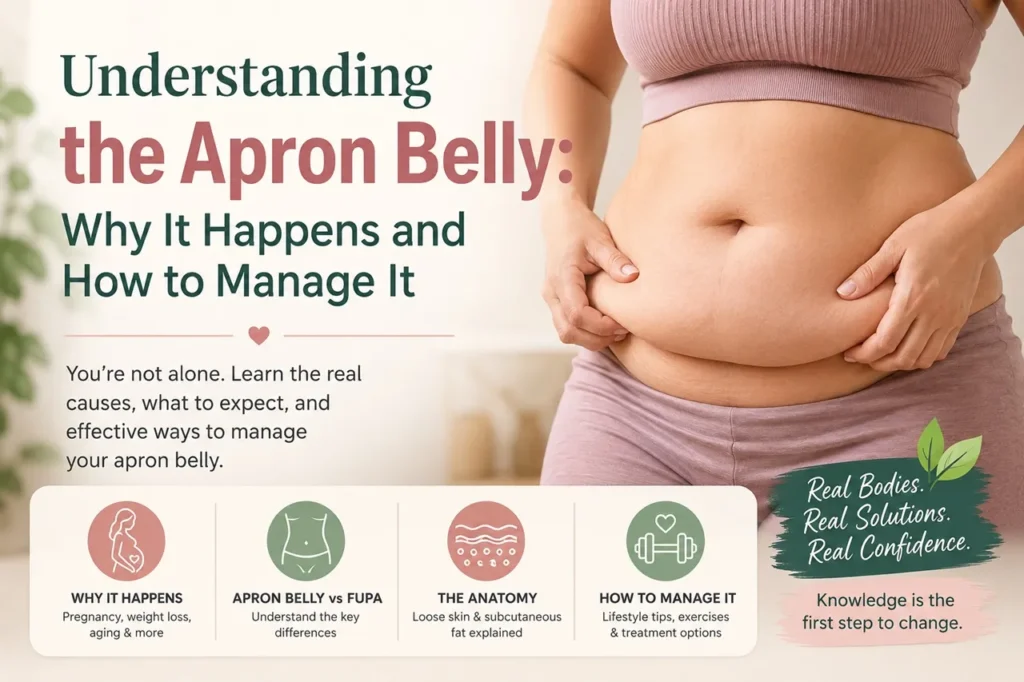
An apron belly, known medically as a panniculus, is a fold of skin and fat that hangs from the lower abdomen. In men it usually starts as a roll that sits over the belt, then grows to cover the pubic area and, in larger cases, the upper thighs. Doctors often describe the size using grades from 1 to 5, which we explain in our apron belly grades guide.
Men and women form an apron belly for similar reasons. The difference is where fat tends to go first, and how quickly it affects health.
Why Men Develop an Apron Belly
Android fat pattern
Men tend to store fat in an android, or apple-shaped, pattern. This means fat builds up around the middle rather than the hips and thighs. Some of that fat is subcutaneous fat, just under the skin, which forms the soft fold. Some is visceral fat, which sits deeper around the organs. Both usually increase together.
Weight gain over time
Gradual weight gain stretches the skin of the lower tummy. When the fat layer becomes heavy enough, gravity pulls it down into a fold. Desk jobs, shift work, alcohol and poor sleep all make this more likely.
Falling testosterone
Testosterone helps men hold muscle and limits fat storage around the middle. Levels drop slowly with age, and faster with obesity, poor sleep and some medical conditions. Lower testosterone makes it easier to gain belly fat, and more belly fat can lower testosterone further. It is a cycle worth breaking.
Big weight loss
Men who lose a lot of weight, through diet, bariatric surgery or weight loss injections, often find the fat goes but the skin stays. The result is a softer, emptier fold of skin. Our guides to an apron belly after weight loss and loose skin after Ozempic cover this in more depth.
Apron Belly vs Beer Belly vs FUPA in Men
Men often use these terms loosely, but they describe different shapes.
| Type | What it looks like | Main tissue | Main concern |
|---|---|---|---|
| Beer belly | Firm, round tummy that sticks out, often tight to the touch | Mostly visceral fat | Heart and metabolic health |
| Apron belly | Soft fold that hangs down over the belt line or groin | Subcutaneous fat and skin | Skin problems, comfort, mobility |
| FUPA | Fat pad over the pubic bone, below the belly | Subcutaneous fat over the mons | Mostly cosmetic and clothing fit |
Many men have a mix. A firm beer belly on top with a softer apron below is very common. Our apron belly vs beer belly and FUPA in men guides go further into each type.
The Health Side: What to Check
An apron belly on its own is mainly about skin and comfort. The deeper fat that often comes with it is the bigger health issue, because visceral fat is linked to type 2 diabetes, high blood pressure, fatty liver and heart disease.
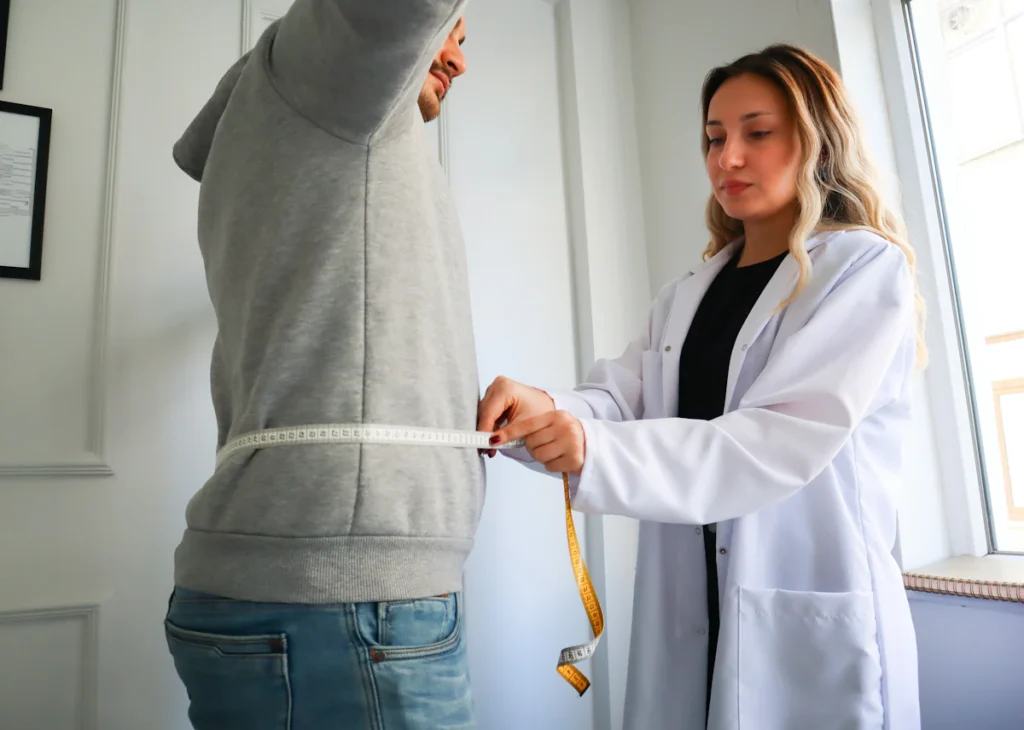
A simple check is your waist-to-height ratio. Measure your waist around the belly button and compare it with your height. The NHS advises keeping your waist to less than half your height. For a man who is 180 cm tall, that means a waist under 90 cm.
Other signs worth mentioning to your GP include loud snoring or stopping breathing at night, which can be sleep apnoea, and feeling very tired, very thirsty or passing more urine, which can be signs of raised blood sugar. Our guide to apron belly health risks covers every warning sign in more detail.
Skin Problems Under the Fold
Men sweat more on average, and many wear tighter work trousers and belts. That makes rashes under an apron belly very common. Intertrigo causes red, raw, damp skin in the crease. A fungal infection can spread down to the groin and inner thighs, which many men mistake for simple jock itch.
- Wash and fully dry the crease every day. A towel, then a few minutes of air, works best.
- Wear breathable cotton or moisture-wicking boxer briefs rather than tight synthetic pants.
- Choose trousers with a waistband that sits above the fold, not in it.
- Change out of sweaty work or gym clothes as soon as you can.
If the rash does not settle in a week, see a pharmacist. Our apron belly rash treatment guide explains the options.
Hernias and Apron Bellies
Men are more likely than women to get certain hernias, and a large apron can hide one. A hernia is a bulge where tissue pushes through a weak spot in the tummy wall, often at the belly button or groin. Check for a lump that gets bigger when you cough or strain and goes down when you lie flat.
The NHS hernia page lists the urgent warning signs. If you have a hernia with sudden pain, vomiting, a swollen tummy or you cannot pass wind, call NHS 111 straight away.
How Men Can Reduce an Apron Belly
1. Lose fat steadily
A small daily calorie deficit, built around protein, vegetables and whole foods, works better than crash diets. Cutting back on alcohol often makes the fastest visible difference for men, because it reduces empty calories and improves sleep.
2. Lift weights
Strength training two or three times a week builds muscle, supports testosterone and improves how your body handles blood sugar. Big moves like squats, deadlifts, rows and presses give the most value for your time.
3. Walk more
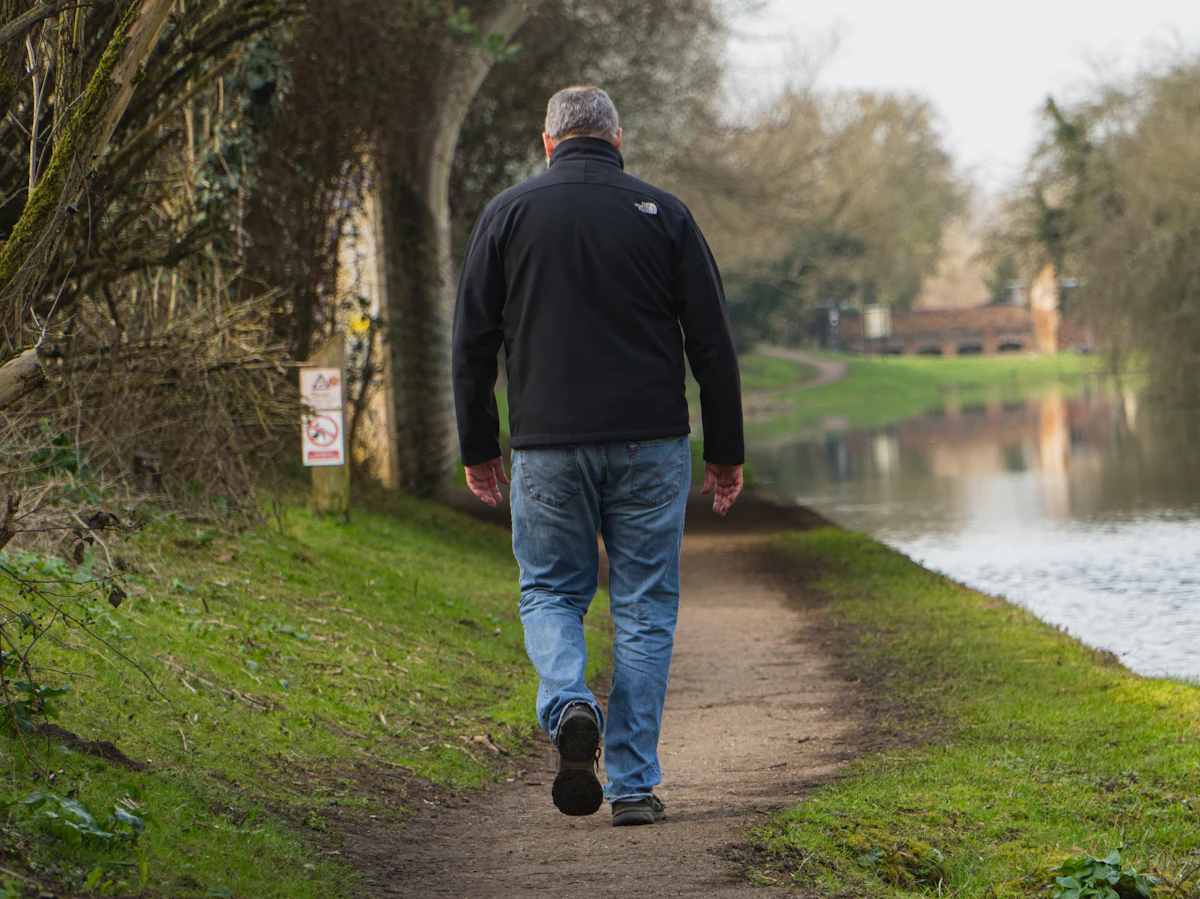
Walking is easy on the joints and burns fat steadily. Aim to build up to 8,000 to 10,000 steps a day. A support belt for an apron belly can stop the fold swinging and rubbing while you build up.
4. Train the core properly
Crunches will not shrink the fold. Planks, dead bugs and carries build the deep core that supports your back. Our apron belly exercises guide has a full routine.
5. Sleep and stress
Short sleep raises appetite and lowers testosterone. Aim for seven to eight hours. If you snore heavily, get checked for sleep apnoea, because treating it often makes weight loss easier.
A Simple 12-Week Starting Plan for Men
Big changes are easier when you build them in stages. This plan is a starting point, not a strict programme. Check with your GP first if you have a heart condition, diabetes or joint problems.
| Weeks | Food | Movement | Habits |
|---|---|---|---|
| 1 to 4 | Protein at every meal. Halve alcohol. | Walk 30 minutes a day. Two short full-body strength sessions a week. | Measure your waist once a week, same day, same time. |
| 5 to 8 | Swap sugary drinks and snacks for water, fruit and nuts. | Three strength sessions a week. Add planks and carries. | Aim for seven hours of sleep. Set a regular bedtime. |
| 9 to 12 | Plan meals for the week. Keep takeaways to once a week. | Build up to 8,000 to 10,000 steps a day. | Review your waist-to-height ratio and book a GP check if needed. |
Most men see the waist measurement start to fall within the first month. The fold itself changes more slowly, so judge progress over three months, not three days.
Clothes That Make an Apron Belly in Men More Comfortable
The right clothes will not change the fold, but they can stop it from digging, rubbing and sweating. Choose trousers with a mid to high rise that sits above the apron, not under it. Many men find braces far more comfortable than a belt pulled tight under the fold. Stretch chinos and trousers with a flat, wide waistband also help. Underneath, longer boxer briefs in breathable fabric stop the thighs rubbing, and a longer shirt or polo that finishes below the fold gives a smoother line.
Medical and Surgical Options
If lifestyle changes are not enough, speak to your GP about weight management services. Depending on your BMI and health, options can include weight loss injections or bariatric surgery.
Once your weight is stable, loose skin may remain. A panniculectomy removes the hanging fold, and a tummy tuck also tightens the muscle wall. The NHS only funds a panniculectomy in limited cases, usually when the apron causes repeated skin breakdown or infection. Our guide to getting an apron belly operation on the NHS sets out the usual eligibility rules. Our apron belly surgery guide explains the criteria and private costs.
Frequently Asked Questions
Can men get an apron belly?
Yes. An apron belly in men is common, especially with weight gain around the middle or after big weight loss. It is the same panniculus that women develop.
Is an apron belly in men the same as a beer belly?
No. A beer belly is a firm, round tummy mostly made of deep visceral fat. An apron belly is a softer fold of skin and fat that hangs down. Many men have both.
Does low testosterone cause an apron belly?
It can contribute. Lower testosterone makes it easier to gain fat around the middle. Ask your GP about a blood test if you also have low energy or low sex drive.
Can exercise get rid of an apron belly in men?
Exercise and diet can shrink the fat part of the fold a great deal. Loose skin left after large weight loss usually needs surgery to remove.
What should men wear with an apron belly?
Trousers with a higher rise that sit above the fold, braces instead of a tight belt, and breathable cotton underwear. Avoid low-rise jeans that push the apron over the waistband.
Is an apron belly dangerous for men?
The fold itself mainly affects skin and comfort. The visceral fat that often comes with it raises the risk of type 2 diabetes and heart disease, so check your waist-to-height ratio.