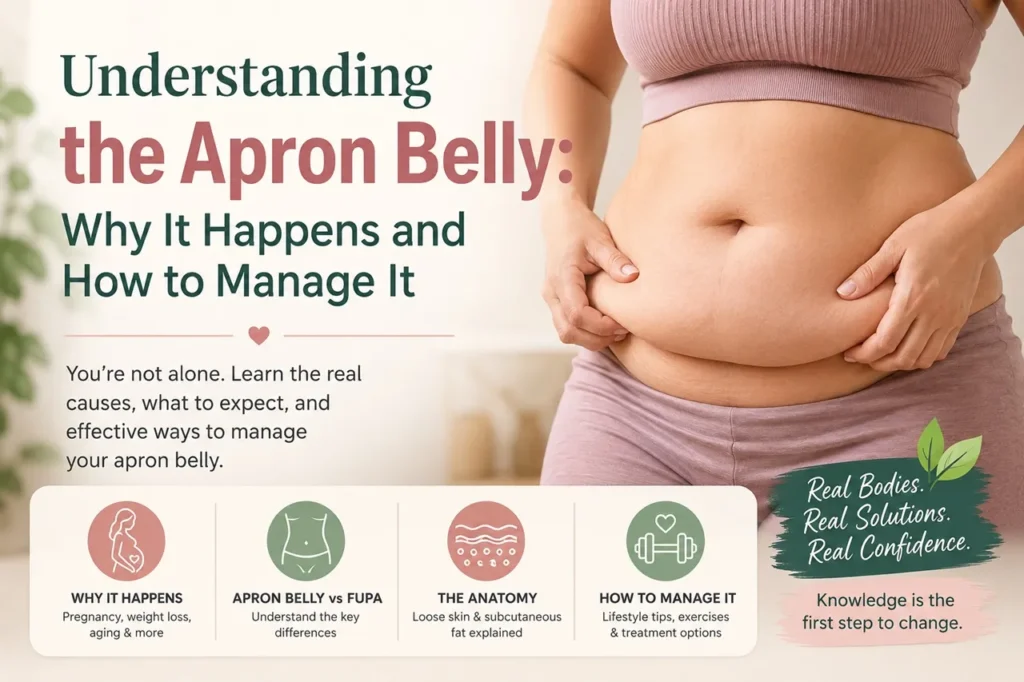
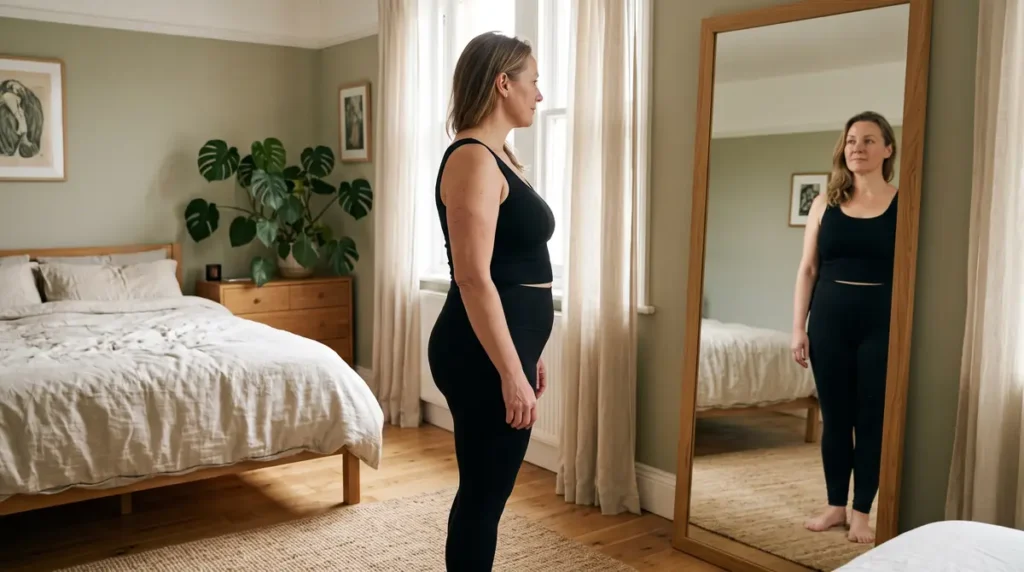
Some body fat never seems to shift, however well you eat. If that sounds familiar, you may be asking: is it lipoedema or apron belly? Both can change your shape and knock your confidence. However, they are very different conditions, and each one needs different help.
Lipoedema is a fat disorder that mostly affects the legs, hips and sometimes the arms. An apron belly is a fold of skin and fat that hangs over the lower tummy. This guide shows you how to spot the difference and get the right support in the UK.
Lipoedema or Apron Belly: The Quick Answer
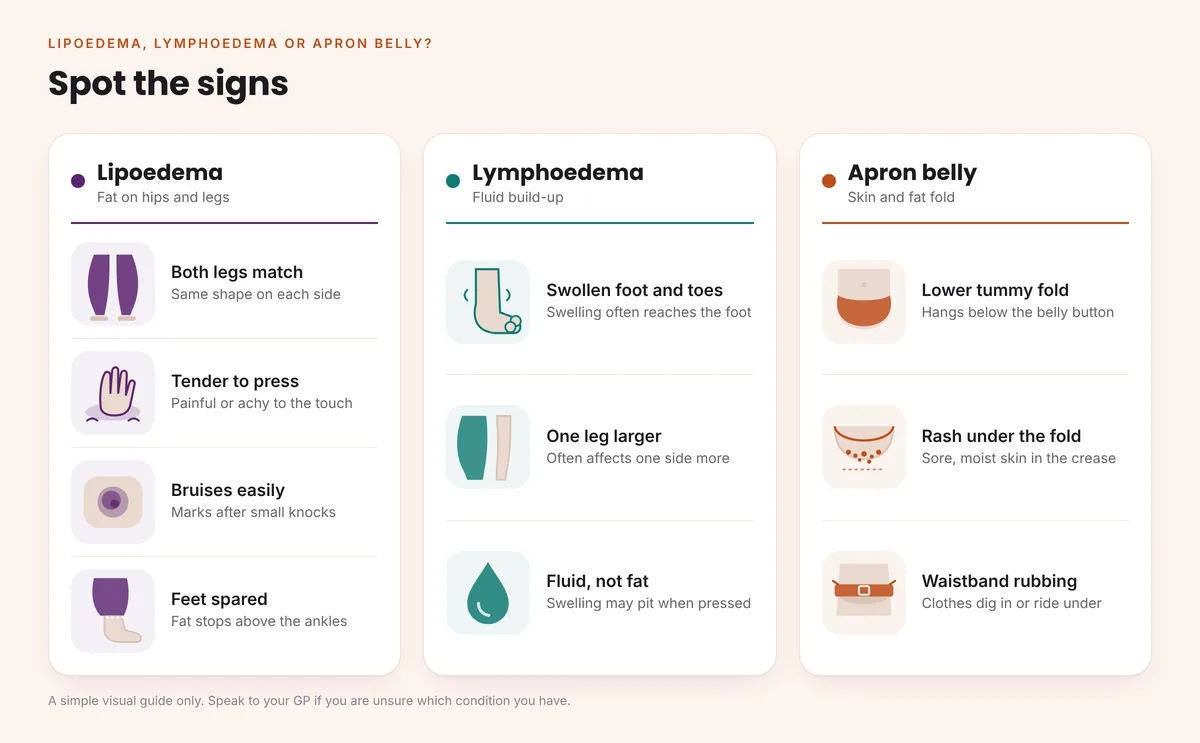
The biggest clue is where the fat sits. Lipoedema builds up on both sides of the body, usually from the waist down to the ankles. The feet are usually spared. An apron belly, by contrast, sits at the front of the lower abdomen and hangs down over the pubic area.
Pain is the second clue. Lipoedema fat often feels tender, heavy or sore when pressed, and it may bruise easily. An apron belly fold does not usually hurt to touch. Instead, the skin underneath can become sore from sweat and rubbing.
The third clue is how the fat responds to weight loss. Fat from an apron belly often shrinks as you lose weight, even if loose skin stays behind. Lipoedema fat, on the other hand, tends to stay put despite careful eating and regular exercise.
What Is Lipoedema?
Lipoedema is a long-term condition in which fat builds up in an unusual way under the skin. The NHS lipoedema guidance describes it as an abnormal build-up of fat in your legs and sometimes your arms. It is far more common in women, and it usually affects both sides of the body equally.
The exact cause is not clear. Lipoedema sometimes runs in families, and hormones seem to play a part. Many women first notice changes during puberty, pregnancy or menopause, or while taking the contraceptive pill.
Lipoedema is not caused by overeating or a lack of willpower, and people at a healthy weight can have it. Sadly, many women spend years being told to simply lose weight before anyone names the condition.
Common Signs of Lipoedema
- Your hips, bottom, thighs or lower legs look out of proportion with your upper body.
- Both legs are affected in a similar way.
- Your feet and hands look normal in size.
- The affected skin feels soft and cool, and it may look dimpled.
- Your legs ache, feel heavy or feel tender when pressed.
- You bruise easily, often without remembering a knock.
- A ring or “cuff” of fat forms just above the ankle or wrist.
How Lipoedema Can Change Over Time
Specialists often describe lipoedema in stages. In early stages, the skin looks smooth, though small nodules may sit underneath. Later, the skin can take on an uneven, orange-peel texture. In advanced cases, larger lobes of fat can form, and the lymph system may become overloaded. This is sometimes called lipo-lymphoedema.
As the condition progresses, fat can also gather around the tummy. As a result, a woman with advanced lipoedema may also have an abdominal overhang. This is one reason the two conditions are easy to confuse.
What Is an Apron Belly?
An apron belly is a fold of skin and fat that hangs from the lower abdomen. Doctors call it a pannus. Our guide on what an apron belly is covers the basics. Its size ranges from a small overhang to a fold that reaches the thighs, as our guide to apron belly grades explains.
Common causes include weight gain, pregnancy, C-sections, ageing skin and large weight loss. Hormonal shifts around menopause can also move fat towards the tummy. Unlike lipoedema, an apron belly does not follow a fixed pattern on the legs or arms.
An apron belly usually contains a mix of fat and loose skin. The fat part can shrink with weight loss. The loose skin part, however, rarely tightens on its own. Our guide on apron belly fat versus loose skin shows you how to tell which one you mostly have.
Where the Fat Sits: The Clearest Clue
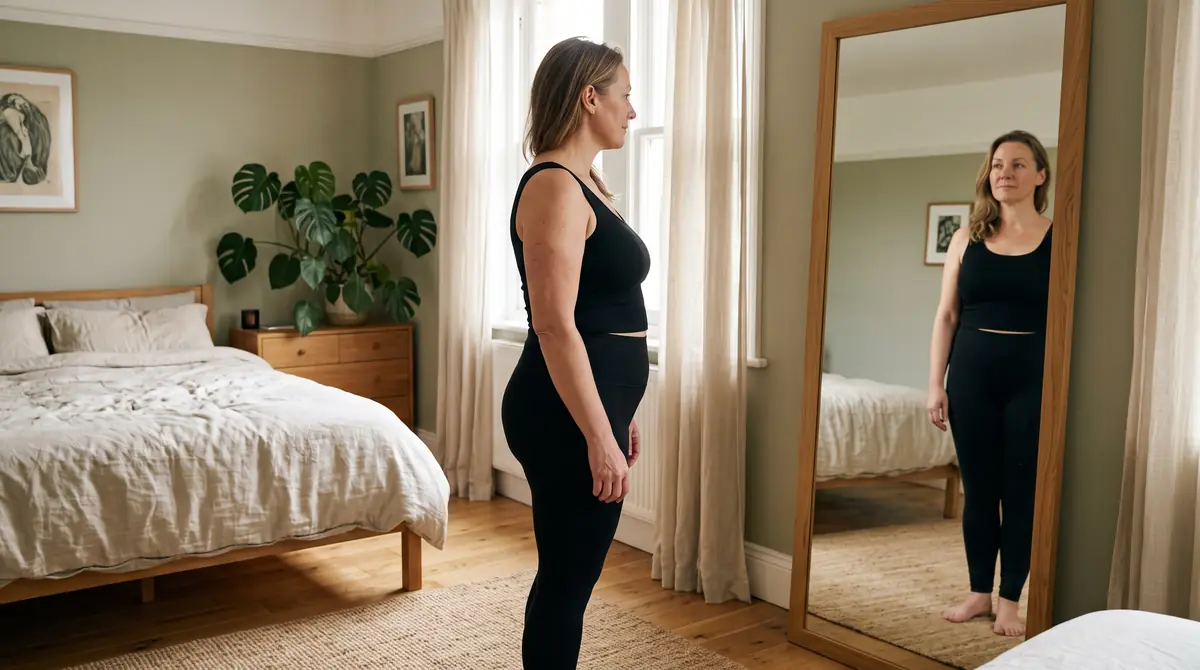
Stand in front of a full-length mirror in your underwear. Then compare your lower body with your upper body.
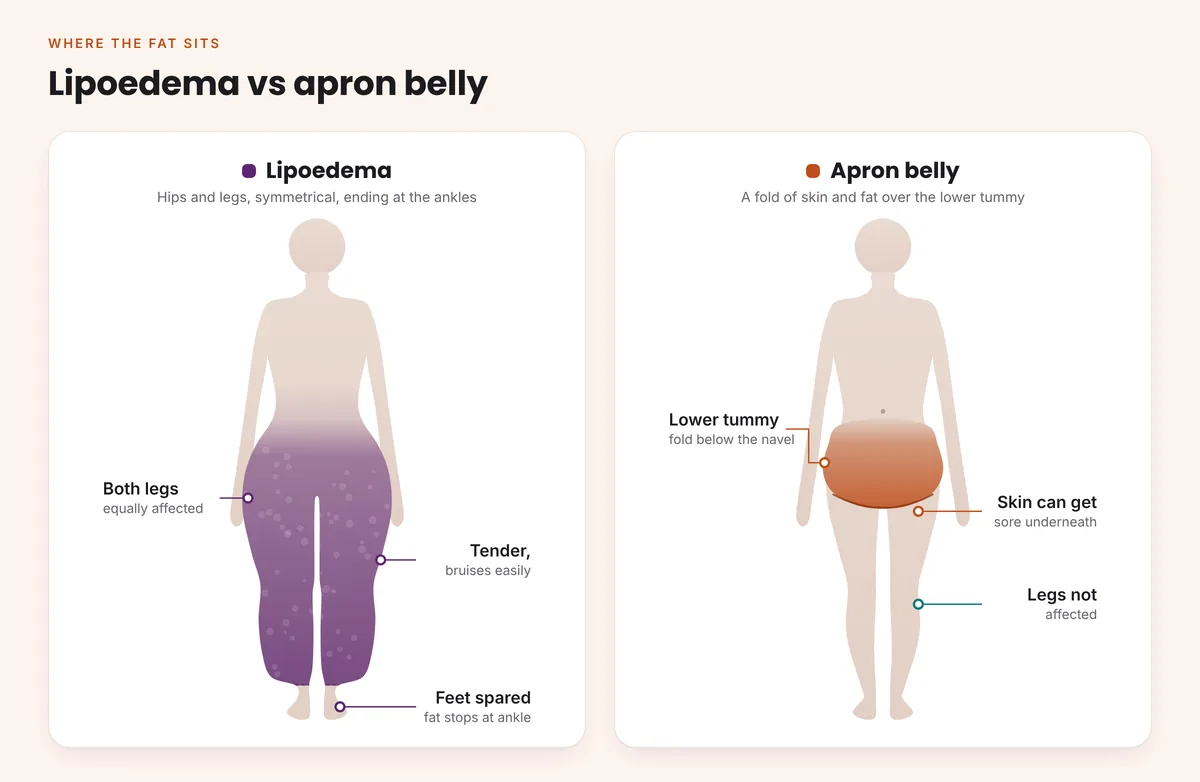
With lipoedema, the lower half often looks much larger than the top half. The fat runs from the hips down the legs and then stops sharply at the ankles. Your feet look slim by comparison. Often, the arms show a similar pattern that stops at the wrists.
With an apron belly, the main change sits at the front of your tummy. The fold hangs down below your belly button and may cover your pubic area. Your legs, meanwhile, usually match the rest of your body in size.
Side-by-Side Comparison Table
This table sums up the main differences. Use it as a guide only, as only a clinician can confirm a diagnosis.
| Feature | Lipoedema | Apron belly |
|---|---|---|
| Main area | Hips, bottom, thighs, lower legs and sometimes arms | Lower front of the abdomen |
| Symmetry | Both sides affected equally | Central fold at the front |
| Feet and hands | Usually spared, often with a cuff at the ankle | Not affected |
| Pain and touch | Often tender, heavy or achy | Fold not usually tender, but skin beneath can get sore |
| Bruising | Bruises easily | No link to easy bruising |
| Response to weight loss | Affected fat changes very little | Fat often shrinks, though loose skin may remain |
| Typical triggers | Puberty, pregnancy, menopause and family history | Weight change, pregnancy, C-section and ageing skin |
| Main skin problem | Dimpled, cool or nodular skin | Rash, sweating and chafing in the fold |
| First step in the UK | See your GP and ask about lipoedema | See your GP if the fold causes skin or back problems |
How Each Condition Feels Day to Day
Many women with lipoedema describe their legs as heavy, especially by the evening. Pressing on the fat can hurt. Walking long distances may become tiring, and tight boots can feel uncomfortable around the calves.
An apron belly brings different daily problems. Sweat and friction build up under the fold, which can cause a red, itchy rash called intertrigo. Waistbands may dig in, and some people feel a dragging ache in the lower back. If your fold gets sore, our guide to apron belly skin care covers simple daily steps.
Both conditions can also affect your mood. Feeling dismissed is common, particularly with lipoedema. Your experience is real, and support exists.
How Weight Loss Affects Each One
This is often where women first suspect something is different. For example, you may lose weight from your face, arms and waist while your legs barely change. That pattern can point towards lipoedema.
With an apron belly, weight loss usually reduces the fat inside the fold. However, the skin may not shrink back fully. After big weight loss, the fold can even look looser. Our guide on how to reduce an apron belly after weight loss covers both.
Healthy eating and regular movement still matter with lipoedema. They support your general health and may ease symptoms. Even so, they are unlikely to remove the lipoedema fat itself.
Could It Be Something Else?
A few other conditions can look similar, so it helps to know about them.
Lymphoedema
Lymphoedema is swelling caused by fluid that the lymph system cannot drain. Unlike lipoedema, it often affects the feet and toes. It may also affect one leg more than the other. A clinician may pinch the skin on the top of your second toe. If they cannot lift a fold, this points towards lymphoedema rather than lipoedema alone.
General Weight Gain
Ordinary weight gain usually spreads more evenly across the body, including the feet and hands. It is not usually painful to touch. It also tends to respond to changes in diet and activity. Our guide to apron belly versus belly fat explains how tummy fat behaves.
Getting Diagnosed in the UK
There is no single blood test or scan for lipoedema. Instead, a clinician diagnoses it by looking at your body, asking about your symptoms and ruling out other causes. Your GP is the right starting point for both lipoedema and apron belly concerns.
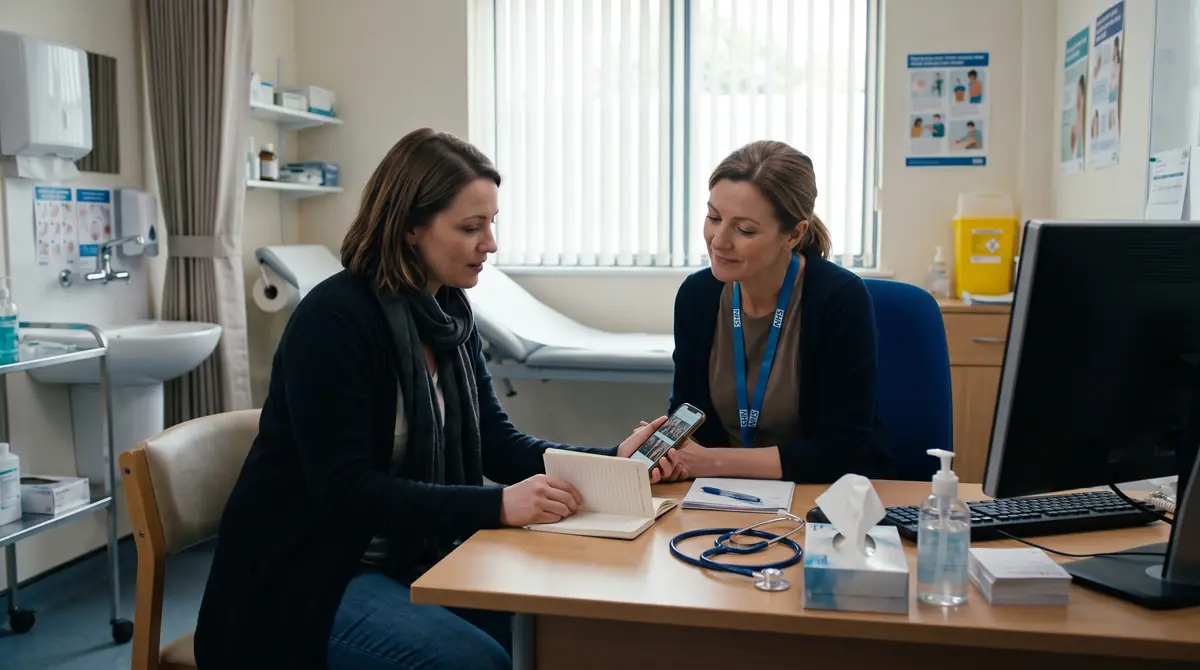
How to Prepare for Your GP Appointment
- Write down when you first noticed changes, such as during puberty or pregnancy.
- Note if your legs feel heavy, achy or tender, and when it is worse.
- Record any easy bruising, with photos if possible.
- Take front and side photos in fitted clothing to show the shape of your legs and tummy.
- List what you have tried, such as diet changes or exercise, and what changed.
- For an apron belly, note any rashes, infections or back pain linked to the fold.
It can help to ask directly: “Could this be lipoedema?” Your GP may then refer you to a lymphoedema service or specialist team. Services vary by area, so waiting times differ.
Treatment Options for Lipoedema
There is currently no cure for lipoedema. However, several approaches can ease symptoms and help stop it getting worse.
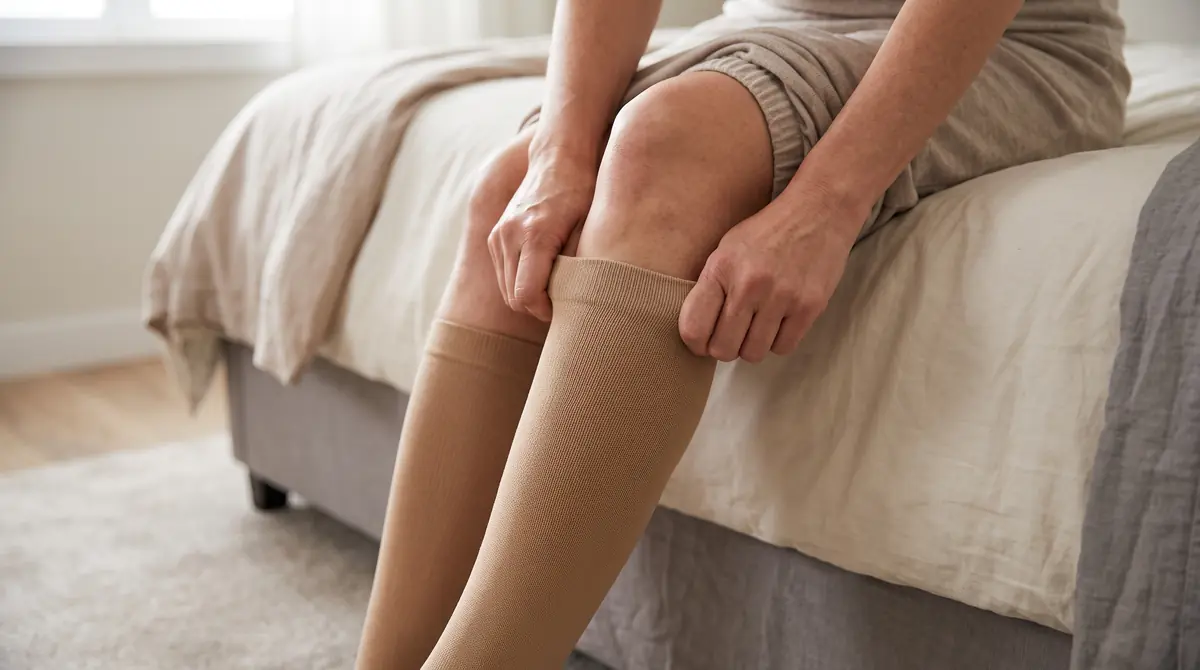
- Compression garments: Stockings or leggings fitted by a trained clinician can reduce pain and make walking easier.
- Movement: Low-impact activity such as walking, swimming and water aerobics supports circulation and fitness.
- Skin care: Regular moisturising helps protect skin that may be dry or fragile.
- Healthy eating: A balanced diet helps you manage overall weight and general health.
- Emotional support: Talking therapies, including CBT, can help if the condition affects your mood.
- Support groups: Charities such as Lipoedema UK offer information and connect you with others.
Some women ask about liposuction. In its guidance on liposuction for chronic lipoedema, NICE says the evidence on safety and effectiveness is inadequate. It therefore recommends the procedure only in the context of research. As a result, NHS access is very limited, and private treatment can be costly. If you consider it, speak to your GP and a specialist team first.
Treatment Options for an Apron Belly
An apron belly is usually managed in steps. First, steady weight loss and regular movement can shrink the fat in the fold. Next, good skin care keeps the crease clean, dry and comfortable. Supportive underwear or a light support band can also reduce rubbing.
When the fold causes repeated infections, skin breakdown or problems with daily life, surgery may be considered. A panniculectomy removes the overhanging skin and fat. A tummy tuck goes further and can also tighten the stomach muscles. Our guide to panniculectomy versus tummy tuck compares the two.
NHS funding for apron belly surgery is limited and depends on local rules. Our guide to apronectomy on the NHS explains the usual criteria and how referrals work.
When You Have Both
Lipoedema and an apron belly can exist together. For instance, a woman may have lipoedema in her legs and a belly fold after pregnancy. Advanced lipoedema can also affect the tummy itself.
In this case, each part needs its own plan. Compression and specialist care may help the legs, while skin care and support help the fold. Tell your clinician about every area that worries you, so they can see the full picture.
When to See a GP Urgently
Most symptoms are not emergencies. Even so, get an urgent GP appointment or call NHS 111 if:
- A leg becomes swollen, red, hot and painful, especially with flu-like symptoms
- The skin under your apron belly is broken, weeping, smelly or spreading
- You develop a fever alongside a skin rash or swelling
- One leg suddenly swells more than the other, or your calf feels tender and warm
A hot, red, painful leg can be a sign of cellulitis, a skin infection that needs antibiotics. Sudden swelling in one calf can also signal a blood clot. In either case, do not wait to see if it settles.
Frequently Asked Questions
Can you have lipoedema and an apron belly at the same time?
Yes, the two conditions can happen together. A woman may have lipoedema in her legs and also an apron belly from pregnancy or weight change. Advanced lipoedema can also involve the tummy. Each area usually needs its own treatment plan, so mention all your symptoms to your GP.
Does lipoedema affect the stomach?
It can, but usually in later stages. Lipoedema mainly affects the hips, bottom, legs and sometimes the arms. As it progresses, fat may also gather around the abdomen. This is one reason lipoedema and an apron belly are sometimes confused.
Will losing weight get rid of lipoedema?
Usually not, because lipoedema fat responds poorly to diet and exercise. Weight loss can still reduce other body fat and ease strain on your joints. Healthy eating and regular movement remain useful for your overall health and symptom control.
Can a GP diagnose lipoedema?
Yes, a GP can recognise the signs and start the process. Lipoedema is diagnosed by examining your body and asking about your symptoms, as there is no single test. Your GP may refer you to a lymphoedema service or specialist team for confirmation and treatment.
Is liposuction for lipoedema available on the NHS?
Rarely. NICE says evidence on its safety and effectiveness is inadequate, so it recommends liposuction for lipoedema only in research settings. Private treatment exists but can be costly. Speak to your GP and a specialist before making any decision.
How is lipoedema different from lymphoedema?
Lipoedema is a build-up of fat, while lymphoedema is a build-up of fluid. Lipoedema usually spares the feet and affects both legs equally. Lymphoedema often affects the feet and toes and can affect one side more than the other.
Does an apron belly hurt?
The fold itself does not usually hurt to touch. However, the skin underneath can become sore from sweat, heat and rubbing. Some people also notice back ache from the weight at the front. Lipoedema fat, by contrast, often feels tender when pressed.
Final Thoughts
Deciding whether it is lipoedema or apron belly starts with one simple question: where does the fat sit? Lipoedema affects both legs and sometimes the arms, stops at the ankles and often feels tender. An apron belly hangs from the lower tummy and mainly causes skin and comfort problems.
Neither condition is your fault, and both deserve proper care. Take notes and photos, then book a GP appointment and ask clear questions. The right diagnosis is the first step towards support that actually fits your body.