Quick Answer
Alcohol does not cause an apron belly, because the overhang is mainly loose, stretched skin that drinking cannot create or remove. It can make the fold feel bigger, though, because alcohol adds calories, increases appetite, interrupts fat processing and disturbs sleep, all of which encourage weight around the middle.
- A medium glass of wine is about 160 calories and a pint of lager about 180, usually on top of what you eat
- Cutting back can reduce the fat within the fold, but it will not tighten loose skin
- UK guidance is no more than 14 units a week, spread over three or more days with drink-free days
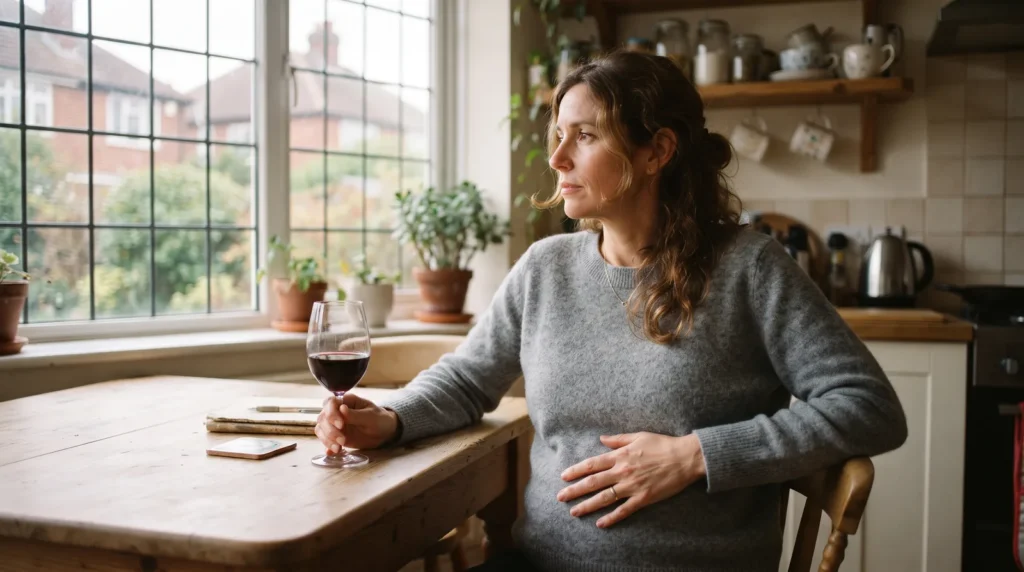
It’s Friday evening. The week has been long, the kids are finally in bed, and a glass of wine feels like the least you deserve. Then the second glass follows, and perhaps a few biscuits to go with it. Later, standing in front of the bathroom mirror, you notice your stomach looks softer than it did a few months ago, and you wonder: is the wine doing this?
It’s a fair question, and one that rarely gets an honest answer. This guide looks at alcohol and apron belly with no lecture and no guilt. We’ll cover what alcohol can and can’t change, why a few drinks a week can add up, and what actually helps if you’d like your belly to feel lighter.
If you’re still getting to grips with what an apron belly is, our apron belly overview explains it in plain English. And since stress and alcohol often travel together, you may also find our post on stress and apron belly a useful companion.
The Short Answer
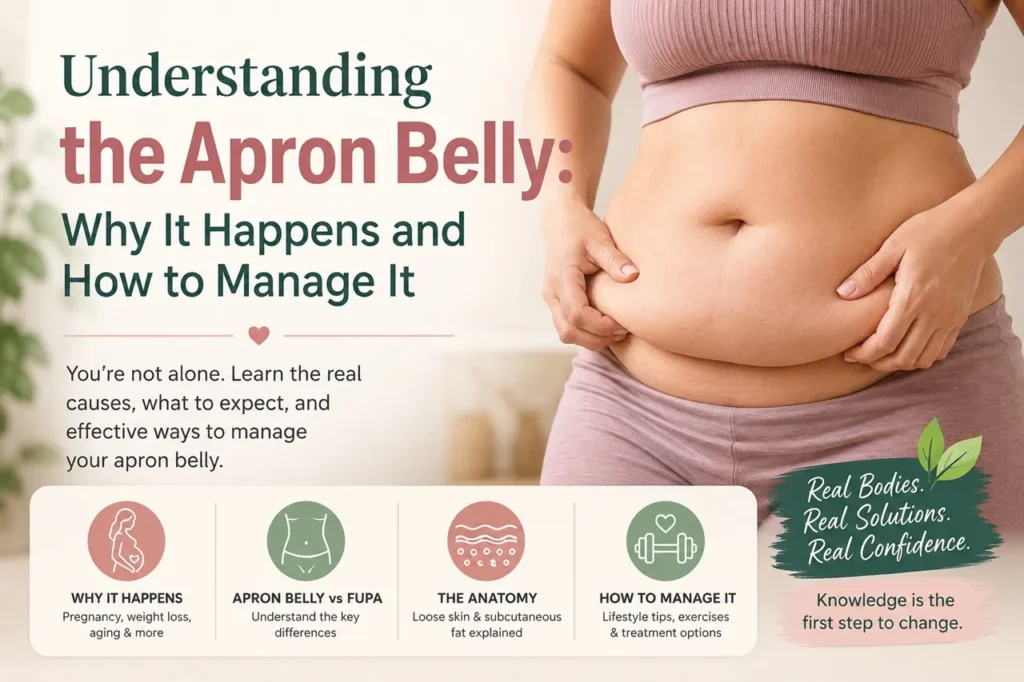
Alcohol doesn’t create an apron belly. An apron belly is mainly loose, stretched skin, usually with a layer of fat and sometimes weakened abdominal muscles. The skin changes come from stretching, whether through pregnancy, weight loss, or ageing. Alcohol can’t stretch your skin or remove it.
But alcohol can influence the fat part of the picture. Drinkaware, the UK alcohol charity, explains that extra calories from drinking can lead to weight gain, including around the middle. So if you’re carrying more weight in your abdomen, drinking may be one of the reasons, and cutting back may help that part feel less heavy.
In other words, alcohol can make a belly overhang feel bigger or more prominent. It just isn’t the cause of the overhang itself.
Why Alcohol Adds Up Faster Than You’d Think
Most of us don’t count the calories in a drink. We probably should know a little about them, because they’re higher than you’d expect.
According to Drinkaware, alcohol contains around seven calories a gram, which is almost as many as pure fat. Their own examples are a pint of lager, stout, or ale at about 180 calories and a medium glass of wine at about 160. Many drinks also contain sugar, which adds further “empty” calories.
Those numbers look modest on their own. The trouble is that drinks are usually on top of what you eat, not instead of it. Drinkaware notes that calories from drinks are typically additional to the rest of your diet, so they tend to push weight upwards. A couple of glasses of wine on four or five evenings a week can quietly become a significant addition to your week.
It’s Not Just the Calories
If it were only about calories, alcohol would be simple to manage. But it affects your body and your habits in several other ways.
It changes your appetite and your choices. Drinkaware says alcohol affects the hormones that control appetite and makes people less inhibited, so they’re less likely to pick healthy food. It’s the reason a quiet evening can end with toast at midnight or a takeaway you hadn’t planned. That’s not weak willpower. It’s what alcohol does to decision-making.
It gets in the way of fat processing. Drinkaware explains that your body prioritises clearing alcohol, which interrupts other processes that should be taking place, including processing fat. That’s one reason calories from drinking are more likely to stick around the middle.
It disturbs sleep. Alcohol may help you drop off, but it can disrupt sleep through the night. Drinkaware notes that poor sleep can increase appetite and affect the hormones involved in weight. It recommends around seven to nine hours a night. A tired body tends to crave sugar and carbohydrates the next day, which can start another cycle.
It adds to stress. Many people drink to unwind, but drinking rarely solves what’s causing the stress. Using alcohol as a coping tool can create a loop that’s hard to break.
Does Alcohol Cause Belly Fat Specifically?
You’ll often hear the term “beer belly”, which suggests beer is the culprit. Drinkaware says otherwise. It states that the cause is the high calorie content in alcohol rather than beer in particular, so wine, cocktails, and spirits with sugary mixers can all play a part.
It also says that central fat, the type that sits around your abdominal organs, is especially harmful. It’s linked to heart disease, type 2 diabetes, stroke, and some cancers. That doesn’t mean a soft tummy is a health emergency. It does mean that the fat around your middle is worth paying attention to, as well as the fold you can see. Our belly fat guide explains the difference between fat and loose skin.
Alcohol Belly Overhang for Women: What About Menopause?
Drinkaware points out that, for post-menopausal women, hormonal changes can make belly weight more likely. That’s worth knowing, because many women find their middle changes during their 40s and 50s whatever they eat or drink.
If that’s you, don’t blame yourself or alcohol alone. Hormones, sleep, stress, muscle loss, and lifestyle all play a part. Our menopause belly page explains what’s happening and what can help. Cutting back on alcohol can still be a sensible step, because it helps with sleep, weight, and energy at a time when all three can be a struggle.
What Alcohol Can’t Do
This is the part that often gets lost. Even if you cut alcohol out completely, it won’t tighten loose skin. Stretched skin has lost some of its elasticity, and no lifestyle change reverses that completely.
What cutting back may do is reduce the layer of fat sitting within and around the overhang. Many people find the fold feels lighter, their clothes sit better, and they feel more comfortable. That’s a worthwhile gain, even if the skin itself stays the same. It’s also worth being realistic: Drinkaware says you can’t specifically lose weight around your stomach, and that fully losing a beer belly can take months or longer.
How Much Is Too Much?
The UK Chief Medical Officers’ low-risk guideline is no more than 14 units a week, as Drinkaware explains. That’s roughly six pints of typical-strength lager or five 175ml glasses of wine. The advice is to spread those units over three or more days, with several drink-free days in between, and to avoid binge drinking.
These guidelines aren’t a target to aim for. They’re an upper limit for lower-risk drinking, and any amount of alcohol carries some risk. If you’re pregnant, taking certain medicines, or living with a health condition, speak to your GP about what’s right for you.
Practical Ways to Cut Back (Without Feeling Deprived)
You don’t need to give up alcohol entirely, unless you want to. Small, steady changes tend to work better than strict rules that collapse after a week.
Count what you’re drinking. Many people are surprised by the total. Drinkaware offers a free app for tracking drinks and calories. Even a week of noting it down can be revealing.
Build in drink-free days. Choose two or three evenings a week and plan something else for them, such as a walk, a bath, a call with a friend, or a favourite programme with a hot drink.
Swap rather than stop. Alcohol-free and low-alcohol versions are widely available now. One word of caution: Drinkaware advises checking the label, because low-alcohol or alcohol-free doesn’t automatically mean low-calorie. Sugar content varies.
Slow down. Alternate each alcoholic drink with a glass of water, and choose smaller measures. A spritzer or a small glass is still a drink to enjoy.
Eat before you drink. It’s easier to make good choices when you’re not hungry, and easier to say no to the late-night snack.
Plan your triggers. If wine goes with cooking dinner, try a different ritual, such as sparkling water with lime. If stress at the end of the day is the trigger, a ten-minute walk may do more than a drink would.
Be kind about slip-ups. One heavy weekend doesn’t undo progress. Notice what happened, and carry on.
Pair It With Movement
Cutting back works best alongside gentle activity. Drinkaware suggests aiming for around 150 minutes of moderate activity a week and avoiding drinking the night before exercise. You don’t need to start with that figure if you’re beginning from zero. Walking, swimming, and light strength work all count, and a stronger core helps your stomach sit better even when the skin stays loose.
If you’d like a beginner-friendly place to start, our belly exercises guide offers a gentle routine you can do at home.
When Drinking Feels Hard to Control
For some people, alcohol isn’t just a habit. If you find it hard to cut down, feel you need a drink to cope, or notice that drinking is affecting your mood, relationships, or work, please talk to your GP. They can discuss support, and many local services offer confidential help. It isn’t a sign of weakness to ask. It’s one of the most useful things you can do for your health.
If you ever feel unable to cope or have thoughts of harming yourself, contact NHS 111, your GP, or call Samaritans free on 116 123.
Looking After Your Skin and Your Expectations
Whatever changes you make, be patient with your body. Weight changes can shift the way your fold sits, and skin that has been stretched for a long time may not bounce back. Our belly skin guide explains what supports skin health, and what is only marketing.
If you’ve done the work, including cutting back, moving more, and sleeping well, and a fold of loose skin still bothers you, that’s not a failure. It’s the limit of what lifestyle changes can do. Surgery is a personal choice, and nobody should rush you. If you’re curious about what the operations involve, our tummy tuck guide walks through the options. If you do consider surgery, ask your surgeon about alcohol before and after the operation, since they’ll give you specific advice.
The Crux
Alcohol and apron belly are linked, but not in the way many people fear. Drinking doesn’t create loose skin. It can, however, add calories, affect appetite and sleep, and contribute to weight around the middle, which can make a belly overhang feel heavier.
The encouraging part is that small changes can help. Count your drinks, build in drink-free days, swap where you can, and move in ways you enjoy. Be patient, because changes take weeks and months, not days. And be kind to yourself along the way. You’re not failing because you enjoy a glass of wine. You’re simply making informed choices about what’s worth it.
Frequently Asked Questions
Does alcohol cause an apron belly?
No. An apron belly is mainly loose, stretched skin, plus fat and sometimes separated muscles. Alcohol can add to the fat part through extra calories, but it can’t stretch or remove skin.
Does alcohol cause belly fat in women?
It can contribute. Drinkaware says extra calories from drinking can lead to weight gain, including around the middle, and that post-menopausal women are more likely to carry belly weight because of hormonal changes. Other factors, such as sleep and stress, matter too.
Will cutting out alcohol get rid of my belly overhang?
It may reduce the fat around your middle, so the fold may feel lighter. It won’t tighten loose skin. Drinkaware says you can’t lose weight from your stomach specifically, and changes can take months or longer.
How much alcohol is okay if I’m trying to reduce belly weight?
The UK Chief Medical Officers advise no more than 14 units a week, spread over three or more days with several drink-free days. That’s an upper limit for lower-risk drinking, not a goal, and less is better for weight.
Are alcohol-free drinks better for my waistline?
Often, but not always. Drinkaware warns that low-alcohol or alcohol-free doesn’t automatically mean low-calorie, because sugar content varies. Check the label before you swap.