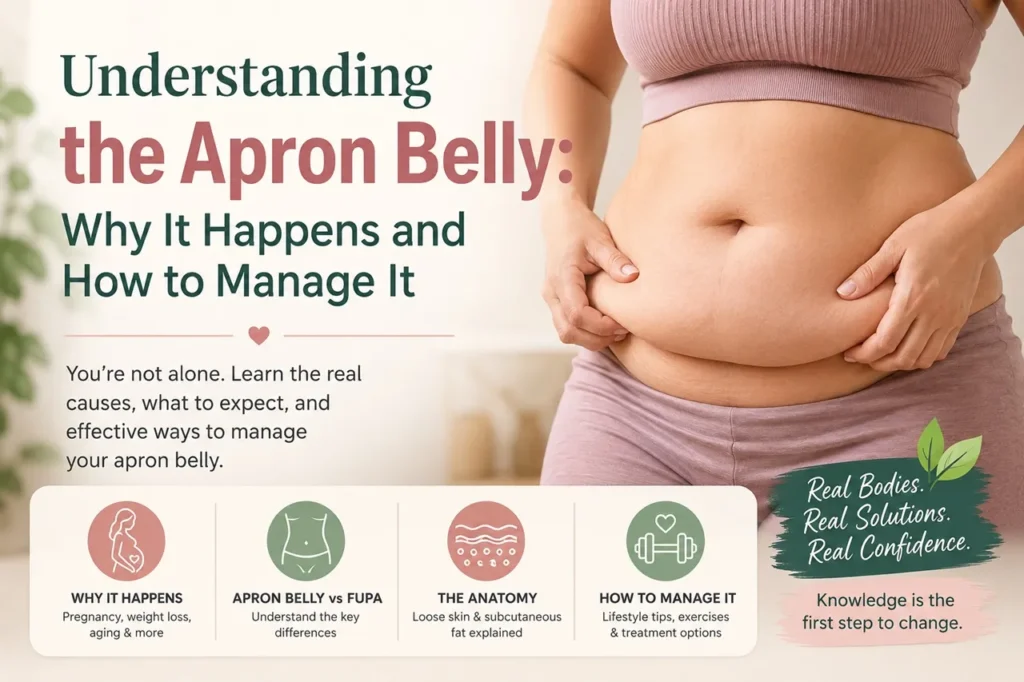

Where fullness sits on your body changes everything about how clothes behave, and the difference between an apron belly and a FUPA is a clear example of that. Both involve lower abdominal fullness, but they sit at different points on the torso, move differently, and create entirely different problems when you pull on a pair of leggings or knickers. Understanding which one you’re dealing with is the first practical step toward finding clothes that actually work.
Quick answer: how an apron belly and a FUPA compare
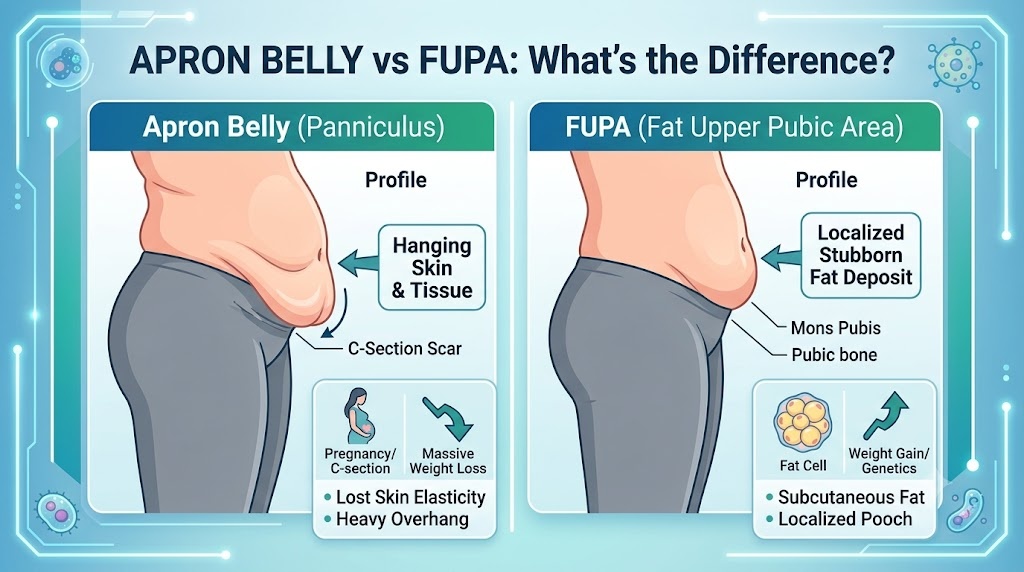
An apron belly is a fold of skin and fat that starts on the lower abdomen and hangs down over the pubic area. It tends to be heavier and more pendulous. A FUPA (fatty upper pubic area) sits on the pubic mound itself, just above the pubic bone, and is typically a rounder, firmer mound that projects forward rather than hanging.
When it comes to clothing fit, the distinction matters enormously. Leggings that sit comfortably on someone with a FUPA may roll down or dig in uncomfortably on someone with an apron belly, because the overhang exerts downward pressure that a high waistband cannot easily counteract. Jeans for apron belly wearers need to account for the fold itself, not just the circumference at the waist. The fupa vs pooch comparison is slightly different again. A pooch is usually a softer, more diffuse lower abdominal roundness without a defined fold, and it tends to behave more like a FUPA in terms of how waistbands sit.
For a fuller grounding in what an apron belly actually is and how it forms, Apron Belly: Understanding How to Manage covers the causes and context in detail.
Apron belly vs FUPA at a glance
| Criteria | Apron Belly | FUPA |
|---|---|---|
| Where it sits | Starts on the lower abdomen and hangs over the pubic area | On the pubic mound, projecting forward |
| Shape | Pendulous fold or overhang | Rounded mound, usually firmer |
| Waistband behaviour | Pushes waistbands down; creates roll-under | Pushes waistbands outward or forward |
| Leggings fit challenge | Waistband slides down due to overhang weight | Waistband may feel tight or dig in at the front |
| Knickers fit challenge | Gusset may not reach correctly; fabric bunches under fold | Front panel may feel stretched or ride up |
| Jeans for apron belly | Needs rise height and room below waistband | Needs stretch across the front panel |
| Main tradeoff | Coverage vs comfort under the fold | Front panel volume vs waistband comfort |
Hormonal shifts, particularly around perimenopause and menopause, can cause fat redistribution that affects both areas simultaneously, which is why some people find themselves managing elements of both. If that applies to you, the menopause belly apron article explains why this redistribution happens and what drives it.
Apron belly vs FUPA: the fit criteria that matter
The fupa vs pooch distinction is useful here too. A pooch tends to be the mildest presentation: a small forward roundness that affects fit mainly by adding volume at the lower front of a garment. A FUPA is more pronounced and sits directly on the pubic mound. An apron belly is structurally different because it involves an actual fold of tissue that hangs, which changes the physics of how fabric behaves against the body.
Fit and use case
For leggings, the key variable is where the waistband sits relative to the fullness. With a FUPA, a high-waisted legging that compresses the mound and distributes pressure evenly tends to work well. The waistband has something relatively stable to grip. With an apron belly, the overhang sits below the waistband, and its weight can pull the waistband downward throughout the day. A very wide, structured waistband, one that extends well above the navel, can help anchor the legging, but it needs to be firm enough to resist the downward pull without cutting in.
Knickers present a similar challenge. Standard brief-style knickers sit across the lower abdomen and may not accommodate the fold underneath, leading to bunching, chafing, or the gusset sitting at an uncomfortable angle. Full-coverage styles with a longer front panel tend to work better for apron belly wearers. For FUPA, the priority is usually a front panel with enough stretch to avoid a tight, digging sensation across the mound.
Jeans for apron belly wearers require a different approach than jeans chosen for a FUPA. Rise height matters for both, but apron belly wearers also need to think about what happens below the waistband, such as whether the denim will press against or under the fold and whether the front panel has enough length to sit comfortably.
A simple fit check for leggings and jeans
Changing rooms rarely show how a garment behaves over a full day. Run this check at home before removing the tags:
- Put the garment on and stand naturally, without pulling your stomach in.
- Sit down for several minutes, ideally on a normal dining chair.
- Walk, bend and climb a step if you can.
- Notice whether the waistband rolls, digs in, slips or causes numbness.
- Check that the fabric stays comfortable across both the lower abdomen and the pubic area.
For jeans in particular, ask yourself whether the waistband stays in place without digging in, whether there is enough room at the lower abdomen, whether the front fastening lies flat, and whether the thighs and seat fit without forcing you into a smaller waist size. If the answer to any of these is no, a different cut will usually solve more than a different size.
Value and tradeoffs
The tradeoff for apron belly clothing choices is almost always between coverage and comfort. Garments that cover the fold well, such as longer waistbands, higher rises and fuller front panels, can feel restrictive if they are not made from fabric with proper stretch and recovery. Cheaper fabrics that claim to be high-waisted often lack the structural integrity to stay in place against the weight of an overhang, making them a poor investment even if the initial price is low.
For FUPA, the tradeoff tends to be between compression and breathability. Compressive fabrics can smooth the mound effectively but may feel uncomfortable over long periods, particularly in warmer weather. Looser fabrics avoid that discomfort but offer less smoothing effect.
In the fupa vs pooch comparison, a pooch is generally the easiest to dress for. Most mid-rise garments with a small amount of stretch will accommodate it without much compromise.
Limitations and deal-breakers
The clearest deal-breaker for apron belly clothing is a waistband that sits at or just below the navel. This is the zone where the overhang begins to exert its downward pull, and a narrow waistband at that point will almost always roll or slide. Any legging or trouser described as “mid-rise” is likely to be problematic.
For FUPA, the deal-breaker is usually a rigid, non-stretch front panel. Structured denim or tailored trousers with no give across the lower abdomen will press uncomfortably against the mound and may create a visible pulling effect at the front seam.
Both conditions are affected by fabric weight and recovery. Fabrics that stretch but do not recover, staying stretched after being pulled, lose their fit quickly and stop providing any useful support or smoothing.
Whatever your shape, these are clear signs that a garment is the wrong fit: the waistband folds into a sharp line, the front fastening strains or gaps, fabric rolls beneath the abdomen, seams press into sensitive skin, or you find yourself adjusting it throughout the day. Persistent rubbing, trapped moisture or sore skin should not be dismissed as merely a clothing problem, and a GP can help if symptoms do not settle with gentler fabrics and good skin care.
How to tell which one you have
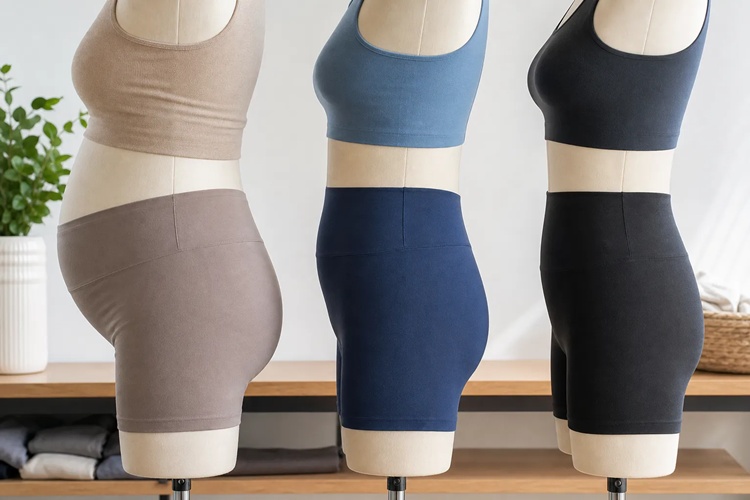
The simplest way to identify which situation applies to you is to stand and look at your lower abdomen in profile. If there is a fold that hangs down from your lower abdomen over the pubic area, you are dealing with an apron belly. If the fullness sits above the pubic bone as a forward-projecting mound without a hanging fold, that is a FUPA. If the fullness is diffuse and soft without a clear fold or mound, it is more likely a pooch.
Once you know which applies, the clothing decision follows logically. Apron belly wearers should prioritise rise height, waistband width, and front panel length. FUPA wearers should prioritise stretch across the front panel and waistband firmness without rigidity. For a pooch, most well-fitted mid-rise garments with stretch will work adequately.
If you are still uncertain about the anatomy involved, what is an apron belly provides a plain-English explanation of how an apron belly forms and how it differs from other types of lower abdominal fullness.
FAQ about apron belly vs FUPA
Is a fupa the same as an apron belly?
No. A FUPA is a mound of fat above the pubic bone, while an apron belly is a fold of skin and fat that starts on the lower abdomen and hangs down over the pubic area. They sit in different locations and create different clothing fit challenges.
Are leggings or jeans better for an apron belly?
Neither is better for everyone; it depends on your pressure point. Leggings with a wide, flat waistband suit people who want continuous coverage, while stretch jeans with a comfortable front rise work well for those who want structure without a rigid, digging waistband.
Will an apron belly ever go away?
It can reduce with substantial fat loss, but the skin fold itself may persist if the skin has lost elasticity. Surgical intervention is the only reliable way to remove the fold entirely.
Will GLP-1 help with apron belly?
GLP-1 medications can support overall fat loss, which may reduce the volume of an apron belly. However, they do not address excess skin, so the fold may remain even after substantial weight reduction.
Can you tighten up an apron belly?
Strengthening the underlying abdominal muscles and reducing overall body fat can improve the appearance, but skin laxity within the fold does not respond to exercise alone. Results vary depending on skin elasticity and the extent of the overhang.
Why does it matter whether you have an apron belly or a FUPA?
The two conditions involve different anatomy and different clothing challenges. Identifying which applies to you before choosing garments or strategies will save a great deal of trial and error.
How do you choose clothes for an apron belly or a FUPA?
Start by identifying whether your fullness hangs as a fold from the lower abdomen (apron belly) or sits as a mound on the pubic area (FUPA), then match your clothing choices to the specific fit challenge that anatomy creates.
What is the most common mistake when buying clothes for either?
The most common mistake is treating both conditions identically. Choosing jeans for apron belly based on waist measurement alone, without considering rise height and front panel length, rarely produces a comfortable result.
Does knowing the difference help with everyday dressing?
Yes. Knowing which condition applies means you can filter clothing options quickly and avoid repeatedly buying garments that will not work for your specific body shape.
Recommended next steps
If you have identified that you are dealing with an apron belly, the priority is understanding rise height and waistband construction when choosing leggings, knickers, and jeans. If FUPA is the primary concern, front panel stretch and waistband firmness are the criteria to focus on. If both are present, which is not uncommon after hormonal changes, you will need garments that address both the forward mound and the downward pull of the fold simultaneously, which narrows the field but does not eliminate good options.
Working through the clothing cluster on this site with a clear sense of your anatomy will make each subsequent decision more straightforward.