
Most of what you’ll read online about an apron belly is written for women, and a lot of it assumes pregnancy. If you’re a man with a belly that hangs over your waistband, that can feel pretty isolating. You may have wondered whether it’s just weight, whether it’s something more, and whether there’s anything you can do about it that doesn’t involve a brutal diet or a trip to a surgeon.
The truth is that apron belly in men is far more common than most people admit. It simply doesn’t get talked about, because men tend to put up with it, joke about it or quietly avoid the doctor. That’s a shame, because a few clear facts can make a real difference to how you feel, how comfortable you are day to day and how you protect your long-term health.
This guide explains why men develop an overhanging belly, what the health risks really are, when it’s worth speaking to a GP, which clothing and skin care habits help, what actually works for reducing it and what the surgical options look like. It’s general information, not personal medical advice.
What Is an Apron Belly, and How Is It Different From a Beer Belly?
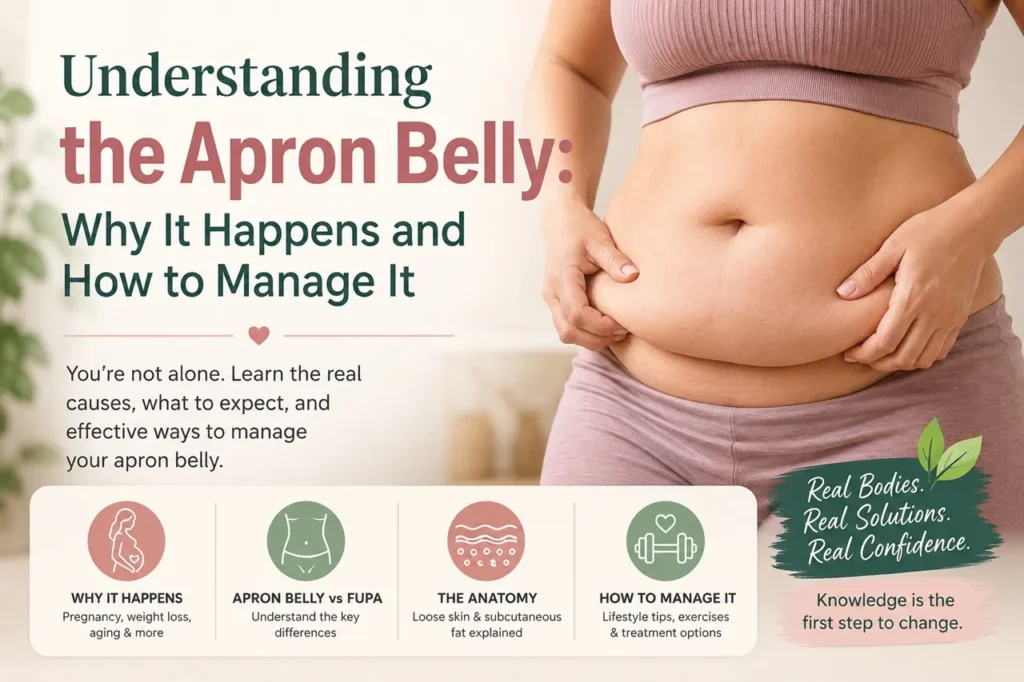
An apron belly, sometimes called a pannus, is a fold of skin and fat that hangs down from the lower abdomen, a bit like an apron. It can sit over the waistband, the groin or even the tops of the thighs, depending on its size.
It’s not the same as the firm, round “beer belly” many men have. A firmer belly is usually caused by fat stored deeper inside the abdomen around the organs, which pushes the stomach forward but doesn’t hang. An apron belly involves fat and loose skin outside the abdominal wall, so it hangs and folds, and it often moves when you walk or sit.
Many men have a bit of both, which is why it can be hard to tell what’s going on. If you also have a bulge near your tummy button or groin, it’s worth knowing the difference between a skin fold and a hernia. Our guide to apron belly or hernia explains what to look for.
Why Do Men Get an Apron Belly?
There isn’t one single cause. For most men it’s a mixture of the following.
Where men store fat
Men tend to carry more fat around the middle than women do, particularly in the abdomen. That means weight gain often shows up first around the stomach. Over time, a large amount of fat in this area can stretch the skin and lead to an overhanging fold.
Significant weight loss
One of the most common causes of an apron belly in men is losing a lot of weight. Whether it comes from diet and exercise, weight-loss surgery or weight-loss medication, the skin can’t always shrink back at the same pace as the fat disappears. That leaves a hanging fold of loose skin, even when you’ve done everything right. If this is you, you should feel proud of the work you’ve put in, and know that it isn’t a failure.
Age
As we get older, skin loses elasticity, muscle mass tends to drop and metabolism can slow down. Together these make it easier to gain fat around the middle and harder for the skin to stay firm.
Hormones
Testosterone levels gradually fall with age in many men, and low levels can be linked with gaining fat around the middle, as well as tiredness, low mood and a lower sex drive. That doesn’t mean a larger belly is a sign of low testosterone, because there are many other causes, but if you have those symptoms too, it’s worth discussing with your GP rather than buying anything online.
Lifestyle
A mostly seated job, a lack of regular activity, regular heavy drinking, poor sleep and a diet high in processed food all make it easier to store fat around the middle. Stress plays a part too, and ongoing high stress can affect appetite, sleep and where the body stores fat. Our post on stress, cortisol and apron belly looks at this in more detail.
Genetics and medication
Some men are simply more likely to carry weight around the middle because of family traits. Certain medicines, including long-term steroids, can also affect weight, so never stop a prescribed medicine without talking to your doctor.
Health Risks: What You Should Know
An apron belly can be about comfort and confidence, but the fat around your middle can also matter for your health, and that’s the bit worth taking seriously.
Metabolic and heart health. Carrying extra fat around the abdomen is linked to a higher risk of type 2 diabetes, high blood pressure, heart disease and stroke. NHS guidance has said that men with a waist measurement of 94cm (37 inches) or more are at higher risk, and the risk is higher still at 102cm (40 inches) or more. More recent NICE guidance also suggests keeping your waist measurement below half your height. The NHS page on obesity explains how to measure your waist and what the figures mean.
Sleep. A larger belly can contribute to snoring and sleep apnoea, a condition where your breathing stops briefly during sleep. Loud snoring, gasping or feeling exhausted all day are worth mentioning to your GP.
Skin problems. Skin resting on skin is warm and damp, which makes rashes, soreness and infections more likely, particularly in hot weather or during exercise. Our guide to apron belly rash and skin irritation explains the signs to look for and what helps.
Back and joint strain. The extra weight at the front can pull on the lower back and make long periods of sitting or standing uncomfortable.
Mental health. Many men quietly feel self-conscious about their body and avoid swimming, the gym or intimacy because of it. That deserves as much attention as the physical side. If it’s affecting your mood, tell someone you trust or your GP.
When to See Your GP
Booking an appointment doesn’t mean you’ve done something wrong, and GPs see this all the time. It’s a good idea to speak to your GP if:
- Your waist measurement is 102cm (40 inches) or more, or you’re worried about your weight.
- You have a lump, bulge or pain near your belly button or groin.
- You have a rash that isn’t clearing, a sore, cracked or weeping area, or a sour smell from the fold.
- You snore heavily, wake gasping or feel exhausted despite a full night’s sleep.
- You have excessive thirst, need to pass urine more often than usual or feel unusually tired, which can be signs of diabetes.
- You’ve lost a lot of weight and the loose skin is causing you real problems.
- You feel low, anxious or ashamed about how your body looks.
Call 111 or seek urgent help for severe stomach pain, a painful bulge you can’t push back, or a hot, red, spreading area of skin with a fever.
What Actually Helps With an Apron Belly
Let’s be honest about this one. There’s no quick fix, and no exercise, wrap or supplement can “melt” belly fat from one place. Fat loss happens across the whole body, and loose skin doesn’t tighten because of a specific workout. But there’s a lot that does help, both for how you feel and for your health.
Weight management
If you carry extra weight, losing some of it is the most effective way to reduce the fat part of an apron belly and cut your health risks. Small, steady changes tend to last better than extreme diets. Think regular meals, plenty of vegetables, lean protein, fewer sugary drinks and takeaways, and smaller portions. Your GP or a local NHS weight management service can offer support, and in some cases medication or specialist programmes, if you meet the criteria.
Staying active
Walking is a great place to start, and building up to 150 minutes of moderate activity a week is a good general goal. Add strength training two or three times a week, since muscle helps your metabolism and posture. If you spend a lot of time seated, break up the day with short walks, and have a look at our advice on sitting all day with an apron belly.
Cutting back on alcohol and improving sleep
Alcohol is high in calories and tends to go hand in hand with snacking, so reducing it helps. Seven to nine hours of decent sleep also supports appetite control and energy.
Looking after your skin
Whatever your size, daily skin care in the fold makes a big difference. Wash gently, dry thoroughly, let the area air, and use a light barrier balm or cornstarch-based powder if you tend to get rubbing. Change out of sweaty clothes quickly after exercise.
Clothing and Support Options
The right clothes won’t change your body, but they can change how comfortable you are all day.
- Trousers: Choose a stretchy or elasticated waistband that sits comfortably instead of digging in. A slightly higher rise can stop the belly spilling over the top.
- Tops: Longer, straight-cut shirts and tops in breathable fabrics like cotton and linen skim the body better than clingy styles.
- Underwear: Moisture-wicking boxer briefs or longer-leg styles reduce chafing between the fold and the thighs.
- Support bands: A soft belly band can help take the weight off your lower back during activity, but avoid anything very tight, and don’t wear one for long periods without checking your skin.
- Avoid tight shapewear for hours at a time: It can trap heat and moisture and irritate the skin.
Surgical Options for Men
If you’ve lost a lot of weight, or you’ve tried everything and the loose skin is still causing problems, surgery might be worth discussing. Men can have the same operations as women, usually either a panniculectomy, which removes the hanging apron, or an abdominoplasty (a tummy tuck), which also tightens the stomach muscles and reshapes the waist.
Liposuction alone isn’t suitable for most people with a true apron belly, because it removes fat but not loose skin. Surgeons will usually want your weight to be stable for several months first, and they’ll talk through scarring, recovery and risks.
NHS funding is only available in limited cases, such as when the skin causes recurrent infections or significant physical problems that haven’t responded to other treatment. Our guide to apronectomy on the NHS explains the criteria. If you do go ahead, our tummy tuck recovery timeline shows what the weeks after surgery usually involve. Always choose a properly qualified surgeon on the GMC specialist register for plastic surgery.
Frequently Asked Questions
Can men get an apron belly? Yes. It’s common after weight gain or significant weight loss, and it affects men of all ages.
Is an apron belly in men a sign of a health problem? Not necessarily, but extra fat around the middle is linked to a higher risk of conditions like type 2 diabetes and heart disease. A GP check is a sensible step.
Can I get rid of a hanging belly with exercise alone? Exercise helps with fat and general health, but it can’t remove loose skin. If the skin hangs because of major weight loss, surgery may be the only way to remove it.
Does low testosterone cause belly fat? Low testosterone can be linked with gaining fat around the middle, but plenty of other factors are usually involved. If you have symptoms like tiredness and low drive, speak to your GP before trying any treatment.
Do men have tummy tucks? Yes, and the operation is very similar. Your surgeon will plan it around your body shape, skin and goals.
Final Thoughts
An apron belly in men isn’t something to be embarrassed about, and it doesn’t mean you’ve failed. It’s a common result of how male bodies store fat, how skin changes with age and weight, and the way modern life makes it easy to sit more and move less.
Start with what you can control: measure your waist, move a little more, look after the skin in the fold and wear clothes that fit comfortably. Speak to your GP if you have any health concerns, and talk to a qualified surgeon if loose skin is affecting your quality of life. Small steps add up, and you don’t have to figure it out alone.
This article is for general information and isn’t a substitute for personal medical advice.