
Quick Answer
Stress cannot create an apron belly or loose skin, but long-term stress may nudge fat towards the middle and make an existing fold feel heavier. Slow, consistent changes help more than any quick fix.
- Protect your sleep and keep a regular routine
- Walk or move gently most days
- See your GP if the change is sudden or unexplained
It’s been a long few months. Work has been relentless, sleep has been patchy, and the to-do list never seems to shrink. Then you notice your stomach looks and feels different. It’s heavier, softer, and the fold below your belly button seems more obvious than before. A thought creeps in: Is this stress?
It’s a fair question, and one many people ask. This guide explains what the research does and doesn’t say about stress and apron belly, how cortisol fits into the picture, and what you can realistically do about it. I’ll also be clear about what stress can’t do, because it can’t create loose skin, and knowing the difference saves a lot of worry.
If you’re still getting to grips with what an apron belly is, our apron belly overview explains it in plain English. And since belly fat and loose skin often get mixed up, our belly fat guide is a useful companion to this article.
First, What Is Cortisol?
Cortisol is a hormone made by your adrenal glands, which sit on top of your kidneys. It’s often called the “stress hormone”, but that’s only part of the story. Cortisol helps regulate blood sugar, metabolism, blood pressure, and your sleep-wake rhythm. It naturally rises in the morning to help you wake up and falls through the day.
When you face a threat or pressure, your body releases extra cortisol to help you cope. That’s useful in short bursts. The trouble starts when stress is constant. As Healthline’s summary of the research puts it, prolonged stress can keep stress hormone levels elevated, along with blood pressure and blood sugar.
Is “Cortisol Belly” Real?
You’ve probably seen the term “cortisol belly” all over social media. It’s worth knowing what it really means. The American Association of Clinical Endocrinology (AACE) describes cortisol belly as a popular, non-medical term used on social media to describe excess belly fat. AACE President Dr Scott Isaacs notes it isn’t a term doctors use, and says abdominal fat is more accurately called visceral fat.
The same source says that chronic stress and elevated cortisol may play a role, and that many other factors contribute to fat around the midsection, including diet, sleep, activity, hormones, and certain medical conditions.
So the honest answer is this: stress can be one contributor to belly fat in some people, but it’s rarely the whole story. Healthline notes that higher long-term cortisol levels are strongly related to abdominal obesity, but also that not everyone with obesity has high cortisol. Genetics, age, hormones, and the number of pregnancies you’ve had all matter too.
Cortisol Belly Fat: How Stress Might Affect Where You Carry Fat
Researchers are still working out the details, but a few connections come up again and again.
Fat storage. Long-term high cortisol seems to be linked with more fat being stored deep in the abdomen. That’s visceral fat, the type that sits around your organs rather than just under your skin.
Appetite and cravings. Stress can change what you want to eat. Many people crave sugary, fatty, or comforting foods when they’re under pressure, and it’s easy to eat more without noticing.
Sleep. Stress and poor sleep feed each other. Healthline cites research linking short or long sleep with more visceral fat, and notes that most adults need around seven to nine hours a night.
Movement. When you’re overwhelmed, exercise is often the first thing to go. A few weeks of sitting more and moving less can change how your body feels.
Alcohol and other coping habits. An extra glass of wine to unwind is common, and alcohol adds calories. It’s not a judgement, just something that quietly adds up.
None of this is a character flaw. These are normal human responses to pressure.
Stress Doesn’t Create an Apron Belly, but It Can Make It Feel Worse
This is the most important point in the article, so it’s worth saying clearly.
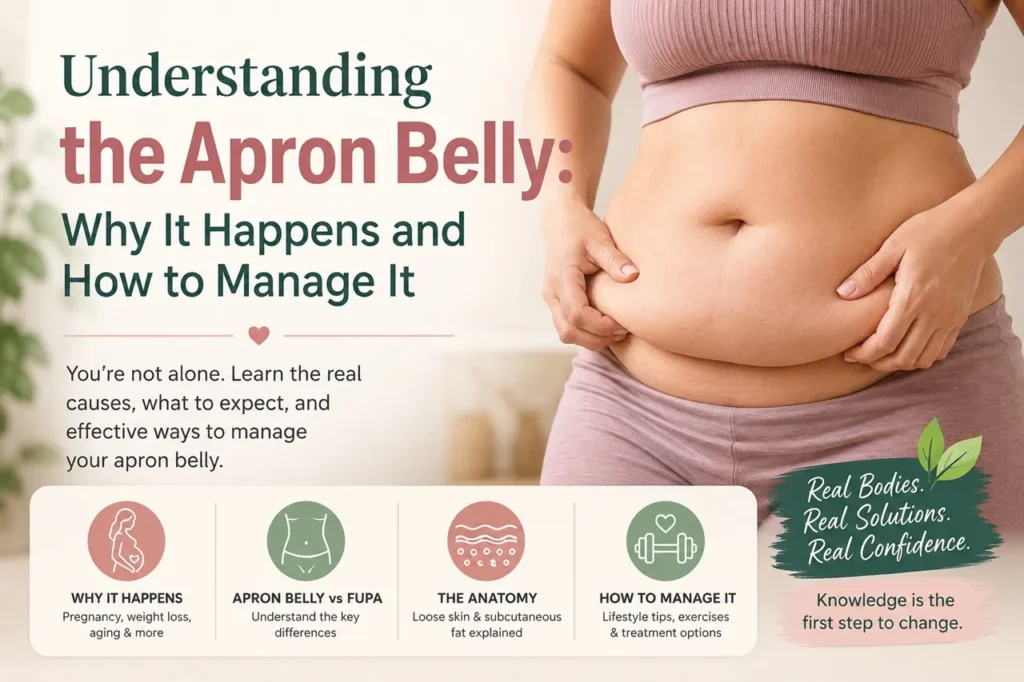
An apron belly is usually made up of loose, stretched skin, a layer of fat, and sometimes weakened or separated abdominal muscles. The skin changes come from stretching, whether from pregnancy, a C-section, weight loss, or ageing. Stress doesn’t stretch your skin, and it can’t remove it either.
What stress can do is influence the fat part of the picture. If stress leads to weight gain around your middle, the existing fold may feel heavier or more prominent. It can also make you more aware of your body, more critical in the mirror, and less likely to look after yourself.
So if your apron belly seems worse during a stressful period, you’re probably noticing a mix of things: a little extra abdominal fat, more bloating, poorer posture, and a harsher inner voice. The underlying loose skin hasn’t changed. Our belly skin guide explains what affects skin and what doesn’t.
Stress, Life Stages and Your Belly
Stress rarely arrives alone. It often lands at the same time as other changes that affect your middle. A new baby brings broken sleep, hormone shifts, and very little time for yourself. Midlife can bring work pressure, caring responsibilities, and menopause, when fat accumulation tends to increase as oestrogen falls, as Healthline notes.
That’s why it’s hard to blame stress alone. If you’re in one of these seasons, give yourself credit for coping, and be wary of anyone selling a single cause or a single cure. Several small, steady changes will serve you better than one dramatic fix.
When It Could Be Something Else
Most belly changes during a stressful time are ordinary. But a few signs deserve a conversation with your GP.
The Mayo Clinic lists signs of Cushing syndrome, a condition in which the body has too much cortisol for a long time. These include weight gain in the trunk with thin arms and legs, a rounder face, a fatty lump between the shoulders, pink or purple stretch marks, thin skin that bruises easily, slow wound healing, extreme tiredness, muscle weakness, high blood pressure, low mood, and irregular periods. It’s particularly important if you take glucocorticoid medicine, such as steroids, for another condition.
Cushing syndrome is uncommon, and a stressful life doesn’t cause it. But if you notice several of these signs together, see your GP and don’t try to self-diagnose.
Also speak to your doctor if you have rapidly increasing belly size, ongoing bloating or digestive problems, persistent low mood or anxiety, or trouble sleeping that doesn’t improve. A swollen abdomen isn’t always fat. Hormones, thyroid problems, and menopause can all change where your body stores weight, and a clinician can help you tell them apart.
What Actually Helps
There’s no quick fix, and Healthline is blunt about that. Slow, consistent changes work better than anything dramatic. Here’s where to start.
Protect your sleep
Sleep is where your body resets. Try to keep a regular bedtime, keep screens out of the last half hour, and make your bedroom cool and dark. If worries keep you awake, write them down before bed so they’re not circling in your head. If sleep problems persist, speak to your GP.
Move in ways you enjoy
Healthline suggests around 30 minutes of moderate exercise most days, plus strength training, and notes that daily activity can reduce visceral fat even without weight loss. It also points out that sit-ups alone won’t reduce visceral fat.
That’s good news if you dislike crunches. Walking, swimming, cycling, yoga, and Pilates all count, and many people find rhythmic exercise calms a busy mind. If you’d like a gentle place to start, our belly exercises guide offers a beginner-friendly routine.
Build small stress buffers
You don’t need a perfect meditation practice. Try a few slow breaths before a difficult meeting, a ten-minute walk at lunchtime, a phone call with a friend, or an evening with no email. Healthline mentions meditation, socialising, and “me time” as helpful. Small habits done often tend to beat grand plans that fade.
Eat steadily, not strictly
Skipping meals and then overeating in the evening is a common stress pattern. Try regular meals with enough protein and plenty of vegetables, and keep a few easy options at home for days when cooking feels impossible. You don’t need to cut out food groups. Crash diets add stress rather than relieving it.
Keep an eye on alcohol and caffeine
Both are fine in moderation for most people, but they can disturb sleep and add up faster than you think. If you use them to cope, consider swapping one a day for something calming.
Talk to someone
If stress feels too heavy to manage alone, tell your GP or a counsellor. Talking therapies can help, and you don’t need to wait until things are at crisis point. If you ever feel unable to cope or have thoughts of harming yourself, contact NHS 111, your GP, or call Samaritans free on 116 123.
Be Kind to Your Body While You Do This
It’s easy to turn stress about your belly into more stress. You worry about the fold, scrutinise yourself, and feel worse. That loop doesn’t help anyone.
Try to treat your body as something you’re looking after, not a problem you’re solving. Wear clothes that fit comfortably, speak to yourself the way you’d speak to a friend, and remember that your stomach is only one small part of you.
When Stress Isn’t the Issue
Some people find that, even after improving sleep, movement, and stress levels, a fold of loose skin remains. That’s not a failure of effort. It’s a limit of what lifestyle changes can do, because they can’t shrink stretched skin.
If the overhang causes irritation, discomfort, or distress, it’s reasonable to explore your options. Surgery is a personal decision, and nobody should rush you. If you’d like to understand what the operations involve, our tummy tuck guide explains them.
Conclusion
Stress and apron belly are connected, but not in the way social media suggests. Chronic stress and high cortisol may play a role in how much fat you carry around your middle, but they can’t create the loose skin that forms an apron belly. Many other factors matter too, including sleep, activity, food, hormones, and genetics.
The most helpful things are also the simplest: sleep, regular movement, steady eating, small stress breaks, and support when you need it. See your GP if you notice other symptoms or sudden changes. Be patient with yourself, because a body under pressure needs care far more than criticism.
Frequently Asked Questions
Can stress cause an apron belly?
Not on its own. An apron belly is mainly loose, stretched skin, plus fat and sometimes separated abdominal muscles. Stress can influence how much fat you carry around your middle, but it can’t stretch or remove skin.
Is cortisol belly a real thing?
“Cortisol belly” is a popular, non-medical term. The American Association of Clinical Endocrinology says it isn’t a term doctors use, and that abdominal fat is more accurately called visceral fat. Chronic stress and high cortisol may play a role, but many other factors contribute.
How do I reduce cortisol belly fat?
There’s no quick fix. Aim for regular sleep, around 30 minutes of moderate movement most days, steady meals, and small stress-relief habits. Avoid crash diets, which add stress. If you’re worried, speak to your GP.
Will a stress belly overhang go away when my stress improves?
The fat and bloating part may ease as sleep, movement, and eating settle, and an overhang can feel less prominent. Loose, stretched skin won’t shrink on its own, because stress never caused it.
When should I see a doctor about belly weight gain?
See your GP if your belly is increasing rapidly, or if you also notice extreme tiredness, thin skin that bruises easily, purple stretch marks, high blood pressure, irregular periods, or low mood. These can have medical causes that need checking.