Quick Answer
Sitting all day does not directly cause an apron belly, but long hours in a chair can make an existing fold more uncomfortable and make fat loss around the middle harder.
- Sit tall with good back support
- Choose waistbands that sit above the fold
- Stand up and move every 30 to 45 minutes
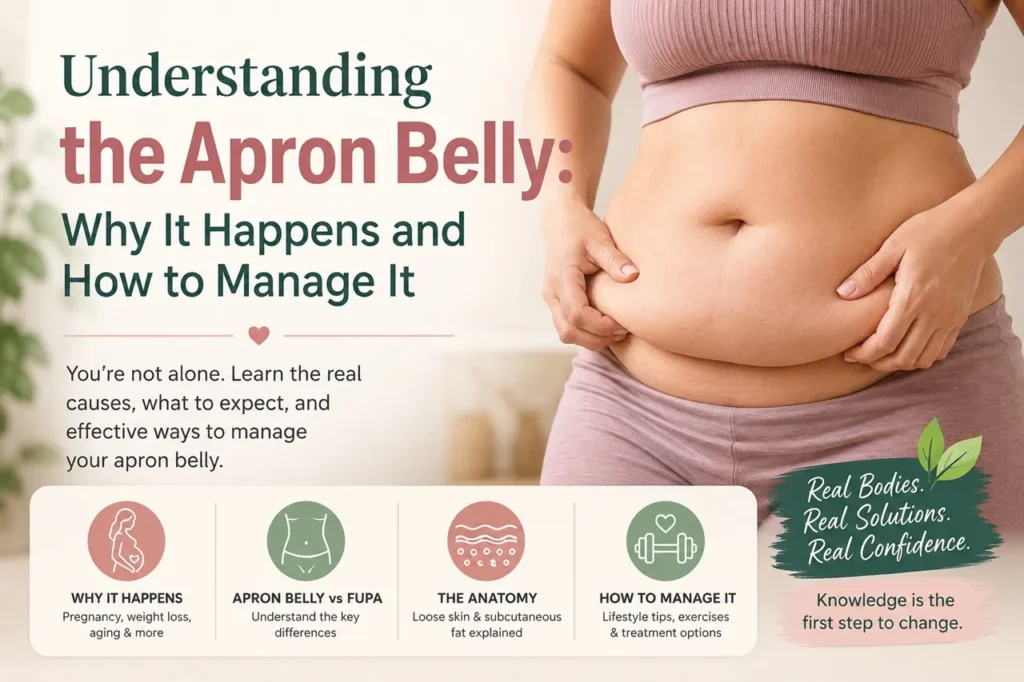
If you work at a desk, you might spend eight hours or more sitting each day, then sit again on the commute and the sofa. With an apron belly, all that sitting can feel uncomfortable. The fold presses on your thighs, waistbands dig in, and the skin underneath gets hot and sore by mid-afternoon.
Sitting does not create an apron belly on its own. However, long hours in a chair can make it feel worse and can make it harder to shift fat around the middle. This guide explains the link between an apron belly and sitting all day, the desk habits that tend to make things worse, and simple fixes you can start tomorrow.
Does Sitting All Day Cause an Apron Belly?
Sitting all day does not directly cause an apron belly, but long periods of inactivity make fat gain around the middle easier and make an existing fold more uncomfortable. An apron belly mainly forms after weight changes, pregnancy, ageing or genetics. Our guide to what causes an apron belly explains the main reasons.
How inactivity adds up
Your body burns energy through all the small movements of the day, such as walking to the kettle, standing and fidgeting. Long hours in a chair cut these right down. Over months and years, that lower daily energy use can make it easier to gain weight, especially around the tummy.
Why sitting makes the fold feel worse
When you sit, your hips bend and your lower belly folds over your thighs. Skin presses against skin, which traps heat and sweat. Tight waistbands then sit right in the crease. That is why many people feel most aware of their apron belly while sitting, not standing.

Desk Habits That Make an Apron Belly Worse
A few common habits make sitting harder on the body. Spotting them is the first step.
Slumping in your chair
When you slump, your pelvis tips back and your upper body curls forward. This squashes the abdomen and pushes the belly out over your lap. Over time, it can also weaken the deep core muscles that help hold the belly in, and it may add to back ache.
Sitting for hours without a break
The NHS advises adults to reduce time spent sitting and break up long periods of not moving. Many desk workers sit for two or three hours at a time without realising. Even a short walk every half hour or so makes a difference to how you feel.
Tight waistbands and the wrong trousers
Trousers that close below the fold can cut into the crease all day. Low-rise styles are often the worst offenders. Our guide to the best trousers for an apron belly explains which rises and waistbands feel better when seated.
Grazing at your desk
Biscuits in the drawer and sugary drinks are easy to reach for when you are busy or bored. Mindless snacking adds up without filling you. This is a habit to notice rather than feel guilty about.
Low water intake
Many people forget to drink at work. Mild dehydration can leave you tired and may make you mistake thirst for hunger. Keep a water bottle within reach.
Easy Fixes for Your Desk Set-Up
A better set-up helps you sit tall without effort. Most changes are free or cheap.
Set your chair height
Your feet should rest flat on the floor, with your knees roughly level with or slightly lower than your hips. If your knees are higher than your hips, your belly gets squashed even more. A footrest helps if your chair is high for your desk.
Support your lower back
Sit right back in your chair so the backrest supports you. A small cushion or rolled towel in the curve of your lower back helps you sit upright. This gives your abdomen more room.
Raise your screen
The top of your screen should be around eye level. If you use a laptop, a stand plus a separate keyboard stops you hunching. Less hunching means less pressure on the fold.
Try a sit-stand routine
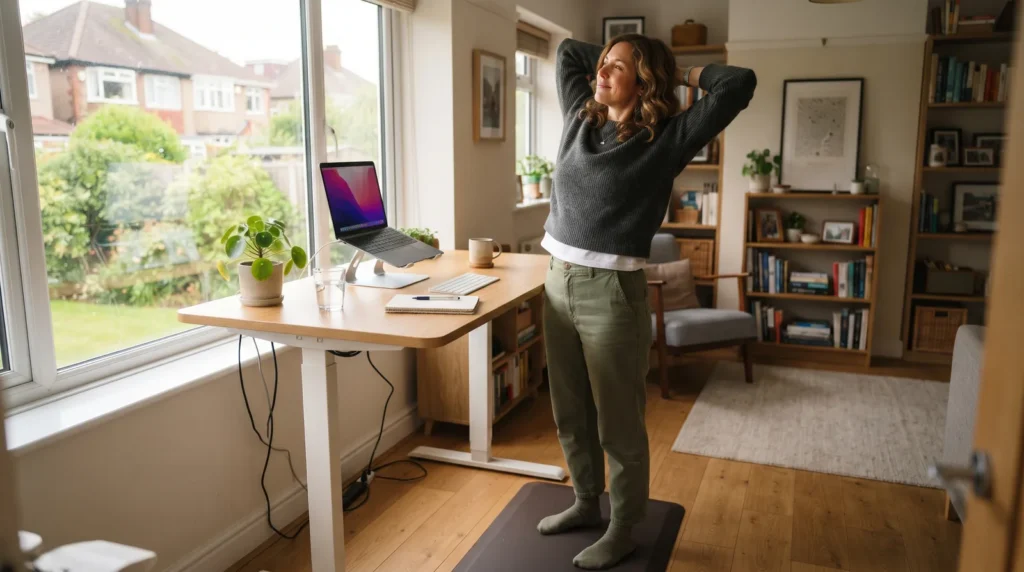
A standing desk or desk riser lets you change position through the day. You do not need to stand all day. Switching between sitting and standing every 30 to 60 minutes is more comfortable for most people.

Move More Without Leaving Your Desk
You do not need a gym to break up sitting. Small, regular movements are the goal.
Set a movement reminder
Use your phone, watch or computer to remind you to stand every 30 to 45 minutes. Stand up, stretch, refill your water or walk to a colleague instead of sending a message.
Simple seated and standing moves
Try these a few times a day:
- Seated core breathing: sit tall, breathe in, then gently draw your lower belly in as you breathe out. Repeat ten times.
- Sit-to-stands: stand up from your chair and sit down slowly without using your hands. Do ten.
- Hip flexor stretch: stand in a short lunge with one foot back and gently tuck your tailbone under. Hold for 20 to 30 seconds each side.
- Calf raises: rise onto your toes and lower slowly while waiting for the printer or kettle.
Use your breaks well
A 10 to 15 minute walk at lunch adds up to over an hour a week. Walking is one of the best activities for an apron belly. Our guide to walking for apron belly shows how to build it into your day.
A Simple Workday Movement Plan
A plan takes the guesswork out of moving more. Here is a simple routine you can adapt to your own hours.
Before work
Walk part of your commute if you can, such as getting off the bus one stop early or parking further away. If you work from home, take a short walk before you sit down, as if you were commuting.
Morning at your desk
Stand up every 30 to 45 minutes. Take phone calls standing or walking. Do a set of sit-to-stands and some seated core breathing mid-morning.
Lunchtime
Eat away from your screen, then walk for 10 to 20 minutes. Fresh air and daylight also help your energy for the afternoon.
Afternoon
The mid-afternoon slump is when many people snack. Instead, try a quick walk, a hip flexor stretch and a glass of water. Use the stairs for at least one trip.
After work
Try to avoid going straight from desk chair to sofa. A short walk, an exercise class or some stretching marks the end of the working day and adds to your daily movement.
Working From Home With an Apron Belly
Home working can mean even more sitting, as there is no walk to meetings or the canteen.
Avoid the sofa and the bed
Working on a sofa or in bed squashes the belly and strains the back. Use a proper table and chair where you can, even if it is the kitchen table with a cushion for support.
Build in natural breaks
Put your printer, water jug or phone charger in another room so you have to get up. Use the time between video calls to stand and stretch.
Keep the Skin Under the Fold Comfortable
Long hours sitting can leave the skin under the fold sweaty, red and sore. A few small steps help.
Start the day dry
Wash and dry under the fold properly in the morning. Pat dry rather than rubbing. A cool hairdryer helps in deep creases.
Use a barrier between skin layers
A thin cotton or moisture-wicking liner tucked under the fold keeps skin apart. Some people keep a spare in their work bag to change at lunch on hot days.
Watch for a rash
Redness, itching, a sour smell or a shiny rash in the fold may be intertrigo or a yeast infection. Our guide to apron belly rash explains what helps, and when to ask a pharmacist or GP.
Food and Drink Habits at Work
Small, steady changes at work can support fat loss without a strict diet.
Plan your snacks
Bring snacks that fill you up, such as fruit, plain yoghurt, nuts or vegetable sticks with hummus. Planning ahead makes the vending machine less tempting.
Eat lunch away from the screen
Eating at your desk makes it easy to overeat without noticing. Taking even 15 minutes away from your screen helps you notice when you are full. It also gets you moving.
Watch sugary drinks
Fizzy drinks, syrups in coffee and fruit juices add sugar quickly. Swap to water, sparkling water, tea or coffee without syrups most of the time.
Back Pain, Bloating and Sitting
Long periods of sitting can bring other problems that often travel with an apron belly.
Back ache
A heavier lower belly pulls the pelvis forward, which can strain the lower back. Sitting slumped adds to that. Our guide on whether an apron belly can cause back pain explains the link.
Bloating after lunch
Sitting curled forward after eating can make you feel more bloated. A short walk after meals often helps digestion. If bloating is frequent, painful or new, see your GP.
When to See Your GP
Most desk-related discomfort improves with small changes. However, some symptoms need checking.
Signs to get checked
See your GP if you have a painful bulge near your belly button or scar, back pain that spreads down your leg, a rash that does not clear, or swelling in your legs. Also see them if your belly changes size quickly without an obvious reason.
Frequently Asked Questions
Can sitting all day give you an apron belly?
Sitting alone does not cause an apron belly. However, long hours of inactivity make weight gain around the middle easier, and sitting can make an existing fold feel more uncomfortable.
How often should I get up from my desk?
Try to stand up or move every 30 to 45 minutes. Even a minute or two of standing, stretching or walking helps break up sitting time.
Is a standing desk good for an apron belly?
A standing desk can help by letting you change position through the day. It will not shrink an apron belly on its own, but it may reduce pressure on the fold and make it easier to move more.
What trousers are best for sitting with an apron belly?
High-rise trousers with a soft, wide or stretchy waistband that sits above the fold are usually most comfortable. Avoid low-rise styles that cut into the crease when you sit.
How do I stop my apron belly sweating at work?
Wash and dry under the fold in the morning, wear breathable fabrics and tuck a thin cotton or moisture-wicking liner under the fold. Change it at lunchtime on hot days.
Can desk exercises reduce belly fat?
Desk exercises will not burn fat from one area, but they increase daily movement and can strengthen your core. Combined with regular walks and good food choices, they support overall fat loss.
The Bottom Line
Sitting all day does not cause an apron belly, but it can make one feel worse and make fat loss harder. Sit tall with good support, choose waistbands that sit above the fold, keep the skin dry, and move every half hour or so. Small, steady changes at work add up over weeks and months.
Your next step
Tomorrow, set a 30 minute movement reminder and take a 10 minute walk at lunch. Check your chair height while you are at it. These three changes take almost no time and make a noticeable difference to comfort.