Quick Answer
Hanging belly fat pain usually comes from the skin fold itself: sweat, friction and trapped moisture make the crease sore, and the weight of the fold pulls on the skin, back and tummy. Daily washing and thorough drying, a support garment and soft clothing that does not cut across the fold ease most symptoms. Skin that is hot, swollen and painful, or a painful bulge, needs prompt medical advice.
- Most apron belly pain is skin irritation or dragging from the weight of the fold
- A pharmacist can help with mild rashes in the crease
- Call 999 if a painful fold comes with a high temperature, fast breathing or confusion
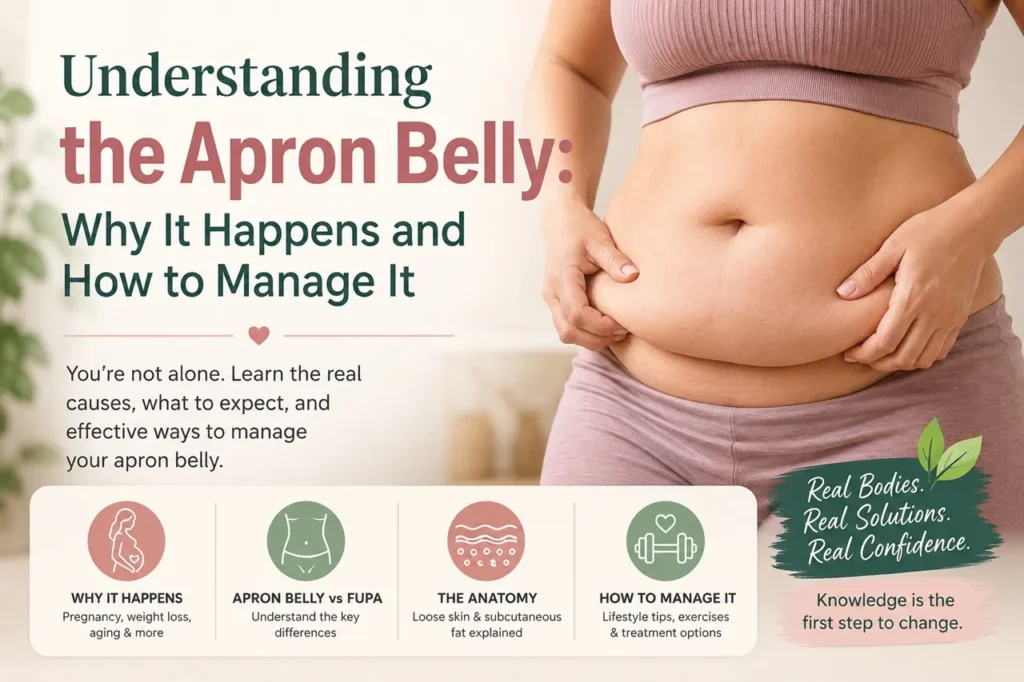
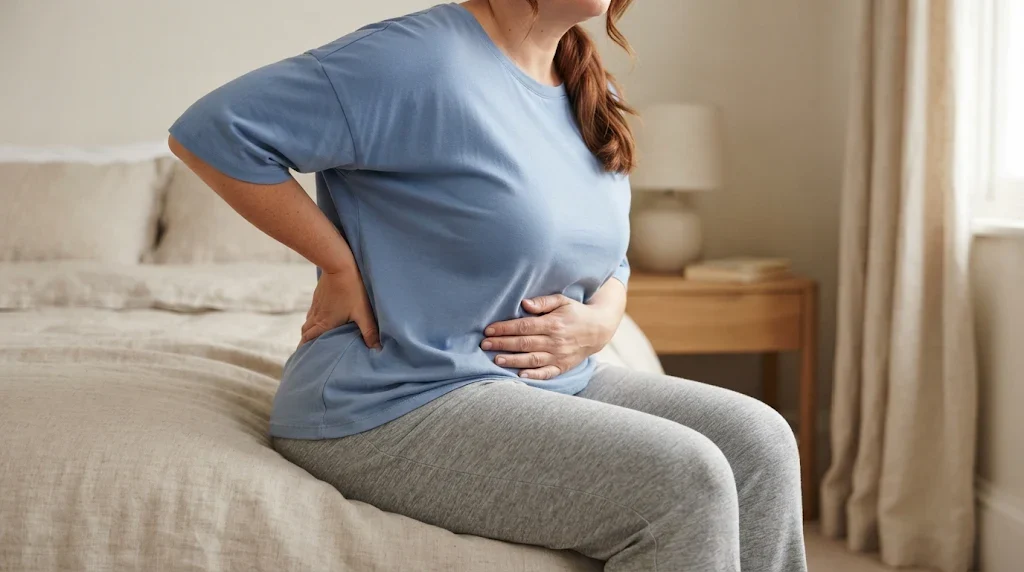
Hanging belly fat pain is more common than many people realise. A heavy apron belly can pull on the skin, rub against the thighs, trap sweat and press on the tissues underneath, so it is no surprise that it can feel sore, tender or achy by the end of the day. This guide explains why an apron belly hurts, how to ease the discomfort at home and which warning signs mean you should speak to a GP or get urgent help.
This article is part of our belly skin hub. For background on what a pannus is and how it is graded, read our guide to the pannus belly.
What Causes Hanging Belly Fat Pain?
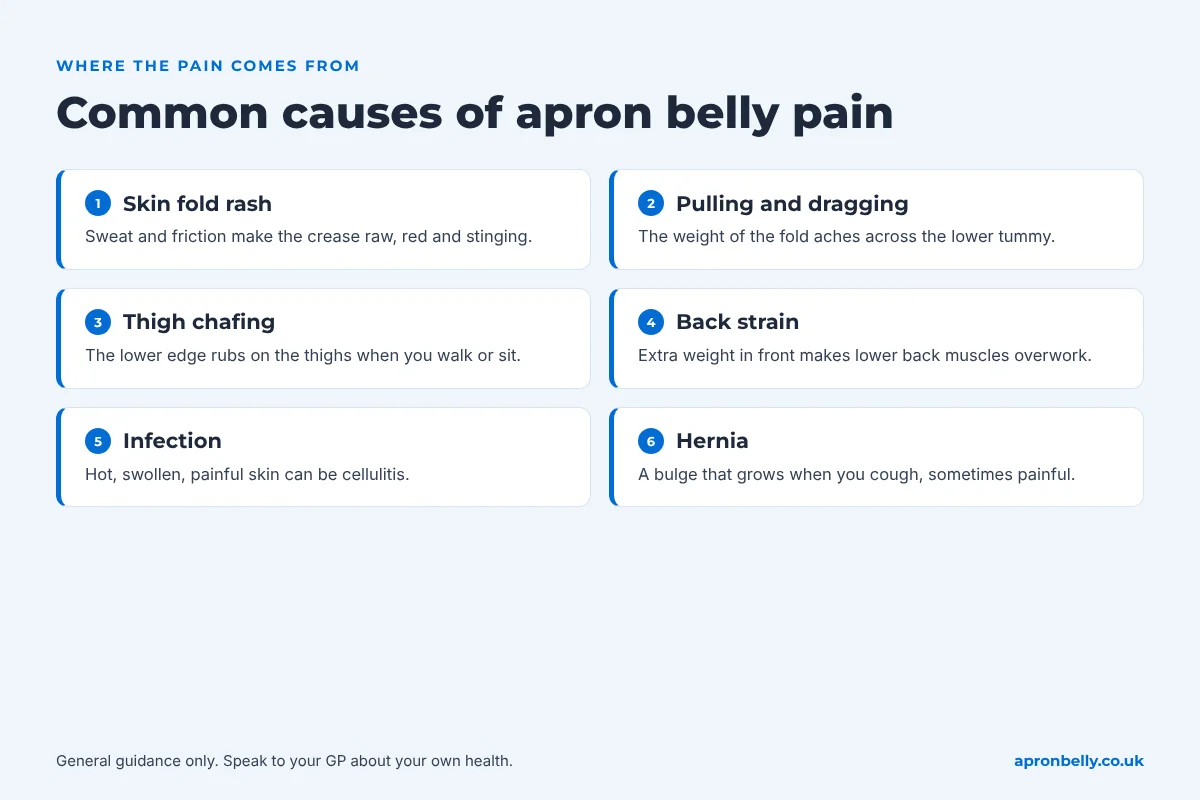
Hanging belly fat pain usually comes from the skin fold itself, through rubbing, moisture and infection, or from the weight of the fold pulling on the skin, back and abdominal wall.
Skin fold irritation and rashes
The crease under an apron belly is warm, dark and often damp. Sweat and friction break down the skin, causing a red, raw rash called intertrigo that can sting, itch and feel sore when you move. Yeast and bacteria grow easily in this environment, which can make the soreness worse and cause a smell. Our guide to apron belly skin care when it gets sore covers this in detail.
Pulling and dragging from the weight of the fold
A large fold is heavy. When you stand or walk, gravity pulls it downward, which can cause a dragging, aching feeling across the lower tummy and where the fold attaches. Many people describe it as a pulling pain that eases when they lift the fold or lie down.
Pressure and chafing against the thighs
When the lower edge of the fold rests on the upper thighs, sitting and walking rub the two surfaces together. Tight waistbands that cut across the fold add pressure points that leave red marks and tender spots.
Back and posture strain
Extra weight at the front of the body shifts your centre of gravity forward. Your lower back muscles work harder to keep you upright, which can lead to backache that feels connected to the belly. Our guide on whether an apron belly can cause back pain explains this link.
Pannus pain from infection or other conditions
Sometimes pain is a sign of something more than irritation. Cellulitis, a deeper skin infection, makes the skin painful, hot and swollen. A hernia can cause a bulge and pain in or around the tummy. Rarely, fluid can build up in a very large fold and make it feel heavy, swollen and tight.
Types of Apron Belly Pain and What They Suggest
Noticing what the pain feels like, where it is and when it happens helps you and your GP work out the cause.
| What you notice | Likely cause | What to do |
|---|---|---|
| Stinging, raw skin in the crease | Intertrigo or chafing | Keep the fold clean and dry, see a pharmacist |
| Itchy red rash with small spots at the edges | Possible fungal infection | Ask a pharmacist about antifungal cream |
| Dragging ache when standing | Weight of the fold | Support garment, rest, posture changes |
| Lower back ache | Posture strain | Core and back strengthening, support |
| Hot, swollen, painful skin | Possible cellulitis | Urgent GP appointment or NHS 111 |
| Bulge that grows when you cough, with pain | Possible hernia | See a GP, get help from NHS 111 if painful |
Pain in the skin versus pain inside the tummy
Pain on the surface of the fold usually feels sore, burning or tender to touch. Pain deep inside the abdomen, such as cramping, pain after eating or pain with fever or vomiting, is less likely to be caused by the apron belly itself and should be checked by a doctor rather than treated as a skin problem.
How to Ease Apron Belly Pain at Home
Most everyday soreness improves with good skin care, support and a few changes to clothing and routine.
Keep the skin fold clean and dry
Wash under the fold once or twice a day with warm water and a gentle, unperfumed wash. Pat the skin dry thoroughly, lifting the fold so air can reach the crease. A cool hairdryer setting can help in hot weather. A soft cotton layer or a moisture wicking fabric strip placed in the fold can reduce rubbing and soak up sweat. Our guide on how to wash under an apron belly sets out the full daily routine step by step.
Support the weight of the fold
A well fitted support belt or high waisted support garment lifts the fold and spreads its weight, which can ease dragging pain and back ache. Our guide to the apron belly support belt explains what to look for. Take it off at night and check the skin underneath for redness.
Choose comfortable clothing
- soft, wide waistbands that sit above or below the fold, never across it
- breathable cotton or moisture wicking fabrics next to the skin
- loose fitting trousers or long line knickers to stop thigh rubbing
- changing damp clothes after exercise or hot days
Use simple pain relief safely
For short term soreness, paracetamol or a pharmacist recommended treatment can help. A cool, damp cloth on irritated skin may soothe stinging. Avoid heat directly on inflamed or broken skin. Always follow the label and ask a pharmacist if you take other medicines or have health conditions.
Rest in comfortable positions
Lying on your side with a pillow supporting the fold, or on your back with the fold lifted and the skin dry, takes the weight off the tissues. Our guide to sleeping with an apron belly has more position ideas.
When Apron Belly Pain Needs a Doctor
Many people put up with pain for too long because they feel embarrassed. GPs and nurses see skin fold problems often and can help.
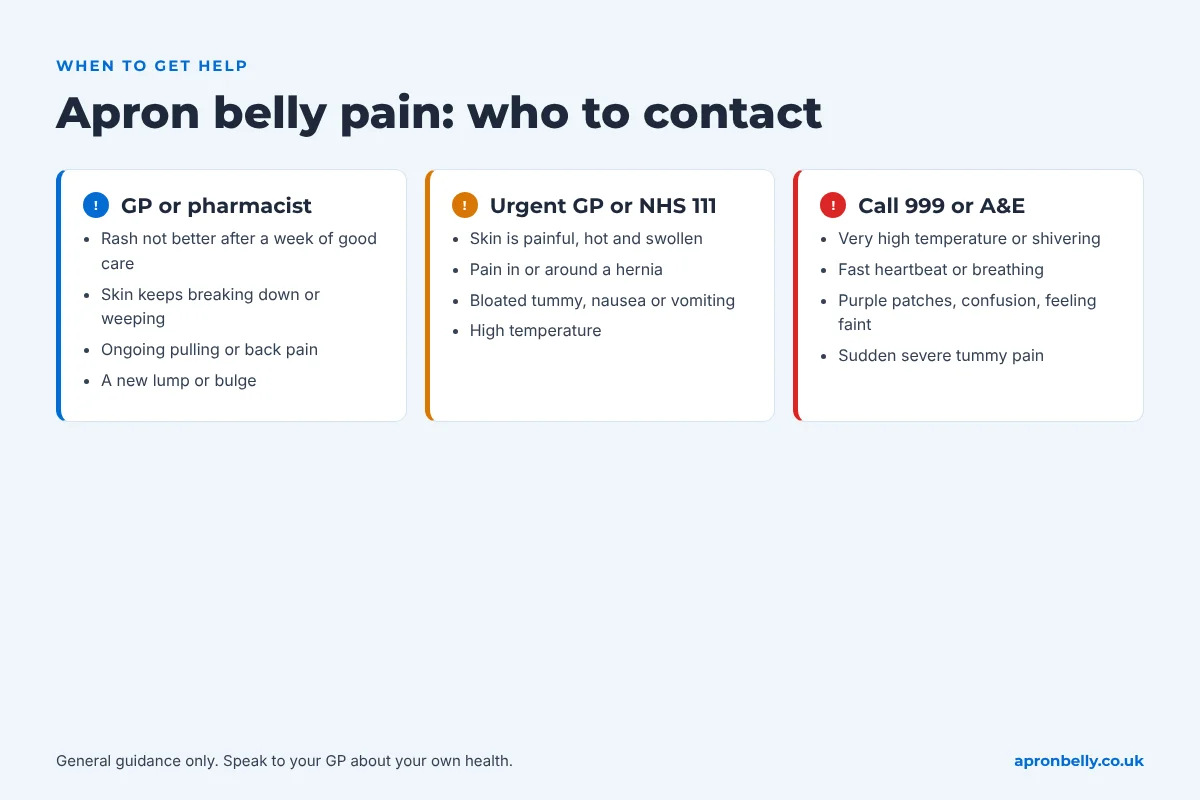
See a GP or pharmacist if
- a rash in the fold has not improved after a week of good skin care
- the skin keeps breaking down, bleeding or weeping
- you have ongoing pulling pain or back pain that limits daily life
- you notice a lump or bulge in your tummy or groin
Get urgent advice from NHS 111 or your GP if
The NHS advises asking for an urgent GP appointment or contacting NHS 111 if your skin is painful, hot and swollen, as this can be cellulitis. For a known or suspected hernia, the NHS hernia guidance says to get help from NHS 111 if you have pain in or around the hernia, a bloated tummy, nausea or vomiting, constipation or a high temperature.
Call 999 or go to A&E if
Call 999 if a painful, swollen fold comes with a very high temperature or shivering, a fast heartbeat or fast breathing, purple patches on the skin, feeling dizzy or faint, confusion, or cold and clammy skin. These can be signs of a serious infection. Severe tummy pain that starts suddenly also needs emergency care.
Long Term Options for a Painful Pannus
If pain keeps coming back despite good care, it is worth talking to your GP about longer term options.
Gradual weight loss
Losing excess weight can make the fold smaller and lighter, which reduces pulling, rubbing and sweating. Even a modest loss can ease symptoms. Your GP can refer you to NHS weight management support.
Strengthening the core and back
Gentle strength work for the back, hips and tummy muscles helps carry the weight of the fold and improves posture, which can ease back and dragging pain over time.
Surgery to remove the fold
A panniculectomy removes the hanging fold. On the NHS it is usually considered only when the fold causes ongoing problems such as repeated infections or pain that has not responded to other treatment, your weight has been stable and you meet local criteria. Our guide to apronectomy on the NHS explains the process, and our article on the large apron belly covers grade 4 and 5 care.
A worked example
A 52 year old man with a grade 3 apron belly has a sore, stinging crease and a dragging ache by evening. He starts washing and fully drying the fold twice a day, uses a cotton liner in the crease and wears a support belt during the day. A pharmacist recommends a cream for a mild fungal rash. Within two weeks the skin is calm and the dragging pain is much better. He keeps a symptom diary in case he needs to discuss surgery with his GP later.
Frequently Asked Questions
Why does my hanging belly hurt?
A hanging belly usually hurts because of the skin fold: sweat, friction and trapped moisture cause soreness and rashes, and the weight of the fold pulls on the skin and back. Less often, pain comes from an infection such as cellulitis or a hernia, which need a doctor.
Is pain under an apron belly serious?
Most pain under an apron belly comes from skin irritation and improves with good hygiene and support. It can be serious if the skin is hot, swollen and painful, or if you also feel unwell with a fever, as this may be an infection that needs urgent treatment.
How can I stop my apron belly from hurting?
Keep the fold clean and fully dry, place a soft cotton or moisture wicking layer in the crease, wear a support garment and avoid waistbands that cut across the fold. See a pharmacist or GP if a rash or pain does not settle within a week.
Can an apron belly cause pulling pain?
Yes. A heavy fold pulls downward on the skin and tissues when you stand or walk, causing a dragging ache across the lower tummy that often eases when you lift the fold, wear support or lie down.
Can I get surgery on the NHS for a painful apron belly?
Possibly. A panniculectomy may be funded on the NHS when the fold causes ongoing problems such as repeated infections or pain that has not improved with other treatment and you meet local criteria, including a stable weight. Your GP can advise on referral.
The Bottom Line
Hanging belly fat pain is common and usually comes from the skin fold, the weight of the fold or posture strain. Daily washing and drying, support garments and comfortable clothing ease most symptoms. Hot, swollen skin, a painful bulge or feeling unwell need prompt medical advice, and surgery may be an option when pain keeps returning.
Your next step
Tonight, check the skin under your fold in a mirror and note any redness, broken skin or swelling. If the skin looks sore, start the twice daily wash and dry routine, and book a GP or pharmacist appointment if it has not improved within a week.