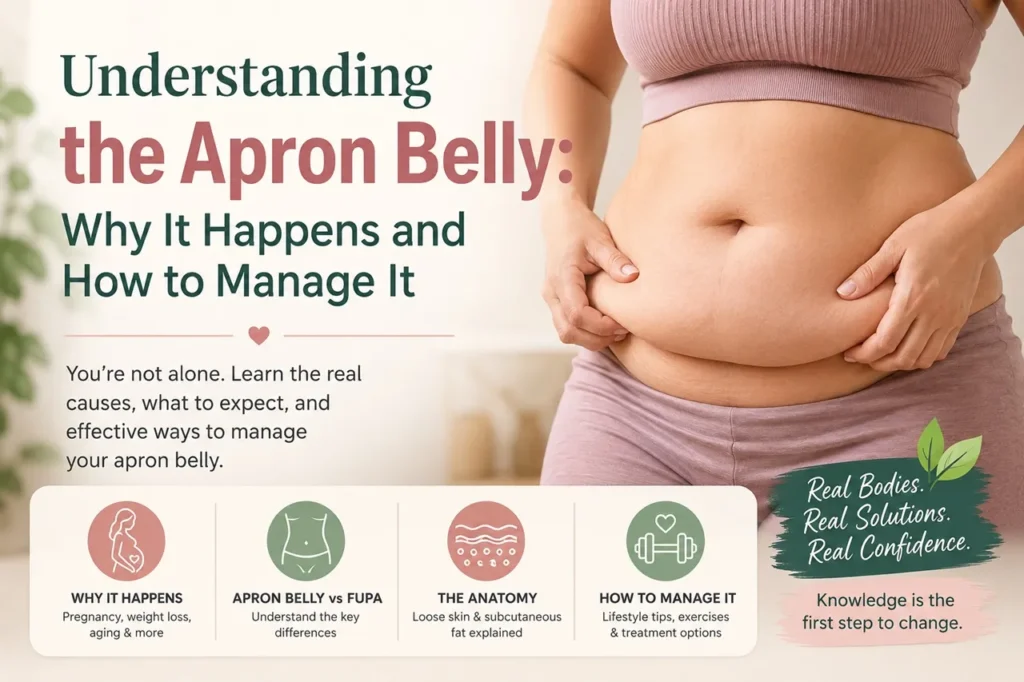
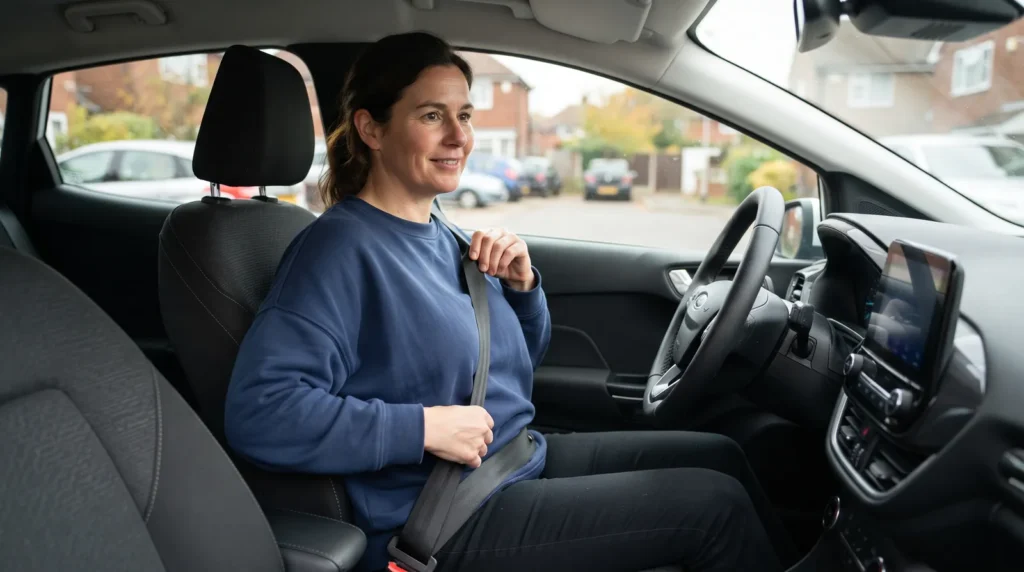
If you have an apron belly, the seatbelt can feel like a daily battle. The lap strap slides up onto the soft fold, digs into the skin, or rubs until it feels sore. As a result, many women loosen it or simply put up with the pain.
The good news is that a few small changes can make an apron belly and a seatbelt work together safely. This guide covers belt position, seat set-up, safe comfort fixes, the law, pregnancy and life after surgery.
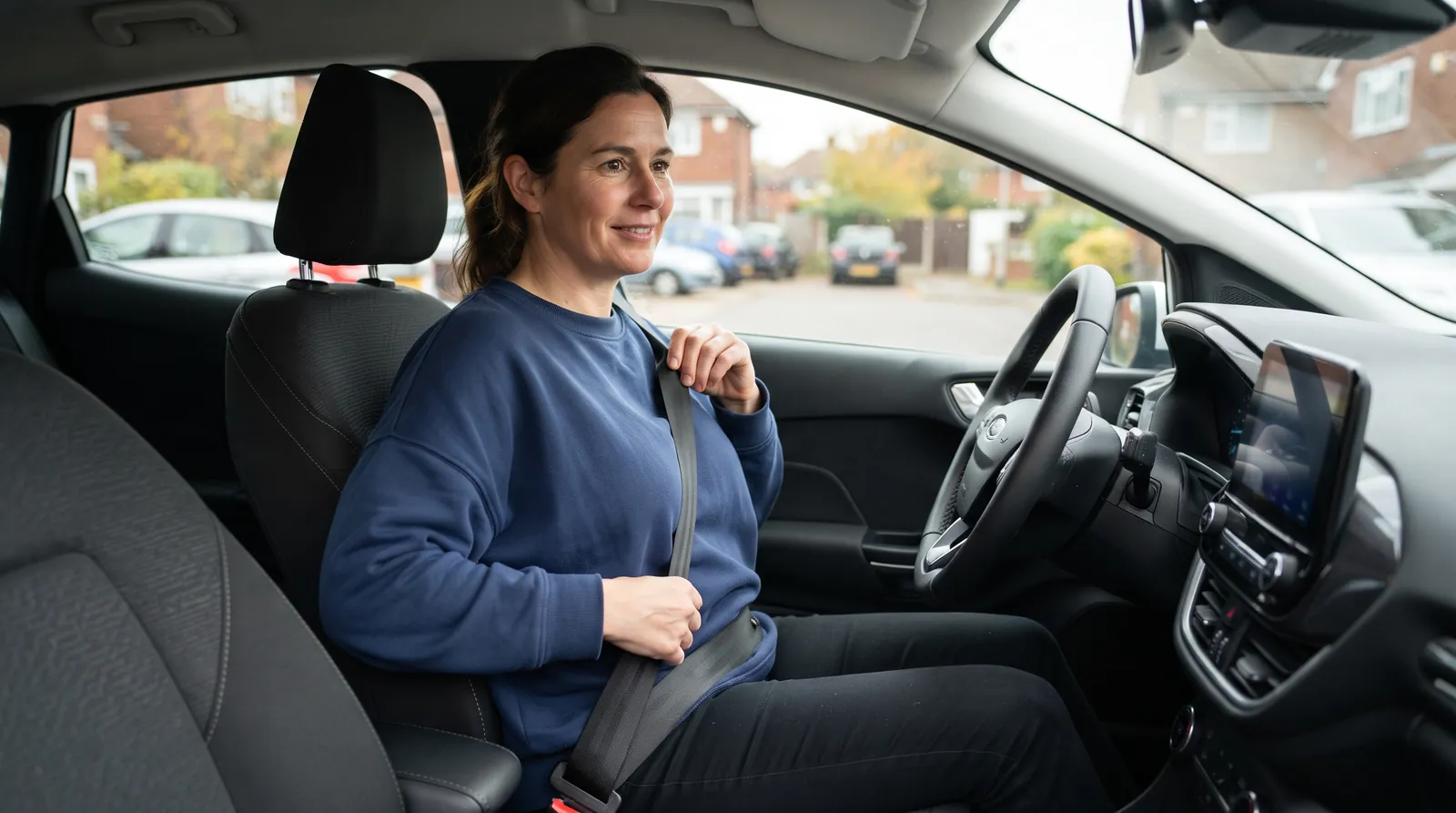
Why the Lap Belt Position Matters So Much
A seatbelt holds you against the strongest parts of your body. In a crash, the lap belt should press on your pelvis, which is solid bone. In contrast, the soft belly has nothing firm to take the force.
RoSPA, the UK road safety charity, puts it simply: the lap belt should go over the pelvic region, not the stomach. It also says the belt should be worn as tight as possible, with no slack. If the lap belt rides up onto your apron belly, it can press into soft organs in a crash instead of resting on bone.
What Research Says About Belly Size and Belt Fit
A 2011 laboratory study by the University of Michigan Transportation Research Institute looked at belt fit in 54 adults. It found that as body mass index rose, the lap belt sat further forward and higher compared with the hip bones. The researchers said extra soft tissue effectively adds slack to the belt.
Furthermore, they warned that a higher lap belt raises the risk of “submarining”. This is when the body slides forward under the belt in a frontal crash. So getting the belt under the fold is the main safety step.
How to Wear a Seatbelt With an Apron Belly
An apron belly can range from a small overhang to a deep fold that reaches the thighs. Our guide to apron belly grades and what they mean explains the sizes. The steps below work for most shapes.
Step-by-Step Belt Fitting
- Sit right back in the seat, so your bottom touches the seat back.
- Gently lift your apron belly with one hand.
- Pull the belt across and clip it in.
- Slide the lap part down, so it sits low across your hip bones and the tops of your thighs.
- Lower your belly back down so it rests over the belt, not under it.
- Place the diagonal strap across your chest, between your breasts, and over the middle of your shoulder.
- Pull up on the diagonal strap to remove slack from the lap part.
Afterwards, check that the belt is flat and not twisted. Never tuck the diagonal strap under your arm or behind your back, since that removes most of its protection.
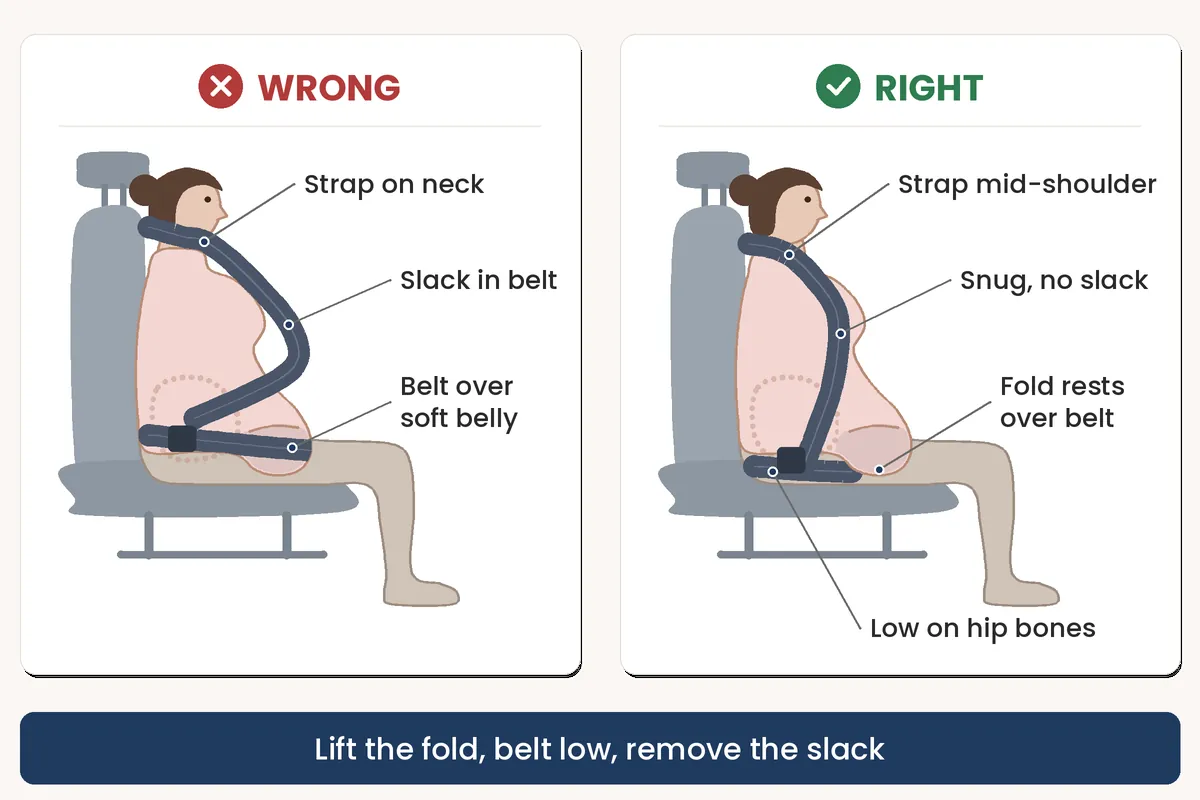
Wrong vs Right Belt Position
| Belt part | Wrong position | Right position |
|---|---|---|
| Lap belt | Across the soft belly or inside the skin fold | Low on the hip bones and tops of the thighs, under the fold |
| Diagonal strap | Across the neck, under the arm or behind the back | Over the middle of the shoulder and between the breasts |
| Tension | Loose, with a gap you can fit a fist into | Snug, with no slack |
| Webbing | Twisted or trapped by clothing or a bag | Flat and free to move |
| Seat back | Reclined far back | Fairly upright, so the belt stays in contact |
Setting Up Your Seat for Comfort and Safety
Seat Height and Recline
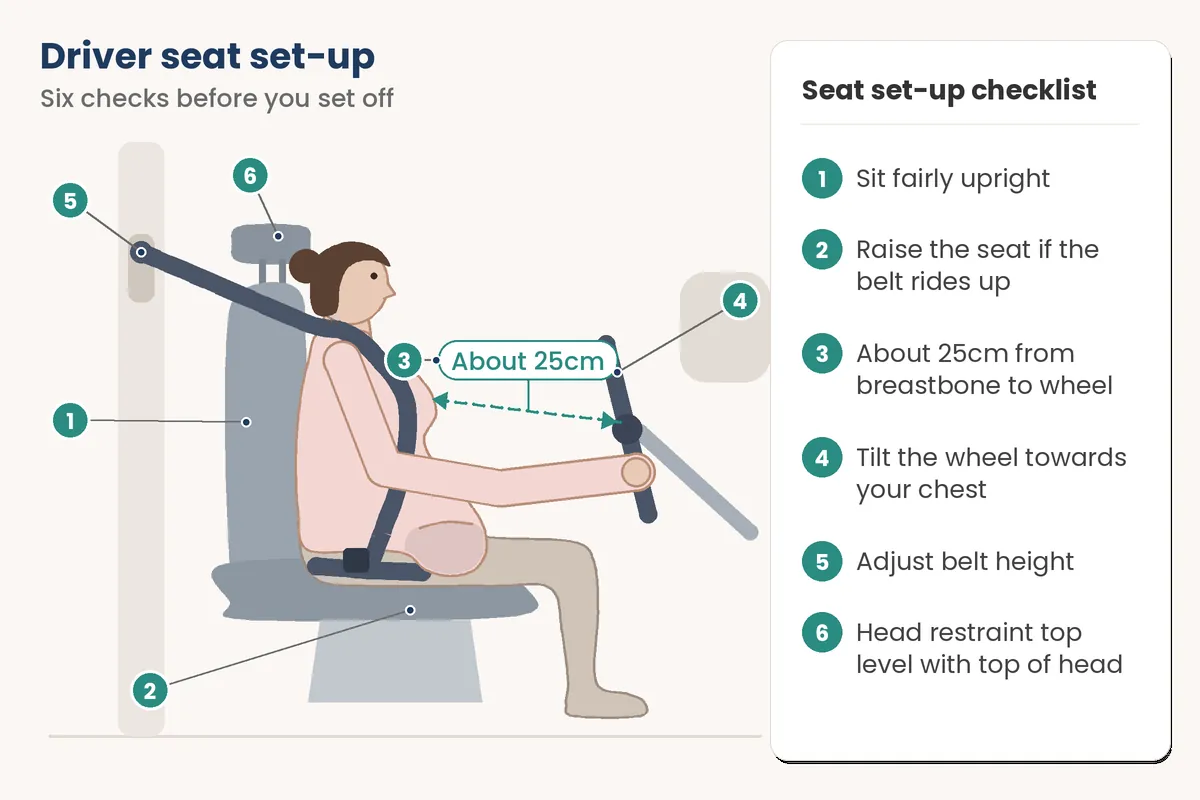
Sit as upright as feels comfortable. A deep recline lets the lap belt drift up onto your belly. If your seat has a height adjuster, try raising it a little and check the belt again.
Distance From the Steering Wheel
Drivers should sit as far back from the wheel as they can while still reaching the pedals easily. Older UK government airbag guidance quoted US and Canadian advice on this. It suggests at least 25cm (about 10 inches) between the wheel centre and your breastbone. If possible, tilt the wheel towards your chest, not your belly.
Belt Height Adjuster and Head Restraint
Many cars have a height adjuster for the top belt anchor beside the front seats. RoSPA suggests using it if the belt does not sit correctly. Meanwhile, set the head restraint so its top is level with the top of your head.
Comfort Fixes That Keep You Safe
A belt that hurts is a belt you will be tempted to loosen. The aim is to make it kinder on your skin without moving it from the right place.
Seatbelt Pads and Covers
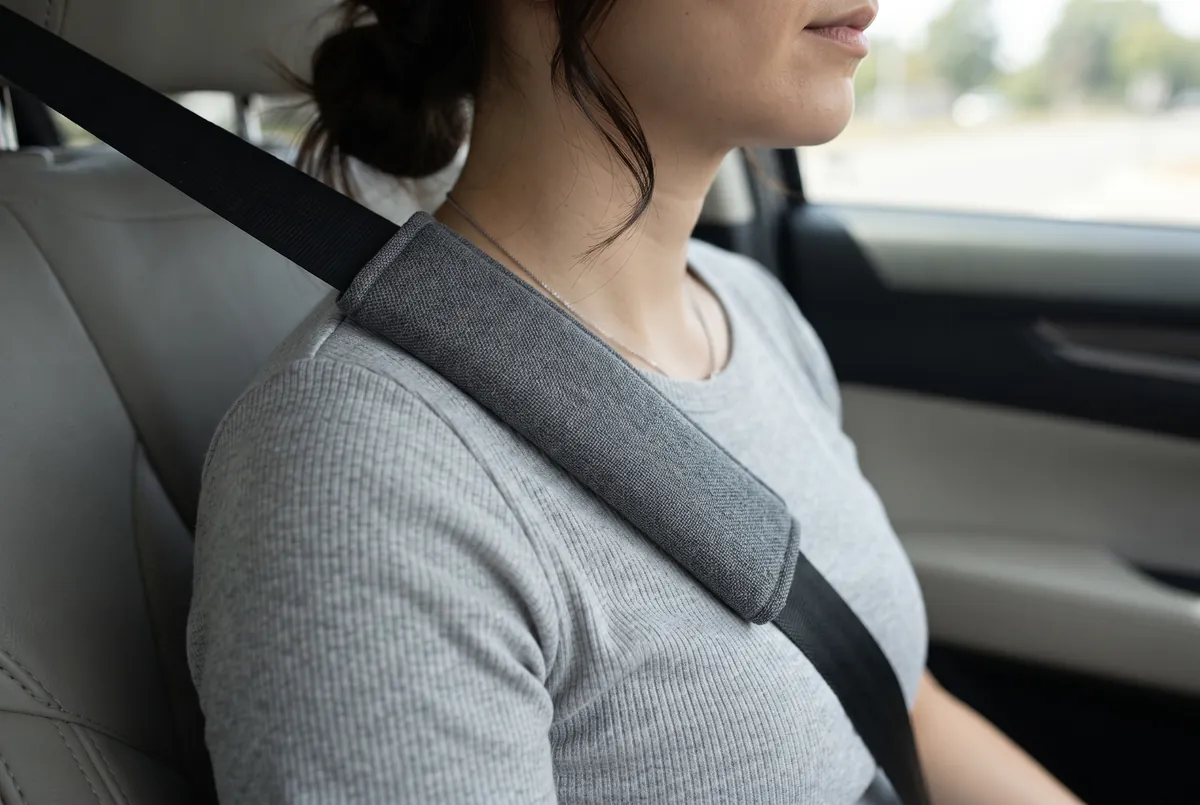
A thin, soft sleeve on the diagonal strap can stop it rubbing on your neck or chest. Choose one that is slim, fits snugly and slides freely along the belt. On the other hand, avoid thick pads on the lap part, as they can lift the belt away from your hips.
However, RoSPA does not recommend add-on belt adjusters and clips, because no standards exist to check they are safe in a crash. So leave out any gadget that changes the belt’s path.
Protecting the Skin Fold
Warmth, sweat and friction under the fold can lead to soreness, especially on long drives. A few simple habits can help:
- Wear breathable cotton or moisture-wicking fabrics next to your skin.
- Choose underwear with a soft, wide waistband that sits under or over the fold, not in it. Our guide to the best underwear for an apron belly has ideas.
- Pick trousers with a smooth, flat waistband, so the lap belt has a neat surface to rest on. See our tips on trousers that suit an apron belly.
Light support can also help. For example, an apron belly support belt or smooth shapewear for an apron belly can lift the fold slightly. Just keep the seatbelt on your hips.
Common Problems and Quick Fixes
| Problem | Why it happens | Fix |
|---|---|---|
| Lap belt rides up during the drive | Seat reclined, slack in the belt or slippery fabric | Sit more upright and pull the diagonal strap to tighten the lap part |
| Strap rubs the neck | Top anchor set too high | Lower the belt height adjuster and add a slim sleeve |
| Redness or soreness in the fold | Heat, sweat and friction | Breathable fabrics, regular breaks and keeping skin dry |
| Belt will not reach the buckle | Belt too short for your body or seat position | Ask the car maker or dealer about an approved longer belt or extender |
Are Seatbelt Extenders Safe and Legal in the UK?
A seatbelt extender is a short strap that clips into the buckle to add length. For some larger bodies, it is the only way to fasten the belt.
The safest route is to contact your car’s maker or a main dealer first. Some manufacturers supply extenders designed and approved for specific models. In contrast, generic extenders sold online may not have been tested with your car’s belt and buckle. RoSPA does not recommend these devices, because no standards currently exist to ensure basic crashworthiness.
If you use an extender, tell your insurer and keep the lap belt low on your hips.
Medical Exemption Certificates
In the UK, you must wear a seatbelt if one is fitted, and the official GOV.UK seat belt rules say you can be fined up to £500 if you do not. Having an apron belly, or finding the belt uncomfortable, is not an exemption by itself.
However, a doctor can decide that you should not wear a belt for a medical reason. If so, they may issue a “Certificate of Exemption from Compulsory Seat Belt Wearing”. You must keep it in your vehicle, show it to the police if stopped, and tell your car insurer.
Apron Belly, Pregnancy and Seatbelts
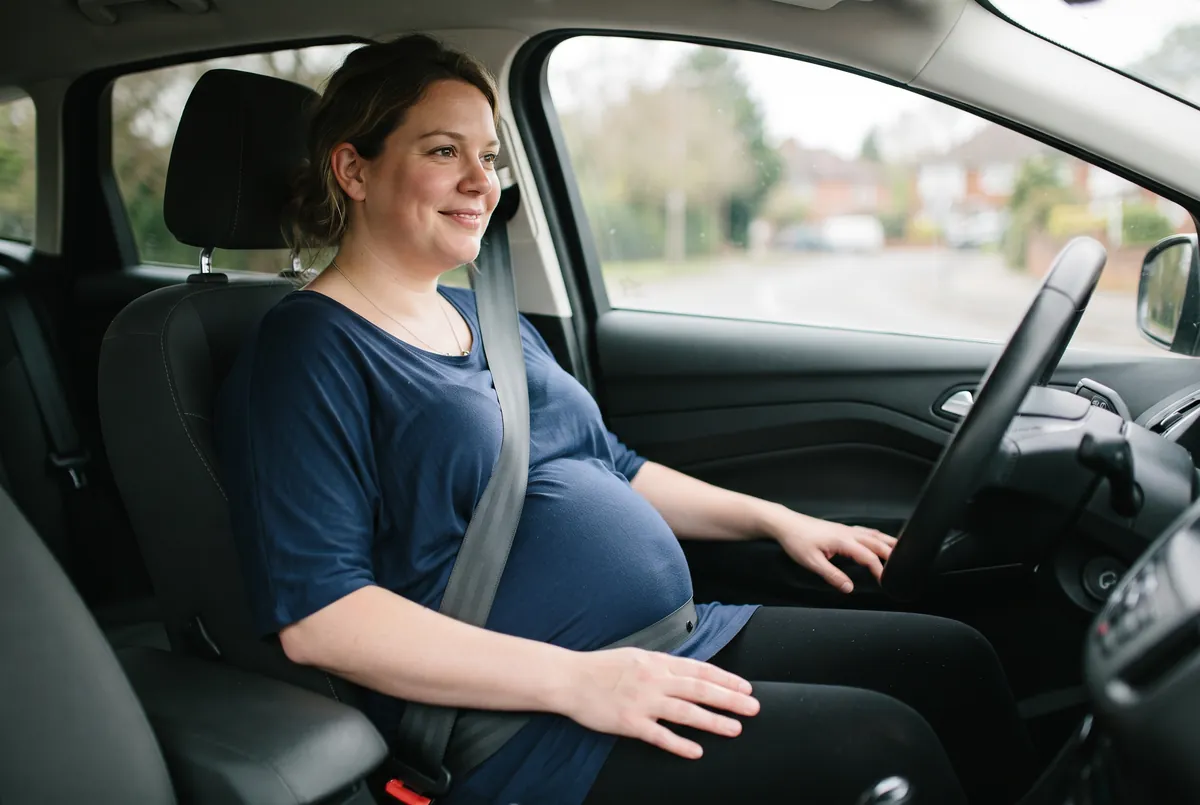
Pregnancy is not a reason to skip the belt. Official advice is to wear the diagonal strap between your breasts and around the side of your bump. Meanwhile, the lap strap should sit as low as possible across your hips and under your bump.
With an apron belly, the bump may sit above an existing fold. In that case, lift the fold as well and place the lap strap on your hip bones and thighs. Never let it cross the bump itself. If you are unsure, ask your midwife to check your belt position. Our article on apron belly and pregnancy explains more about how the two interact.
Driving and Seatbelts After Apron Belly Surgery
After a panniculectomy or tummy tuck, the lower belly scar often sits exactly where the lap belt goes. Therefore, getting back in the car needs some planning. Our comparison of panniculectomy vs tummy tuck explains both operations.
When Can You Drive Again?
The NHS guide to tummy tuck surgery says you will not be able to drive for a few weeks afterwards. One NHS hospital leaflet suggests waiting 6 weeks, because your reactions may be slower in an emergency. In every case, follow your surgeon’s advice and check with your insurer before you drive. When you start again, begin with short trips.
Protecting Your Scar as a Passenger
You will still need a belt as a passenger. Ask your surgical team how to protect the wound, and keep the lap belt low on your hips. Our week-by-week tummy tuck recovery timeline explains what to expect at each stage.
Choosing a Car That Fits You Better
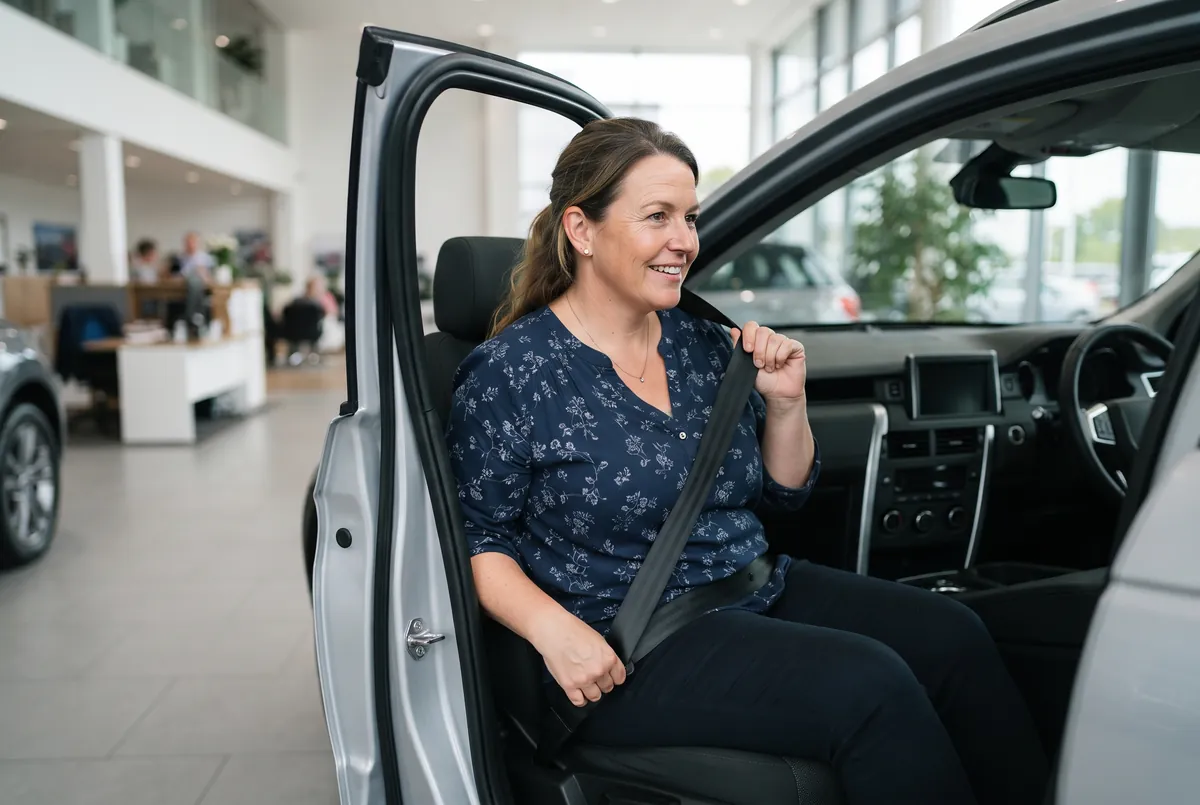
If you are buying or leasing a car, test the belt before you sign. Sit in the driver’s seat, fasten the belt and check these points:
- Does the lap belt reach the buckle easily with room to spare?
- Can the seat rise and tilt so the belt sits low on your hips?
- Is there a height adjuster for the top belt anchor?
- Does the steering wheel tilt and move in and out?
After a Crash: Seatbelt Marks and Warning Signs
Even a minor bump can leave a bruised line where the belt held you. Doctors call this a “seat belt sign”. Emergency research has linked this mark across the abdomen with a higher chance of hidden injury, so always get it checked.
After a crash, call 999 or go to A&E straight away if you have any of these: worsening belly pain, vomiting, feeling faint, blood in your urine, or a swollen, tight tummy. In addition, if you already have a hernia, mention it to the medical team.
When to See a GP
Some signs mean it is time to speak to your GP or pharmacist:
- Skin in the fold that is red, raw, weeping or smells, which may point to an apron belly rash or infection.
- Soreness that does not settle after a few days, despite the tips in our guide to caring for sore apron belly skin.
- A lump or bulge near the belly button or scar that appears when you sit or strain.
- Pain from a surgical scar, or a wound that opens, oozes or looks hot and swollen.
- Any bruising or pain across your belly after a crash, even a small one.
- You find the belt so painful that you cannot wear it safely.
Frequently Asked Questions
Where should a seatbelt go if I have an apron belly?
The lap belt should sit low across your hip bones and the tops of your thighs, under the fold of your apron belly. The diagonal strap should cross your chest between your breasts and rest over the middle of your shoulder. Lift the fold first, place the belt, then let your belly rest over it.
Is it dangerous for the seatbelt to sit on my stomach?
Yes, it can be. RoSPA advises that the lap belt should go over the pelvis, not the stomach. In a crash, a belt across the soft belly can press into the organs beneath. Research also suggests a high lap belt raises the risk of sliding forward under the belt in a frontal crash.
Can I get a seatbelt exemption for an apron belly?
An apron belly is not an automatic exemption. Only a doctor can decide that you should not wear a belt for medical reasons and issue a certificate. If you get one, you must keep it in the car, show it to police if asked, and tell your insurer. Most people are advised to find a safer belt position first.
Are seatbelt extenders legal in the UK?
Seatbelt extenders are sold in the UK, but they are not all equal. RoSPA does not recommend add-on belt devices, because no standards exist to ensure they are crashworthy. The safest option is an extender supplied or approved by your car’s maker. Ask a main dealer, and tell your insurer if you use one.
How do I stop my seatbelt rubbing my apron belly?
Lift the fold and place the lap belt low on your hips, so it does not sit in the crease. Sit more upright, remove slack from the belt and wear breathable fabrics. A slim sleeve on the diagonal strap can help. Avoid thick pads on the lap part, as they can lift the belt off your hips.
When can I drive after apron belly surgery?
The NHS says you will not be able to drive for a few weeks after a tummy tuck. Some NHS hospitals suggest waiting about 6 weeks, as your reactions may be slower. Always follow your surgeon’s advice, check with your car insurer first, and start with short, easy trips.
What should I do if the seatbelt bruised my belly in a crash?
Get checked by a doctor, even if you feel fine. A bruise across the belly from the belt can be linked to hidden injuries inside the abdomen. Call 999 or go to A&E if you have worsening pain, vomiting, faintness, blood in your urine or a swollen, tight tummy.
Final Thoughts
Living with an apron belly should never mean choosing between comfort and safety in the car. In most cases, the fix is simple: lift the fold, keep the lap belt low on your hips, and remove the slack. A good seat set-up and soft, breathable clothing then do the rest.
If the belt still hurts, or your skin keeps getting sore, talk to your GP rather than loosening the strap. You deserve to travel comfortably, and your body deserves the full protection a well-fitted seatbelt can give.