If you live with an apron belly, you probably know the small daily frustrations. Waistbands dig in. Skin rubs and gets sore in warm weather. Clothes that fit everywhere else pull awkwardly at the middle. Many people reach for shapewear to feel more comfortable, and that’s a perfectly reasonable thing to do.
But the choice can be confusing. Some garments help. Others roll down, pinch or leave you struggling to breathe by lunchtime. This guide walks through what supportive garments can and can’t do, the types worth considering, and how to choose safely. Not sure whether what you have is an apron belly or a different kind of lower-belly fat? Our guide to apron belly vs FUPA explains the difference.
What Can Shapewear Actually Do for an Apron Belly?
Let’s be honest first. Shapewear won’t remove an apron belly, and it won’t tighten loose skin or reduce fat. Nothing you wear will change your body permanently.
What a good garment can do is make daily life easier:
- Smooth the silhouette under clothes
- Give gentle lift and support to the lower abdomen
- Reduce skin-on-skin friction and chafing
- Help you feel more confident and comfortable
Comfort is the goal. If a garment leaves you sore, breathless or marked with deep lines, it’s the wrong one, however good it looks.
Types of Garments to Consider
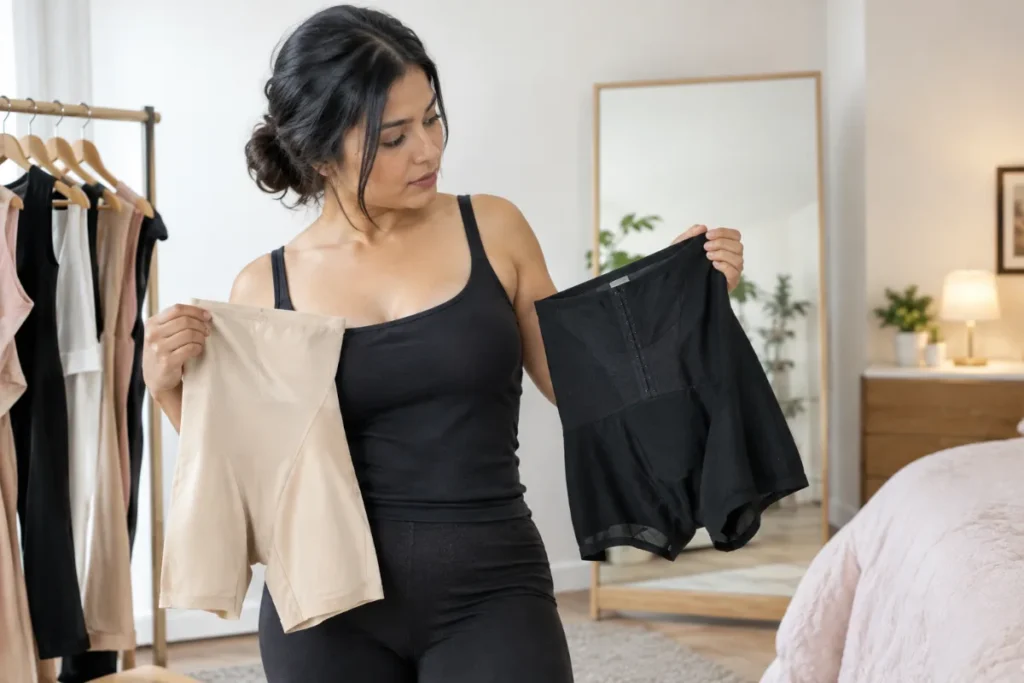
High-waisted control briefs
These are the most popular choice, and for good reason. A wide, high waistband holds the lower abdomen without cutting into it. Look for a waistband that sits flat instead of folding over, and for a smooth, seamless finish under clothing.
Shaping shorts
Shorts add coverage over the upper thighs, which helps if you also get inner-thigh chafing. Choose a soft, flexible fabric and check that the leg openings don’t squeeze.
Support leggings and cycling shorts
Leggings with a supportive waistband are easier to wear all day than heavily compressive pieces, and they can be a comfortable everyday option. Anti-chafe cycling-style shorts are especially useful under dresses and skirts in warm weather.
Belly bands and abdominal binders
These wrap around the midsection. Some people find them comforting, particularly in early recovery after birth or surgery. But they’re also the easiest garment to get wrong. Wraps can ride up, roll or press too hard. If you’re using one after a C-section or an operation, ask your midwife, physio or surgeon before you start.
Shaping bodysuits
Bodysuits smooth the whole torso and stay in place well. The catch is comfort: they can feel restrictive when you sit, and toilet visits are harder. They’re better for special occasions than for every day.
Postnatal support garments
If your apron belly followed pregnancy, high-waisted postnatal briefs are designed around a soft, healing tummy. They tend to be gentler than standard shapewear. If you had a caesarean, wait until your wound has fully healed and you’ve been given the go-ahead. Our guide to apron belly after C-section covers recovery timings in more detail.
How to Choose the Right Garment
Get the size right
Sizing down “for more control” is the most common mistake. An over-tight garment rolls, digs in and creates new bulges above and below the band. Measure yourself, check the brand’s size chart, and if you’re between sizes, choose the larger one. Fit varies widely between brands, so expect to try a few.
Choose breathable fabric
Skin folds trap heat and moisture, so fabric matters. Cotton, or a cotton-blend lining, especially in the gusset and against the skin, is kinder to sensitive areas. Moisture-wicking fabrics can help in summer or during exercise. Avoid rough seams and stiff edges where the fold rubs.
Look for a flat, wide waistband
A narrow elastic waistband can cut into the skin and make the overhang bulge. Wide, flat bands spread pressure more evenly. Be cautious with silicone grippers on the hem, as some people find them irritating.
Check for comfort when you sit
Stand in front of a mirror, then sit down and lean forward. The garment should stay in place without pinching or digging into the crease. If you can’t sit comfortably, it will be miserable by mid-afternoon.
Think about how you’ll use it
An everyday piece should be light and soft. Something for a wedding or a night out can be firmer, because you’ll wear it for a few hours rather than a whole day.
When to Be Careful With Compression
Firm compression isn’t right for everyone. Take care, or speak to a health professional first, if any of these apply:
- You’re recovering from surgery, including a C-section, tummy tuck or hernia repair. Follow your surgeon’s advice, as they may recommend a specific garment.
- You have a hernia or diastasis recti. Strong pressure on the abdomen may not be comfortable or helpful. A women’s health physiotherapist can advise.
- You have reflux, breathing problems or a sensitive bladder. Tight garments can make these worse.
- You’re pregnant. Standard shapewear isn’t designed for pregnancy.
- You have a skin condition, or broken or sore skin under the fold.
Stop wearing a garment straight away if you notice numbness, tingling, shortness of breath, pain, or skin that becomes red or blistered.
Looking After Your Skin While You Wear It
Any garment that sits against a skin fold needs a little care. Repeated rubbing and trapped moisture in a skin fold can lead to a rash called intertrigo, which sometimes becomes infected and needs treatment.
- Keep the area clean and dry, and dry thoroughly after washing.
- Wear clean garments daily, and wash them according to the label.
- Take breaks. Avoid wearing firm shapewear all day and night, and don’t sleep in it unless it’s designed for that.
- Watch for redness, soreness, a persistent rash or a smell. These can signal irritation or a skin infection, and a GP or pharmacist can help.
If chafing or rashes keep coming back, that’s worth raising with your GP, since it can also be relevant if you ever look into treatment options.
Common Mistakes to Avoid
Buying a size too small. It’s tempting, but it causes rolling and discomfort.
Expecting it to “fix” the problem. Shapewear changes how clothes sit, not your body.
Wearing it too long. Give your skin and muscles regular breaks.
Choosing style over comfort. If it hurts in the shop, it will hurt more after a day of wear.
Ignoring your skin. Persistent irritation is a sign to change garment, not to push through.
Garments Are One Part of the Picture
Supportive clothing can make you more comfortable, but it works best alongside other things: gentle movement, good skin care and, if you want it, professional advice. Our guide on apron belly before and after exercise explains what exercise can and can’t change, and apron belly vs FUPA helps if you’re unsure which you have.
FAQs About Shapewear for Apron Belly
Does shapewear get rid of an apron belly?
No. It can smooth and support the area under clothing, but it doesn’t reduce fat or tighten skin.
What is the best type of shapewear for an apron belly?
There’s no single best option. High-waisted briefs or shorts with a wide, flat waistband suit most people for everyday wear. The right choice depends on your body, your comfort and how you’ll use it.
Is it safe to wear shapewear every day?
Light, breathable support garments are usually fine for many people, but firm compression shouldn’t be worn all day and night. Take breaks, and stop if you notice pain, numbness or skin problems.
Can I wear shapewear after a C-section?
Wait until your wound has healed and your midwife, GP or physio says it’s fine. Choose soft postnatal garments rather than firm compression.
What should I do if shapewear rolls down?
That usually means the size or style is wrong. Try a wider, higher waistband or a different size, and avoid narrow elastic bands.
Can shapewear help with chafing under the fold?
It can reduce friction, especially anti-chafe shorts in breathable fabric. If the skin is sore or has a rash, see your GP or pharmacist.
Final Thoughts
The best garment for an apron belly is the one you forget you’re wearing. Focus on fit, breathable fabric and a flat, wide waistband, and be cautious with heavy compression. If you’re recovering from surgery or have a health condition, check with a professional first.
Shapewear is a tool for comfort, not a fix, and choosing comfort is a perfectly good goal.
This article is for general information and isn’t a substitute for personal medical advice. Speak to your GP, pharmacist or physiotherapist about your own situation.