
An apron belly pregnancy can feel confusing from the very first scan. Your bump may sit higher than you expected, the fold of skin can hide how much your baby is growing, and the usual pregnancy advice rarely mentions a pannus at all. This guide explains what actually changes when you are pregnant with an apron belly, what your midwife is checking for, and how to keep your skin and back comfortable from the first trimester to the weeks after birth.
Being pregnant with an apron belly is common in the UK, and most women with a panniculus have healthy pregnancies and healthy babies. The goal here is not to worry you. It is to help you understand your body, ask better questions at appointments and feel more in control.

What an Apron Belly Pregnancy Actually Means
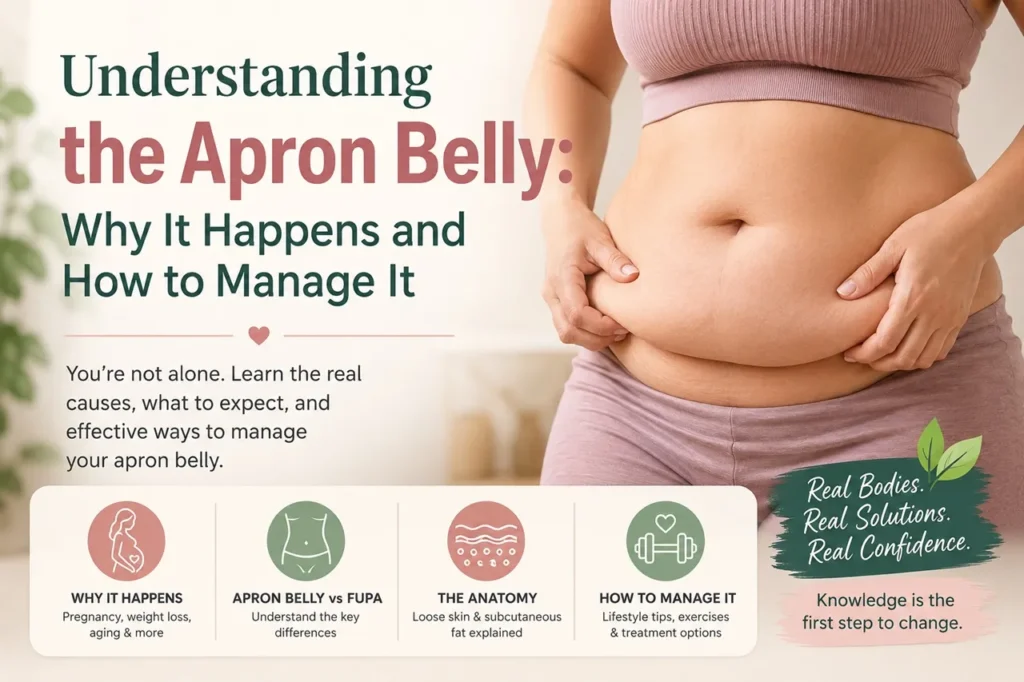
An apron belly, also called a panniculus or pannus, is a fold of skin and fat that hangs from the lower tummy over the pubic area. It can come from weight gain, a previous pregnancy, a caesarean, or loose skin after weight loss. We cover the causes in more depth in our main guide to what an apron belly is.
When you become pregnant, your womb grows up and out of the pelvis. It pushes behind and above the apron, not through it. That is why many women notice that the fold stays in place while the bump rises above it. In early pregnancy the apron may even look bigger, because bloating and a little early weight gain settle there first.
The size of your apron matters more than the label. A small Grade 1 fold that only covers the pubic hairline behaves very differently from a Grade 3 or 4 panniculus that reaches the thighs. If you are not sure where you sit, our apron belly grades guide shows each stage in plain English.
B Belly, Double Bump or Apron: What Shape Is Your Bump?
Many women search for “B belly” or “double bump” because their pregnant tummy has a crease across the middle. A B belly happens when a band of skin and fat creates a line across the bump, so it looks like a capital B from the side. It is simply the shape of your tissue and does not mean anything is wrong with your baby.
An apron belly pregnancy often looks like a B belly in the first and second trimesters. As the womb grows, the top curve usually becomes rounder and the crease softens. For some women the fold never fully disappears. Both shapes are normal, and neither changes how your baby grows.
| Bump shape | What you see | What it usually means |
|---|---|---|
| Classic round bump | One smooth curve from ribs to pubic bone | Little or no fold of loose skin |
| B belly or double bump | A crease across the middle of the bump | A band of skin and fat sits across the womb |
| Apron belly bump | Bump rises above a hanging fold | An existing panniculus stays below the growing womb |
How an Apron Belly Can Affect Your Antenatal Care
Your care should follow the same NICE and NHS pathways as any other pregnancy. However, a pannus can make some routine checks a little harder, so it helps to know what to expect.
Measuring your bump
From around 24 weeks, your midwife measures fundal height with a tape measure. This checks that the top of the womb is growing at the expected rate. With an apron belly, the tape may be harder to place and the number can be less reliable. Because of this, your team may offer extra growth scans instead of relying on the tape alone.
Ultrasound scans
Ultrasound waves travel less clearly through thicker tissue. Your sonographer may ask you to lift the fold, lie at a slight angle, or scan above the apron rather than below it. Some scans take longer, and occasionally you will be asked to come back. This is common and does not mean something is wrong.
Screening and extra checks
If your BMI is 30 or above at booking, the UK guidance is to offer you some extra support. According to the Royal College of Obstetricians and Gynaecologists, this usually includes a higher dose of folic acid (5 mg a day, on prescription), a glucose tolerance test to check for gestational diabetes, and closer blood pressure checks for pre-eclampsia. You may also be assessed for your risk of blood clots.
These checks are about your weight, not your apron. A woman with a large fold but a lower BMI may not need them. A woman with a higher BMI and no fold might. Ask your midwife which checks apply to you and why.
Skin Care Under the Fold While You Are Pregnant
Pregnancy raises your body temperature and increases sweating. Add a skin fold that rarely sees the air, and the result is often a rash called intertrigo. It shows up as red, sore, damp skin in the crease, sometimes with a yeasty smell.
A simple daily routine keeps most problems away:
- Wash the crease once a day with warm water and a mild, fragrance-free wash.
- Pat the skin completely dry, then let it air for a few minutes. A cool hairdryer setting also works well.
- Tuck a strip of soft cotton or a moisture-wicking liner into the fold on hot days.
- Avoid heavy creams inside the crease, since they trap moisture.
- Choose cotton knickers that sit above or below the fold, never in it.
If the skin cracks, weeps, bleeds or smells strongly, speak to your midwife or GP. Some antifungal creams are safe in pregnancy, but it is best to check first. Our apron belly rash treatment guide explains the difference between a simple sweat rash and a fungal infection.
Support, Comfort and Your Back
As your bump grows, the apron can feel heavier and tug on your lower back. Many women find a maternity support belt makes a real difference. Look for one that sits under the bump and lifts the apron gently, with a soft, breathable panel and adjustable fastening. Our apron belly support guide compares belts, slings and binders in more detail.
Avoid tight shapewear while pregnant, particularly anything that presses across the top of the bump. A support belt should lift, not squeeze. If you are unsure, bring the belt to an appointment and ask your midwife to check the fit.
Back pain is also common, because the extra weight at the front shifts your centre of gravity. Our article on whether an apron belly can cause back pain explains why, and which small posture changes help.
Staying Active During an Apron Belly Pregnancy
Exercise is safe for most pregnant women and helps with mood, sleep and blood sugar. The NHS advice on exercise in pregnancy suggests keeping up your normal activity for as long as it feels comfortable, and says even 30 minutes of walking a day can be enough.
For women with an apron belly, the best options are low impact and supported:
- Swimming and aqua classes, because the water carries the weight of both the bump and the fold.
- Walking, ideally with a support belt if the apron swings or rubs.
- Pelvic floor exercises, which you can do sitting down several times a day.
- Gentle pelvic tilts on all fours, which ease back pain without pressure on the tummy.
After 16 weeks, avoid lying flat on your back for long periods. This is general pregnancy advice and applies to everyone. You do not need to diet during pregnancy. The aim is to eat well and stay active, not to lose weight.
Birth: Vaginal Delivery and Caesarean With an Apron Belly
An apron belly does not decide how you give birth. Most women with a panniculus can plan a vaginal birth, and the fold does not block the baby. Your team will make decisions based on your health, your baby’s position and your birth history.
If you need a caesarean, it helps to talk it through beforehand. The usual cut sits low, just above the pubic bone, which is often under the fold. Your surgeon may choose a slightly different position to keep the wound out of the damp crease, or may hold the apron up during the operation. Afterwards, keeping the wound clean and dry is the top priority, because moisture under the fold raises the risk of infection.
Ask your midwife if a support binder or dressings designed for skin folds are available for your recovery. If you already had a caesarean before this pregnancy, our guide to apron belly after a C-section covers scar overhang and healing in detail.
What Happens to an Apron Belly After Pregnancy
In the postpartum months your womb shrinks back into the pelvis within about six weeks. The skin that stretched over the bump takes much longer. For many women the apron looks larger straight after birth, then slowly settles over six to twelve months. If the change is more of a soft bulge than a fold, our guide to getting rid of a lower belly pooch may help.
Two things often sit behind a postpartum apron. The first is stretched skin, sometimes with stretch marks, that has lost some of its bounce. The second is diastasis recti, where the two long tummy muscles separate along the linea alba, the band of tissue down the middle. Muscle separation lets the tummy push forward and makes the apron look heavier. You can read how to spot it in our guide to mom pooch vs diastasis recti, and our guide to apron belly and diastasis recti explains the home gap test and a 12-week rebuild plan.
Gentle core work, walking and good sleep all help. Surgery, such as a tummy tuck, is usually only considered once you have finished having children and your weight has been stable for a year. Our guide to getting rid of an apron belly sets out realistic, non-surgical steps first.
Can You Prevent an Apron Belly During Pregnancy?
You cannot fully prevent skin from stretching during pregnancy. Genetics, the size of your baby and how many pregnancies you have had all play a part. However, you can lower the chance of a larger fold afterwards:
- Aim for steady, healthy weight gain rather than restriction or overeating.
- Stay active most days with walking, swimming or pregnancy classes.
- Keep pelvic floor and deep core muscles working throughout.
- Roll onto your side to sit up from lying, instead of crunching straight up.
None of these are guarantees, but together they give your skin and muscles the best chance to recover.
When to Speak to Your Midwife or GP
Contact your maternity unit or midwife straight away if you notice reduced baby movements, heavy bleeding, severe tummy pain, or sudden swelling of the face, hands or feet. These signs need checking whatever your body shape.
Also get help quickly if the skin under your apron becomes hot, swollen, spreading red or very painful, because this can be a sign of infection that needs treatment.
Finally, if you feel judged or anxious about your body at appointments, say so. You deserve care that is kind and clear. A good midwife will explain why each check is offered and will work with you, not around you.
Frequently Asked Questions
Can you get pregnant with an apron belly?
Yes. An apron belly does not stop you from getting pregnant. Weight-related conditions such as PCOS can affect ovulation, so if you have been trying for a year without success, speak to your GP.
Does an apron belly hide a pregnancy bump?
In early pregnancy it can. The womb grows behind and above the fold, so many women do not look pregnant until 20 weeks or later. By the third trimester the bump usually shows clearly above the apron.
Is an apron belly pregnancy high risk?
Not automatically. Your level of care depends on your BMI, blood pressure, blood sugar and medical history. Many women with an apron belly have low-risk pregnancies.
Is it safe to wear a support belt under an apron belly while pregnant?
A maternity support belt that lifts from below is generally fine. Avoid anything tight around the top of the bump and check the fit with your midwife if you feel any discomfort.
Will my apron belly be bigger after pregnancy?
It often looks bigger in the first few months, then shrinks as swelling settles and the womb returns to size. How much it improves depends on your skin, muscles and weight over the following year.
Should I get a tummy tuck between pregnancies?
Most surgeons advise waiting until you have finished having children. Another pregnancy can stretch the skin and separate the muscles again, which would undo the result.