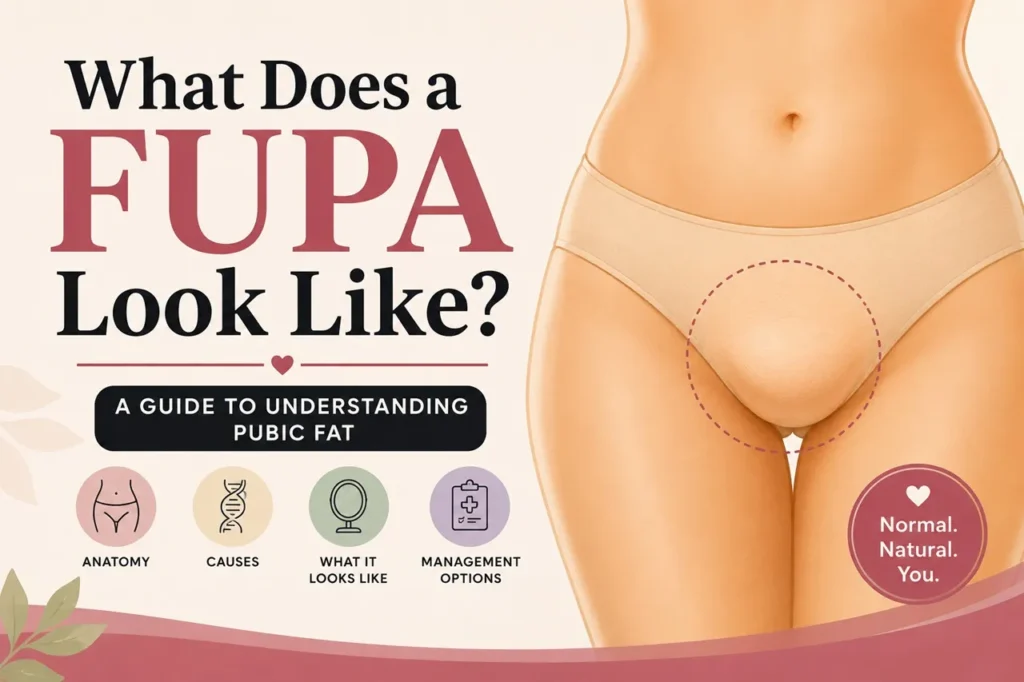

Put simply, a FUPA in slang refers to the pocket of fat that accumulates right above the pubic bone.
If you have spent any time scrolling through TikTok or Instagram lately, you have probably seen the term pop up in viral captions and comment sections. It spreads quickly online, yet many people still quietly wonder what it actually means and why it has become one of the internet’s most-searched body terms.
This guide breaks down where the slang came from, what it stands for, and the medical reality behind it. We will also look at how it differs from an apron belly and why the words we choose to talk about our bodies matter. Whether you are curious about the slang itself or want a clear, respectful explanation, this guide has you covered.
What Is a FUPA in Slang?
In casual conversation, this term describes a soft area of fat over the lower abdomen and pubic bone. It is not a clinical description. Instead, it is shorthand that grew out of internet culture. People use it to talk about a body shape that is common, yet rarely discussed openly.
The word shows up most often in social media captions and body-positive threads, where people compare experiences or share what has helped them feel more comfortable. You will also find it in fashion and shapewear reviews, since shoppers often search for garments that smooth this specific area.
Is it offensive? That depends on context and tone. Used self-referentially or within supportive communities, it is often reclaimed as a light-hearted, relatable word. Used to mock someone else, however, it crosses into unkind territory. A neutral example might be someone writing, “Finally found jeans that don’t dig into this area,” which reflects practical frustration rather than judgement.
Is FUPA a Medical Term?
No. This is slang, not a diagnosis you would find on a medical chart. Healthcare professionals rely on more specific, anatomically accurate terms instead. The right term depends on exactly what is being described, and why.
Understanding these clinical terms helps clarify what is actually happening in the body. It also moves the conversation beyond a catch-all internet phrase.
Panniculus
A panniculus is an apron-like fold of excess skin and fatty tissue that hangs over the lower abdomen. Clinicians discuss it most often after major weight loss or pregnancy, when skin has stretched and lost some elasticity. They typically assess it by grade, since its size can affect hygiene, mobility, and skin health.
Lower Abdominal Fat
This term simply describes fat stored in the lower abdomen, below the navel. Everyone carries some fat here. The amount varies based on genetics, hormones, and overall body composition, rather than any single cause.
Pubic Fat Pad
Also called the mons pubis, this is a natural, permanent area of fatty tissue that cushions the pubic bone. Every body has it, regardless of weight. It serves a protective function, which means it cannot be fully removed through weight loss alone.
Apron Belly
This term describes a more pronounced fold of skin and fat that hangs down over the lower abdomen. It often extends further than the area typically described as a FUPA. Doctors frequently link it to major weight fluctuation, pregnancy, or ageing, and may raise it when discussing surgical options like a panniculectomy.
FUPA vs Apron Belly: What’s the Difference?

The terms are sometimes used interchangeably online. However, they describe different things. Here is a straightforward comparison:
| Feature | FUPA | Apron Belly |
|---|---|---|
| Location | Lower abdomen, just above the pubic bone | Lower and sometimes mid-abdomen, hanging further down |
| Size | Typically smaller, more localised | Larger, more pronounced overhang |
| Medical Term | No official medical term (slang only) | Closest medical equivalent: panniculus |
| Causes | Genetics, hormones, weight gain, pregnancy | Major weight change, pregnancy, ageing, skin laxity |
| Skin Fold | Minimal to moderate | Often a distinct, hanging fold of skin |
| Surgery Options | Liposuction (if fat-based) | Panniculectomy, tummy tuck, or combined procedures |
If you want to work out which term better describes your own body, our detailed guide on FUPA vs apron belly covers the condition in far more depth, including causes and care tips.
What Causes a FUPA?
There is rarely just one explanation. Most people find it comes down to a combination of factors.
Pregnancy
Pregnancy stretches the abdominal skin and muscles considerably. Afterwards, the body does not always fully bounce back. Hormonal shifts during and after pregnancy can also encourage fat storage in the lower abdomen.
Weight Gain
Where the body stores extra fat is largely determined by genetics. Still, the lower abdomen is a common site for many people, particularly those with a pear-shaped or apple-shaped body type.
Genetics
Family history plays a real role in fat distribution patterns. Some people are simply predisposed to carrying more weight in this area, regardless of their overall size.
Hormonal Changes
Fluctuations in oestrogen and other hormones can influence where fat accumulates. This applies during puberty, pregnancy, menopause, or with certain medical conditions.
Ageing
As we age, skin naturally loses collagen and elasticity. This can make existing lower belly fat look more pronounced, even without any real weight change.
Rapid Weight Loss
Losing weight quickly, whether through diet, illness, or surgery, does not always give skin enough time to retract. As a result, loose tissue can remain in this area.
Loose Skin
Separately from fat itself, stretched skin from pregnancy, weight change, or ageing contributes to the appearance many people describe with this term.
Body Fat Distribution
Ultimately, everyone stores fat differently. Some people carry more around the hips and thighs, others around the abdomen. Genetics, hormones, and lifestyle factors all play a part, rather than any single cause.
Can Men Have a FUPA?
Yes, absolutely. The term is often associated with women’s bodies online. Even so, men experience the same lower abdominal fat accumulation, sometimes referred to informally as a “man FUPA.”
Fat distribution differs somewhat between sexes due to hormonal patterns. Men tend to store more visceral fat around the abdomen generally, which can include this lower region. Common contributing factors mirror those above: genetics, weight gain, and ageing. Reduced testosterone levels over time can also shift fat storage patterns. It is a normal, widespread experience, not something unique to one gender.
Can You Reduce a FUPA?
It helps to set realistic expectations from the outset. Genetics heavily influence fat distribution. So, it is not always possible to target this specific area through lifestyle changes alone, no matter how disciplined the approach. That said, several strategies can help.
1. Healthy Diet
A balanced, calorie-appropriate diet supports overall fat loss. This may reduce fat in this area as part of general weight reduction. However, spot reduction (losing fat from one area only) is not something the body allows.
2. Exercise
Regular cardiovascular exercise supports overall calorie expenditure. Over time, this can contribute to gradual fat loss across the body, including the abdomen.
3. Strength Training
Building muscle will not eliminate fat directly. Still, core-focused strength work can improve posture and overall abdominal tone, which may change how the area looks.
4. Weight Loss
Gradual, sustainable weight loss, rather than rapid crash dieting, tends to produce better results for skin elasticity and overall body composition.
5. Skin Tightening
For looser skin rather than fat, some people try non-surgical skin-tightening treatments. Results vary considerably, though, and are typically modest compared to surgical options.
6. Liposuction
This surgical procedure removes localised fat deposits. It can work well when the area is primarily fat-based rather than loose skin. However, it does not address excess skin on its own.
7. Tummy Tuck
Also called abdominoplasty, this procedure removes excess skin and tightens abdominal muscles. It suits people dealing with marked skin laxity alongside fat.
8. Panniculectomy
This procedure specifically removes an overhanging panniculus. Doctors often consider it medically necessary, rather than purely cosmetic, when the skin fold causes hygiene issues, rashes, or mobility problems. Read our full breakdown of FUPA surgery options if you are considering this route.
If you would rather start with non-surgical approaches, our guide to FUPA exercises and tips on how to get rid of a FUPA naturally cover practical, realistic steps.
Is It Rude to Call Someone a FUPA?
Language shapes how people feel about their bodies. The same word can land very differently depending on who is using it, and why. Referring to your own body with this term in a light-hearted or practical way is very different from directing it at someone else uninvited.

Body positivity movements have worked to reclaim this word from its more mocking origins. But that reclamation only really works within communities that consciously choose supportive framing. Used carelessly, particularly toward someone who has not invited the comment, it can still cause genuine hurt.
Social media has unfortunately given rise to bullying built around body-shape terms like this one. This can seriously affect mental health, self-esteem, and body image, especially among younger users. Here is a helpful general rule: if you would not want a comment said about your own body by a stranger, it probably is not appropriate to say about someone else’s.
Frequently Asked Questions
It is an informal term for a soft area of fat above the pubic bone. It became popular through internet and social media culture, rather than medical use.
Not exactly. It is generally smaller and more localised. An apron belly involves a larger, more pronounced hanging fold of skin.
Yes. Men experience lower abdominal fat accumulation for similar reasons, including genetics, weight gain, and hormonal changes over time.
Exercise, especially combined with a balanced diet, can support overall fat loss that may reduce the area’s appearance. Spot reduction, though, is not medically possible.
Yes. Procedures such as liposuction, a tummy tuck, or a panniculectomy can help, depending on whether fat, skin, or both are involved.
It offers a quick, relatable way to discuss a common body feature that previously lacked an easy, informal name. Body-positive creators helped bring it into mainstream conversation.
Final Thoughts
At its core, a FUPA is slang, not a diagnosis. It describes a body feature that is far more common than most people realise. Genetics, pregnancy, hormones, and ageing all play a part in how, and where, fat gets stored.