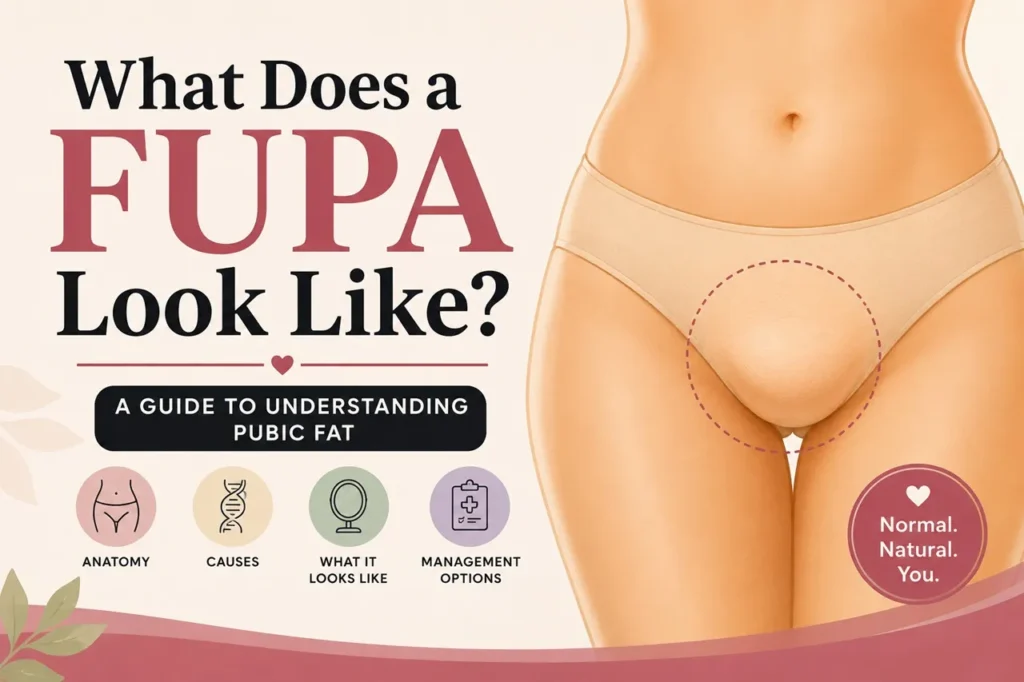
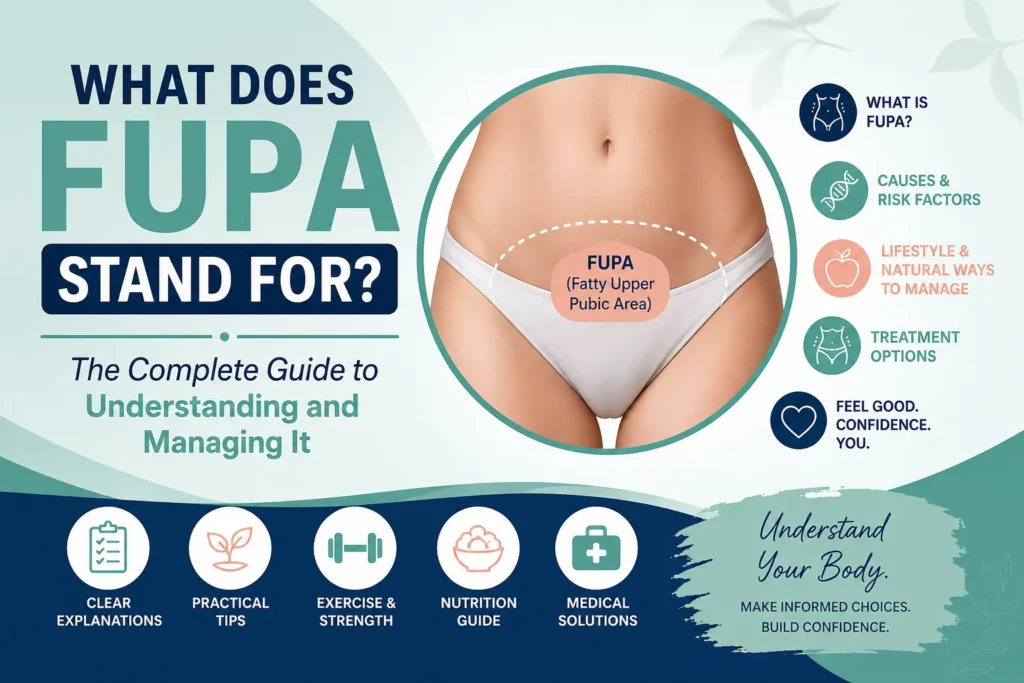
FUPA stands for Fatty Upper Pubic Area. It refers to subcutaneous fat that accumulates over the mons pubis, the soft, rounded tissue above the pubic bone. The term is widely searched but rarely discussed openly, which is why accurate, stigma-free information matters.
Key takeaways
- FUPA stands for Fatty Upper Pubic Area. It is fat over the mons pubis.
- A FUPA is mainly fat and usually does not hang. An apron belly is a hanging fold of skin and fat.
- Common causes include genetics, weight changes, pregnancy, menopause and C-section scarring.
- You cannot spot-reduce a FUPA. Lowering overall body fat reduces it over time.
- Surgical options include monsplasty, liposuction and a tummy tuck.
If you’ve found this guide out of curiosity, frustration, or a genuine desire to understand your body better, you’re in the right place. This guide covers what a FUPA is, why it develops, and your realistic options, from lifestyle changes to medical procedures.
What Does FUPA Mean? Defining the Anatomy
The short answer: FUPA means Fatty Upper Pubic Area. It describes fat buildup over the mons pubis, the cushioned tissue that sits over the pubic symphysis, the joint connecting the two halves of the pelvis.

The mons pubis is made up of adipose (fat) tissue, so it naturally changes with body weight, hormones, and age. When fat accumulates in this area beyond typical levels, it forms what is commonly called a FUPA (upper pubic fat) or a lower abdominal bulge. Many people notice it most when wearing fitted clothing or swimwear.
Is it normal to have some fat here? Yes, completely. Some degree of fat in the mons pubis region is entirely normal and serves a physiological purpose. The concern arises when the fat causes physical discomfort, lowers self-confidence, or resists weight-loss efforts.
FUPA vs. Apron Belly (Pannus): What’s the Difference?

These two terms are often used interchangeably, but they describe different conditions.
- FUPA: Primarily fat-based. Sits higher on the pubic region. Typically does not hang.
- Apron Belly (Pannus): A large fold of loose skin and fat that hangs down from the lower abdomen, often extending over the pubic area. More common after major weight loss or multiple pregnancies.
Check out the full comparison for further information.
Understanding which condition you have matters because it directly shapes your management and treatment options. For a broader overview, see our guide to FUPA meaning and its common causes.
Why Does a FUPA Develop? Common Causes

The mons pubis is particularly sensitive to several biological and lifestyle factors. The most common causes include:
Genetic Predisposition
Some bodies are programmed to store fat in the lower abdominal and pubic region. If close relatives carry weight in this area, there is a reasonable chance of a similar pattern. Genetics also affect how readily the body releases fat from this area during weight loss.
Weight Fluctuations
Repeated cycles of weight gain and loss take a toll on skin elasticity. The mons pubis has relatively thin skin, making it one of the first areas to show residual laxity. Major overall weight loss may still leave fullness in the mons pubis.
Pregnancy and Hormonal Changes
Pregnancy causes a dramatic redistribution of fat around the lower abdomen and pelvis. After delivery, the body may not fully reabsorb all the fat stored in the upper pubic region. Hormonal shifts during the postpartum period, particularly drops in oestrogen and progesterone, can further affect where fat settles.
Menopause produces a similar hormonal environment. As oestrogen levels decline, fat often migrates from the hips and thighs toward the lower belly and mons pubis.
C-Section Scarring
A caesarean section involves an incision just above the pubic hairline. As scar tissue forms, it can bind the skin to the fascia below, creating a shelf-like appearance where fat collects above the scar. This is commonly called a C-section shelf or C-section pouch, and it can be difficult to reduce without surgical intervention.
Ageing and Lifestyle Factors
Collagen production declines steadily from the mid-20s onward. Less collagen means less structural support in the skin, making fat deposits more visible. A diet high in refined sugar, sodium, and ultra-processed foods can worsen this by promoting chronic low-grade inflammation and water retention, both of which can make the lower abdominal area appear more prominent.
Can You Spot-Reduce a FUPA With Exercise?
The short answer: No. Spot reduction (the idea that exercising a specific body part burns fat in that area) is not supported by exercise science. When the body burns fat for energy, it draws from total fat stores, not exclusively from the muscles being trained. Doing 200 sit-ups daily will not reduce upper pubic fat any faster than it would reduce fat on the arms or back.
What actually works: Reducing mons pubis fullness is most effectively achieved by lowering overall body fat through sustainable nutrition, cardiovascular exercise, and strength training. As total body fat decreases steadily over time, the upper pubic area will also reduce. How quickly it responds depends on individual genetics and the underlying cause of the fullness.
Core-strengthening exercises still play an important role, not by burning fat but by building the underlying muscle, improving posture, and creating a firmer, more supported lower abdominal area.
Actionable Steps: Managing and Reducing the Appearance of a FUPA
Nutritional Strategy
Diet is one of the most important levers available. Specific changes that can make a visible difference:
- Reduce sodium: High salt intake can cause water retention, making the lower abdomen appear more bloated and prominent.
- Limit refined sugar and processed carbohydrates: These drive insulin spikes and promote subcutaneous fat storage over time.
- Prioritise anti-inflammatory foods: Leafy greens, oily fish, berries, and whole grains support skin health and help manage body composition.
- Stay well hydrated: Drinking adequate water helps the body flush excess fluid and reduces bloating.
No single food will target upper pubic fat. However, eating in a modest caloric deficit and choosing mostly whole foods supports steady, sustainable fat loss across the body.
Effective Workouts

Full-body cardio for overall fat loss:
- Walking (30 to 45 minutes daily is highly effective and sustainable)
- Swimming
- Cycling
- HIIT sessions (2 to 3 times per week)
Core strengthening to improve muscle tone beneath the fat:
- Planks: Build deep core stability without straining the lower back
- Leg raises: Engage the lower abdominal region; start with bent-knee versions if you’re a beginner
- Pike rollouts: An advanced option that builds core strength and hip flexor engagement
- Pelvic tilts: Gentle and effective, especially post-pregnancy
Aim for consistency over intensity. Three focused core sessions per week, combined with daily low-impact cardio, will produce clear results over time.
Posture and Confidence

Anterior pelvic tilt, where the pelvis tips forward and the lower back arches excessively, causes the lower abdomen and pubic region to protrude more than they otherwise would. Correcting posture can visibly reduce a lower belly bulge, even without losing fat.
Strengthening the glutes and stretching the hip flexors are the two most effective mechanical fixes. Standing tall, engaging the core lightly, and drawing the pelvis to a neutral position makes a real, measurable physical difference.
When Medical Intervention Is an Option

If lifestyle changes have not produced the desired results, particularly when the cause is structural, such as C-section scarring or loose skin, medical options may be appropriate.
This section is informational only. Always consult a consultant plastic surgeon on the GMC Specialist Register before making any decisions.
Non-Invasive Options
CoolSculpting (Cryolipolysis): Uses controlled cooling to destroy fat cells without surgery. Best suited for small, defined pockets of fat where skin elasticity remains good. Results are gradual, typically appearing over two to four months. CoolSculpting is not appropriate for large amounts of fat or cases involving loose skin.
Surgical Options
Monsplasty: A procedure specifically designed to address mons pubis fullness. It involves removing excess fat and, if needed, lifting and tightening the skin of the pubic area. Recovery is typically two to four weeks. This is a relatively straightforward procedure when skin laxity is moderate.
Liposuction: A strong option when the primary issue is excess subcutaneous fat and skin elasticity remains intact. Liposuction permanently removes fat cells, but patients with low skin elasticity may experience looser-looking skin afterwards, making careful patient selection essential.
Abdominoplasty (Tummy Tuck): The most comprehensive surgical approach. An abdominoplasty addresses excess skin, fat, and underlying muscle laxity across the entire lower abdominal region, including the mons pubis. Recovery takes four to six weeks on average. Surgeons typically recommend it for individuals who have experienced major weight loss or multiple pregnancies.
The best procedure depends on individual anatomy, the root cause of the FUPA, overall health, and personal goals. A consultant plastic surgeon on the GMC Specialist Register can assess whether fat, skin laxity, or both are contributing factors and recommend accordingly.
The Psychological Perspective
The physical aspects of managing a FUPA are only one part of the picture.
Self-Acceptance Is Not Giving Up
Body positivity does not mean pretending to love every part of yourself unconditionally. It means treating your body with respect while working toward your goals and recognising that your worth is not contingent on any physical feature.
Research consistently links negative body image to higher rates of anxiety, disordered eating, and reduced motivation to maintain healthy habits. Approaching change from a place of informed self-care, rather than shame, produces better outcomes.
Breaking the Stigma
The term “FUPA” was originally coined as derogatory slang. Health and wellness communities have since reclaimed it as a clinically descriptive label for a specific anatomical area. Fat in the lower abdomen may result from carrying a child, hormonal shifts, or a genetic predisposition, none of which is a moral failing.
Work toward your goals with the information you need. Do it from a place of curiosity and self-care, not embarrassment.
Frequently Asked Questions About FUPA
Is having a FUPA the same as having belly fat?
Not exactly. Belly fat can refer to both subcutaneous fat (under the skin) and visceral fat (around the organs). A FUPA specifically refers to subcutaneous fat stored over the mons pubis, the region above the pubic bone. It is a distinct anatomical location, not just general abdominal fat.
Can I get rid of a FUPA without surgery?
In many cases, yes, particularly if the main issue is excess fat rather than loose skin. A sustained caloric deficit combined with regular cardio and core-strengthening exercises can reduce upper pubic fat over time. If C-section scarring or loose skin is the primary cause, non-surgical methods may reduce fat volume but are unlikely to address the structural component.
How long does recovery take for a monsplasty?
Most patients return to light activities within two weeks and resume normal daily routines within four weeks. Strenuous exercise is typically restricted for six weeks. Swelling and bruising can take several months to resolve fully. Individual recovery timelines vary, so your surgeon’s guidance should always take priority.
Does losing weight help reduce a FUPA?
Yes, for most people, losing body fat will reduce mons pubis fullness. However, genetics influence how quickly this area responds to overall fat loss. In cases where major weight loss leaves loose, inelastic skin behind, fat reduction may make the area appear more prominent until surgical correction is considered.
What is the difference between a FUPA and a C-section shelf?
A C-section shelf is a specific subtype of FUPA caused by scar tissue from a caesarean section binding the skin to the underlying fascia. This creates a distinct, shelf-like ridge rather than generalised fullness. A standard FUPA is not necessarily related to surgery and may result from genetics, weight changes, or hormones.
At what BMI does a FUPA typically become noticeable?
There is no specific BMI threshold. Because FUPA development is influenced by genetics, hormones, and body fat distribution, not just total weight, it can be present across a wide range of body sizes. Some individuals notice fullness in the mons pubis area even at a lower body weight due to their natural fat distribution pattern.
Your Next Step Toward Understanding Your Body
A FUPA is common, well understood, and, depending on the cause, highly manageable. The options available are broader than most people initially assume.
Start with lifestyle strategies: focus on nutrition, build a consistent movement habit, and address posture. If those steps have been exhausted and a structural issue persists, consult a consultant plastic surgeon on the GMC Specialist Register for a clear, personalised assessment of what is possible.
And if what you’re experiencing feels more like a hanging skin fold than a localised fat deposit, the condition may be an apron belly rather than a FUPA. A detailed guide on how to reduce an apron belly covers the key differences, realistic surgical and non-surgical options, and related concerns.