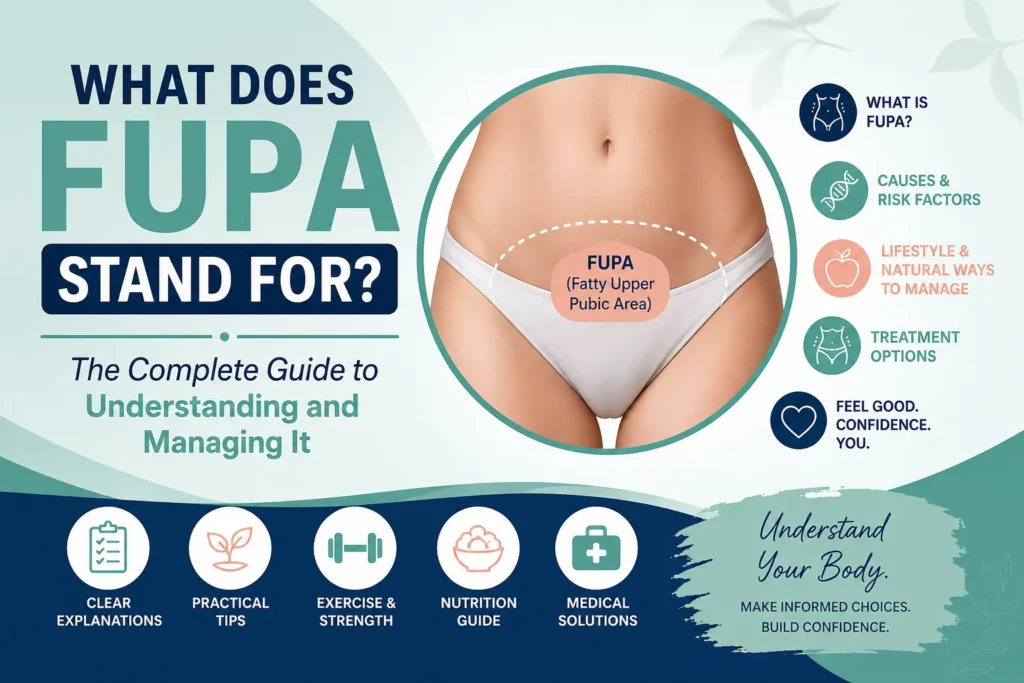
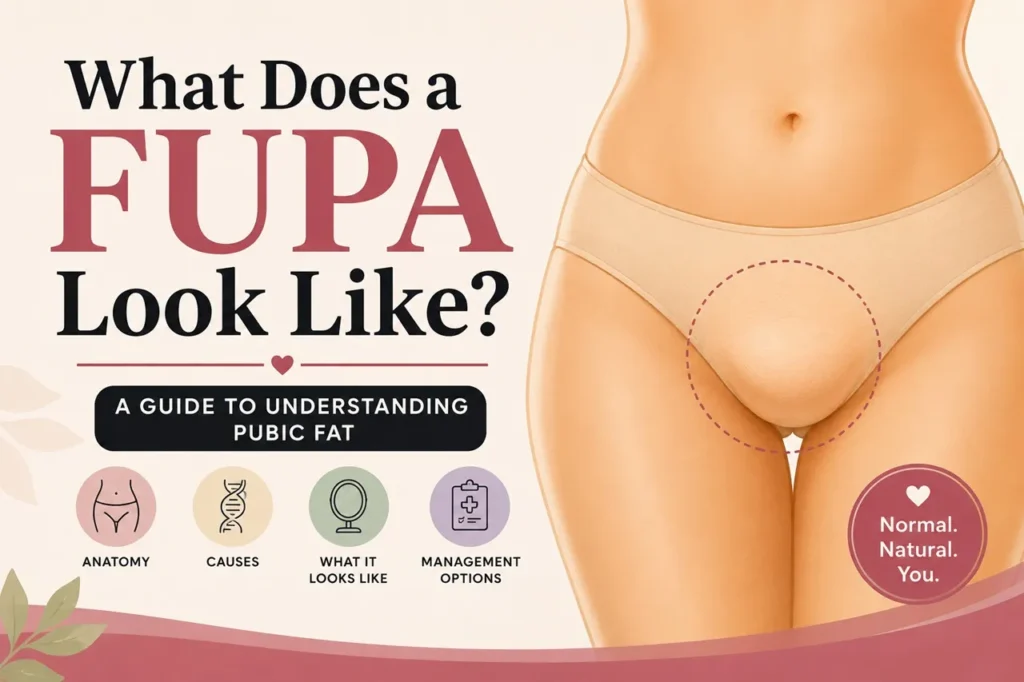
A FUPA usually looks like a soft, rounded mound of fat just above the pubic bone. It can be more visible in fitted clothes or swimwear. In some people, the skin folds down over the pubic area. After a C-section, a shelf can form above the scar. Most of these changes are normal.
Key takeaways
- A FUPA is fat over the mons pubis, just above the pubic bone.
- It most often looks like a soft, rounded mound.
- After weight change or pregnancy, the skin may fold down over the pubic bone.
- C-section scarring can create a shelf above the scar.
- You cannot spot-reduce a FUPA, but lowering overall body fat may help.
So, what does a FUPA look like? And why does it seem like nobody talks about it openly? The term FUPA (Fat Upper Pubic Area) refers to the accumulation of fatty tissue directly above the pubic bone. It is one of the most common anatomical features of the human body. It’s also one of the most misunderstood. However, because it sits in an intimate area, many people feel confused or embarrassed when they notice it.
The good news is that a FUPA is rarely a medical concern. For most people, it is simply a natural part of body composition that varies from person to person. Understanding what it is, why it forms, and how it presents can go a long way toward easing anxiety and helping you make informed decisions about your body.
This guide breaks down the anatomy, causes, and visual characteristics of the FUPA. It also covers realistic management strategies and when it might be worth speaking to a doctor.
What Is a FUPA? The Anatomy of the Mons Pubis
The medical term for the FUPA is the mons pubis. It’s a rounded, fleshy mound located directly above the pubic bone and below the lower abdomen. According to the Cleveland Clinic, the mons pubis is composed largely of adipose tissue (body fat). Its primary biological function is to cushion the pubic symphysis during physical activity.

This region naturally stores fat because of its high density of fat cells, which are particularly responsive to hormonal signals. Because the area is rich in oestrogen receptors, people assigned female at birth often notice more fat accumulation here, especially during puberty, pregnancy, or hormonal shifts.
It is also worth distinguishing between two presentations:
- Simple fat deposits: A soft, rounded mound above the pubic bone. This is the most common form and is entirely normal.
- Panniculus (or pannus): A more pronounced skin fold or apron of skin and fat that hangs downward. This typically occurs after major weight gain or loss and may cause skin irritation from friction.
Both are natural variations, but they present differently and may require different approaches to management.
Read Also: Apron Belly vs FUPA: What’s the Difference & How to Get Rid of It?
Why Does a FUPA Develop?
A FUPA does not have a single cause. Several factors can influence how much fat accumulates in the mons pubis area and how it looks over time.
How Do Pregnancy and Postpartum Changes Affect the Pubic Area?
Pregnancy is one of the most common reasons people notice a change in the appearance of the lower abdomen and pubic region. As the uterus expands, the surrounding tissues stretch a great deal. After delivery, the skin and muscles in this area do not always return to their previous state.
This gives rise to what many people call the “mum tum,” a general protrusion of the lower abdominal region. However, in some postpartum cases, the issue is deeper than surface fat. Diastasis recti is a condition where the abdominal muscles separate during pregnancy.
It can cause the belly to protrude outward even when body fat levels are relatively low. According to the Cleveland Clinic, diastasis recti affects up to 60% of people during or after pregnancy.
Skin laxity, the loss of skin elasticity, also plays a role. After the skin has been stretched, it may not fully bounce back. This can make the pubic area appear more pronounced.
What Role Do Genetics and Hormonal Weight Gain Play?
Genetics strongly influence where your body stores fat. Some people are predisposed to carrying more adipose tissue in the lower abdominal and pubic region, regardless of their overall body weight.
Hormonal weight gain, particularly the kind associated with fluctuations in oestrogen and cortisol, can also direct fat storage toward the hips, thighs, and pubic area. This is especially common during perimenopause and menopause, when oestrogen levels shift considerably. For more on managing weight fluctuations related to hormonal changes, see our guide to what causes a FUPA.
How Can C-Section Recovery Contribute to a FUPA’s Appearance?
For those who have delivered by caesarean section, scar tissue can play an unexpected role. The incision made during a C-section sits just above the pubic hairline. As the scar heals, it can create an adhesion (essentially a tethering of skin to the underlying tissue). This can cause the skin above the scar to appear to “overhang.” This is sometimes called a C-section shelf or C-section pooch, and it is distinct from fat accumulation alone.
Visual Characteristics: What Does a FUPA Look Like?
The appearance of a FUPA varies considerably from person to person. In general, the area presents as one of the following:
- A soft, rounded mound: This is the most common presentation. The mons pubis appears fuller or more prominent than the surrounding area. It may be noticeable when wearing fitted clothing, swimwear, or underwear.
- A skin fold or overhang: In cases where there has been major weight change or postpartum recovery, the skin may fold downward over the pubic bone. The degree of this overhang depends on the amount of adipose tissue present and the level of skin laxity in the area.
- A post-surgical shelf: As described above, C-section scarring can create a distinct ledge-like appearance even in the absence of large fat deposits.
It is also worth noting that the FUPA can look different depending on posture, clothing, and even time of day. Bloating, for example, can temporarily exaggerate its appearance. Furthermore, the presence of pubic hair, skin tone, and body proportions all affect how the area looks.
The most important thing to understand is that body variation in this area is entirely normal. The mons pubis is a functional anatomical structure, and its appearance reflects a wide range of perfectly healthy bodies.
Frequently Asked Questions
No, not usually. A FUPA is a cosmetic or anatomical feature, not a medical condition. See a doctor only if the area becomes painful, irritated, or grows rapidly without explanation.
A FUPA is localised fat above the pubic bone. A mum tum is a broader lower-abdomen protrusion that can involve muscle, skin, and fat, often linked to diastasis recti.
Not through spot reduction. Science doesn’t support burning fat from one specific area. A balanced diet and core-strengthening exercises can lower overall body fat, which may improve the area’s appearance over time. Postpartum core rehab can also help. Our guide to a lower belly pooch after pregnancy covers safe postpartum core work.
See a doctor if you notice:
1. Sudden or unexplained growth
2. Pain or tenderness
3. Persistent irritation, rashes, or infection under a skin fold
4. Lumps or hard changes instead of soft, fatty tissue
Most cases are benign, but these signs need a professional check.
Management and Treatment Options

What Lifestyle Adjustments Can Help Manage a FUPA?
While you cannot target fat loss in a specific area, lifestyle changes can reduce overall body fat and improve the tone and appearance of the lower abdomen.
Core strengthening exercises are particularly useful. Moves like pelvic tilts, dead bugs, and transverse abdominis activations help build the deep core muscles that support the lower abdomen. Low-impact cardiovascular exercise, such as walking, swimming, or cycling, supports fat metabolism over time.
A balanced diet rich in whole foods, lean proteins, and fibre also contributes to healthy weight management. For those experiencing hormonal weight changes, working with a registered dietitian can help tailor nutritional strategies to your specific physiology.
Consistency matters more than intensity here. Small, sustainable habits tend to produce more lasting results than short-term restrictive approaches.
What Professional Interventions Are Available for a FUPA?
For those who have tried lifestyle options and are still seeking a change, several cosmetic and medical interventions exist:
- Liposuction: A surgical procedure that removes localised fat deposits from the mons pubis. It is typically performed under local or general anaesthetic and involves a recovery period of several weeks.
- Monsplasty: A surgical procedure that removes both excess fat and skin from the mons pubis area. This is particularly relevant for individuals who have experienced major weight loss and have notable skin laxity.
- CoolSculpting (Cryolipolysis): A non-invasive fat-reduction treatment that uses controlled cooling to destroy fat cells. According to the American Board of Cosmetic Surgery, CoolSculpting can reduce fat in a targeted area by approximately 20 to 25% per session. Results typically develop over several months.
These interventions carry varying levels of risk, cost, and recovery time. It is essential to consult with a consultant plastic surgeon on the GMC Specialist Register or a dermatologist to determine which option, if any, is appropriate for your individual situation. Our guide to FUPA surgery options and recovery explains what each procedure involves.
Your Body, Your Baseline
Understanding what a FUPA looks like starts with understanding that it is not an anomaly. It is anatomy. The mons pubis is a normal, functional part of the human body, and its appearance varies enormously between individuals based on genetics, hormones, pregnancy history, and more.
If you have been wondering, “What does FUPA look like?” because you noticed a change in your own body, the most grounding thing to know is this: variation is normal. Most presentations are entirely benign. Whether you choose to manage it through lifestyle habits, look into professional interventions, or leave it alone, the most important step is making that decision from a place of accurate information, not anxiety or shame.
If you have any concerns about changes in this area, always reach out to a qualified medical professional. Self-care includes knowing when to ask for support.
Medical Disclaimer: This blog post is intended for informational purposes only and does not constitute medical advice, diagnosis, or treatment. Always consult a qualified healthcare professional before making any decisions about your health or body.