Quick Answer
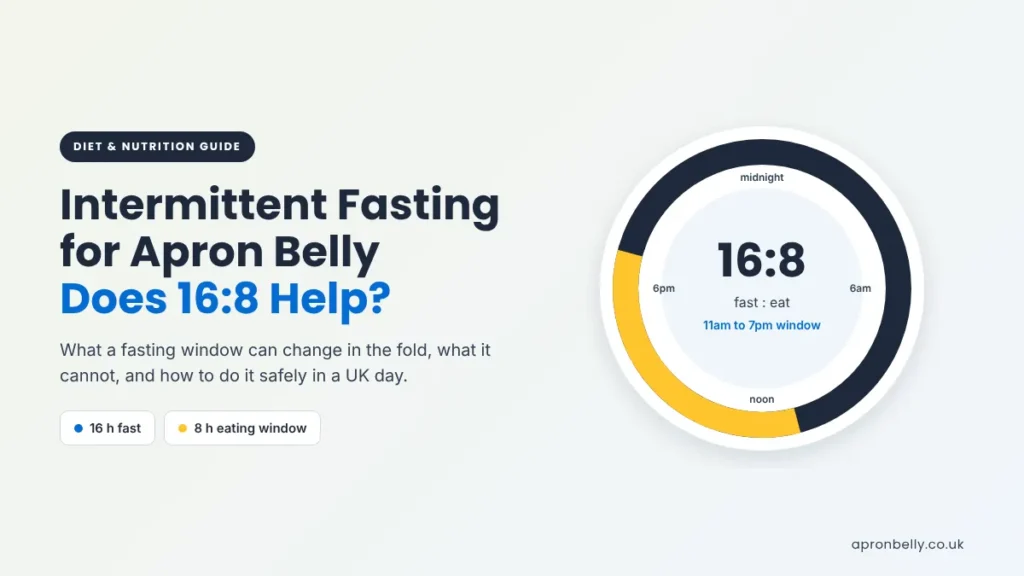
Intermittent fasting for apron belly can help shrink fat in the fold by making a steady calorie deficit easier, but trials show 16:8 works about as well as ordinary calorie control. It will not tighten loose skin.
- Start with a 12:12 or 14:10 gap before trying 16:8
- Build both meals around protein and vegetables
- Lose no faster than about 1 kg a week
Intermittent fasting for apron belly is one of the most searched diet questions among UK women with a lower belly fold. The 16:8 pattern, where you eat within an eight-hour window and fast for the other sixteen, promises a simpler way to lose weight without counting every calorie. The appeal is obvious. The question is whether a fasting schedule does anything special for the overhang itself.
This guide gives an honest answer. It explains what 16:8 involves, what an apron belly is made of, what the clinical trials found when fasting was tested against ordinary calorie control, and who should steer clear of it. You will also find a practical UK meal timing plan, a comparison of the main fasting patterns, and the safety checks worth running before you begin.
The Short Answer
Intermittent fasting can help an apron belly shrink in the same way any sustained calorie deficit can: by reducing the fat inside the fold. It cannot tighten the stretched skin that gives the apron its shape. Trials that compared 16:8 with standard calorie restriction found similar weight loss, so fasting is a tool for eating less, not a special belly treatment.
What fasting can change
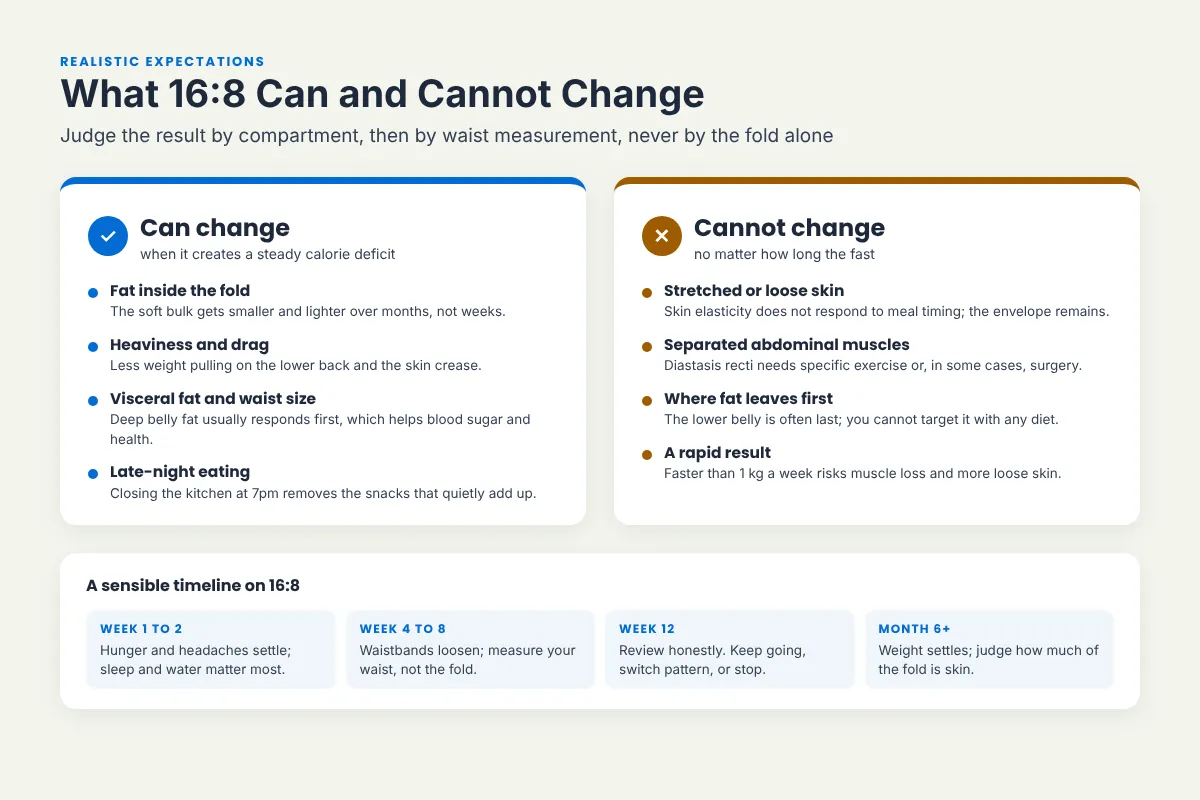
The soft, compressible part of the fold is subcutaneous fat. Any approach that keeps you in a modest energy deficit for months will reduce it, and 16:8 works for some people because it removes late evening snacking and shortens the time available to eat.
What fasting cannot change
The skin envelope and any separated abdominal muscles do not respond to meal timing. If your fold is mostly loose skin after pregnancy or weight loss, fasting will make it lighter but not smaller. Our guide to apron belly fat versus loose skin helps you judge which you have.
What Intermittent Fasting Actually Is
Intermittent fasting is an umbrella term for eating patterns that alternate periods of eating with periods of little or no food. It says nothing about what you eat, only when. A window filled with takeaways and biscuits still adds up.
16:8, 5:2 and the other patterns
The 16:8 method, also called time-restricted eating, limits food to an eight-hour daily window, such as 11am to 7pm. The 5:2 diet keeps five normal days and two days of around 500 to 600 calories. Alternate-day fasting swaps a normal day for a very low calorie day, and some people do a full 24-hour fast once or twice a week. Gentler versions include 14:10 and 12:12, which many people already follow without noticing.
Why 16:8 is the most popular choice
16:8 is popular because it fits a working day. Push breakfast to a late brunch, eat lunch and dinner as usual, then stop. There is no calorie app, no fast days to plan around, and no special food to buy. For people who eat most of their excess calories after 8pm, closing the kitchen early does much of the work.
What an Apron Belly Is Made Of
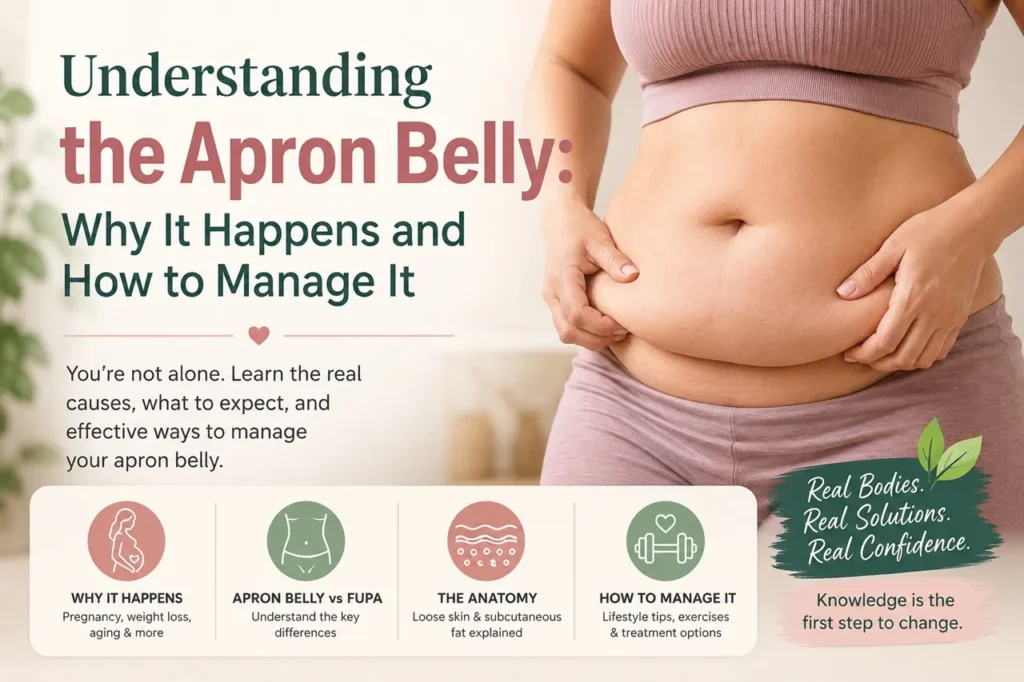
An apron belly, or pannus, is a flap of tissue that hangs over the lower abdomen or pubic area. Our plain English guide to what an apron belly is covers the grades and causes in detail.

Fat, skin and muscle
The fold contains three things. First, subcutaneous fat, which sits directly under the skin and makes the apron soft and heavy. Second, the skin itself, which may have been stretched by pregnancy, rapid weight gain or weight loss, and may have lost elasticity with age. Third, the abdominal wall beneath, which can be weakened or separated, a condition known as diastasis recti. Deeper still is visceral fat around the organs, which pushes the abdomen forward but is not part of the hanging fold.
Why that matters for fasting
Diet, including intermittent fasting, acts on the fat compartments. It lowers subcutaneous fat slowly and visceral fat somewhat faster. It does nothing for skin elasticity or muscle separation. So the honest expectation is a smaller, lighter fold, with the skin still present. The more of your apron is fat, the more you will see from fasting.
Does Intermittent Fasting for Apron Belly Work? What the Research Says
Several well-designed trials have tested time-restricted eating against ordinary calorie control. The findings on intermittent fasting for apron belly fat, and for belly fat in general, are consistent.
Fasting versus ordinary calorie control
A 12-month randomised trial published in the New England Journal of Medicine in 2022 followed 139 adults with obesity. One group restricted calories and ate only between 8am and 4pm; the other restricted calories with no time limit. Both groups lost a meaningful amount of weight, and the fasting group did not lose any more. Waist circumference and body fat fell by similar amounts in both groups.
Shorter trials point the same way. When 16:8 is followed without calorie guidance, weight loss tends to be modest, because some people eat more within the window. Fasting works when it helps you eat less overall, and not otherwise.
Where belly fat goes first
You cannot choose where your body takes fat from, and fasting does not change that. Visceral fat is usually mobilised earlier, which is good news for health, while the subcutaneous fat in a lower belly fold is often among the last to shift. This is why the apron can seem stubborn even when the scales are moving.
The lean mass question
One concern raised in fasting research is that a portion of the weight lost can be muscle rather than fat, particularly when protein intake is low or the eating window is very short. For someone with a heavy fold, keeping muscle matters, because a strong core and back carry the weight more comfortably. The fix is adequate protein at both meals and some form of resistance training, which we cover below.
How 16:8 Fits a UK Day
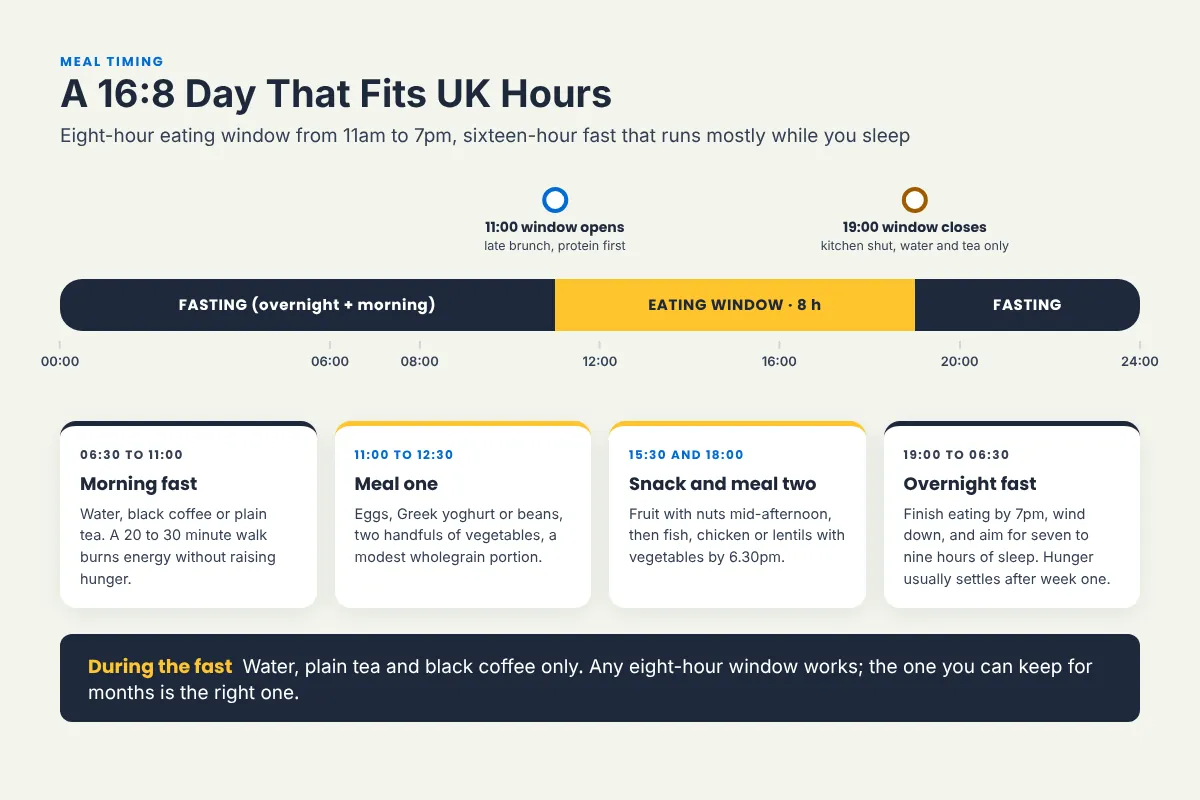
The best window is the one you can keep for months. Here are three options that suit common UK routines.
Three sample windows
| Window | Who it suits | Typical meals | Watch out for |
|---|---|---|---|
| 11am to 7pm | Office hours, families with early dinners | Late brunch, late afternoon snack, dinner by 6.30pm | Hunger mid-morning in the first week |
| 12pm to 8pm | Evening eaters, later commutes | Lunch, small snack, dinner at 7pm | Eating too close to bedtime |
| 9am to 5pm | Early risers, shift workers on days | Breakfast, lunch, early supper | Social dinners and evening cravings |
Building the two main meals
With fewer meals, each one has to do more. Base lunch and dinner on a palm-sized portion of protein, such as eggs, fish, chicken, beans or Greek yoghurt, plus two handfuls of vegetables and a modest portion of wholegrain carbohydrate. Drink water, tea or black coffee freely during the fast. Our diet and nutrition guide for apron belly has UK shopping lists and meal ideas that work inside a window.
Fasting Patterns Compared
If 16:8 does not suit your routine, another pattern might. The table rates each on how easy it is to sustain and how well it fits life with a lower belly fold.
| Pattern | How it works | Ease of sticking to it | Typical weight loss | Best for |
|---|---|---|---|---|
| 12:12 | Twelve-hour overnight gap | Very easy | Small unless it stops late snacking | Beginners, anyone with a medical condition (with GP advice) |
| 14:10 | Ten-hour eating window | Easy | Modest | People who want structure without skipping meals |
| 16:8 | Eight-hour eating window | Moderate | Similar to calorie counting when total intake falls | Evening snackers, routine-driven people |
| 5:2 | Two low-calorie days a week | Moderate to hard | Similar to daily restriction in trials | People who prefer normal eating most days |
| Alternate-day | Every other day very low calorie | Hard | Can be larger short term, with high drop-out | Supervised programmes only |
Reading the table
No pattern of intermittent fasting for apron belly has been shown to target the fold specifically. Choose the one with the highest chance of lasting, and judge it after eight to twelve weeks by your waist measurement and how your clothes fit, not by the fold alone.
Making 16:8 Work With a Fold
A fasting schedule is only the frame. These habits decide whether the fold gets lighter and how the skin looks as you lose.
Protein and strength to protect muscle
Aim for a protein source at every meal and snack inside the window. Add two or three short resistance sessions a week, using bodyweight, bands or light dumbbells. Our four-week beginner strength programme for apron belly is designed for a heavy lower belly and needs no gym.
Walking, sleep and stress
Daily walking burns energy without raising hunger much, and it is easy to do while fasting. Thirty minutes a day is a sensible target, as explained in our guide to walking for apron belly. Protect sleep, too, because a short night increases appetite the next day and makes a fasting window far harder to hold. If a heavy fold makes nights uncomfortable, our guide on how to sleep with an apron belly covers positions and support.
A realistic rate of loss
The NHS Better Health weight loss guidance recommends a safe, steady rate of about 0.5 to 1 kg (1 to 2 lb) a week. Slower loss gives skin the best chance of adapting. Very rapid loss, whether from aggressive fasting or weight loss injections, tends to leave more loose skin, a problem we explore in our article on Ozempic and apron belly loose skin.
Who Should Not Try 16:8 Without Medical Advice
Intermittent fasting is safe for many healthy adults, but it is not for everyone, and some groups should not attempt it at all.
Medical conditions and medicines
Do not start 16:8 if you are pregnant, breastfeeding, under 18, underweight, or recovering from an eating disorder. Speak to your GP or diabetes team first if you have type 1 or type 2 diabetes, because insulin and sulfonylurea tablets can cause dangerous low blood sugar during a fast. Also seek advice if you take medicines that must be taken with food, have a history of fainting, or have had bariatric surgery.
Signs to stop
Dizziness, headaches that do not settle after the first fortnight, poor sleep, irritability, hair shedding, or a pattern of overeating when the window opens are all signs that this approach is not working for your body. Stop, eat normally, and talk to your GP or a registered dietitian about a gentler plan.
Frequently Asked Questions
Does 16:8 fasting get rid of an apron belly?
It can reduce the fat inside the fold if it helps you eat less over several months, but it cannot remove stretched skin. Trials show 16:8 produces similar weight loss to ordinary calorie restriction. If your apron is mostly loose skin, expect it to become lighter rather than disappear.
How long does it take to see a difference with intermittent fasting?
Most people notice looser waistbands within four to eight weeks if they are in a steady calorie deficit. The lower belly is often the last area to change, so give any pattern at least twelve weeks and track your waist measurement rather than relying on the mirror.
Is 16:8 better than calorie counting for belly fat?
Not according to the best evidence. A 12-month trial in the New England Journal of Medicine found no extra benefit from adding a time window to calorie restriction. 16:8 is simply a different way to achieve the same deficit, and it suits people who dislike tracking food.
Can I drink tea or coffee during the fasting hours?
Yes. Water, black coffee, plain tea and herbal teas are all fine during the fast, and many people find they make the hours easier. Milk, sugar, juice and most flavoured drinks contain enough calories to interrupt a strict fast, so keep them for the eating window.
Will fasting make my loose skin worse?
Fasting itself does not damage skin, but fast weight loss of any kind leaves less time for skin to adapt. Lose at the NHS-recommended rate of 0.5 to 1 kg a week, eat enough protein, and stay active. If skin is already very loose, read our guide on tightening apron belly skin without surgery.
Is intermittent fasting safe after a C-section or during breastfeeding?
Fasting is not advised while breastfeeding, because your energy and fluid needs are higher. After a C-section, wait until you have recovered fully and your GP or health visitor is happy for you to lose weight. Gentle, regular meals support healing better than a long fast.
The Bottom Line
Intermittent fasting for apron belly is neither a miracle nor a gimmick. Used well, 16:8 is a simple way to cut late-night eating and create the steady energy deficit that shrinks fat in the fold. It will not tighten skin or close a muscle gap, and it is not safe for everyone.
A sensible starting point
Begin with a 12:12 or 14:10 gap for a week, then try 16:8 if it feels comfortable. Build both meals around protein and vegetables, walk daily, add two short strength sessions, and lose no faster than 1 kg a week. If the fold remains large once your weight has settled, our guide on tightening apron belly skin without surgery explains the next realistic options.