Quick Answer
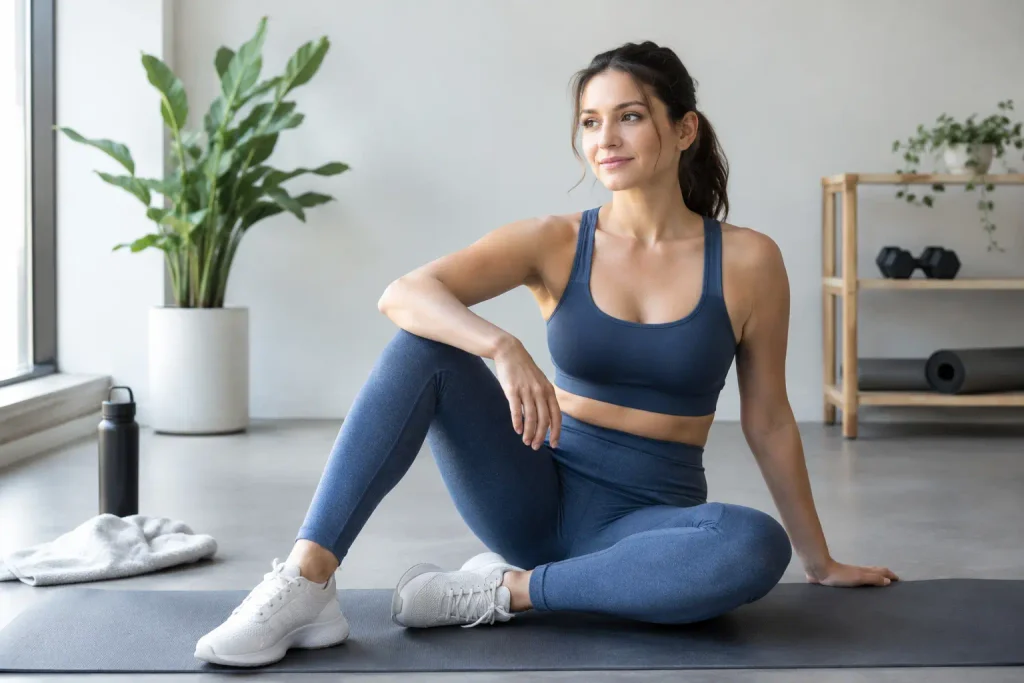
The best activewear for an apron belly has a wide, high waistband, four-way stretch fabric, flat seams, moisture-wicking material and an opaque finish, so it stays put without digging into the fold.
- Choose high-waisted leggings that sit above the belly button
- Get your sports bra properly fitted
- Keep the skin under the fold dry and comfortable
There’s a particular kind of dread that comes before a workout. It isn’t about the exercise. It’s about the clothes. The leggings that roll down halfway through a squat. The waistband that digs in and makes the fold bulge over the top. The sports bra that rides up and meets your belly in the middle. By the time you’ve tugged and adjusted for the tenth time, you’ve lost all interest in the class.
If that’s you, the problem isn’t your body. It’s that most activewear is designed for a flat, even torso, and an apron belly doesn’t behave that way. The right clothes can make exercise far more comfortable and far more likely to happen. This guide covers activewear for apron belly shapes: leggings, sports bras, tops, and the small construction details that decide whether a garment stays put.
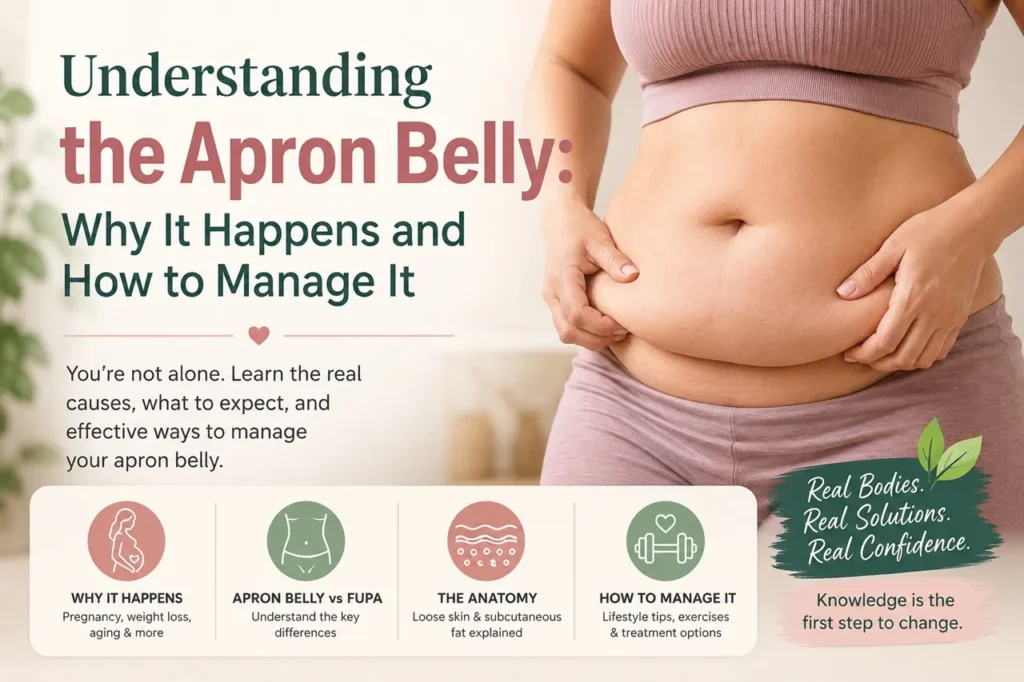
If you’re still getting to grips with what an apron belly is, our apron belly overview explains it in plain English. And if you’d like gentle ideas for what to do once you’re dressed, our belly exercises guide is a good place to start.
Why Standard Activewear Often Fails an Apron Belly
Most gym clothes rely on a snug waistband to stay up and a flat front to look neat. An apron belly changes both.
Waistbands roll or dig in. A thin, narrow elastic sits right on the fold and either slides down or cuts in. Many people end up folding the waistband over, which makes it roll even more.
The fold moves when you do. During jumping, running, or bending, the lower belly shifts, and fabric that isn’t anchored properly will bunch or slide.
Fabrics trap moisture. Sweat gathers in the crease under the fold. Some materials hold it against the skin, which can lead to rubbing and soreness.
Sizing doesn’t match proportions. Your waist and hip measurements may sit at different sizes, so a garment that fits your hips can gape at the waist, or the other way round.
Knowing this helps you shop with a checklist instead of hoping for the best.
The Five Features That Matter Most
Whatever you’re buying, check these before you worry about colour or print.
A wide, high waistband. A waistband that’s several centimetres wide spreads pressure across a larger area, so it doesn’t cut into the fold. A high rise that sits above the belly button holds the lower belly gently, instead of squeezing at the narrowest point. Look for a band that’s flat and smooth, not thin elastic.
Fabric with plenty of stretch and recovery. Four-way stretch fabric moves in every direction and springs back, so it won’t sag or bag out after a few washes. Check the care label for a decent proportion of elastane or similar stretch fibre.
Moisture-wicking material. Cleveland Clinic advises choosing moisture-wicking clothing for sweaty days and avoiding heavy or rough materials such as cotton, which hold sweat against the skin. That’s useful if you’re prone to rubbing in the fold.
Flat or hidden seams. Seams and tags are a common source of friction. Look for flatlock stitching, seamless construction, and tagless labels, especially at the inner thigh and the waistband.
Opaque, supportive thickness. Thin, clingy fabric can show every contour and may turn see-through when stretched or sweaty. Medium-weight, squat-proof fabric gives smoother coverage and feels more secure.
Leggings for Apron Belly: What to Look For
Leggings are the staple, and also where most frustrations start.
Choose high-waisted. A high-waisted pair that reaches above the belly button holds everything in place and avoids a muffin-top effect at the waistband. Ultra-high styles that come up to the ribs can feel even more secure if you like that.
Look for a wide, flat waistband with no drawcord or hard elastic. Waistbands that lie flat tend to roll less. Avoid anything with a thin band or a bulky knot.
Consider a double-layered waistband. An extra layer of fabric gives more hold without added tightness. It’s a simple feature, and it makes a big difference over a long session.
Pick the right length. Full-length leggings protect your inner thighs from rubbing. Capri lengths are cooler in summer. Check that the hem sits flat at the ankle or calf.
Try the squat test. In the changing room or at home, squat down, bend forward, raise your arms, and march on the spot. If the waistband rolls, the fabric thins to see-through, or you feel the urge to pull them up, they won’t survive a workout.
Avoid compression that’s too tight. Many people assume tighter means better support. But a waistband or panel that restricts your breathing, digs into the fold, or leaves deep marks is working against you. Go up a size if you’re unsure. Nobody sees the number on the label.
Other Bottoms Worth Considering
Leggings aren’t the only option. Different activities suit different cuts.
Bike shorts and longer shorts. These are good under dresses and for warm weather. A longer inseam stops thigh rubbing and a high waist keeps the belly gently supported.
Joggers and track pants. Soft, stretchy joggers with a wide waistband and a relaxed leg are comfortable for walking, strength sessions, and low-key classes. Pick ones with a flat waistband rather than a tight elastic cuff at the hip.
Sports Bras and the Apron Belly
Sports bras are a surprising part of the apron belly puzzle. A band that rides up, or a longline style that stops mid-ribcage and lets the fabric gather over the belly, can add to discomfort.
Why fit matters. The University of Portsmouth’s Research Group in Breast Health notes that wearing the wrong size is linked to pain in the breasts, neck, back, and shoulders, poor posture, chafing, and reluctance to exercise. It also reports that, among 51 elite female athletes surveyed, roughly three quarters had never been properly fitted, and that breasts change size, shape, and position across the menstrual cycle and throughout life. So your size may not be what it was a year ago.
Choose the band first. The band does most of the work. It should sit level around your ribcage, feel snug but not tight, and stay in place when you raise your arms. If it rides up at the back, try a smaller band or a different style.
Pick a style that ends where you want it to. A standard crop style stops under the bust and leaves your belly free of fabric. Longline styles end lower and can feel supportive for some people, but if the hem sits on the fold, it may roll or dig. Try both and see which feels comfortable when you move.
Test it properly. Jump on the spot, swing your arms, and bend forward. If you feel bounce, pinching, or a band that rolls, it’s not the right one.
If you’re unsure, consider a professional bra fitting. Some UK lingerie and sports shops offer fittings, so ask before you buy. It can make a big difference to comfort.
Tops That Work With an Apron Belly
The right top covers where you want cover, and doesn’t ride up or cling to the fold.
Longer lengths. Tops that reach the hip or mid-thigh stay down during movement and cover the lower belly. Look for a slightly curved hem that’s longer at the back.
Loose but not shapeless. A relaxed fit that skims the body is more forgiving than a tight one. Fabrics with some drape move away from the fold.
Avoid tops with elastic at the hem. A tight hem sits on the fold and can ride up or create a ridge. A loose, finished edge is gentler.
Keeping Skin Comfortable During Exercise
The best clothes in the world won’t help if the skin in the fold is sore. A few habits reduce the risk of chafing.
Stay dry. Cleveland Clinic calls moisture the enemy when it comes to chafing, and recommends changing into dry clothes as soon as possible after a sweaty session. Take a spare top and pair of underwear if you’re going straight from the gym to work or the shops.
Use a barrier. A dab of petroleum jelly, a balm, or a drying powder on areas that rub can reduce friction, especially during long sessions such as running or cycling. Cleveland Clinic’s chafing guidance lists several options. Try a small amount first to check your skin is happy with it.
Choose snug, not baggy, where it matters. Cleveland Clinic notes that tighter-fitting clothes are less likely to move and rub against your skin. Baggy fabric can bunch and chafe, so use fitted layers close to the skin and looser ones on top.
Treat sore skin gently. If skin does get irritated, wash gently with mild soap and warm water, pat dry rather than rubbing, and apply petroleum jelly or an unscented moisturiser. Wear loose, breathable clothing while it heals. Seek medical advice if it doesn’t improve after a week, becomes very painful or itchy, or shows signs of infection such as yellow pus, a foul smell, or warmth.
Our belly skin guide covers general skin care for the fold in more detail.
A Note on C-Section Scars and Surgery Recovery
If you’ve had a caesarean, a tight waistband pressing directly on a tender scar can be uncomfortable. Choose a soft, wide, high-rise band that sits above the scar, or a super-soft, low-friction fabric if it sits on it. Check with your GP or midwife before returning to exercise, and wait until your scar has healed. Our guide on apron belly after a C-section explains what recovery usually looks like.
If you’ve had abdominal surgery, follow your surgeon’s advice on compression garments and what to wear. They’ll give you specific instructions, and those come before any general shopping tips. Our tummy tuck guide explains what the operations involve.
How to Shop Smart
A few practical habits save money and frustration.
Try before you commit. Sizing varies hugely between brands. Order two sizes online if returns are free, and keep tags on until you’ve done the squat test at home.
Shop by feature, not size alone. Search for “high-waisted”, “wide waistband”, “squat-proof”, or “no-roll” to narrow the field.
Read the reviews for real-life details. Look for comments about whether the waistband rolls, whether the fabric stays opaque, and whether the leggings survive a wash. Take marketing claims with a pinch of salt.
Conclusion
The best activewear for an apron belly is the clothing you forget you’re wearing. Look for a wide, high waistband, stretchy yet supportive fabric, flat seams, moisture-wicking material, and an opaque finish. Get your sports bra fitted properly, choose tops that sit where you want them to, and keep skin dry and comfortable.
Your body doesn’t need to change before you move it. With clothes that fit the way you actually are, exercise becomes something you can simply get on with, and that’s the point.
Frequently Asked Questions
What are the best leggings for an apron belly?
High-waisted leggings with a wide, flat waistband, four-way stretch, flat seams, and opaque fabric tend to work best. A double-layered waistband helps stop rolling. Do a squat and bend test before you commit to a pair.
How do I stop leggings rolling down with an apron belly?
Choose a wide, high waistband that sits above your belly button, and avoid thin elastic. Try a double-layered band, and go up a size if the waistband digs in. A band that rolls is usually too narrow or too tight.
What sports bra is best if I have an apron belly?
Choose the band first, so it sits level, snug, and stays put when you raise your arms. Try both crop and longline styles, and check that the hem doesn’t roll onto the fold. If you’re unsure of your size, get a professional fitting.
What fabric is best for gym clothes if the fold gets sweaty?
Cleveland Clinic advises moisture-wicking fabric on sweaty days and avoiding heavy or rough materials like cotton, which hold sweat against the skin. Choose flat seams too, and change into dry clothes after exercise.
How do I prevent chafing under an apron belly when exercising?
Keep the area dry, use fitted layers close to the skin, and apply a barrier such as petroleum jelly or a balm where friction occurs. See your GP if sore skin doesn’t improve after a week or shows signs of infection.