Quick Answer
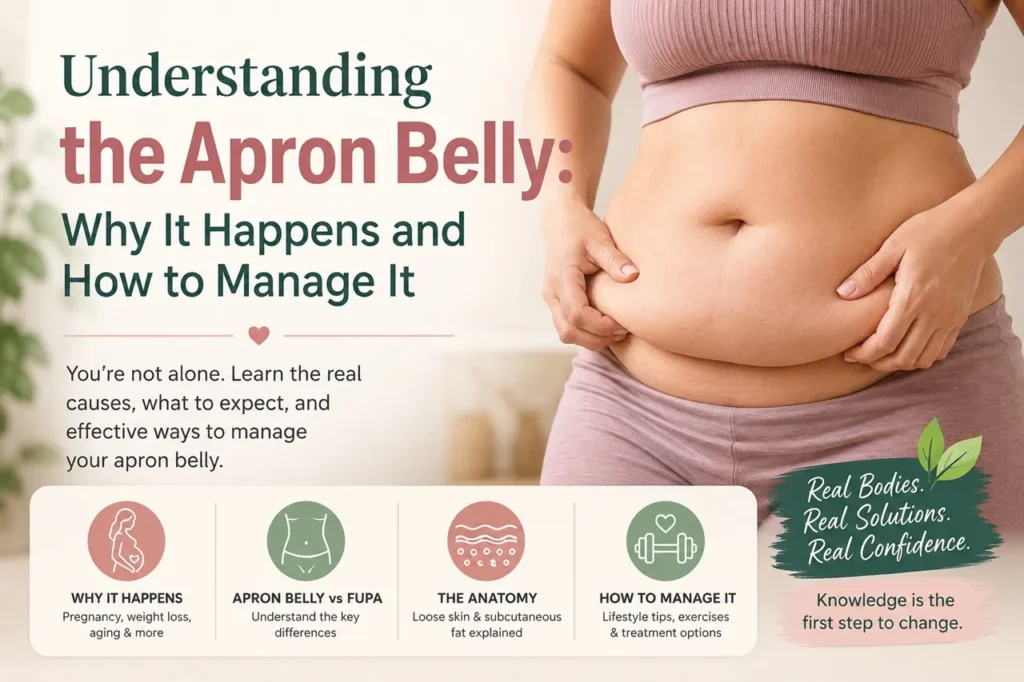
A mild pannus stomach is a small fold of skin and fat that hangs from the lower tummy and just covers the pubic hairline when you stand. It is usually called a grade 1 pannus, the mildest of five grades. Most mild folds can be managed at home with good skin care, steady weight loss and regular activity, and many shrink noticeably when the fat inside them reduces.
- Grade 1 means the fold covers the pubic hairline but not the genitals
- It is common and not a disease, but the skin crease can get sore
- See a GP if the skin is hot, broken, painful, smelly or not healing
A mild pannus stomach is often the first sign that the lower belly has started to fold over itself. You might notice it when you sit down, when trousers start to dig in below the tummy, or when a small crease appears where the fold meets the skin below. If you have read the word pannus in a clinic letter, or seen it online, it can sound worrying, but a grade 1 fold is the mildest form and usually the easiest to improve.
This guide explains what a mild pannus is, how to tell if yours is grade 1, why it forms and what you can do about it in the UK. For a wider overview of the medical terms, read our guide to the pannus belly, and for everything on caring for the skin, visit our belly skin hub.
What Is a Mild Pannus Stomach?
A mild pannus stomach is a grade 1 pannus: a small hanging fold of lower belly skin and fat that covers the pubic hairline but does not reach the genital area or thighs.
The medical name
Pannus and panniculus are the medical words for a fold of skin and the fat just under it, called subcutaneous fat, that hangs down from the lower abdomen. The everyday names are apron belly, stomach apron and, for a smaller fold, a small pannus or small apron belly. They all describe the same shape.
What a grade 1 fold looks and feels like
- a soft roll of skin and fat sitting just above the pubic area when you stand
- a crease underneath the fold that can feel warm or damp
- a fold that lifts easily with your hand and may almost disappear when you lie down
- waistbands that sit under the fold or roll down
- little or no effect on walking, sitting or getting dressed
How to Tell If You Have a Grade 1 Pannus
Clinicians often grade a pannus from 1 to 5 by how far it hangs when you are standing. Our full guide to apron belly grades explains every stage. For a mild pannus, the main question is simply whether the fold covers your genital area.
The five grades at a glance
| Grade | How far the fold hangs | How it is usually described |
|---|---|---|
| Grade 1 | Covers the pubic hairline but not the genitals | Mild |
| Grade 2 | Covers the genital area | Moderate |
| Grade 3 | Reaches the upper thighs | Moderate to large |
| Grade 4 | Reaches the middle of the thighs | Large |
| Grade 5 | Reaches the knees or below | Very large |

A simple check at home
- Stand in front of a full length mirror in your underwear, with your back straight and arms by your sides.
- Look side on as well as from the front, as a small fold is often easier to see from the side.
- Notice where the lowest edge of the fold sits: above the pubic hairline, on it, or lower.
- Lift the fold gently and check the crease for redness, moisture or broken skin.
- Write down what you see, or take a photo in the same light each month, so you can track changes.
When the grade is hard to judge
A fold can look bigger after a large meal, at the end of the day or when you are bloated. If you are not sure, check again on a different day, or ask your GP or practice nurse to look. They will not judge you, and an accurate grade is useful if you ever need a referral.
Why a Small Pannus Forms
A small pannus usually forms when the skin and fat of the lower belly are stretched beyond the point where they can fully spring back. Several things can combine.
Common causes
- weight gain, especially fat stored low on the tummy
- pregnancy, which stretches the skin and tummy muscles, and sometimes a caesarean scar that creates a ledge above it
- weight loss, where fat shrinks faster than skin can tighten
- ageing, as skin makes less collagen and elastin
- genes, which affect where you store fat and how elastic your skin is
Fat or loose skin?
It helps to know what your fold is mostly made of. If you can pinch a thick layer, the fold is probably mostly fat, which responds well to weight loss. If it feels thin and empty, like crepe, it is probably mostly loose skin, which changes much more slowly. Our guide to apron belly fat vs loose skin explains how to tell the difference.
Problems a Mild Pannus Can Cause
Many people with a grade 1 pannus have no physical symptoms at all. When problems do happen, they are usually in the skin crease under the fold.
Skin problems in the crease
Warmth, sweat and rubbing in the fold can lead to soreness, a red rash called intertrigo, or a yeast infection. Keeping the area dry is the best protection. If you already have a rash, our guide to apron belly rash covers what to do.
Comfort and confidence
A small fold can make some clothes uncomfortable, and it can affect how you feel about your body. These concerns are valid even when the fold is small. High waisted, soft waistbands that sit above the fold rather than cutting into it are often more comfortable.
Health risks linked to weight
The fold itself is not harmful, but if it has formed because of weight gain, the NHS notes that carrying extra weight raises the risk of conditions such as type 2 diabetes and heart disease. The NHS suggests aiming to keep your waist size to less than half your height as a simple guide.
What to Do About a Mild Pannus Stomach
The good news about a mild pannus stomach is that it is the grade most likely to improve without surgery, especially if it is mostly fat.

Look after the skin every day
- wash the crease once a day with warm water and a gentle, unperfumed cleanser
- pat the skin completely dry, lifting the fold, before dressing
- wear breathable cotton underwear, or tuck a soft cotton liner into the crease on hot days
- change out of sweaty clothes after exercise
Lose weight steadily if you need to
If you are above a healthy weight, the NHS recommends aiming to lose 0.5kg to 1kg a week by eating fewer calories than you use and staying active. Because a grade 1 fold is small, even moderate weight loss can make a visible difference. Our guide to how long it takes to lose an apron belly gives realistic timelines.
Build strength and stay active
You cannot burn fat from one spot, but strength training helps you keep muscle while you lose fat, and core work improves posture and how the belly is held. Brisk walking for apron belly is an easy place to start. If you have had a baby, check for separated tummy muscles first, as explained in our guide to apron belly and diastasis recti.
Be patient with loose skin
Skin can firm up a little over many months, especially after modest weight loss in younger skin. Creams and wraps do not remove a fold. Our small apron belly guide covers exercise, diet and skin care for smaller overhangs in more detail.
Will a Grade 1 Pannus Need Surgery?
Surgery on the NHS
An operation to remove the fold, called a panniculectomy or apronectomy, is rarely offered on the NHS for a grade 1 pannus. Local NHS policies usually look for a larger fold that causes ongoing problems, such as repeated skin infections or difficulty with daily life, and a weight that has been stable for some time. The rules vary between areas, so your GP is the best person to ask.
Private treatment
Some people choose a private tummy tuck for a small fold of loose skin that has not improved at a stable weight. This is cosmetic surgery with real risks and recovery time, so it is worth waiting until your weight has settled and any plans for future pregnancies are complete.
When to See a GP
Book a GP appointment, or call NHS 111 if you cannot get one and are worried, if you notice any of the following.
Skin warning signs
- skin in the crease that is hot, swollen, painful or spreading red
- broken, weeping or bleeding skin, or a bad smell
- a rash that has not improved after a week or two of keeping the area clean and dry
- fever or feeling unwell alongside a sore fold
Other reasons to get checked
See a GP if a lump or bulge appears near the belly button or a scar, if the fold changes size quickly without weight change, or if you would like support with weight loss. A GP can check your BMI and health and tell you about local NHS weight management services.
Frequently Asked Questions
What does a mild pannus stomach mean?
A mild pannus stomach is a small fold of skin and fat that hangs down from the lower tummy and just covers the top of the pubic hair area when you stand. It is usually described as a grade 1 pannus, the lowest grade on the five point scale clinicians use.
Is a grade 1 pannus a medical problem?
A grade 1 pannus is not a disease and many people have one without any problems. It can cause sweating, rubbing or rashes in the skin crease, so it is worth keeping the area clean and dry and seeing a GP if the skin becomes sore, broken or infected.
Can a mild pannus go away?
A mild pannus that is mostly fat often shrinks a great deal with steady weight loss and regular activity. If the fold is mostly loose, stretched skin, for example after pregnancy or large weight loss, it may get smaller but is less likely to disappear completely.
Can I get a panniculectomy on the NHS for a grade 1 pannus?
It is unlikely. NHS policies for removing an apron of skin usually look for a larger fold that causes ongoing problems such as recurrent infections or difficulty with daily activities, alongside a stable weight. Your GP can explain the rules where you live.
How do I know if my pannus is grade 1 or grade 2?
Stand in front of a full length mirror in your underwear. If the fold covers the pubic hairline but not the genital area, that is usually grade 1. If it covers the genital area, it is usually grade 2. A GP or nurse can confirm this for you.
The Bottom Line
A mild pannus stomach is a small, grade 1 fold that covers the pubic hairline but not the genital area. It is common, it is not a disease and it is the grade most likely to improve with steady weight loss, regular activity and good skin care. Loose skin changes more slowly, and surgery is rarely needed at this stage.
Your next step
Do the mirror check this week, write down your grade and start a simple daily skin routine. If the skin is sore, broken or infected, or you would like help with your weight, book a GP appointment.
Featured image: measuring tape by Evan-Amos, Wikimedia Commons, public domain, cropped.