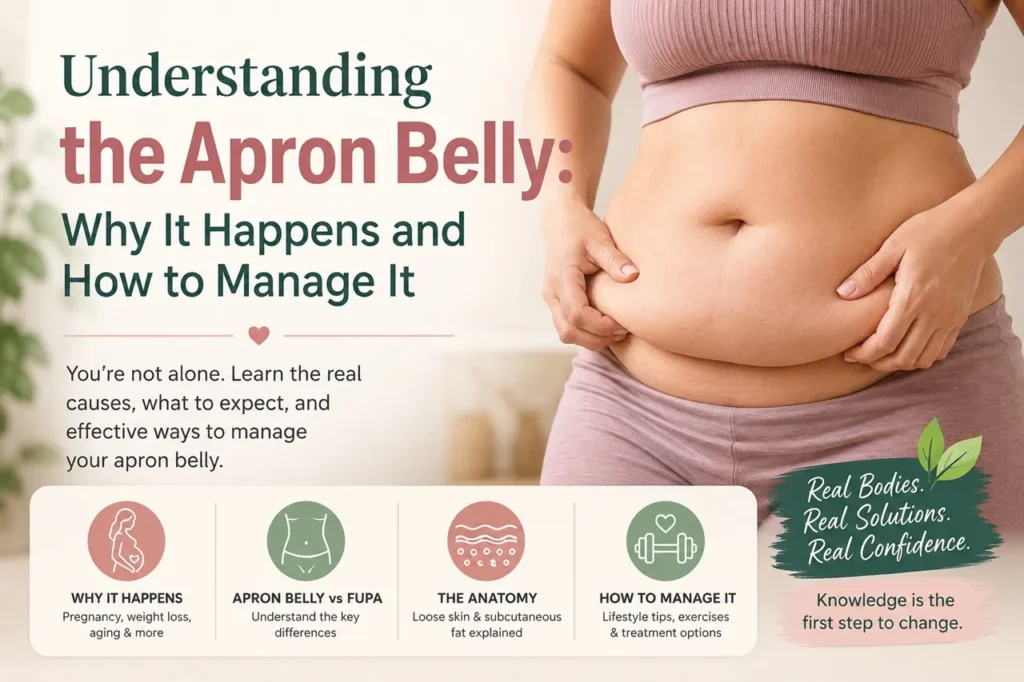

Quick Answer
Body confidence with an apron belly means feeling comfortable and at ease in your body, rather than liking how every part of it looks. It grows from small, practical daily steps, not from a single big change.
- Fix physical comfort first
- Wear clothes that fit the body you have now
- Speak to yourself kindly and move for enjoyment
Living with an apron belly can affect far more than how your clothes fit. It can shape how you feel in the mirror, in photos, in the bedroom and on a beach. Many people quietly avoid things they once enjoyed, not because they cannot do them, but because they feel exposed.
Body confidence does not mean loving every part of yourself every day. For most people, it means feeling settled enough in your skin to get on with life. This guide focuses on practical, everyday ways to build that feeling with an apron belly. If you would like the mindset side first, our guide to stopping feeling ashamed of a hanging belly is a good companion read.
What Body Confidence Really Means
Body confidence with an apron belly usually means feeling comfortable, capable and at ease in your body, rather than liking how every part of it looks. It grows from small daily actions, not from a single moment of self-acceptance.
Body positivity and body neutrality
Body positivity encourages you to love your body as it is. Some people find that freeing. Others find it too big a leap. Body neutrality is a gentler idea. It shifts the focus away from how your body looks and towards what it does for you, such as carrying your children, walking the dog or hugging a friend. Both approaches are valid, and many people move between them.
Confidence is a skill
Confidence often follows action rather than coming first. Each time you wear the outfit, join the swim or stay in the photo, it gets a little easier. The steps below are designed to be small enough to try this week.

Start With Physical Comfort
It is hard to feel confident when your body is sore, sweaty or squeezed. Fixing comfort first removes a constant reminder.
Look after the skin under the fold
A rash, smell or soreness under the fold can make you feel self-conscious all day. Wash and dry the area properly each morning and use a thin cotton or moisture-wicking liner if it helps. Our guide to apron belly skin care has a simple routine.
Choose underwear that supports you
Knickers that roll down or dig into the crease are a constant distraction. High-waisted styles that sit above the fold often feel far better. Light support garments can also reduce movement and rubbing. They are a tool for comfort, not something you must wear.
Build a small comfort kit
Keep a few items in your bag: a spare liner, anti-chafe balm and a small pack of wipes. Knowing you can deal with discomfort quickly helps you relax when you are out.
Make Your Wardrobe Work for You
Clothes that fit the body you have now are one of the fastest confidence boosts. You do not need a new wardrobe, just a few pieces that feel good.
Do a wardrobe sort
Take everything out that pinches, rolls down or makes you feel uncomfortable. Pack away items you are keeping “for when”, so they are not a daily reminder. Keep the clothes you reach for on a good day, and notice what they have in common.
Learn which shapes you like
Many people with an apron belly find high waists, wrap shapes, soft structured fabrics and A-line skirts comfortable. Others prefer fitted styles with a supportive layer. There are no rules, only what feels right to you. Our guide on styling an apron belly covers useful outfit ideas if you want them.
Wear the nice things now
Waiting to wear your favourite clothes until you change shape can mean waiting for years. Wear the good dress or bright top now. You deserve to enjoy them today.
Change How You Talk to Yourself
The words in your head affect how you feel more than you might expect. Changing them takes practice, but it works.
Notice the harsh voice
For a few days, simply notice when you criticise your body. Many people are surprised how often it happens. Noticing is the first step to changing it.
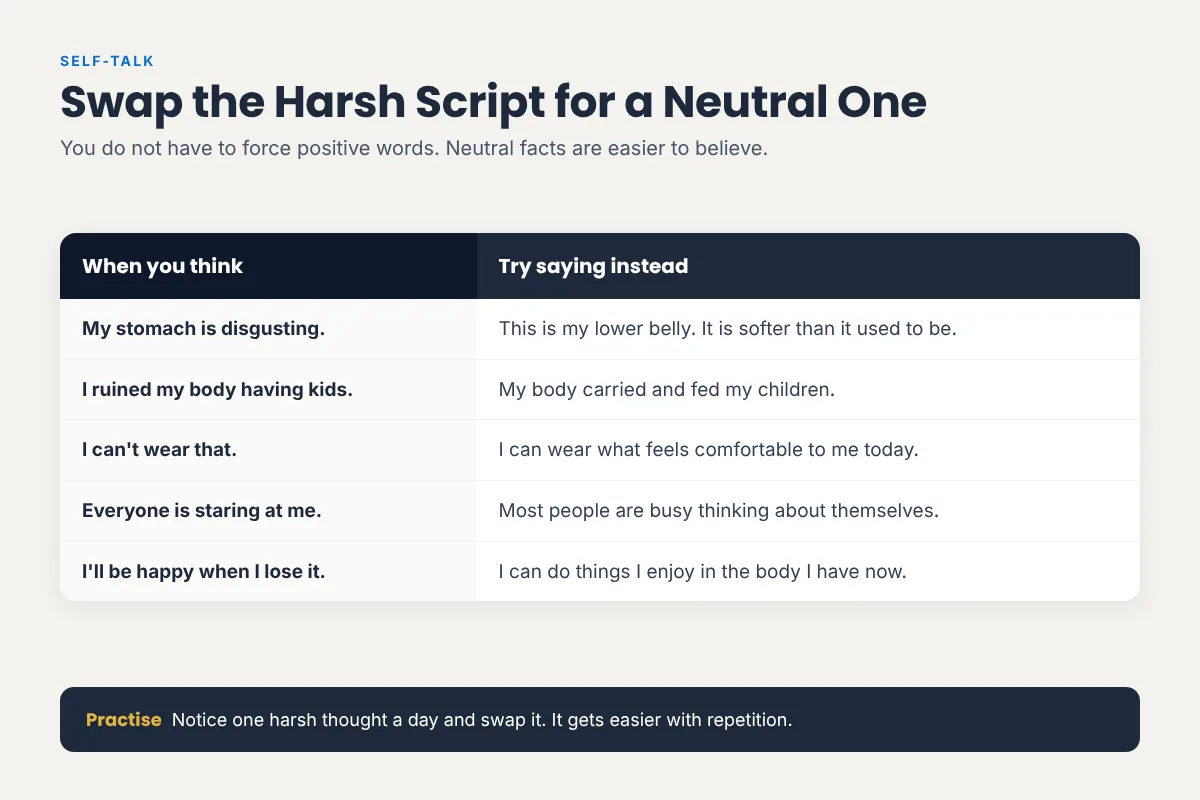
Swap criticism for neutral facts
Instead of “my stomach is disgusting”, try “my belly carried two babies” or “this is my lower belly, and it is softer than it used to be”. You do not need to force positive words. Neutral, factual statements are often easier to believe.
Talk to yourself like a friend
Ask yourself what you would say to a friend who felt this way. You would not call her names. Try to offer yourself the same kindness.
Mirrors, Photos and Social Media
These three areas often trigger the hardest feelings. Small changes can ease them.
Practise gentle mirror time
Some people avoid mirrors completely. Others check them constantly. Both can keep worry going. Try a short, calm look each day, noticing parts you like or feel neutral about, as well as your belly.
Stay in the photo
Many people with an apron belly hide behind others in pictures. Years later, they wish they had been in them. Ask for photos taken from slightly above, or stand at an angle, if that helps you feel comfortable. Then let yourself be in the picture.
Curate your feed
Unfollow accounts that make you feel worse, including diet and “body transformation” content. Follow people with bodies like yours who share everyday life, fashion or fitness. What you see every day shapes what feels normal.
Move Your Body for Enjoyment
Exercise used as punishment rarely lasts. Movement you enjoy builds confidence because it reminds you what your body can do.
Pick something that feels good
Walking, swimming, dancing, yoga and cycling are all good options with an apron belly. Choose what makes you feel strong or relaxed, not what burns the most calories. Our guide to yoga for apron belly has gentle poses designed for a heavier lower belly.
Celebrate what you can do
Notice progress that has nothing to do with appearance. You might climb the stairs without stopping, lift your shopping more easily or sleep better. These wins matter.
Handling Social Situations
Swimming pools, changing rooms and family comments can be the hardest moments. Having a plan helps.
Swimming and the beach
Choose a swimsuit you feel secure in, such as a high-waisted or tummy-control style. Wear a cover-up to and from the water if you like. Remember that most people at a pool are thinking about themselves, not you.
Comments from others
Unkind or unwanted comments about your body hurt, even when people mean well. A short, calm reply can end the topic: “I’d rather not talk about my body, thanks.” You do not owe anyone an explanation.
Intimacy and partners
Feeling self-conscious can affect your sex life. Talking honestly with a partner often helps more than hiding. Lingerie or nightwear you feel good in, softer lighting and positions that feel comfortable can all ease worry.
A Four-Week Confidence Plan
If you like structure, try this simple plan. Each week builds on the last, and none of it requires changing your body.
Week 1: comfort
Sort your underwear drawer and keep only pieces that feel good. Set up a simple morning skin care routine for the fold. Notice how often you criticise your body, without trying to change it yet.
Week 2: wardrobe
Pack away clothes that do not fit. Choose two outfits you feel good in and wear them this week. Unfollow at least five social media accounts that leave you feeling worse.
Week 3: self-talk and movement
Swap one harsh thought each day for a neutral fact. Try one form of movement purely for enjoyment, such as a dance class, a swim or a walk with a friend.
Week 4: stretch your comfort zone
Do one thing you have been avoiding. This might be staying in a group photo, going swimming or wearing a fitted top. Afterwards, write down how it went and what you learned.
Keep going
Repeat the steps that helped most, and add new ones over time. Confidence grows in layers, and setbacks are a normal part of the process.
When Feelings Become Too Heavy
Feeling low about your body sometimes is common. However, for some people it becomes constant and starts to affect daily life.
Signs to seek help
Speak to your GP if you spend hours a day worrying about your belly, avoid going out, check mirrors constantly or feel hopeless. These can be signs of anxiety, depression or body dysmorphic disorder, which are all treatable.
Talking therapies
In England, you can refer yourself to NHS Talking Therapies without seeing a GP first. Therapies such as cognitive behavioural therapy (CBT) can help with body image worries. Charities like Mind also offer support and information.
If you are thinking about surgery
Surgery can improve comfort and confidence for many people. It works best when you are clear about what it can and cannot change. If your distress is very high, a good surgeon may suggest talking to a psychologist first.
Frequently Asked Questions
How can I feel more confident with an apron belly?
Start with comfort, such as good skin care and supportive underwear. Wear clothes that fit you now, change harsh self-talk to neutral facts, and move in ways you enjoy. Small actions each week build confidence over time.
What is body neutrality?
Body neutrality focuses on what your body does rather than how it looks. It can feel more realistic than trying to love every part of yourself, especially when you are struggling.
How do I stop hiding in photos?
Start by staying in a few casual photos with people you trust. Stand at a slight angle or ask for photos from just above eye level if it helps. Over time, it becomes easier.
Should I tell my partner how I feel about my apron belly?
Many people find honest conversations reduce worry and bring them closer. Share what makes you feel comfortable and what does not. A caring partner will want to help.
When should I get help for body image worries?
See your GP if worries take up a lot of your day, stop you going out or leave you feeling hopeless. In England, you can also refer yourself to NHS Talking Therapies.
Will surgery fix how I feel about my body?
Surgery can improve comfort and confidence for many people, but it does not change everything. It helps to work on body image alongside any decision about surgery.
The Bottom Line
Body confidence with an apron belly is built through small, practical steps. Fix physical comfort first, wear clothes that fit, speak to yourself kindly, and move for enjoyment. Be patient with yourself, and ask for support if your feelings start to take over daily life.
Your next step
Choose one step from the ladder above and try it this week. It might be sorting your underwear drawer, unfollowing three accounts or staying in a family photo. Then pick the next one.