
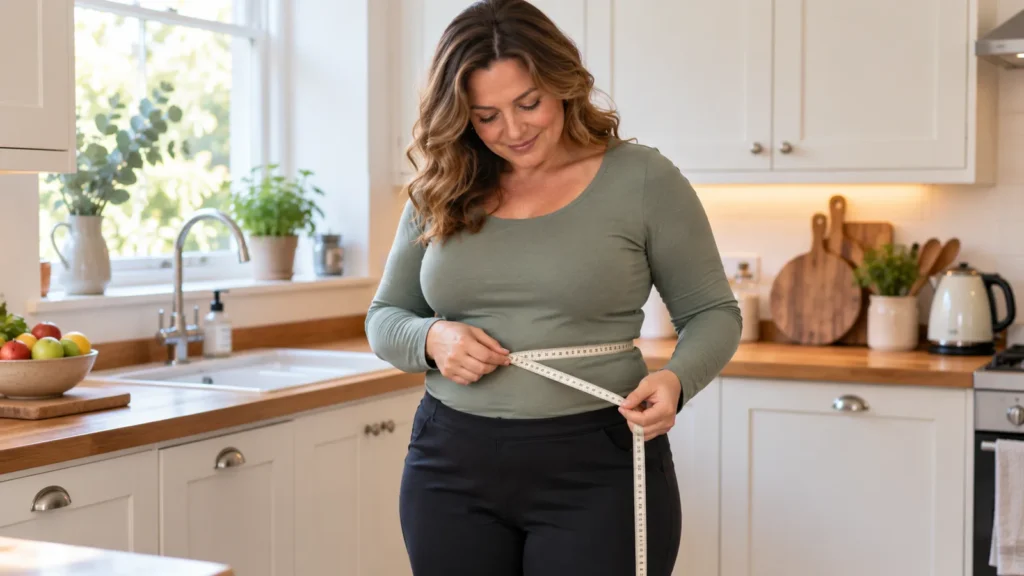
If you live with an overhang, you may have wondered whether it puts you at risk of diabetes. The link between an apron belly and diabetes is real, but it is not as simple as fold size. Your blood sugar risk depends far more on fat stored deep inside your tummy than on the skin hanging in front of it.
This guide explains the difference between the two types of belly fat and how to check your own waist. It also covers the skin problems diabetes can cause under a fold. Finally, it explains what blood sugar means for apron belly surgery and when to ask your GP for a test.
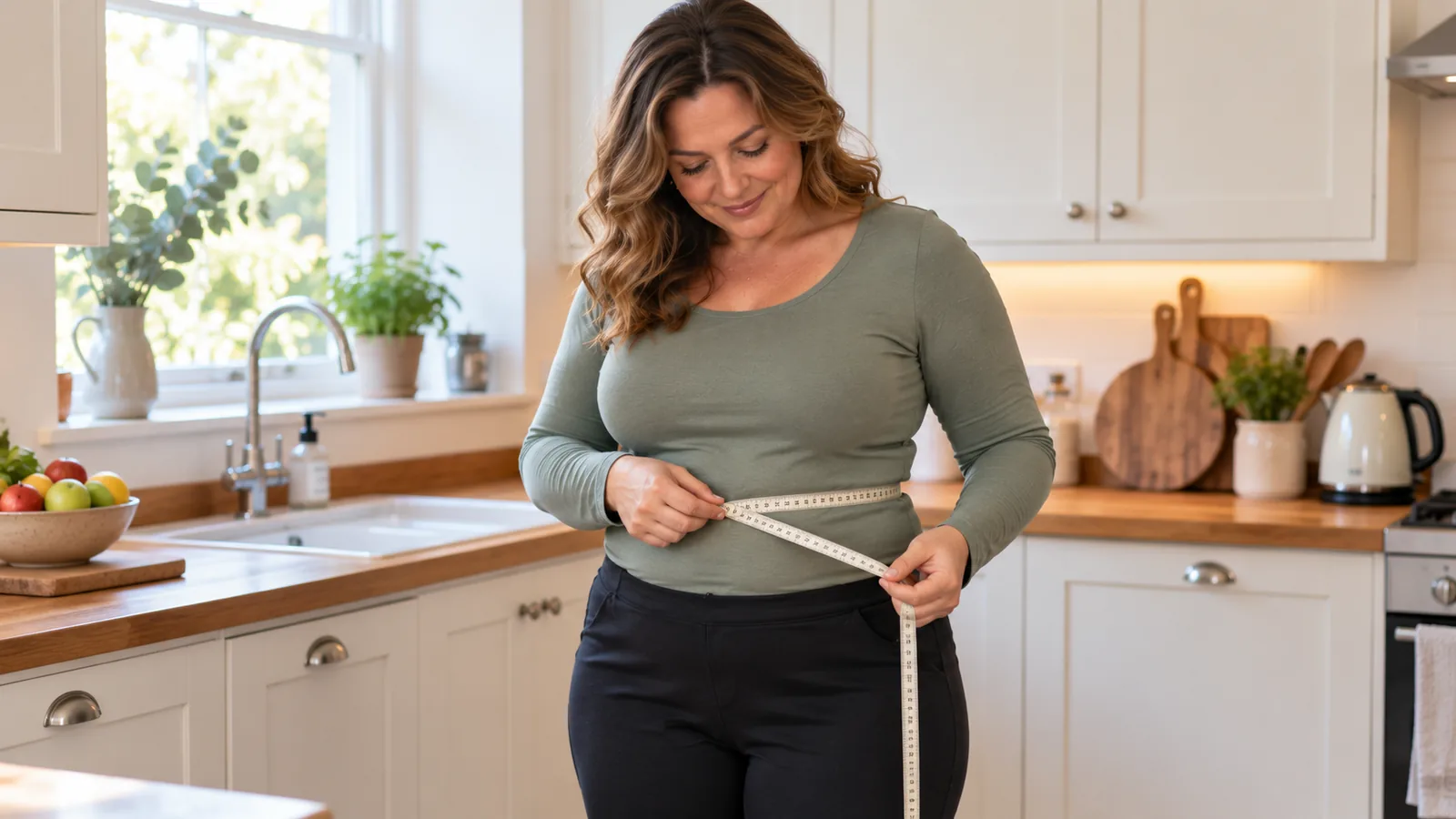
Apron Belly and Diabetes: The Short Answer
An apron belly does not cause type 2 diabetes on its own. The fold is mostly skin and the fat that sits just under it. However, the things that often lead to an apron belly, such as carrying extra weight, can also raise your diabetes risk.
Here are the key points at a glance:
- An apron belly, or pannus, is mainly loose skin and subcutaneous fat.
- Diabetes risk is more closely tied to visceral fat, which wraps around your organs.
- Your waist-to-height ratio gives a better clue to that hidden fat than the size of your fold.
- Diabetes can make rashes, thrush and slow-healing wounds under a fold more likely.
- High blood sugar can delay planned apron belly surgery until it is better controlled.
So, a large fold is not a diagnosis, and a small one is not a guarantee.
Two Kinds of Belly Fat: Subcutaneous vs Visceral
Not all belly fat behaves the same way. Doctors usually talk about two main types, and they sit in different places.
Subcutaneous Fat: The Fat You Can Pinch
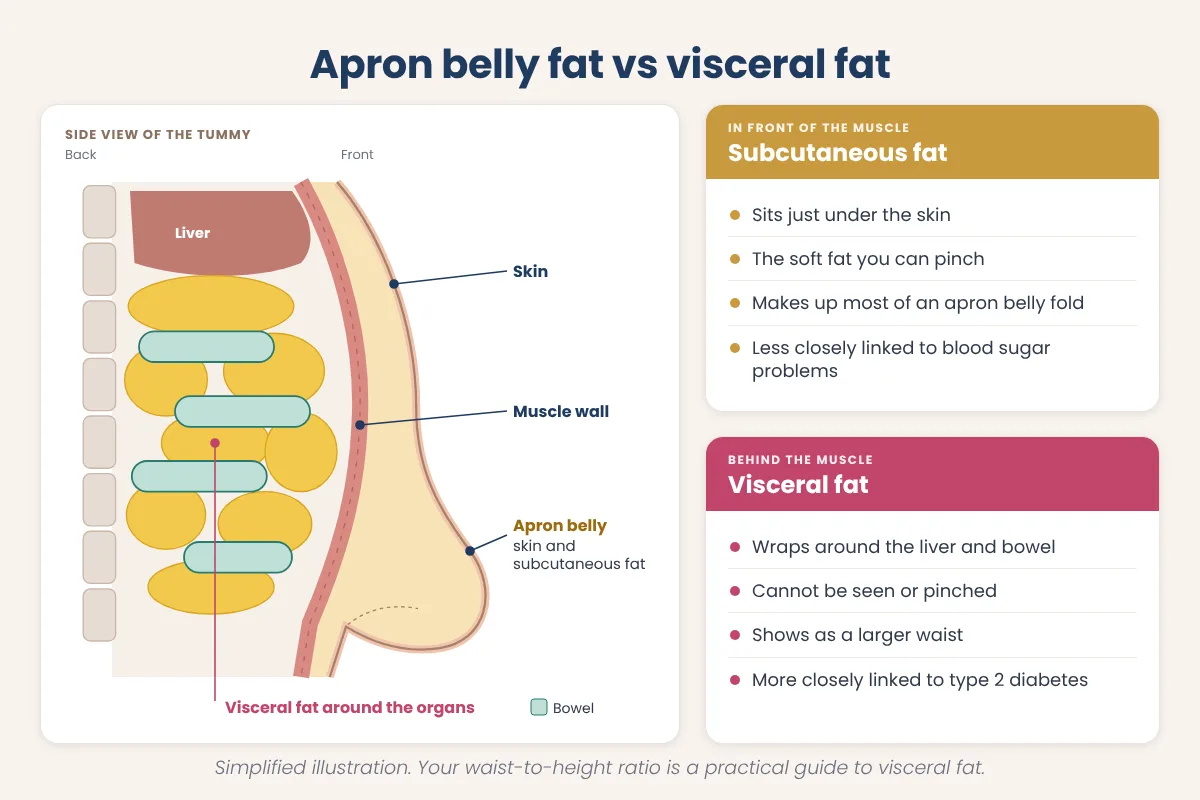
Subcutaneous fat lies just beneath the skin, in front of your tummy muscles. It is the soft layer you can pinch between your fingers. An apron belly is largely made of this fat, along with stretched skin that has lost some of its spring.
This is why the fold can stay after big weight loss, pregnancy or ageing. In those cases, much of what remains is skin rather than fat. Our guide to apron belly vs belly fat explains how to tell the two apart at home.
Visceral Fat: The Hidden Fat Around Your Organs
Visceral fat sits deeper, behind the tummy muscles. It surrounds organs such as the liver and bowel. You cannot see or pinch it, but it often shows as a firm, rounded tummy and a larger waist.
Research links fat stored around the organs and in the liver more closely with poor blood sugar control than fat under the skin. A 2020 review in Endocrine Reviews noted that people with obesity who stay metabolically healthy tend to carry less visceral and liver fat.
Why the Two Often Go Together
Many people carry both types at once. Gaining weight usually adds fat in several places, including deep inside the tummy. As a result, an apron belly can be a sign that it is worth checking your wider health. Our article on apron belly health risks covers the other problems a fold can bring.
How Central Fat Affects Your Blood Sugar
To understand the link, it helps to know what insulin does. Insulin is a hormone made by the pancreas. It moves glucose, or sugar, out of your blood and into your cells, where it is used for energy.
The NHS describes type 2 diabetes as a condition where insulin does not work properly, or there is not enough of it. In turn, the level of glucose in your blood becomes too high.
What Insulin Resistance Means
Insulin resistance means your cells stop responding well to insulin. At first, the pancreas makes extra insulin to keep blood sugar in range. Over time, it may not keep up, and blood sugar starts to rise. This in-between stage, called prediabetes, rarely causes symptoms, but healthy changes can often stop it becoming type 2 diabetes.
Carrying extra fat around the middle is one of the factors linked to insulin resistance. Others include low activity, family history and some hormone conditions. For example, polycystic ovary syndrome is associated with insulin resistance, and our guide to the PCOS apron belly covers this in more detail.
Check Your Waist-to-Height Ratio
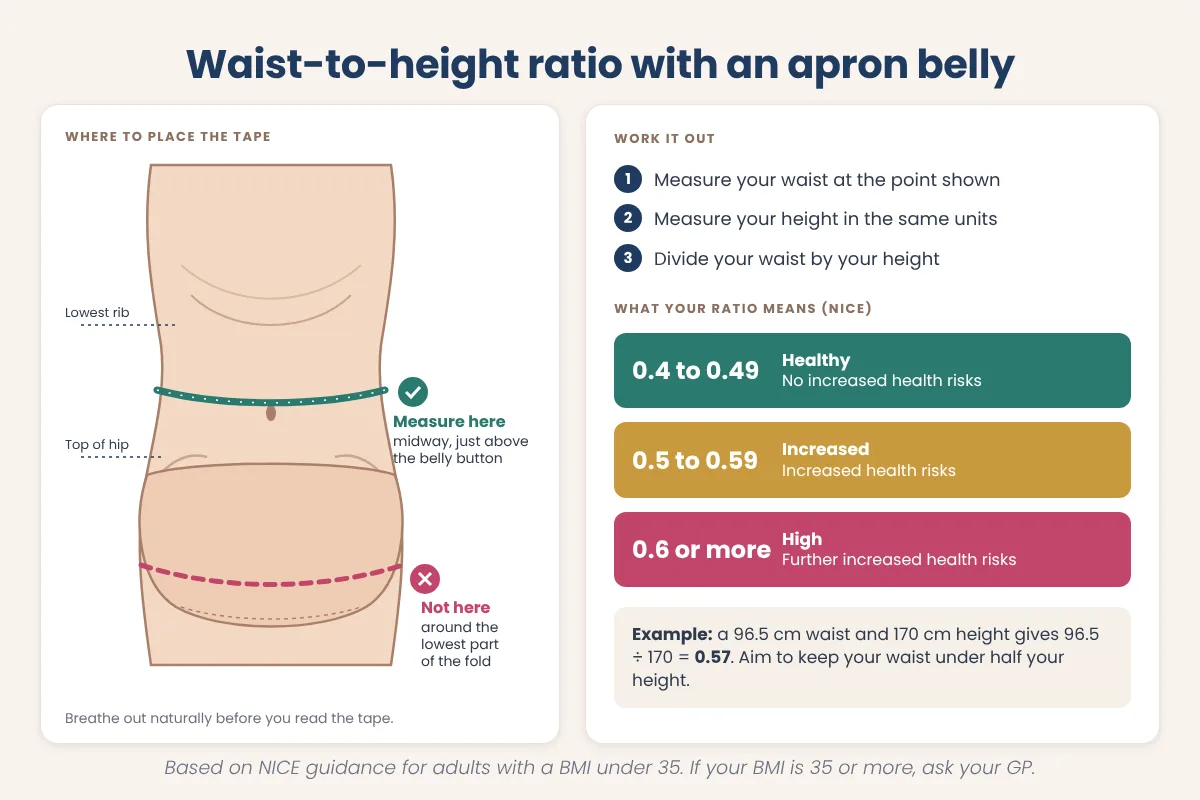
Because the size of your fold says little about deep fat, doctors use your waist instead. NICE guidance on central adiposity advises adults to keep their waist to less than half their height. In other words, aim for a waist-to-height ratio under 0.5.
How to Measure When You Have an Apron Belly
Measuring correctly matters, especially with a hanging fold. NICE sets out these steps:
- Find the bottom of your ribs and the top of your hip bones.
- Wrap the tape around your waist midway between these points. This is usually just above the belly button.
- Breathe out naturally, then take the reading.
- Measure your height in the same units, either both in centimetres or both in inches.
- Divide your waist measurement by your height.
Do not wrap the tape around the lowest, widest part of your fold. That point is lower than your true waist and will give a misleading result.
What Your Result Means
| Waist-to-height ratio | NICE category | What it suggests |
|---|---|---|
| 0.4 to 0.49 | Healthy central adiposity | No increased health risks |
| 0.5 to 0.59 | Increased central adiposity | Increased health risks |
| 0.6 or more | High central adiposity | Further increased health risks |
NICE lists type 2 diabetes, high blood pressure and heart disease among the risks linked to higher central fat. For example, someone 170 cm tall with a 96.5 cm waist has a ratio of 0.57. These bands apply to adults with a BMI under 35, of both sexes and all ethnic backgrounds.
If your BMI is 35 or above, the ratio is not used in the same way. Instead, speak to your GP about your overall risk.
Other Type 2 Diabetes Risk Factors
Your waist is only one part of the picture. The NHS says you may be more at risk of type 2 diabetes if:
- You are white and over 40, or over 25 and from a South Asian, Chinese, Black African or Black Caribbean background.
- A parent, brother or sister has type 2 diabetes.
- You are overweight and not very physically active.
- You have a condition that raises your risk, such as high blood pressure.
Diabetes UK adds that having had gestational diabetes in pregnancy also raises your future risk. This matters for many mums with an apron belly. If you had it, Diabetes UK advises a blood sugar test at your 6-week postnatal check and then once a year.
Use the Know Your Risk Tool
The NHS points people to the Diabetes UK Know Your Risk tool. It takes a few minutes and asks for your waist size, height and weight. Measure your waist as above, not by your belt size.
If you are aged 40 to 74 and live in England, you may also be offered a free NHS Health Check. Ask your GP surgery or local pharmacy if you have not had one.
Type 2 Diabetes Symptoms to Look Out For
Many people with type 2 diabetes have no symptoms at all, or they develop slowly. For this reason, a blood test is the only way to know for sure. The NHS lists these common symptoms:
- Feeling very tired.
- Peeing more than usual.
- Feeling thirsty all the time.
- Losing weight without trying to.
Other signs can include blurred vision and cuts or wounds that take longer to heal. Itching around the vagina, or thrush that keeps coming back, can also be a clue. If you notice any of these, book a GP appointment.
How Diabetes Affects the Skin Under Your Fold
The crease under an apron belly is warm, damp and short of air. These are ideal conditions for skin problems. When blood sugar is high as well, some of those problems become more likely and harder to clear.
Intertrigo
Intertrigo is a red, sore rash caused by skin rubbing on skin in a fold. Trapped sweat makes it worse. The Primary Care Dermatology Society lists both obesity and diabetes as factors that make it more likely. It also notes that bacterial or fungal infection on top of the rash is common.
Fungal Infections and Thrush
Candida, the yeast behind thrush, is the fungus most often linked to intertrigo. It can cause a red rash with small spots, known as satellite spots, around the edge. Since the NHS lists repeated thrush as a possible sign of diabetes, a fold rash that keeps returning is worth mentioning to your GP. Our guide to apron belly rash explains daily care and treatment.
Acanthosis Nigricans
Acanthosis nigricans causes dry, dark, velvety patches of skin. The NHS says they usually appear in the armpits, neck or groin, and they are most common in skin folds. Obesity is the most common cause, and type 2 diabetes is another. Some patches also have small skin tags.
The NHS advises seeing a GP about any new dark patches, which usually fade once the cause is treated.
Diabetes, Wound Healing and Apron Belly Surgery
Blood sugar control matters a great deal if you are thinking about a panniculectomy, also called an apronectomy. This operation removes the hanging fold of skin and fat. It leaves a long wound across the lower tummy, which needs to heal well.
Why Surgeons Check Your Blood Sugar
Diabetes can slow wound healing and raise the risk of infection after surgery. A 2018 US study in Plastic and Reconstructive Surgery looked at over 7,000 panniculectomy patients. It found diabetes was an independent risk factor for the wound opening up. In the same study, obesity and smoking were linked to wound infections.
The HbA1c Level Before Planned Surgery
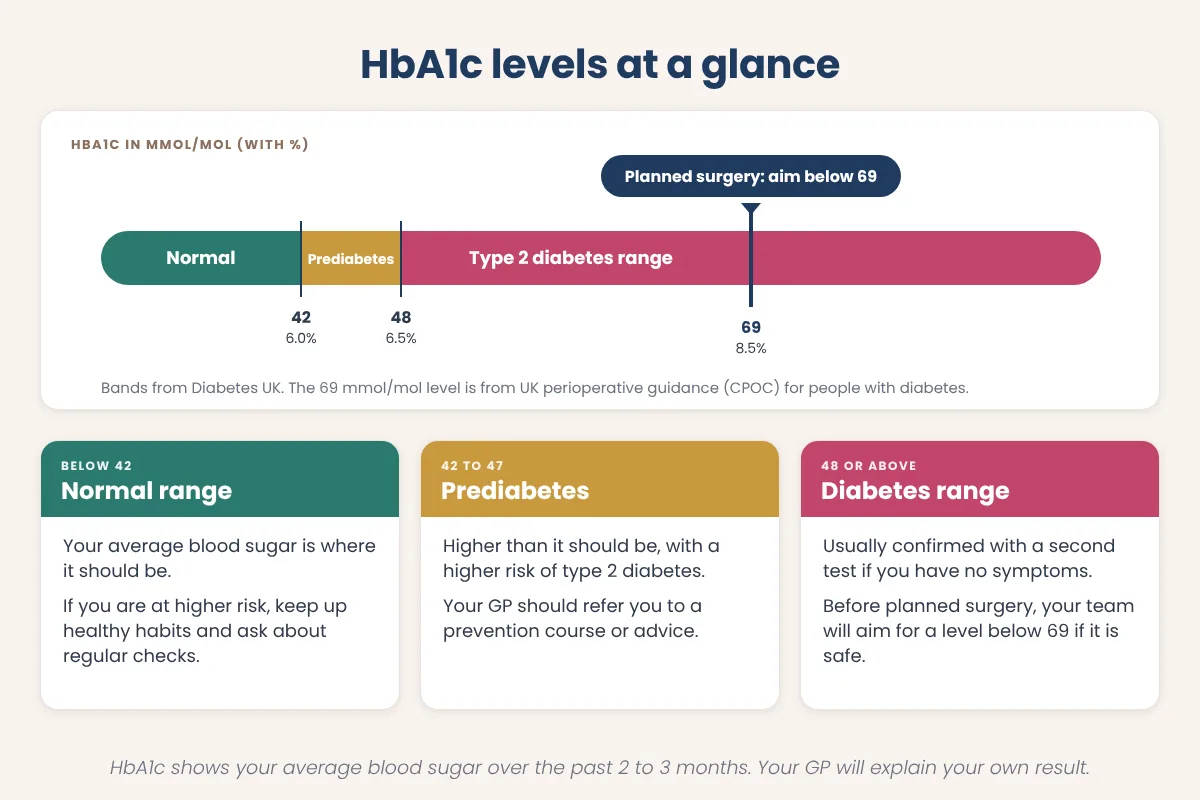
UK guidance from the Centre for Perioperative Care (CPOC) covers people with diabetes referred for planned surgery. It says their HbA1c should be below 69 mmol/mol (8.5%), measured within 3 months before referral, if this is safe to achieve. If your level is higher, your GP will usually aim to improve it first.
In urgent cases, though, the need for surgery always comes first, and your surgical team will make that call.
NHS Funding Rules Still Apply
Good blood sugar control is only one step. NHS funding for an apronectomy also depends on local criteria, such as a stable BMI and being a non-smoker. Our guide to getting an apronectomy on the NHS sets out the usual requirements.
Weight Loss Options That Help Both
Losing some weight can lower your diabetes risk and ease pressure on the skin of your fold. The NHS says losing just 5 to 10% of your body weight can improve your health. Even so, a fold made mostly of loose skin may not shrink fully.
Everyday Changes
The NHS suggests aiming to lose 0.5 to 1 kg a week, through a balanced diet with fewer calories and more activity. Breaking up long spells of sitting also helps, according to Diabetes UK. If you are unsure where to start, our guide to walking for an apron belly offers a gentle plan.
NHS Weight Management Support
If you have prediabetes, Diabetes UK says your GP should refer you to a type 2 prevention course or advice. If you already have type 2 diabetes or high blood pressure, you may be offered the NHS Digital Weight Management Programme. This is a free 12-week online programme that you join through your GP surgery.
NHS guidance for this programme generally asks for a BMI of 30 or more, or 27.5 or more for some ethnic groups. You can also check your GP surgery or local integrated care board website for other services you can self-refer to.
GLP-1 Weight Loss Medicines
Medicines such as semaglutide and tirzepatide reduce appetite and help you feel full for longer. On the NHS, they are prescribed only if you meet the BMI and health criteria, alongside diet and activity support. Semaglutide is also used to treat type 2 diabetes under different brand names.
These medicines are prescription-only and can cause side effects. If you buy them privately, the NHS advises using a registered pharmacy, because fake versions are sold online. Fast weight loss can also leave looser skin, as our article on Ozempic and apron belly loose skin explains.
The HbA1c Test and When to See a GP
Type 2 diabetes is diagnosed with a blood test. The most common one is the HbA1c test, which shows your average blood sugar over the past 2 to 3 months.
| HbA1c result | What it usually means |
|---|---|
| Below 42 mmol/mol (6%) | Normal range |
| 42 to 47 mmol/mol | Prediabetes, with a higher risk of type 2 diabetes |
| 48 mmol/mol (6.5%) or above | Type 2 diabetes range |
If you have no symptoms, a second test is usually needed to confirm a diabetes result. Conditions that affect red blood cells, such as thalassaemia, can make the result less accurate, so your GP may use another test.
When to Book a GP Appointment
The NHS advises seeing a GP if you think you may have type 2 diabetes, or if you are at higher risk. In addition, book an appointment if:
- Your waist measures more than half your height.
- You notice tiredness, extra thirst or peeing more than usual.
- Rashes or thrush under your fold keep coming back.
- You spot new dark, velvety patches of skin.
- A cut or sore under your fold is slow to heal.
- You are thinking about apron belly surgery and have diabetes.
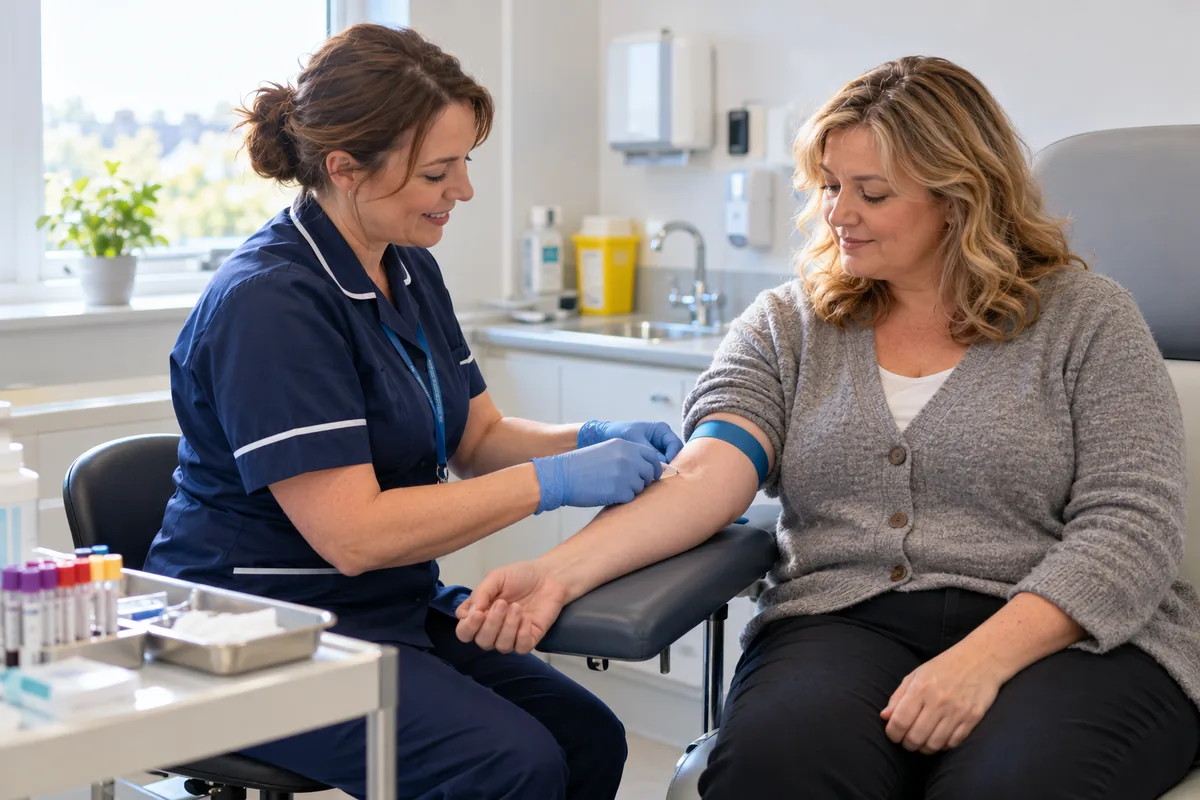
Your GP or practice nurse can arrange a blood test and explain your result. If you have diabetes, Diabetes UK says you are entitled to an HbA1c test at least once a year.
Frequently Asked Questions
Does an apron belly mean I have diabetes?
No, an apron belly does not mean you have diabetes. The fold is mostly skin and fat under the skin. However, the extra weight that often comes with it can raise your risk. A waist check and a blood test give a clearer answer.
Is apron belly fat visceral or subcutaneous?
An apron belly is mostly subcutaneous fat and loose skin, which sit in front of the tummy muscles. Visceral fat lies deeper, around your organs. Many people carry both, and visceral fat is more closely linked to type 2 diabetes.
How do I measure my waist if I have an apron belly?
Find the bottom of your ribs and the top of your hips, then measure midway between them. This is usually just above your belly button. Breathe out naturally first, and do not measure around the lowest part of the fold.
Can diabetes make an apron belly rash worse?
Yes, it can. Diabetes is a known risk factor for intertrigo, and high blood sugar makes yeast infections such as thrush more likely. A fold rash that keeps coming back is worth mentioning to your GP.
Can I have apron belly surgery if I have diabetes?
Often, yes, but your blood sugar needs to be well controlled first. UK guidance suggests an HbA1c below 69 mmol/mol (8.5%) before referral for planned surgery, if it is safe to achieve. You may also need to meet local NHS criteria.
Will losing weight get rid of my apron belly?
Losing weight can reduce the fat in your fold and lower your diabetes risk. However, stretched skin may not shrink back fully. If a loose fold remains at a stable weight, your GP can discuss support or surgery options.
What HbA1c level means prediabetes?
According to Diabetes UK, an HbA1c of 42 to 47 mmol/mol means prediabetes. A level of 48 mmol/mol or above is in the type 2 diabetes range. Your GP will explain what your own result means.
Final Thoughts
An apron belly is mostly skin and fat under the skin, so its size alone cannot tell you about your blood sugar. The fat deep inside your tummy matters more, and a simple waist-to-height check is a good first clue. Meanwhile, rashes that keep returning or slow-healing sores under your fold are worth a closer look.
Above all, try not to guess. Measure your waist, use the Know Your Risk tool and ask your GP for an HbA1c test if you are concerned. Finding raised blood sugar early gives you the best chance to bring it down.