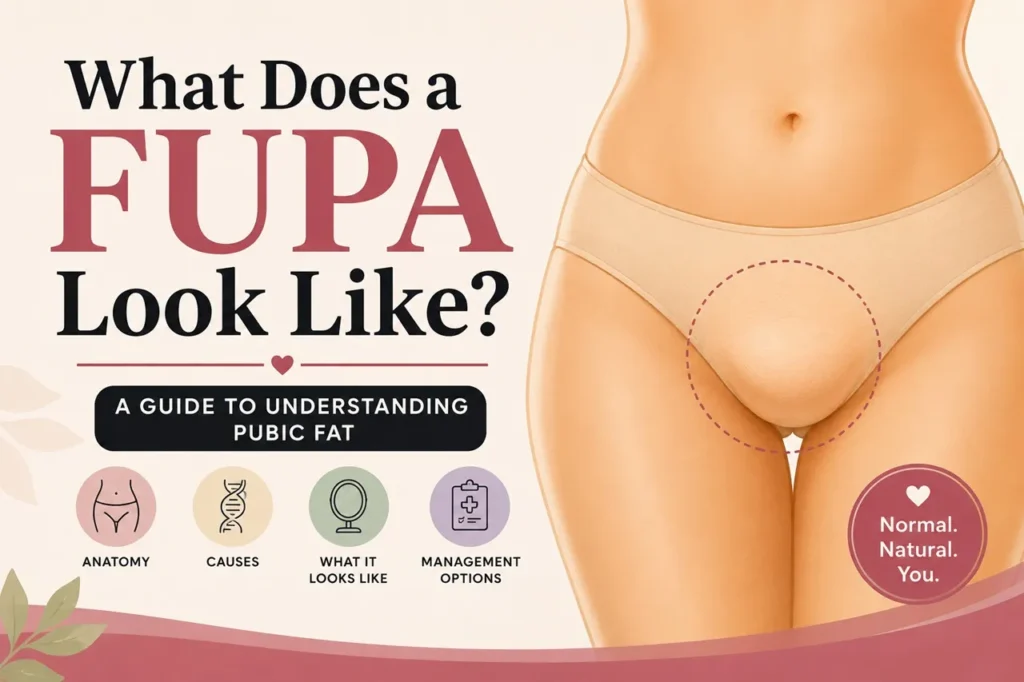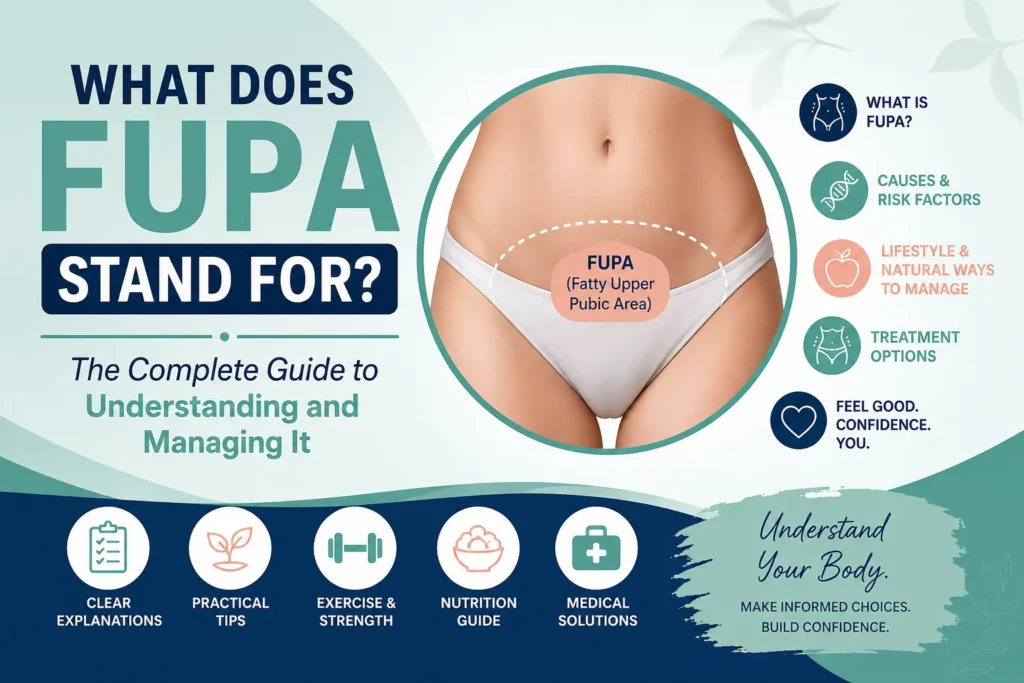

If you’ve ever looked down and noticed a soft pouch above your pubic area, you may have searched “FUPA” before. FUPA stands for fat upper pubic area. It refers to a layer of fat under the skin just above the pubic bone. It is incredibly common, yet most people who have one don’t fully understand why it’s there.
This guide explains the causes, clears up a few common myths, and offers realistic ways to manage it.
It does this without the shame spiral that often comes with it.
What Exactly is a FUPA?
In plain terms, a FUPA is adipose tissue stored in the pelvic region, just above the pubic bone. This is not a medical diagnosis. It is simply where your body happens to store fat.
Two layers are worth understanding here. Visceral fat sits deep inside the abdomen, wrapped around your organs. Subcutaneous fat is different; it lives just under the skin, held in place by a network of connective tissue.
A FUPA is almost always subcutaneous. This is good news.
It responds to lifestyle changes better than deeper visceral fat. The abdominal wall underneath stays mostly unchanged. The fat layer on top creates the look people are trying to understand.
Read Also: Apron Belly vs FUPA: What’s the Difference & How to Get Rid of It?
Why Does It Develop? Common Causes Behind Lower Abdominal Fat

Nobody develops a FUPA for just one reason. Usually, it’s a mix of things stacking on top of each other.
Weight Fluctuations
Gaining weight quickly stretches the skin and expands fat cells in the area. Losing weight rapidly, on the other hand, can leave behind loose skin that the fat pad underneath makes more noticeable. Neither process happens evenly across the body. The lower abdomen tends to hold fat longer than areas like the arms or face.
Postpartum Factors
Pregnancy changes the body in ways that don’t simply reverse after delivery. During postpartum recovery, months of stretching leave the skin looser than before.
With multiple pregnancies, it may not snap back as people expect. Add hormone changes and a slower metabolism. Then it is easy to see why many new mothers notice this area the most.
Hormonal Changes and Genetics
Here’s something a lot of people don’t realise: genetics plays a bigger role than diet in where your body stores fat. Some people tend to store it in the lower abdomen rather than in the hips or thighs.
On top of that, hormone imbalances play a role. Chronic stress raises cortisol levels, and that high cortisol promotes fat storage in this area.
Stress isn’t just “in your head.” It appears on your body, often right here. These metabolic changes build over time, which can make the area feel stubborn.
Myth vs. Reality: Understanding the Confusion
A lot of confusion online comes from mixing up two different things.
FUPA vs. Panniculus
A FUPA is fat. A panniculus is different. It is an apron of extra skin, sometimes with fat.
It hangs down, and it often appears after major weight loss or several pregnancies. The difference between panniculus and FUPA matters because they respond to different solutions.
A FUPA might shrink with lifestyle changes. A panniculus involves loose skin and stretched tissue. Exercise usually won’t tighten the loose skin again.

Addressing the “Unhealthy” Myth
Here’s a myth that needs to die: this only happens to people who don’t take care of themselves. That’s simply false. Athletes have one.
Thin people have one. Genetics, hormones, childbirth, and ageing drive it, and those factors have little to do with how “healthy” someone is. Bodies don’t distribute fat with our approval in mind.
Can you manage a FUPA?
Yes, to a degree, though it’s worth setting realistic expectations from the start.
Lifestyle Modifications
Sustainable healthy weight management beats any quick fix you’ll find in an ad. That means a balanced diet, consistent sleep, and stress management, since cortisol control matters here. Crash diets tend to backfire, often making skin laxity worse rather than better.
The Role of Exercise
Spot reduction is the idea that you can lose fat in one specific area.
It isn’t real, no matter what a fitness influencer promises. However, strengthening your core still helps. Building the muscle underneath a fat layer can improve posture and firm up the area, even if the fat itself takes time to reduce.
If you’re researching exercises for lower belly fat, choose programmes that mix core strength training and cardio. Avoid workouts that only target the abs. For more on this, our guide to FUPA exercises breaks it down step by step.
If your main question is how to lose lower belly fat, the honest answer is simple.
- You need total-body fat loss from a calorie deficit.
- Strength training helps too.
- No single miracle exercise will do it.
When to Consult a Professional
Sometimes lifestyle changes aren’t enough, and that’s completely normal; it doesn’t mean you did anything wrong. For more serious cases, especially when there is excess skin and not just fat, schedule a visit with a doctor.
Surgical options like a tummy tuck (abdominoplasty) remove excess skin and tighten the abdominal wall. Doctors usually consider them when loose skin, not fat, causes the main issue. A qualified plastic surgeon can help you figure out which category you actually fall into.
According to the Mayo Clinic, abdominoplasty candidates are often at a stable weight. They also have excess skin that does not respond to diet or exercise. To learn about recovery, our article on tummy tuck recovery explains the timeline in detail.
The Importance of Body Positivity
Let’s step back for a second. A layer of fat in your lower abdomen is not a personal failing; it’s just anatomy.
Body positivity isn’t about giving up on your goals. It means accepting your body as it changes. Changes can come from pregnancy, weight shifts, stress, or ageing. You can still work toward what helps you feel good.
Self-confidence doesn’t have to wait for the fat to go away. It can exist alongside the process, not just after it.

Frequently Asked Questions
Yes, particularly if the FUPA is mostly fat rather than loose skin. Results can vary a lot between people. This happens because genetics and skin elasticity affect how visible the change is.
No. Thin people develop them too. Genetics, hormones, pregnancy, and ageing all contribute, often independently of overall body weight.
Most people notice small changes after 8 to 12 weeks of steady habits, but clear results often take months. Patience matters more than intensity here.
Conclusion
A FUPA is common, normal, and, most importantly, not a reflection of your health or worth. It develops from genetics, hormones, pregnancy, and weight changes. Lifestyle changes and strength training can help, but quick fixes rarely work.
For more severe cases involving excess skin, a conversation with a medical professional can clarify your options. Above all, be patient with your body. It’s carried you through a lot, and a little grace goes a long way.