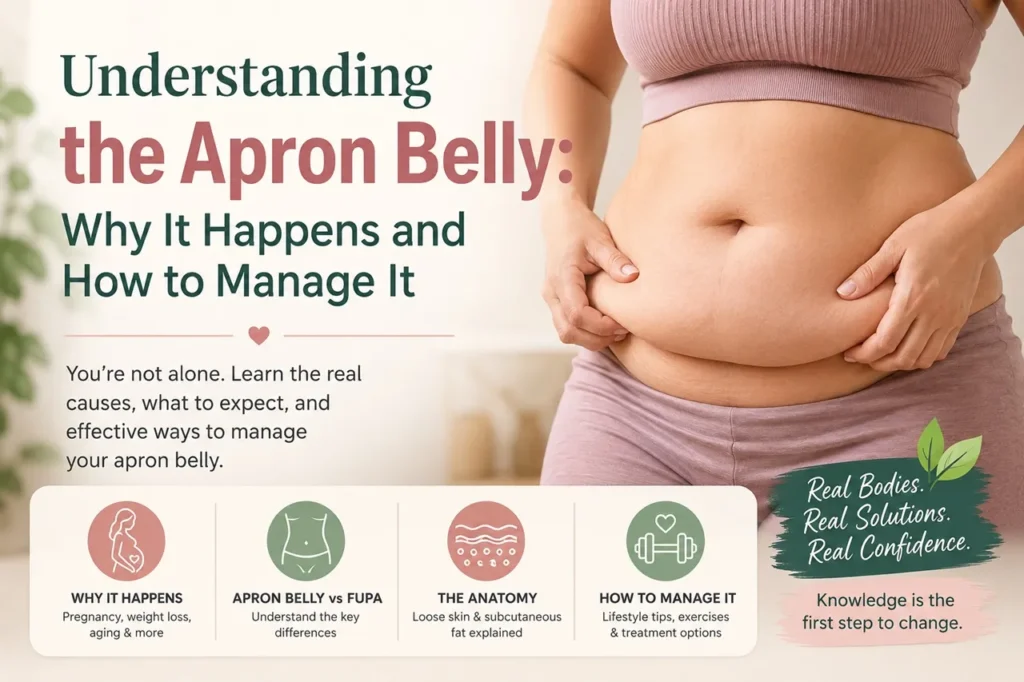

Many women notice their tummy changing shape around menopause, even when their weight stays much the same. If you already live with an overhang, you may wonder whether hormones could help. This guide looks at HRT and apron belly changes together: what the evidence says, what HRT can realistically do and where its limits lie.
It explains why fat tends to move to the middle after menopause and what studies show about HRT and fat distribution. It also covers the main types of HRT and what they cannot change. Finally, it sets out lifestyle steps that help, what to know before apron belly surgery and when to speak to your GP.

HRT and Apron Belly: The Short Answer
HRT, or hormone replacement therapy, is a treatment for menopause symptoms. It is not a weight-loss treatment, and it cannot remove a hanging fold of skin. Even so, some research suggests it may limit the build-up of fat around the middle after menopause.
Here are the key points at a glance:
- Falling oestrogen at menopause is linked to more fat around the tummy.
- The NHS says there is little evidence that most types of HRT make you put on weight.
- Some studies link HRT with less visceral fat, but the evidence is mixed.
- HRT cannot tighten loose skin or shrink an existing apron belly on its own.
- HRT tablets slightly raise blood clot risk, which matters before surgery.
- Patches, gels and sprays do not raise blood clot risk, according to the NHS.
In short, HRT may help some women with their symptoms and with where new fat settles. However, it works best alongside strength training, regular activity and a balanced diet.
Why Menopause Moves Fat to Your Middle
The NHS lists weight gain as a common symptom of perimenopause and menopause. It also notes that the extra weight often settles around the stomach and upper body. For many women, this is the point at which a small overhang starts to feel bigger.
The Role of Falling Oestrogen
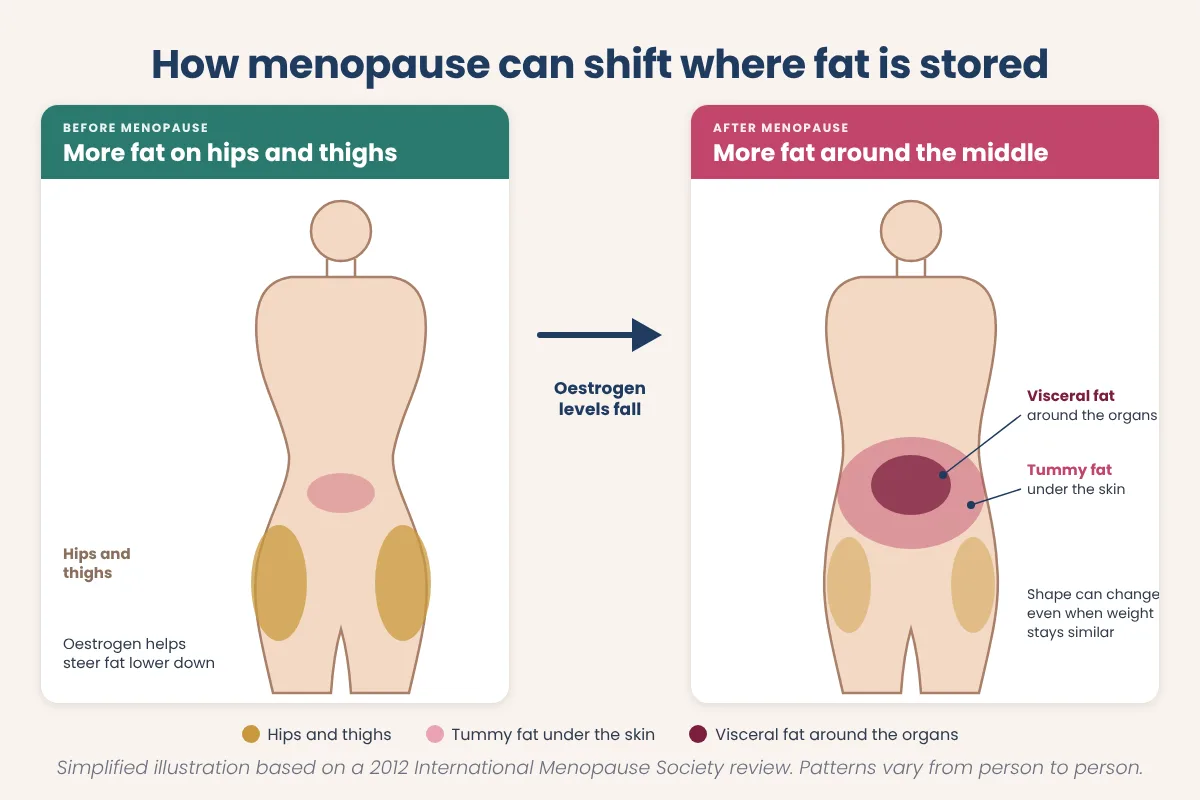
Before menopause, oestrogen helps steer fat towards the hips and thighs. As oestrogen levels fall, that pattern tends to shift. A 2012 review by the International Menopause Society, published in Climacteric, looked at this in detail.
The review found that weight gain itself cannot be blamed on the menopause transition. However, the hormonal change is linked to more total body fat and more abdominal fat. In other words, your shape can change even if the scales barely move.
Ageing, Muscle and Daily Habits Also Play a Part
Hormones are only one piece of the puzzle. The NHS notes that it is common to lose muscle strength as you reach menopause. Poor sleep from night sweats, low mood and a busy life can also make it harder to stay active.
Our guide to menopause belly vs apron belly explains how to tell these changes apart from a true overhang.
Does HRT Cause Weight Gain?
This is one of the most common worries about starting HRT. The NHS page on side effects of HRT says there is little evidence that most types make you put on weight. It adds that weight gain around menopause often happens whether you take HRT or not.
Some side effects can feel like weight gain, though. For example, the NHS lists breast tenderness and feeling sick among possible side effects of oestrogen. These usually settle within a few weeks. If side effects last longer than 3 months, the NHS advises speaking to a GP. A change of dose or type, such as moving from tablets to patches, may help.
Can HRT Change Where You Store Fat? What the Evidence Says
Research on HRT and fat distribution points in a hopeful direction, but it is not settled. Here is a fair summary of the main findings.
Studies That Suggest Less Central Fat
The 2012 International Menopause Society review found that oestrogen therapy appears to reduce the tendency to store fat around the middle. Most studies it looked at showed a fall in overall fat mass with oestrogen, with or without a progestogen. The authors concluded that oestrogen may partly prevent the change in body shape linked to menopause.
A 2018 Swiss study, from the OsteoLaus cohort, measured body fat in 1,053 women aged 50 to 80 with scans. After allowing for age, current HRT users had less visceral fat than women who had never used it. They also had a slightly lower BMI. However, the benefit was not seen in women who had stopped HRT.
A Trial That Found No Change
Not every study agrees. A US trial from 2005 randomly gave 76 women in early menopause either combined HRT or a dummy pill. It used scans to measure tummy fat over 2 years. In the 51 women who completed the trial, there was no difference in deep tummy fat, fat under the skin or weight between the groups.
That trial used an older type of tablet HRT, so its results may not apply to every product used today.
What This Means for You
Observational studies, like the Swiss one, can show a link but cannot prove that HRT caused it. Women who choose HRT may differ in other ways, such as their health or habits. As a result, HRT should not be started only to change your shape.
The fair conclusion is this. HRT may help limit new fat building up around the organs after menopause. On the other hand, it is unlikely to shift fat you already carry without other changes.
Types of HRT Explained
HRT replaces the hormones your body makes less of during menopause. According to the NHS, it mainly contains oestrogen, progestogen or both. The right type depends on your symptoms, your stage of menopause and whether you still have a womb.
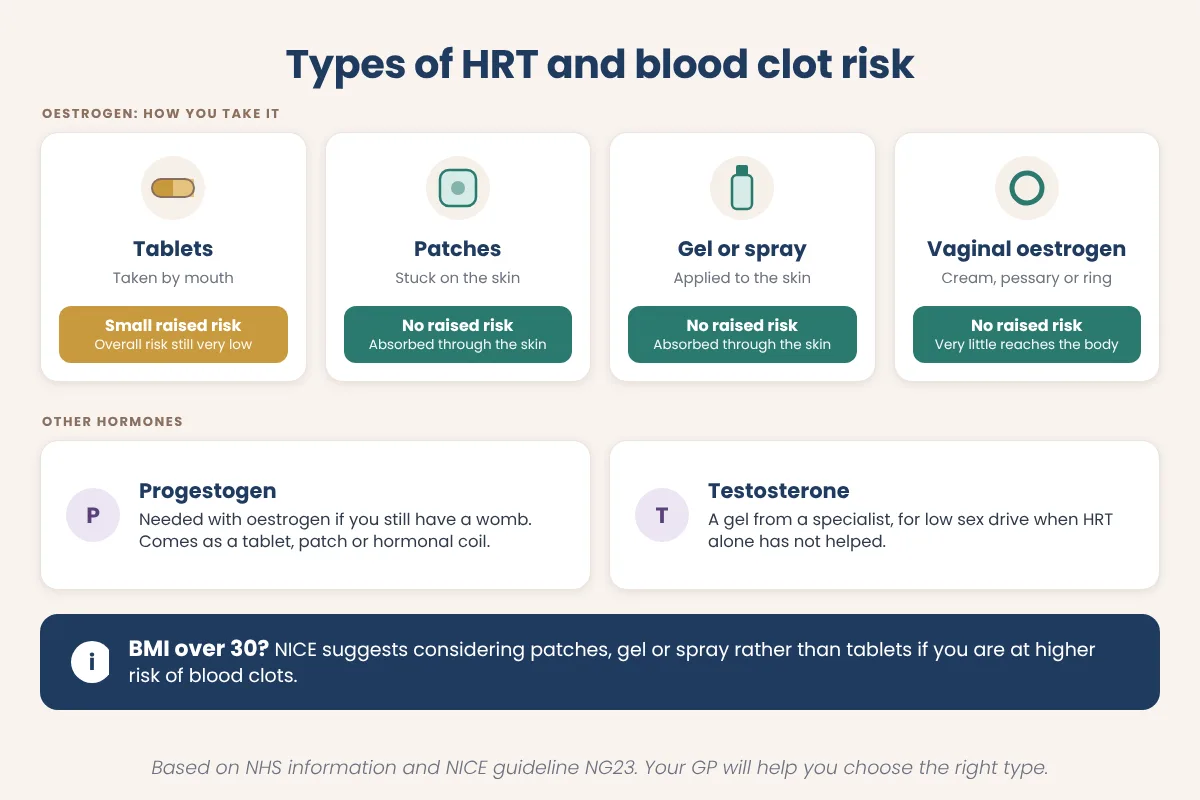
| Type of HRT | How it is taken | Main use |
|---|---|---|
| Oestrogen tablets | By mouth, usually once a day | Hot flushes, night sweats and other symptoms |
| Oestrogen patches, gel or spray | Through the skin | The same symptoms, without the raised clot risk of tablets |
| Progestogen | Tablets, patches or a hormonal coil (IUS) | Protects the womb lining if you still have a womb |
| Vaginal oestrogen | Cream, gel, pessary, tablet or ring | Vaginal dryness and discomfort |
| Testosterone | Gel, prescribed by a specialist | Low sex drive when HRT alone has not helped |
Oestrogen: Tablets, Patches, Gel and Spray
Oestrogen is the main hormone in HRT. It eases symptoms such as hot flushes, night sweats and sleep problems. You can take it as a daily tablet, a patch changed every few days, a daily gel or a spray. If you have had a hysterectomy, you will usually take oestrogen on its own. Our article on apron belly after a hysterectomy covers other tummy changes after that operation.
Progestogen
If you still have a womb, you also need a progestogen. This protects the womb lining from the risk of cancer that oestrogen alone can raise. It comes as tablets, a combined patch or a hormonal coil, such as the Mirena. Possible side effects include headaches, breast tenderness and changes in bleeding, which usually settle within weeks.
Vaginal Oestrogen
Low-dose oestrogen placed inside the vagina helps with dryness and discomfort. The NHS says very little of it reaches the rest of the body. For that reason, it does not help with hot flushes, and it is not expected to change fat around your tummy.
Testosterone
Testosterone levels also fall around menopause. NICE says doctors can consider it for low sex drive if HRT alone has not helped. The NHS notes it is not licensed for menopause symptoms, so a specialist usually prescribes it. Possible side effects include acne, unwanted hair growth and weight gain, though these are not common.
Why Patches and Gels May Suit Some Women Better
Blood clots, also known as venous thromboembolism or VTE, are a rare but serious risk. NICE menopause guidance (NG23) states that VTE risk is raised with oral HRT but not with transdermal HRT. It advises considering patches, gels or sprays for women at higher risk of clots, including those with a BMI over 30.
Many women with an apron belly fall into that BMI group. So, if you are thinking about HRT, ask your GP whether a skin-based option would suit you better.
What HRT Cannot Do for an Existing Apron Belly
An apron belly, or pannus, is a fold of skin and fat that hangs from the lower tummy. Once the skin has stretched over many years, it often loses its spring. This is why a fold can remain even after weight loss.
Oestrogen does affect skin. A 2013 review in Dermato-Endocrinology explained that low oestrogen after menopause leaves skin thinner, with less collagen and less elasticity. It also suggested that oestrogen can slow some signs of skin ageing.
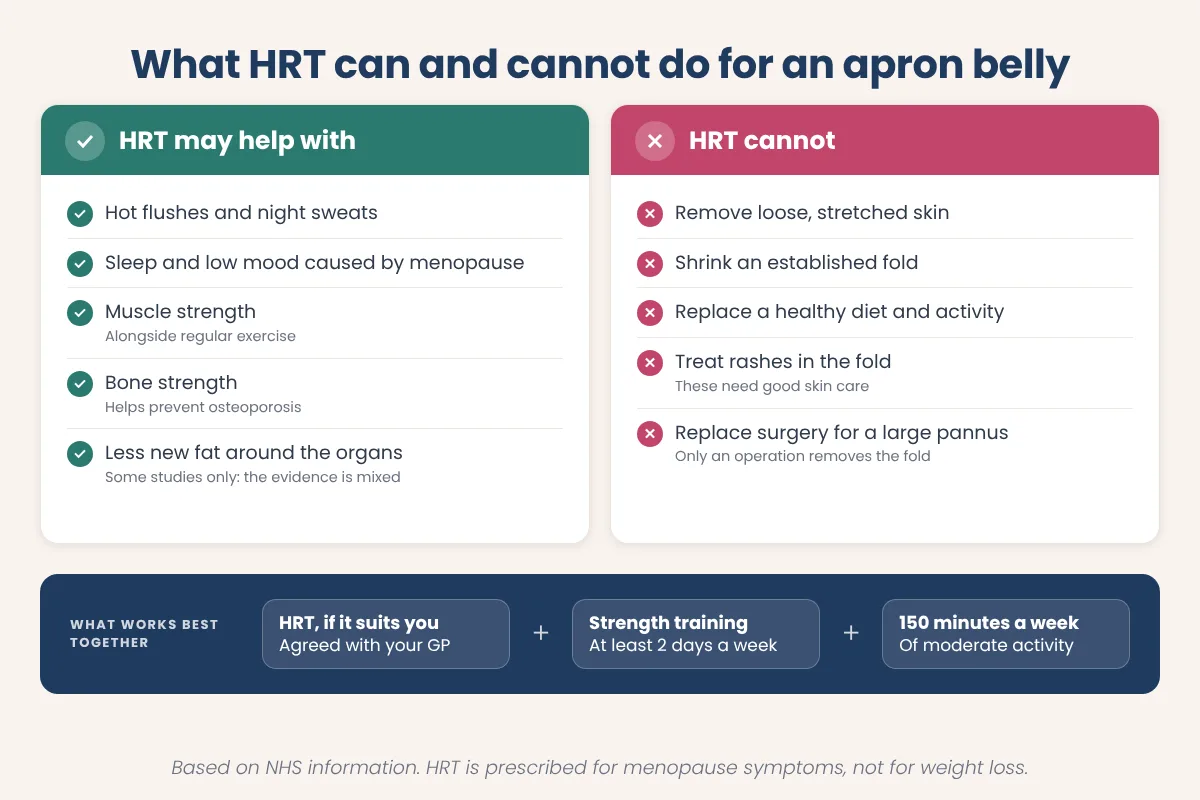
However, there is no good evidence that HRT can lift or shrink a hanging fold of loose skin. In practice, HRT will not:
- Remove stretched skin that already hangs over your pubic area.
- Reverse the grade of an established apron belly.
- Take the place of diet, activity or surgery.
- Stop rashes in the fold, which need good skin care.
To see how much of your fold is fat and how much is skin, read our guide to apron belly fat vs loose skin.
Lifestyle Steps That Work Alongside HRT
Whether you take HRT or not, daily habits remain the main way to reduce tummy fat. The NHS notes that regular exercise and a balanced diet help you manage your weight around menopause.
Strength Training
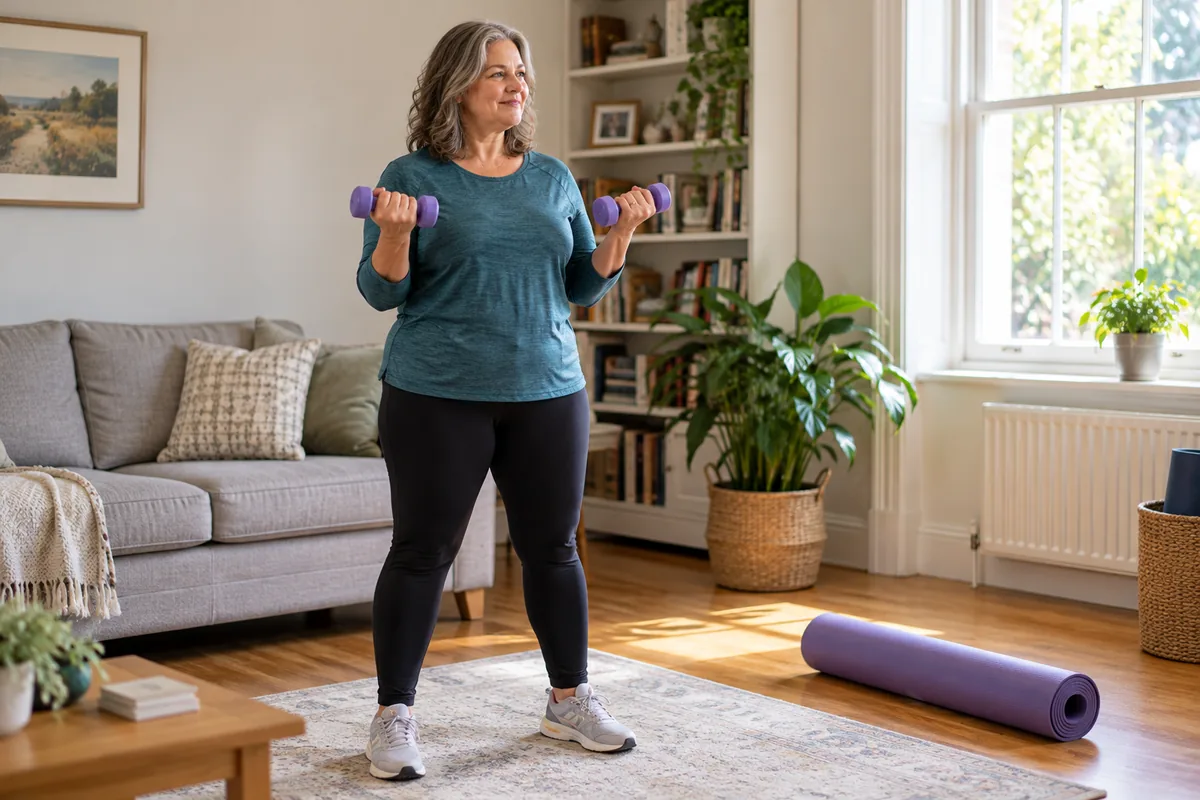
The NHS says HRT can help your muscles stay strong, but exercise is also needed. Adults should do strength training that works all the major muscle groups on at least 2 days a week. That includes the legs, hips, back, tummy, chest, shoulders and arms.
You do not need a gym. Squats to a chair, wall press-ups, resistance bands and carrying shopping all count. For moves that are kind to a heavier lower tummy, try our apron belly exercises.
Regular Activity
The NHS also advises at least 150 minutes of moderate activity each week. Brisk walking, swimming and cycling all count. Spread it over 4 to 5 days, and break up long spells of sitting where you can.
Eating Well
Next, focus on regular meals with plenty of vegetables, fibre and protein. Cutting back on sugary drinks and alcohol also helps. Our guide on how to lose a menopause apron belly sets out a step-by-step plan.
HRT and Apron Belly Surgery
For some women, a panniculectomy or tummy tuck is the only way to remove a large fold. If you take HRT, your surgical team will want to know about it well before the operation.
Why Blood Clot Risk Matters
Major surgery raises the risk of blood clots on its own. Lying still during and after an operation slows blood flow in the legs. Oral HRT adds a small extra risk, as do a higher BMI and smoking. As a result, surgeons look at all these factors together.
What Your Surgeon May Advise
NICE guidance on preventing blood clots in hospital (NG89) covers this point. It says doctors should advise people to consider stopping HRT that contains oestrogen 4 weeks before planned surgery.
In practice, advice can vary by type of HRT and by operation. For example, an NHS Lanarkshire guideline advises continuing patches and gels around surgery. It suggests ideally stopping oral HRT 4 weeks before major surgery, or switching to a skin-based form. If oral HRT cannot be stopped, the team may use extra measures to prevent clots, such as compression stockings or blood-thinning injections.
Most importantly, do not stop or change your HRT on your own. Stopping suddenly can bring back hot flushes and other symptoms. Instead, tell your surgeon at your first consultation and follow their plan.
Costs and NHS Funding
The NHS rarely funds apron belly surgery, and only when strict criteria are met. Our guide to getting an apronectomy on the NHS explains the usual rules. If you are thinking of going private, our breakdown of apron belly surgery cost covers typical UK prices.
When to See a GP
The NHS suggests talking to a GP if you think you have menopause symptoms and want to know your options. In addition, book an appointment if:
- Hot flushes, poor sleep or low mood are affecting your daily life.
- Your tummy is growing quickly, or you have unexplained weight changes.
- You are on HRT and have side effects lasting more than 3 months.
- You have bleeding after not having a period for 12 months.
- You are planning apron belly surgery and take HRT.
- Rashes or soreness in your fold keep coming back.
The NHS says the benefits of HRT are likely to outweigh the risks for women under 60 with menopause symptoms. This applies if you are not at high risk of breast cancer or blood clots. Your GP will help you weigh these up. The British Menopause Society’s patient charity, Women’s Health Concern, also offers reliable information.
Frequently Asked Questions
Can HRT get rid of an apron belly?
No, HRT cannot get rid of an apron belly. It may help limit new fat building up around the middle after menopause. However, it cannot tighten stretched skin or remove a hanging fold. Diet, activity and sometimes surgery are needed for that.
Does HRT make you put on weight?
The NHS says there is little evidence that most types of HRT cause weight gain. Many women gain weight around menopause whether they take HRT or not. Regular exercise and a balanced diet are the best ways to manage it.
Does HRT reduce belly fat?
Some studies link HRT with less fat around the organs, known as visceral fat. However, one trial found no change in tummy fat over 2 years. HRT is not a weight-loss treatment, so it should not be started for this reason alone.
Which type of HRT is best if I have a high BMI?
NICE advises considering patches, gels or sprays for women at higher risk of blood clots, including those with a BMI over 30. These skin-based forms do not raise blood clot risk. Your GP will help you choose the right type.
Do I need to stop HRT before a tummy tuck?
You might. NICE says people should consider stopping oestrogen HRT 4 weeks before planned surgery, but advice varies by type and operation. Do not stop it on your own. Tell your surgeon early and follow their advice.
Can testosterone help with menopause belly fat?
Testosterone is not a treatment for belly fat. In the UK, a specialist may prescribe it for low sex drive after menopause if HRT alone has not helped. Weight gain is a possible but uncommon side effect.
Why does menopause cause an apron belly?
Falling oestrogen makes the body more likely to store fat around the tummy. Skin also becomes thinner and less elastic with age. Together, these changes can make an existing overhang bigger or more noticeable.
Final Thoughts
HRT can be a helpful treatment for menopause symptoms, and it may limit new fat settling around your middle. Even so, the evidence is mixed, and HRT cannot remove loose skin or an established apron belly. Strength training, regular activity and good food habits remain the foundation.
If you are thinking about HRT, talk to your GP about the type that suits your health, especially if your BMI is over 30. And if surgery is on the horizon, tell your surgeon about your HRT early, so they can plan your care safely.