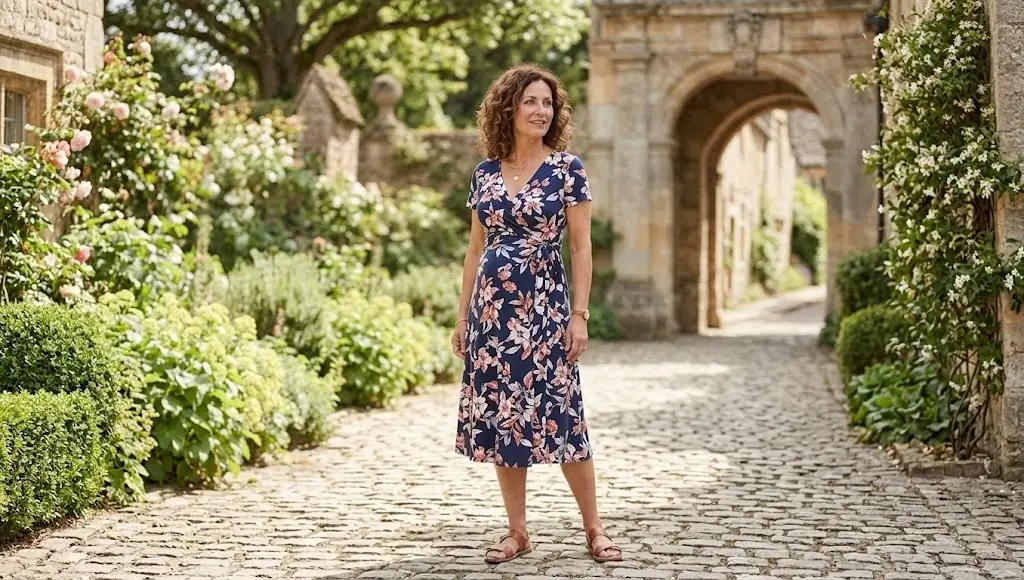
Finding the best dresses for an apron belly is easier than finding trousers, because many dresses have no waistband to fight with. The right cut lets fabric fall past the lower tummy fold instead of gripping it. The wrong one draws a line straight across it.
This guide covers nine dress shapes that skim, smooth and flatter a hanging lower tummy. You will also find the fabrics, seams and details to look for, what to wear underneath and a quick checklist for the changing room.
If you are new to the term, our guide to what an apron belly is explains the causes and grades. For trousers, tops and layering, see our full guide on how to hide an apron belly.
What Makes a Dress Work With an Apron Belly?
Three things decide whether a dress flatters or frustrates. The first is where the shape is fitted. The second is where the fabric is released. The third is how heavy the fabric is once it falls over your tummy.
Good dresses fit closely at the bust, shoulders or natural waist, then release fabric above the fold. That way, nothing has to stretch over the overhang or tuck under it. The skirt simply hangs in a smooth line.
Seams, ties and pockets also matter. A horizontal seam or belt sitting right on the crease acts like a pointer. In contrast, seams placed higher on the body, or running diagonally, lead the eye upwards and away from your lower tummy.
1. Wrap and Faux-Wrap Dresses
The wrap dress is the most reliable choice for most body shapes. Its crossover front creates a diagonal line from the shoulder to the opposite hip. That angle breaks up the horizontal width of an apron belly.
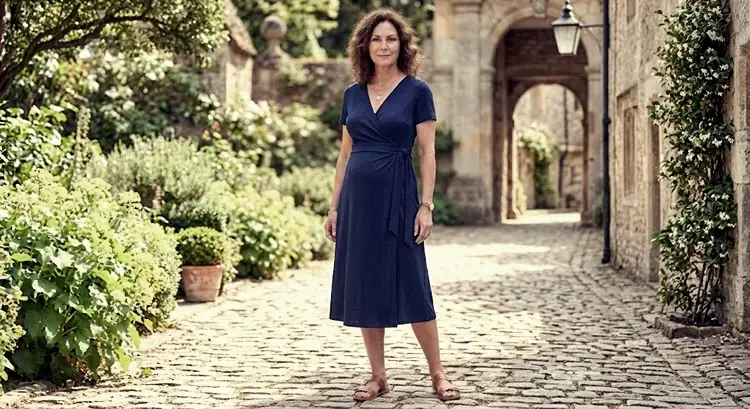
A true wrap also lets you set the fit yourself. Tie it a little looser on bloated days and slightly firmer on others. Faux-wrap dresses look the same but are sewn shut, so they never gape or slip open when you sit.
Choose midi lengths in crepe, heavier jersey or printed viscose. Check that the tie sits at your natural waist, not lower. If the tie lands on the fold, it will pull the fabric inwards and outline the overhang.
2. Empire Line Dresses
An empire line dress has a seam just under the bust. Below that seam, the skirt drops straight down and clears the tummy completely. For a large or heavy apron, this is often the most comfortable shape you can wear.
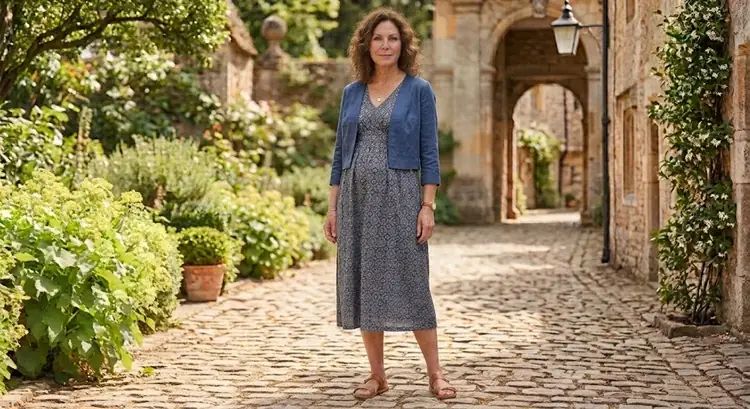
Because the fitted section sits so high, there is no pressure on the abdomen at all. That makes empire dresses a good choice for long days, travel and hot weather. They also suit you during pregnancy and after a caesarean.
Look for a skirt with enough fabric to hang freely, rather than a narrow tube. A soft V-neck or square neckline balances the shape nicely. Avoid stiff, voluminous styles that stick out, as these can add bulk.
3. A-Line Dresses
An A-line dress is fitted at the top and widens gradually towards the hem, like the letter A. The gentle flare skims over the hips and tummy without clinging. It works for work, weekends and smarter occasions.
The flare should start above the fold, ideally from the bust or natural waist. When it does, the fabric moves away from your body before it reaches the overhang. As a result, the outline of the apron stays hidden.
Knee-length and midi versions are the easiest to wear. Structured cotton, denim and ponte hold the A shape well. Very thin fabrics lose the flare and drop back towards the body, so they lose most of the benefit.
4. Fit-and-Flare Dresses
A fit-and-flare dress is fitted through the bodice to the natural waist, then opens into a fuller skirt. It defines your shape without asking the fabric to hug the lower tummy. Many people find it the most feminine option.
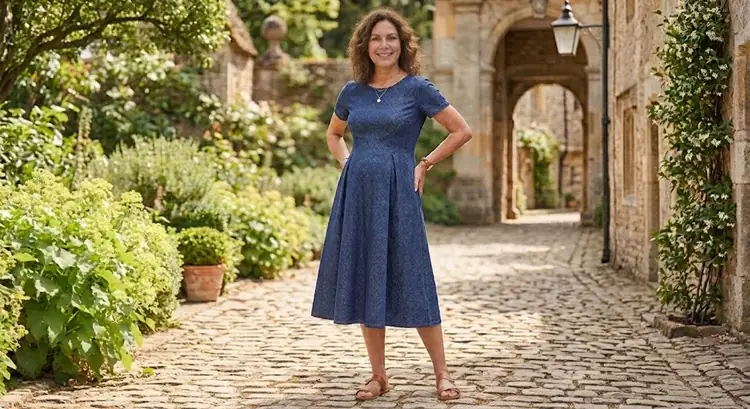
The key is the waist seam. It should sit at your natural waist, the narrowest point of your torso, usually a little above the navel. If the seam sits lower, it can rest on the fold and create a shelf.
Pleated, gathered or circle skirts all work, provided the fabric has some body. Skirts with soft box pleats fall more smoothly than heavy gathers. Pair the dress with a cropped cardigan for cooler days, ending at the waist seam.
5. Shirt Dresses
A shirt dress has a collar and a button front, like a long shirt. The row of buttons forms a strong vertical line from neck to hem. That line makes the body look longer and draws the eye up and down rather than across.
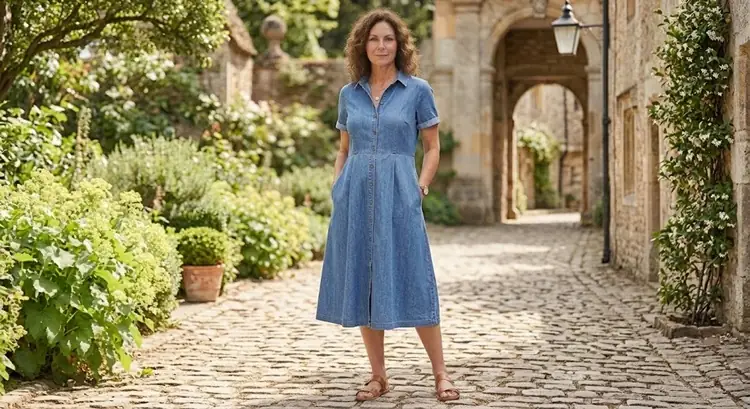
Crisp cotton, chambray and linen give the most structure, so the dress hangs away from the tummy. Choose a relaxed fit through the middle. A shirt dress that is tight at the stomach will pull at the buttons and gape.
Many shirt dresses come with a self-tie belt. Tie it at the natural waist or leave it off and let the dress fall straight. Rolled sleeves and an open collar keep the look relaxed for daytime.
6. Side-Ruched Ponte Dresses
Ruching is fabric gathered along a seam, usually at one or both sides of a dress. The small gathers add texture across the tummy. Any natural curve then blends into the folds rather than standing out against a smooth surface.
Ruching lets you wear a fitted, bodycon-style dress with more confidence. However, the fabric needs weight. Thick ponte or double-layer jersey holds its shape, while thin stretch jersey shows every line underneath, including the crease of the fold.
Look for ruching that runs from the bust down to the hip, not just a small patch. Wrap-effect ruched dresses combine two flattering features in one. Light shapewear underneath gives the smoothest finish for evenings and events.
7. Tiered and Smocked Maxi Dresses
Tiered dresses have layers of fabric stacked down the skirt, each one slightly fuller than the last. The tiers create movement and soft volume, so the eye never settles on one area. They feel cool and easy in summer.
Smocked dresses use rows of elastic stitching at the bodice or waist. The smocking stretches with you through the day, which is helpful if you bloat after meals. It also removes the need for zips or buttons around the middle.
Choose smocking that sits high, at the bust or natural waist, rather than across the lower tummy. Cotton and cotton gauze are breathable and soft. Keep tiers light, as heavy ruffles low on the skirt can add width.
8. Swing and Trapeze Dresses
A swing or trapeze dress flares from the shoulders or bust and has no waist definition at all. The fabric falls straight past the tummy in one loose line. It is a relaxed, easy shape for warm weather and casual days.
Because the dress never touches the abdomen, it suits people who dislike any pressure on the fold. It also works well for those with sensitive or sore skin under the apron, as air can move freely.
The risk is looking shapeless. Balance the volume with a fitted shoulder, a neat neckline or a slim sleeve. A shorter length that shows the legs, or a long open cardigan on top, keeps the outline tidy.
9. Structured Shift Dresses
A shift dress falls straight from the shoulders with little or no waist shaping. In a structured fabric, it skims the body like a column. It is a smart, simple option for the office, meetings and occasions.
Fabric choice makes or breaks the shift. Thick crepe, tweed, scuba and lined cotton all hold their own shape. They hang past the tummy without dipping into the crease. Unlined thin fabric, however, tends to cling and show every curve.
Choose a size that fits the widest part of your tummy, then have the shoulders or hem adjusted if needed. A knee-length or midi shift with a V-neck looks polished and lengthens the upper body.
Best Fabrics for Dresses Over an Apron Belly
Fabric weight decides whether a dress glides over the fold or sinks into it. Heavier, structured fabrics hold their own shape. Light, stretchy ones collapse into each curve, including the crease beneath the apron.
Reliable choices include ponte, crepe, scuba, heavier viscose, cotton poplin, chambray and linen blends. For summer, cotton gauze and seersucker stay cool and light while still holding some body away from the skin.
Treat thin jersey, ribbed knit and satin with care. Shiny fabric reflects light off every contour, so it highlights the tummy rather than hiding it. A lining under a lighter fabric adds weight and helps the dress hang more smoothly.
Details to Look For and Details to Skip
Small design choices change how a dress looks on an apron belly. Diagonal seams, wrap fronts, side ruching and vertical button plackets all lead the eye upwards. Print and detail at the neckline do the same.
Skip horizontal seams, drop waists and belts that sit across the lower tummy. Patch pockets on the front of the skirt also add bulk where you least want it. Side-seam pockets are a much better choice.
Prints can help too. Small, busy patterns break up the surface so curves are harder to read. However, a large bold motif placed across the lower tummy works like a spotlight, so position matters as much as pattern.
What to Wear Under Your Dress
The layer closest to your skin shapes the final look. Low-cut knickers often sit under the apron and leave a visible dent through the dress. High-waisted knickers that finish above the fold give a smoother line.
For fitted or special-occasion dresses, light shapewear can help. Choose a style that starts above the navel and ends on the thigh, so it holds the fold rather than rolling under it. Our guide to the best shapewear for an apron belly compares compression levels.
Cotton-rich bike shorts stop thighs and the lower tummy rubbing under dresses on warm days. Our best underwear for an apron belly guide covers styles that stay in place without digging in.
Choosing a Dress for the Occasion
For work, a structured shift, shirt dress or crepe wrap dress looks smart and stays comfortable at a desk. Add an open longline blazer to create two long vertical lines down the front of the body.
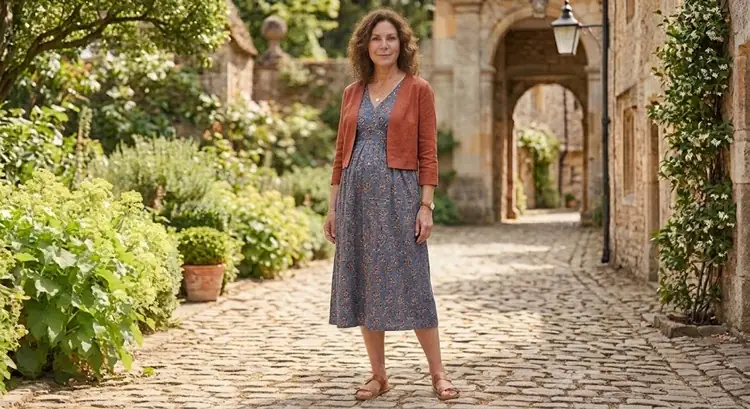
For weddings and parties, a fit-and-flare or side-ruched midi dress in a rich colour works well. Keep sparkle and embellishment near the neckline. A lightweight shawl or long cardigan gives cover during the evening.
For holidays and hot weather, choose a tiered cotton maxi, a smocked sundress or a swing dress in linen. Loose, natural fabrics let air move around the fold and help prevent heat and chafing.
Quick-Reference Dress Table
Use this table as a shortcut when you are shopping or trying dresses on.
| Dress shape | Why it works | Watch out for |
|---|---|---|
| Wrap or faux-wrap | Diagonal line, adjustable fit | Tie sitting on the fold |
| Empire line | Seam under the bust, skirt clears the tummy | Stiff, oversized skirts |
| A-line | Gradual flare skims hips and tummy | Thin fabric that loses the flare |
| Fit-and-flare | Defines the waist, fuller skirt falls freely | Waist seam set too low |
| Shirt dress | Vertical button line, crisp structure | Tight fit pulling at the buttons |
| Side-ruched ponte | Gathers hide curves in the texture | Thin, single-layer jersey |
| Tiered or smocked maxi | Movement, stretch for bloating | Heavy ruffles low on the skirt |
| Swing or trapeze | No pressure on the tummy at all | Looking shapeless without a fitted shoulder |
| Structured shift | Column shape in firm fabric | Unlined fabric that clings |
Comfort and Skin Care in Dresses
The skin under an apron belly can become warm, damp and sore, especially in summer. Dresses help because they let more air move than trousers. The most flattering dress is one you can wear all day without rubbing or irritation.
Choose cotton and linen where you can, and keep a soft cotton liner in the fold on hot days. Wash the area gently each day and pat it completely dry. Take shapewear off at home so the skin can breathe.
See a pharmacist or GP if a rash in the fold spreads, cracks, weeps, smells or lasts more than a few days. Our apron belly rash treatment guide explains common causes and remedies.
Frequently Asked Questions
What is the most flattering dress for an apron belly?
A wrap or empire line dress suits most people. The wrap adds a diagonal line and an adjustable fit. The empire line has a seam under the bust, so the skirt falls clear of the tummy without any pressure.
Can I wear a bodycon dress with an apron belly?
Yes. Choose thick ponte or double-layer jersey with side ruching, which hides the fold in its gathers. Light shapewear that starts above the navel gives a smoother line underneath a fitted dress.
Are maxi dresses good for an apron belly?
Yes, especially tiered or smocked maxi dresses. Keep the smocking at the bust or natural waist, and choose breathable cotton. Avoid heavy ruffles across the lower skirt, which can add width.
Should I wear a belt with a dress if I have an apron belly?
You can, as long as the belt sits at your natural waist, a little above the navel. A belt resting on the fold creates a hard line and can dig in. Soft belts about 2 to 4 cm wide are the most comfortable.
What dress length is best for an apron belly?
Knee-length and midi dresses are the easiest to wear, as they balance the body and keep the eye moving. Longer maxi dresses also work well. Very short dresses can suit you too if the shape releases above the fold.
What fabrics should I avoid in a dress?
Avoid thin stretch jersey, ribbed knits and shiny satin worn alone. These fabrics cling to the crease and reflect light off every curve. Ponte, crepe, cotton and linen blends hang more smoothly.
Final Thoughts
The best dresses for an apron belly fit at the bust, shoulders or natural waist and release fabric above the fold. Wrap, empire line, A-line and fit-and-flare shapes cover most occasions. Shirt, ruched, tiered, swing and shift dresses fill in the rest.
Pick fabrics with some weight, keep seams and belts away from the crease and put detail near your face. Above all, choose dresses that feel comfortable for a full day. Wearing your shape openly is always a valid choice too.