
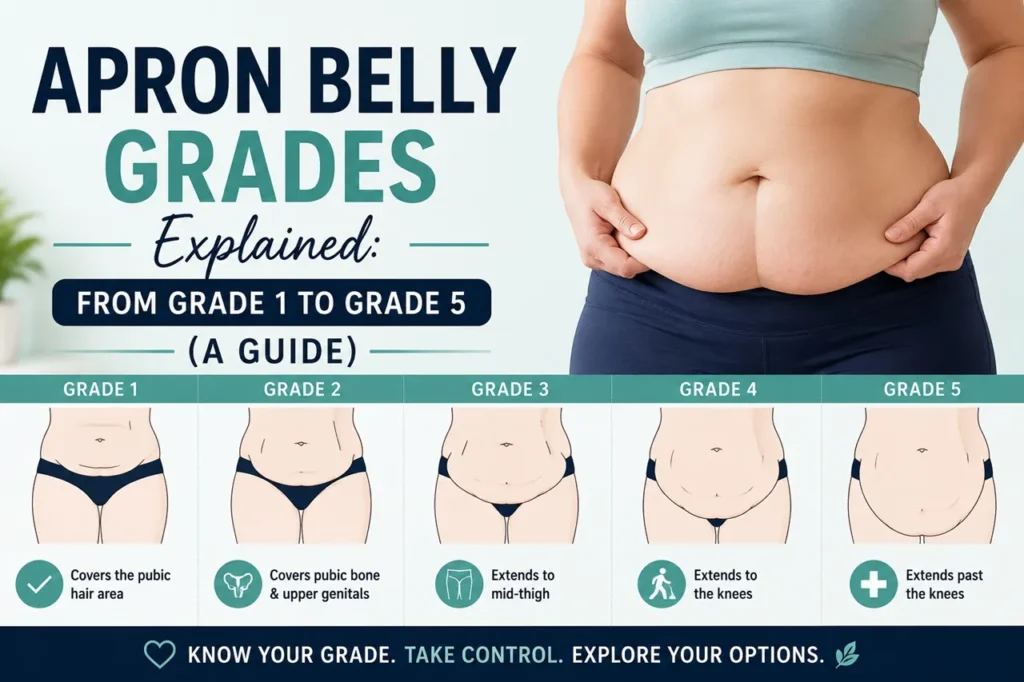
Apron belly grades describe how far a hanging fold of lower tummy skin and fat reaches. The scale runs from Grade 1 to Grade 5. At Grade 1, the fold covers the pubic hair area. At Grade 5, it reaches the knees or lower. Higher grades often bring more skin, hygiene and mobility problems, and may need medical treatment.
Key takeaways
- An apron belly, or panniculus, is a flap of skin and fat that hangs over the lower tummy.
- Grades run from Grade 1, the mildest, to Grade 5, the most severe.
- Grade 1 and Grade 2 often improve with diet and core exercise.
- From Grade 3, stretched skin will not tighten with exercise alone.
- A panniculectomy removes the overhang. A tummy tuck also tightens the muscles.
If you’ve noticed a fold of skin hanging over your waistline, you’re not alone. Understanding apron belly grades is the first step. It helps you know what’s normal, what needs attention, and what actually works. This guide breaks the condition down stage by stage. You’ll learn where you stand and what to do next.
Whether your overhang is barely noticeable or affects your daily movement, this guide walks through each grade in plain English. Every medical term gets explained simply along the way.
What is an Apron Belly? (Understanding the Overhang)
An apron belly, medically known as a panniculus, is a flap of skin and fat. It hangs down over the lower abdominal apron. Unlike ordinary belly fat that sits evenly across the midsection, this overhang forms at the base of the stomach. It often droops over the waistband or pubic area.

It develops for several reasons. Pregnancy stretches the skin beyond its natural elasticity, and the tissue doesn’t always spring back after childbirth. Rapid weight loss can leave loose skin behind once the fat underneath disappears. Genetics also play a role in where subcutaneous fat settles on the body. Ageing gradually reduces collagen too, which makes skin more prone to sagging.
An apron belly isn’t simply “being overweight.” Even people at a healthy weight can develop one after pregnancy or major weight fluctuation. The real issue often lies in stretched skin and connective tissue, not fat alone.
For many women, the overhang appears gradually over months or years. The change can feel confusing at first. Some notice it only after standing for long periods, whilst others see it constantly. Either way, understanding the cause helps set realistic expectations before you look at treatment options.
How Apron Belly is Graded (The Severity Scale)
Clinicians use a panniculus classification system to describe the tissue and its effect on the body. This grading scale runs from Grade 1, the mildest form, through to Grade 5, the most severe. Knowing your grade helps you and your GP decide what comes next.
The scale isn’t about judgement. It’s a practical tool that describes anatomy, much like grading systems used for other medical conditions. It gives doctors a consistent way to talk about severity. That matters when deciding whether a referral makes sense.
Grading is descriptive, not diagnostic. Two people with the same grade might feel very different levels of discomfort. Body shape, skin condition, and overall health all play a part. Read on to see how each stage differs.

Grade 1 Apron Belly
A mild apron belly is the earliest stage. The overhang stays limited and is often barely visible under clothing. At this stage, the skin covers the pubic hair area but doesn’t extend much further.
Most people with Grade 1 notice only a slight pooch when sitting or bending forward. It rarely causes discomfort. Many manage it well through core-strengthening exercise and general fitness routines. This stage responds particularly well to consistent lifestyle changes.
Grade 2 Apron Belly
At Grade 2, the moderate skin overhang becomes more noticeable. The tissue extends further down. It typically covers the pubic bone and upper genitals, creating a visible fold even in fitted clothing.
Some mild chafing may begin at this stage, particularly in warm weather or during physical activity. Diet and targeted exercise can still manage it well. This is often when people start researching non-surgical treatment options.
Grade 3 Apron Belly
Grade 3 marks a turning point. The panniculus reaches the upper thigh. Severe skin laxity becomes apparent, meaning the skin has lost much of its elasticity and won’t tighten with exercise alone.
At this stage, physical discomfort often enters the picture. Skin folds can trap moisture, and clothing may not fit properly. Some people even find tying shoelaces becomes awkward. A consultation with a GP or specialist becomes worthwhile at this point.
Grade 4 Apron Belly
Grade 4 is a more advanced stage. The hanging tissue reaches the mid-thigh. This level of overhang frequently causes mobility restriction, making everyday tasks noticeably harder. Walking longer distances or climbing stairs both become a challenge.
Posture often suffers, too, as the body compensates for the extra weight pulling the body forward. Lifestyle changes alone rarely resolve the issue by this point. Most people need proper medical guidance here.
Grade 5 Apron Belly
The most severe stage, Grade 5, involves a panniculus reaching the knees or lower. Doctors classify this as a severe medical grade. It can greatly limit mobility, hygiene, and quality of life.
At this level, the condition often needs medical intervention rather than lifestyle management. Skin breakdown, chronic infections, and serious back strain are common concerns. A healthcare professional will need to assess these directly.
Common Health and Hygiene Issues Associated with Apron Bellies
As the grade increases, so does the likelihood of physical complications. Skin irritation, back strain, and hygiene challenges all become more common at higher grades. Understanding these issues early helps you manage them before they escalate.
Skin Irritation and Intertrigo
One frequent issue is intertrigo, a form of skin inflammation. It develops in warm, moist folds where skin rubs against skin. Left untreated, it can lead to skin chafing, soreness, and even fungal or bacterial infections.
A rash under skin folds is another common complaint, particularly in summer or after exercise. Some people also notice reduced sensitivity or numbness in the overhanging skin. This is common after major weight loss, and it can make irritation harder to spot before it becomes a bigger problem.
Back Pain and Poor Posture
Beyond the skin itself, the extra weight pulling on the lower abdomen often causes back pain and poor posture. The body naturally shifts to compensate for the added load. Over time, this constant compensation can strain the lower back and hips.
Managing Hygiene at Higher Grades
Hygiene becomes genuinely difficult to manage at higher grades too. Washing and drying the area beneath the overhang takes extra care and time. Trapped moisture combined with limited airflow creates the perfect environment for bacteria and yeast. That’s why daily cleaning and keeping the area dry matter so much.
Regularly checking the skin, wearing breathable fabrics, and using a mild barrier cream all help prevent flare-ups. Don’t let any of this alarm you. It simply highlights why addressing the condition matters, whether through lifestyle changes or medical treatment. Comfort and long-term wellbeing count just as much as appearance.
Can You Get Rid of an Apron Belly Without Surgery?
For Grade 1 and Grade 2, the answer is often yes, at least partially. Diet, targeted exercise, and non-invasive treatments can all make a visible difference at these earlier stages.

Diet and Core-Strengthening Exercises
Non-surgical fat reduction through a calorie-appropriate diet can visibly reduce the overhang over time. Pairing this with core strengthening exercises like planks, pelvic tilts, and gentle Pilates helps even more.
A sensible diet for lower belly fat focuses on whole foods and adequate protein. Cutting back on processed sugar and staying hydrated both help too. Regular movement, even a daily walk, supports fat loss and improves circulation to the area.
Why Lifestyle Changes Have Limits
However, it pays to stay realistic. Once skin has stretched a great deal, exercise and diet cannot fully tighten it back. This is especially true after pregnancy or major weight loss. Skin laxity is a structural change, not just excess fat. Grade 3 and above typically need more than lifestyle adjustments alone.
Non-Invasive Skin-Tightening Treatments
Some non-invasive skin-tightening treatments are also available, such as radiofrequency or ultrasound-based therapies. Clinics often market these for mild-to-moderate laxity. Results vary widely among people, and outcomes rarely match those of surgery. Anyone considering these should first research the provider carefully. Setting realistic expectations beforehand avoids disappointment later.
Medical Treatments and Surgical Options for Severe Grades
When lifestyle changes aren’t enough, medical options enter the conversation. This usually happens from Grade 3 onwards. Surgery, cost, recovery, and NHS eligibility all factor into the decision.
Panniculectomy vs Tummy Tuck
A panniculectomy surgery removes the excess hanging skin and fat. It doesn’t tighten the underlying abdominal muscles, making it a more targeted procedure focused purely on the overhang.
By contrast, abdominoplasty, better known as a tummy tuck, does both jobs. It removes excess skin and tightens the underlying muscles for a more contoured result. The right choice depends on individual anatomy, goals, and whether muscle separation is present too.
Cost and Recovery Timeline
Tummy tuck costs in the UK vary considerably by clinic, surgeon, and procedure complexity. As a guide, a private tummy tuck costs about £6,500 to £9,500, with an average of about £8,000. A private panniculectomy starts from about £6,000. Our apron belly surgery cost guide explains what affects the price. A personalised quote after consultation still matters most. Skin removal surgery recovery typically involves several weeks of limited activity. Most people return to light daily routines within four to six weeks, though full recovery can take longer.
NHS Funding Criteria
In some cases, the panniculus causes recurrent infections or serious mobility issues. NHS funding criteria may apply here, but the NHS reviews each case individually. Documented medical necessity matters far more than cosmetic preference. NHS funding is rare and strict, so ask your GP first. Private medical insurance usually excludes cosmetic surgery.
Preparing for Surgery
Before any procedure, a thorough consultation covers medical history and current weight stability. It also checks for underlying conditions that might affect healing. Surgeons typically want weight stable for several months beforehand. Further weight changes after surgery can affect long-term results. Aftercare, including compression garments and follow-up appointments, plays a meaningful role in healing too.
Frequently Asked Questions about Apron Belly Grades
Can apron belly be prevented?
Maintaining a stable weight through balanced nutrition and regular activity reduces the risk of abdominal fat build-up. After pregnancy or major weight loss, gradual change and core-strengthening exercise help support the skin and reduce overstretching. Avoiding rapid weight swings makes a noticeable difference for many people.
Is surgery always required?
No. Mild to moderate grades often improve with diet, targeted exercise, and supportive garments alone. Surgeons generally reserve procedures like panniculectomy or abdominoplasty for cases involving persistent infections, chronic discomfort, or a real impact on daily life.
How does pregnancy affect apron belly grades?
Pregnancy stretches the abdominal skin rapidly, which raises the chance of developing or worsening an apron belly. Multiple pregnancies, larger babies, caesarean deliveries, and postpartum weight retention are all linked to higher grades of panniculus.
What are the health risks if left untreated?
An untreated apron belly can lead to chronic skin irritation and recurrent infections such as intertrigo, caused by trapped moisture in the skin fold. Over time, this can progress to ulceration, cellulitis, or restricted movement. At Grade 4 or 5, daily hygiene and walking can become genuinely difficult.
Conclusion
Managing apron belly effectively starts with understanding which grade best describes your situation. Mild cases often respond well to diet, exercise, and patience. More advanced grades usually benefit from professional medical input instead.
Whatever stage you’re at, remember that body positivity and physical health aren’t mutually exclusive. You can feel confident in your body whilst still seeking practical solutions for comfort or hygiene concerns.
If your apron belly affects your daily life or causes pain, don’t wait it out. Consulting a healthcare professional is the best next step. Your GP or a consultant plastic surgeon on the GMC Specialist Register can assess your specific grade. They’ll talk you through realistic, safe options tailored to you.
There’s no single right way to approach this. What matters is finding what works for your body, your comfort, and your circumstances. Taking that first step towards a proper assessment beats guessing every time.
This article is intended for general informational purposes only and does not constitute medical advice. Please consult a certified GP or medical professional for a personal assessment and treatment plan.